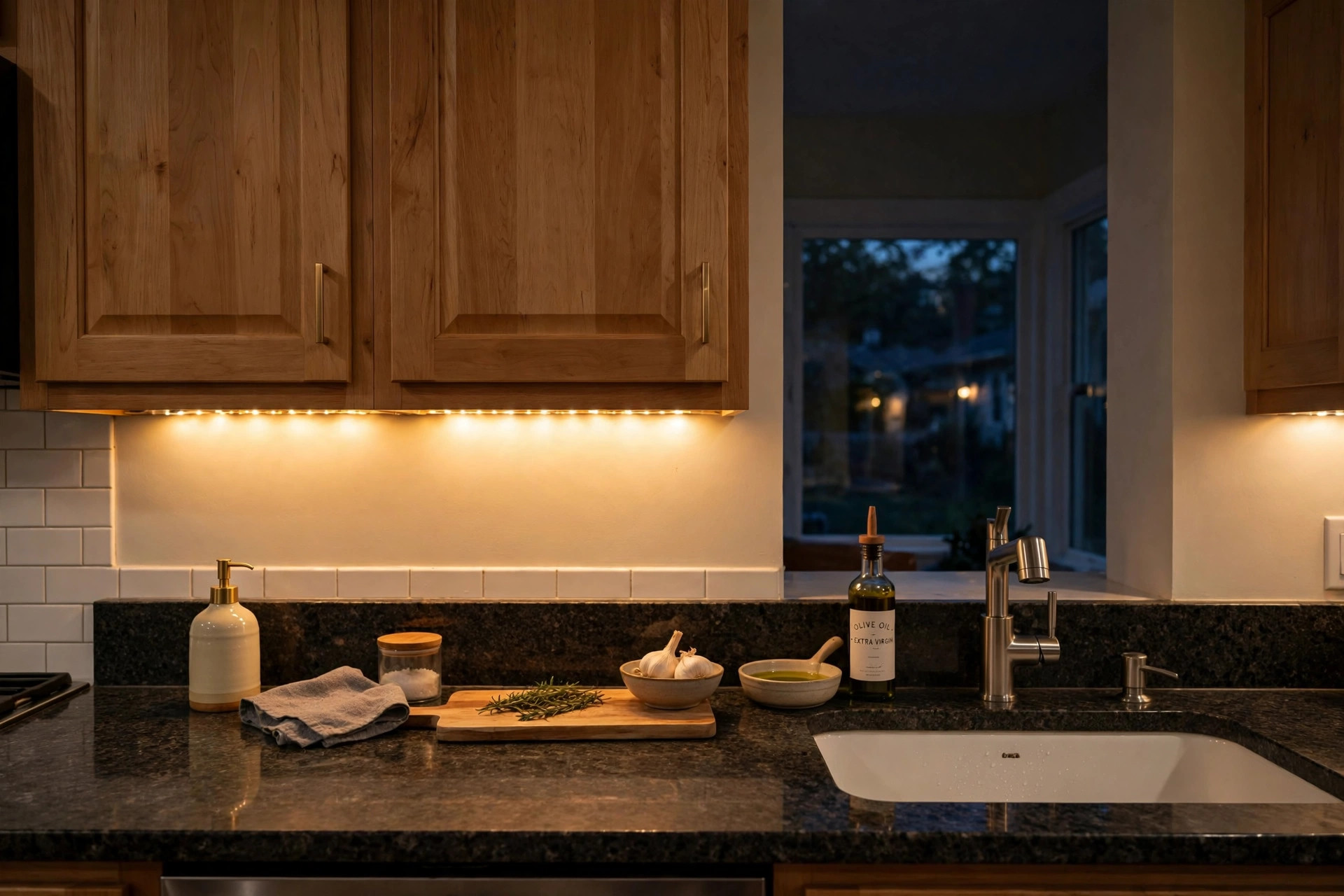

When shoppers type under cabinet strips deals near me into a search box, they usually want two things at once: a fair price and a store close to home. Under cabinet strips have become one of the most popular ways to light a kitchen, a pantry, a desk, or a shelf. The strips hide out of sight under a cabinet edge and throw soft, useful light right where hands work. They use very little power, they last a long time, and they are easy to install. But prices differ a great deal from store to store. This guide explains what under cabinet strips are, how to choose them, where deals turn up, what they cost, and how to keep them working well for years.
Why Under Cabinet Strips Matter
Kitchen ceilings often sit too high to light a counter well. When a cook stands at the counter, the body blocks the ceiling light and throws a shadow across the food. Under cabinet strips fix this problem in a direct way. They sit just above the work surface and point light down onto it. Chopping, reading a recipe, and cleaning become easier and safer.
Good task light also changes the mood of a room. A kitchen lit only by one ceiling fixture can feel flat and cold. Strips under the cabinets add a warm band of light that makes the whole room feel finished. Many people leave them on in the evening as a soft night light.
Energy cost is another reason for their growth. Most strips sold today use LED light. An LED strip that lights a whole counter run may use less power than one old table lamp. The strips also run cool, which matters under wood cabinets where heat can build up.
How Under Cabinet Strips Work: Under Cabinet Strips Deals near Me
An under cabinet strip is a slim bar or a flat tape that holds a row of small lights. Most modern strips use LED lights because they are small, cool, and cheap to run. The strip mounts under a wall cabinet with clips, screws, or sticky backing. A wire or a thin cord carries power to the strip.
Some strips plug into a wall outlet. Others wire directly into the home power system with a driver that lowers the voltage. A few run on batteries. Plug-in and battery strips suit renters and people who do not want to hire an electrician. Hardwired strips suit owners who want a clean look with no cords showing.
Many strips dim with a switch or remote, and some change color temperature from warm to cool.
Types of Under Cabinet Strips
Strips fall into a few main types. Each fits a different need and budget.
Tape strips. These are flat, flexible tapes with LED lights built in. They bend around corners and fit under almost any cabinet. They are usually the cheapest type and the easiest to install. Their weak point is heat: cheap tapes can run hot and may dim over time if they lack a metal channel.
Bar or puck strips. Rigid bars and round pucks give strong, even light. Bars work well in straight runs. Pucks work well inside single cabinets or above small desks. They cost more than tape but often last longer.
Plug-in strips. These connect to a normal outlet. No electrician is needed. They suit kitchens where an outlet sits nearby and cords can be hidden.
Hardwired strips. These connect to the home wiring through a driver box. They give the neatest result with no cords at all. Most need a licensed electrician for safe installation.
Battery strips. These run on common batteries and stick on with magnets or tape. They are cheap and need no tools, but batteries must be changed, so they suit small jobs.
Color-change strips. These shift from warm white to cool white, or through many colors. They cost more but suit rooms where mood changes through the day.
Related light types fill other rooms of the house. Readers who plan outdoor projects may enjoy our guide at patio string lights for American homes, and those lighting entry points can read our sensor porch lights buying guide.
What to Look for When You Choose
Shopping for under cabinet strips is easier when a few facts are clear before the store visit.
Brightness. Brightness is measured in lumens. For a kitchen counter, 200 to 400 lumens per foot works well for most people. Too dim and the light does little. Too bright and it glares off a glossy counter.
Color temperature. This is measured in Kelvin. Warm white, around 2700 to 3000 Kelvin, suits kitchens and living rooms. Cool white, around 4000 to 5000 Kelvin, suits garages and workbenches where fine detail matters.
Length. Measure each cabinet run before shopping. Strips come in fixed lengths, and kits often link together. Buying after measuring avoids a second trip.
Power type. Decide whether plug-in, hardwired, or battery suits the room. Hardwired strips need a driver that matches the strip voltage, usually 12 or 24 volts.
Dimming. Check whether the strip dims and whether the switch or remote is included. Some strips dim only with a matched driver sold apart.
Certifications. Look for marks from known testing groups. A mark shows the product met safety standards. Cheap strips without marks may overheat or fail early.
Buyers who want to compare efficiency can check ENERGY STAR, which lists lighting products that meet strict efficiency rules.
Where to Find Under Cabinet Strips Deals Near Me
The phrase under cabinet strips deals near me is best answered by a short plan, not by one store. Prices move with sales, clearances, and store stock, so a buyer who checks a few channels usually pays less.
Big home stores. National home improvement chains carry a wide range of strips and often run weekend sales. Both Home Depot and Lowe’s stock plug-in, hardwired, and battery strips, and their websites show stock at the store nearest the buyer. Checking the site before driving saves a wasted trip.
Lighting specialty shops. Specialty sellers often carry better drivers and truer colors than the cheapest big-box kits. Lumens and Lamps Plus both sell cabinet lighting with full spec sheets, which helps buyers compare real brightness instead of guessing from box photos.
Manufacturer sites. Big lighting makers sell direct and sometimes run their own sales. Philips offers a range of cabinet and accent lighting, and its product pages list full specs for each strip.
Clearance and open-box. Stores mark down strips when packaging changes or a model leaves the line. Ask the lighting desk about clearance ends and open-box returns. These can cut a third or more from the price with no loss of function.
Seasonal timing. Sales cluster around spring home-improvement season and the holiday months. Buyers who can wait a few weeks often catch a price drop.
Local electric supply shops. Small electrical suppliers serve contractors but sell to the public too. They carry hardwired strips and drivers of known quality, and staff can answer wiring questions that big-box clerks may not know.
Online comparison, local pickup. Comparing the price online and then picking up at a local store gives the online price with no shipping wait.
Homeowners who are dining-room focused may also like our piece on chandeliers for Texas homes.
Cost and Price: What to Expect
Prices for under cabinet strips cover a wide band. A simple battery tape strip can cost under ten dollars. A basic plug-in LED kit for a short run often costs twenty to forty dollars. Longer kits with dimmers and remotes run fifty to one hundred dollars. Professional hardwired systems with aluminum channels and matched drivers can reach one hundred fifty dollars or more per run, plus the cost of an electrician if hard wiring is new.
Installation cost matters as much as the strip price. A plug-in or battery strip costs nothing to install beyond a few minutes. A hardwired run may need an electrician for one to three hours of work. Buyers should add that cost to the strip price before comparing deals.
Running cost stays low. A typical LED strip uses only a few watts. Left on four hours a day, most strips add well under a dollar a month to the power bill. ENERGY STAR guidance at energy.gov explains how efficient lighting trims home energy use, and ENERGY STAR lists certified lighting that meets its efficiency bar.
Watch for hidden costs. A strip may need a separate driver, dimmer, or mounting channel. Reading the box or the spec sheet before buying keeps the true price honest.
Installation Basics
Most plug-in and battery strips install with simple tools. The steps below fit most kits.
1. Clean the underside of the cabinet with a damp cloth and let it dry. Dust keeps sticky tape from holding. 2. Plan the strip position near the front edge of the cabinet. Front placement lights the counter best and keeps the strip hidden from view. 3. Test the strip before mounting. Plug it in or fit the batteries and check that every section lights. 4. Mount the strip with the clips, screws, or adhesive that came in the kit. Work from one end to the other and keep the strip straight. 5. Hide the cord along the cabinet edge or inside a cord channel. Keep cords away from stove heat and sink water. 6. Fit the driver and dimmer where air can reach them. Drivers that overheat fail early.
Hardwired strips belong to a licensed electrician. Cabinet work mixes wood, wire, and heat, and a wrong connection can start a fire. The small fee for a professional buys peace of mind.
Care and Upkeep
Under cabinet strips need little care, but a few habits keep them bright.
Dust the strips every few months. Grease from cooking coats LED lenses and dims the light. A soft dry cloth is enough for most strips. Never spray cleaner straight onto a strip.
Check mounts once a year. Heat and steam loosen sticky tape over time. Tighten screws or replace tape before a strip falls onto the counter.
Replace a failed driver, not the whole strip. When a strip flickers or goes dark, the small driver box is the usual fault. Matching the voltage and wattage of the old driver fixes most cases.
Safety Notes
Under cabinet strips are low voltage in most cases, but safety still counts.
– Buy strips with known safety marks. Cheap unmarked strips can overheat under a wood cabinet. – Keep strips clear of stove tops and toaster ovens. Direct heat shortens LED life and can melt plastic housings. – Do not pinch cords in cabinet doors. A pinched cord can expose wire and start a fire. – Unplug plug-in strips before cleaning them with a damp cloth. – Use only the driver sold with or matched to the strip. The wrong voltage burns out LEDs or overheats the driver. – Keep battery strips dry. Kitchen steam is fine, but direct splashes can corrode battery contacts. – Call an electrician for any hardwired work. Rules for kitchen wiring differ by area, and a pro knows the local code.
Advice on safe home products also comes from The Spruce, which covers lighting choices for kitchens and other rooms in plain terms.
Frequently Asked Questions
How many lumens do I need under my kitchen cabinets? Most kitchens do well with 200 to 400 lumens per foot of strip. If the counter is dark stone or wood, choose a brighter strip, since dark surfaces soak up light.
Are under cabinet strips worth the money? For most homes, yes. They cost little to buy and run, they make kitchen work easier, and they improve how the room looks. Buyers who find a good deal on a quality kit usually call it one of the cheapest upgrades in the house.
Can I install under cabinet strips myself? Plug-in and battery strips are made for do-it-yourself fitting and need only basic tools. Hardwired strips should be installed by a licensed electrician, since they connect to the home power system.
Do under cabinet strips raise the electric bill much? No. A normal LED strip uses only a few watts. Running it several hours a day costs well under a dollar a month in most areas.
How long do LED under cabinet strips last? Quality LED strips often last 25,000 to 50,000 hours of use. At four hours a day, that is many years. Cheap strips with poor heat control may dim or fail sooner, which is why buying from known brands and checking safety marks matters.
Where can I find under cabinet strips deals near me right now? Start with the websites of Home Depot and Lowe’s, which show sale prices and stock at nearby stores. Check specialty sellers like Lumens and Lamps Plus for clearance, and ask local electrical supply shops about contractor pricing. Comparing two or three sources almost always beats the first price seen.
Final Word
Finding under cabinet strips deals near me is less about luck and more about method. Measure first, decide on plug-in, hardwired, or battery, and compare prices across big stores, specialty sellers, and local supply shops. Spend the savings on a quality strip with real safety marks. The result is a kitchen that works better, looks better, and costs pennies a day to light.
References
ENERGY STAR. (n.d.). Energy efficient products. https://www.energystar.gov Lamps Plus. (n.d.). Lighting and home decor. https://www.lampsplus.com Lowe’s. (n.d.). Home improvement products. https://www.lowes.com Lumens. (n.d.). Lighting and ceiling fans. https://www.lumens.com Philips. (n.d.). Lighting products. https://www.philips.com The Home Depot. (n.d.). Home improvement products. https://www.homedepot.com The Spruce. (n.d.). Home and garden advice. https://www.thespruce.com U.S. Department of Energy. (n.d.). Energy efficiency and renewable energy. https://www.energy.gov
Was this guide helpful?

About James Carter
The My Garden US editorial team writes practical, in-depth home and garden guides for American homeowners — tested advice, no fluff.
You May Also Like

Where to Find Landscape Spot Lights for Sale in the USA
August 22, 2026 0 views
Reading Floor Lamps Where to Buy USA: A Complete Home Guide
September 4, 2026 0 views
Garage Shop Lights for Texas Homes USA
February 26, 2026 0 views