
Introduction
Homeowners in the United States keep turning to top rated woven wood shades for american homes when they want warmth and natural style at the window. These shades are made from bamboo, reeds, grasses, and rattan. The woven strands filter sunlight into a soft, golden glow. They give a room a calm and organic feel that painted blinds and heavy drapes cannot match. This guide explains why these shades rank so well with buyers, what to look for before you buy, the main types on the market, what they cost, how to care for them, and the safety rules every home should follow.
Why Woven Wood Shades Matter: Top Rated Woven Wood Shades for American Homes
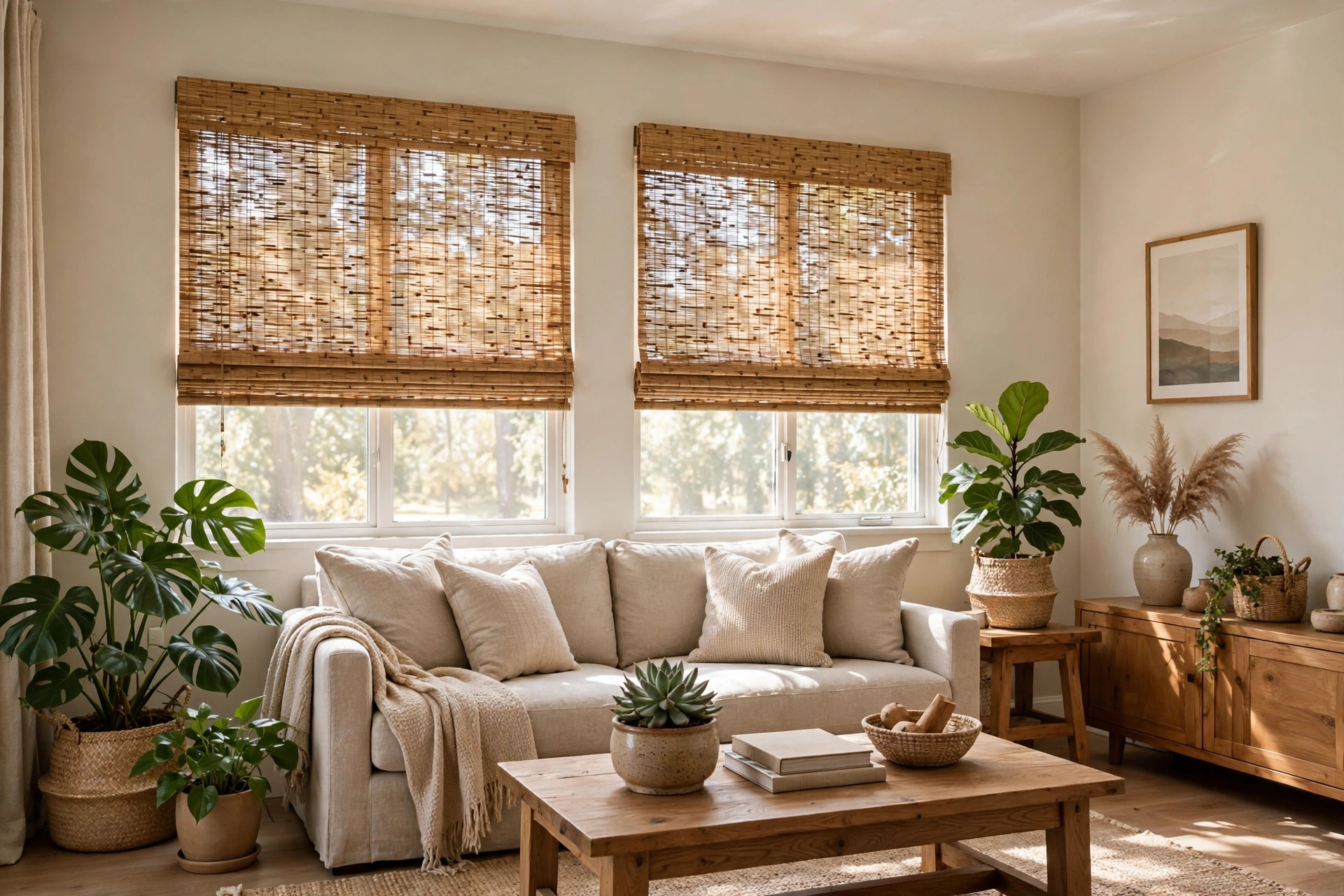
A window treatment sets the tone of a room. Woven wood shades bring texture into a space. The natural fibers add depth and interest without loud color. They suit many home styles, from coastal cottages to mountain cabins to modern farmhouses. The natural material also filters light in a gentle way. Harsh midday sun becomes a warm pattern of light and shade. Rooms feel brighter but not glaring.
Another reason buyers choose them is their tie to nature. American homes today favor wood, stone, linen, and other honest materials. Woven wood shades fit this trend. They pair well with hardwood floors, wicker baskets, houseplants, and natural wood furniture. A shopper who values a clean and calm home often finds these shades to be the right choice. Reviews on major retail sites show that owners praise them for looks, for ease of use, and for the relaxed mood they bring. Retailers such as Wayfair and Blinds.com carry a wide range of these shades, and customer ratings help buyers pick the best sellers with confidence.
What to Look for When You Choose
The top rated woven wood shades for american homes share a few traits. A buyer should check each one before placing an order.
Weave Tightness
The weave controls light and privacy. A tight weave blocks more light and gives more privacy. A loose, open weave lets more sun through and shows the view outside. Think about the room. A bedroom or a street-facing living room needs a tighter weave. A kitchen nook or a screened porch may do fine with an open weave. Some makers add a privacy liner to the back of the shade. The liner keeps the woven look on the front while blocking light at night. This option is wise for bedrooms.
Material and Build
Bamboo is the most common fiber. It is light, strong, and resists wear. Rattan and reeds give a bolder, more rustic look. Jute and grass weaves feel soft and coastal. Look at the edge binding and the mounting hardware. A clean edge binding keeps the weave from fraying. Solid mounting brackets hold the shade level for years. Product detail pages on The Home Depot often list these specs, and Consumer Reports testing guides stress that build quality matters more than brand name in window treatments.
Lift Type
Standard cord lift is the most common and the least costly. Cordless lift is safer and cleaner to look at. You raise and lower the shade by hand. Top-down, bottom-up lift lets you lower the top for daylight while the bottom stays shut for privacy. Motorized lift costs more but adds ease, and it works well on tall or hard-to-reach windows. Safety experts at the U.S. Consumer Product Safety Commission urge homes with young children to choose cordless or motorized options.
Measurements
Measure every window with care. An inside mount needs exact width and height of the window frame. An outside mount gives more room for error and covers the trim. Many makers offer cut-to-size service. Home design guides at HGTV remind readers that a shade measured well hangs straight and lasts longer.
Measure the width in three places: top, middle, and bottom of the window. Use the narrowest number for an inside mount. Measure the height in three places too and use the longest number. A steel tape measure gives the best result. Write down each number in inches, to the nearest eighth. Do not round up. If you plan to mount two shades side by side on a wide window, leave a small gap between them. This keeps the shades from rubbing.
Light and Room Direction
The direction a window faces should shape your choice. East-facing windows get bright morning sun that fades fast. West-facing windows take harsh afternoon heat. South-facing windows get steady light all day. North-facing windows give soft, even light with little heat. For hot west and south windows, pick a tighter weave with a liner. For soft north light, an open weave looks lovely and needs no liner. This small step makes the top rated woven wood shades for american homes work harder for your comfort and your energy bill.
Types and Options
Standard Roman Fold
The classic style folds up in soft pleats. It shows the full weave when down. It suits living rooms, dining rooms, and bedrooms. Most top sellers use this fold.
Waterfall Roman Fold
This style keeps gentle folds even when the shade is fully down. It adds a soft, tailored look. It costs more than the standard fold.
Roll-Up Shades
Roll-up woven shades tie at the bottom with fabric straps. They have a relaxed, casual feel. They work well in sunrooms, porches, and beach houses.
Outdoor Woven Shades
Outdoor versions use fibers treated for sun and rain. They shade patios and porches. Look for UV rating and rust-proof hardware. The design editors at The Spruce note that outdoor natural shades last longer when they are brought in during heavy storms.
Lined and Unlined
Unlined shades keep the open, airy look and let light pass through. Lined shades block light and add privacy. A liner also keeps the room warmer in winter. Buyers who need both looks can pick a removable liner, which attaches with small tabs.
Style and Room Matching
Woven wood shades come in many color tones, from pale honey to deep walnut. Light tones open up small rooms and suit coastal or cottage homes. Dark tones add drama and suit rooms with dark wood floors or leather furniture. The fiber pattern matters too. Fine bamboo looks clean and modern. Chunky reeds look rustic. Before you buy, hold a fabric swatch next to your wall color and trim. Many sellers mail free swatches. This step avoids costly returns and helps you match the shade to rugs, pillows, and wood tones already in the room.
Cost and Price
Prices for the top rated woven wood shades for american homes vary with size, fiber, and lift type. A small standard cord-lift shade may cost as little as forty dollars. A mid-size cordless shade in a tight bamboo weave often runs from eighty to one hundred sixty dollars. Large windows, waterfall folds, and motorized lifts push the price to two hundred dollars or more per window. Custom widths add to the cost. A full house with ten to twelve windows can run from eight hundred to two thousand dollars.
Shoppers can cut costs by choosing stock sizes, picking cord lift over motorized, and ordering during seasonal sales. Large home stores such as Lowe’s and IKEA run frequent window treatment sales. Online dealers often offer free shipping, which saves a good deal on bulky orders. Be sure to read the return policy before you buy. Some custom sizes cannot be returned.
Installation is another cost to weigh. A handy homeowner can install a shade in twenty minutes with a drill and a level. A handyman charges roughly fifty to one hundred dollars per window. For a whole house, a pro installer may offer a flat rate. If the windows are tall or hard to reach, paying a pro is worth it. A level shade hangs right and the lift runs smooth.
Buyers comparing value may also look at related window options. For rooms that need full darkness, a luxury blackout curtains for bedrooms buying guide helps weigh blackout drapes against lined woven shades. For a bolder look, the best navy blue velvet curtains for american homes shows how heavy fabric changes a room. And for covered porches, affordable outdoor patio curtains with free shipping lists budget choices that pair well with natural shades.
Care and Upkeep
Woven wood shades are easy to care for. Dust them once a week with a soft cloth or a vacuum brush attachment. Turn the shade and dust the back side too. For spots, wipe with a barely damp cloth and let the shade dry fully before raising it. Do not soak the fibers. Too much water can warp bamboo and reeds.
Keep the shades out of rooms with constant steam, such as a shower room, unless the maker rates them for moisture. Direct, all-day sun can fade the fibers over time. A light curtain panel behind the shade can slow fading. Check the lift cords once a year for fraying. Replace worn cords at once. Bob Vila’s home care guides at Bob Vila advise testing lift cords and brackets each spring, when windows are opened for the season.
For cordless shades, the care is even simpler. Test the tension each season by raising and lowering the shade. If it slips, the spring may need a reset. Most makers print reset steps in the manual. Keep the manual in a folder with your other home papers. If a slat of bamboo cracks, a dab of wood glue and a small clamp can fix it overnight. Do not pull on stuck shades. Find the cause first. A loose bracket or a tangled cord is the usual trouble, and both take minutes to fix.
Safety
Safety is a serious matter with window coverings. Loose lift cords have caused child injuries. The Consumer Product Safety Commission has pushed for safer designs for years. Choose cordless or motorized shades in any room a child may use. If you keep corded shades, install cord cleats high on the wall and wrap the cords tight. Cut looped cords and add tassels. Move cribs, beds, and play areas away from windows with cords. Renters should ask landlords about cordless upgrades. These steps take minutes and protect lives.
Frequently Asked Questions
Do woven wood shades give privacy at night?
Unlined shades give little privacy at night when lights are on inside. The open weave shows shapes and movement. Add a privacy liner or a lined version for full night privacy. This is the most common upgrade buyers choose.
Can woven wood shades fit an inside mount?
Yes, if the window frame is deep enough. Measure the depth of the frame. Most makers list the needed depth in the product specs. Shallow frames may need an outside mount instead.
Do they block heat from the sun?
They cut glare and some heat. A tight weave with a liner blocks more heat than an open weave alone. For the hottest south-facing windows, pair the shade with a light liner or a sheer panel for best results.
Are bamboo shades good for kitchens?
They can be, if they are kept away from the stove and sink. Grease and steam can stain the fibers. A damp wipe now and then keeps them clean. Pick a shade with a wipeable finish for kitchen use.
How long do woven wood shades last?
With normal care, a well-made shade lasts seven to twelve years. Sun, moisture, and rough handling shorten its life. Dusting often and keeping the shade dry adds years.
Can I trim a woven wood shade to fit?
Some stock shades can be trimmed a small amount with sharp shears, but the edge binding may suffer. It is safer to order the right size or use the maker’s cut-to-size service. Custom orders cost more but fit better.
A Final Word
Top rated woven wood shades for american homes earn their ratings with natural beauty, soft light, and honest materials. They suit many rooms and many budgets. Measure with care, pick the right weave and lift for each room, add liners where privacy matters, and follow the safety rules for cords. Done right, these shades give a home a warm and timeless look that lasts for years.
References
Blinds.com. (n.d.). Window blinds, shades, and shutters. https://www.blinds.com Bob Vila. (n.d.). Home improvement advice. https://www.bobvila.com Consumer Reports. (n.d.). Product reviews and ratings. https://www.consumerreports.org HGTV. (n.d.). Home and garden ideas. https://www.hgtv.com IKEA. (n.d.). Home furnishings. https://www.ikea.com Lowe’s. (n.d.). Home improvement products. https://www.lowes.com The Home Depot. (n.d.). Home improvement products. https://www.homedepot.com The Spruce. (n.d.). Home and garden advice. https://www.thespruce.com U.S. Consumer Product Safety Commission. (n.d.). Product safety information. https://www.cpsc.gov Wayfair. (n.d.). Furniture and home goods. https://www.wayfair.com
Was this guide helpful?

About Lisa Anderson
The My Garden US editorial team writes practical, in-depth home and garden guides for American homeowners — tested advice, no fluff.
You May Also Like

Noise Reducing Machine Washable Curtains for Sale: A Complete Buyer’s Guide
August 31, 2026 0 views
Top Rated Moroccan Pattern Curtains for Florida Homes
July 23, 2026 0 views
Best Light Filtering Roller Shades for California Apartments
June 14, 2026 0 views