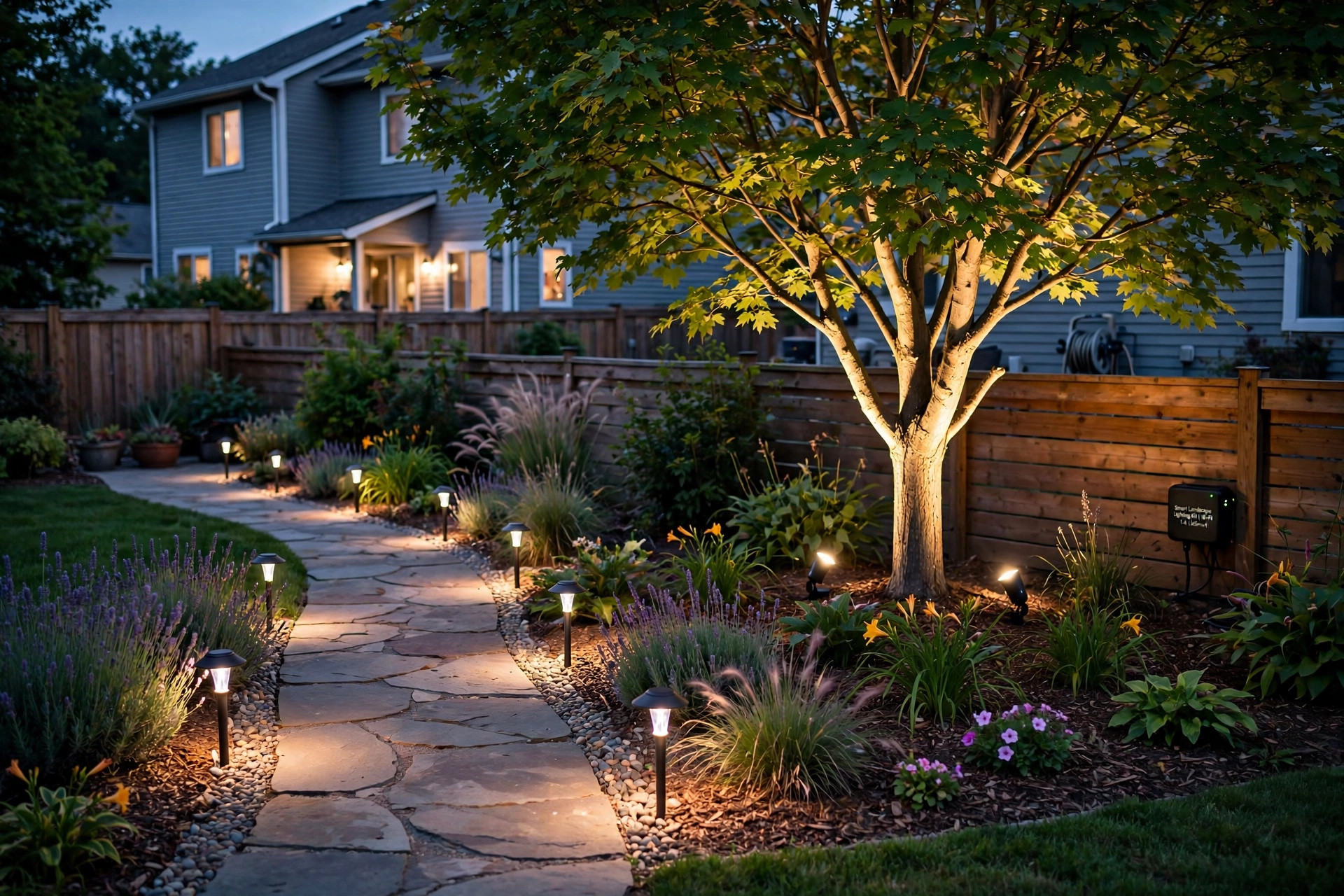

This guide to smart landscape lighting kit reviews USA will help you compare the best smart landscape lighting kits on the American market. A smart landscape lighting kit is a set of outdoor lights that you can control with a phone app, a remote, or your voice. The kit often includes spotlights, path lights, and a small control box. Many owners use these kits to light walkways, trees, and garden beds. The right kit adds beauty to a yard and also adds safety after dark. Read on to learn what to look for, how much to pay, and how to keep your lights working for years.
Why Smart Landscape Lighting Matters
A dark yard is hard to enjoy and hard to keep safe. Many home owners find that good outdoor light changes how they feel about their property. Paths become clear. Steps become easy to see. A lit yard also discourages trouble at night. A bright front walk tells a visitor where to go. A lit side yard gives you peace of mind.
Smart kits make the job simple. Old outdoor lights needed a timer box on the wall. You had to bend down and set small dials. Smart kits replace that work with a phone app. You set a schedule once. The lights turn on at dusk and off at dawn. You can dim them for a quiet evening or make them bright for a party. Many kits also work with voice helpers. A simple spoken command can turn the whole yard on or off.
Smart lighting also saves energy. Most modern kits use LED lamps. LED lamps use far less power than old bulbs. They also last many years. A kit that uses low voltage wire is safe for a do-it-yourself project. You do not need to dig deep trenches. You do not need to call an electrician for most installs.
What to Look For in a Smart Landscape Lighting Kit: Smart Landscape Lighting Kit Reviews Usa
Reviews of these kits look at the same few points again and again. Keep these points in mind as you shop.
Brightness and Color
Brightness is measured in lumens. For a garden path, 100 to 200 lumens per light is often enough. For a large tree, 400 lumens or more may be better. Some kits let you change the color. Warm white looks soft and welcoming. Cool white looks sharp and modern. Color changing kits can show red, green, and blue for holidays. Think about the mood you want before you buy.
App Control and Voice Control
The app is the heart of a smart kit. A good app is easy to use. It should let you group lights by zone. It should let you set schedules for each zone. Check reviews to see if the app is stable. A buggy app can turn a good kit into a daily headache. Voice control is a nice extra. Most top kits work with the major voice helpers sold in the United States.
Power and Wiring
Most kits use low voltage power. A transformer plugs into an outdoor outlet. It sends safe low power through thin cable to each light. Check how many lights one transformer can support. Some starter kits hold six lights. Larger kits hold twelve or more. Look for weatherproof connectors. Rain and snow should not break the connection.
Wireless Range and Zones
A smart kit works only if the signal reaches every light. Check the rated range in the maker guide. Walls, trees, and metal sheds can cut the signal short. Kits with a mesh link pass the signal from light to light. This design covers large yards better than a single hub design. Zone control is just as useful. A good app lets you put path lights in one zone and tree spots in another. You can then run the front yard bright and the back yard dim. Look for kits that support at least four zones.
Build Quality
Outdoor lights face sun, rain, and cold. Metal housings last longer than cheap plastic. A solid stake keeps a path light upright in soft soil. Reviews often praise kits with thick cable and sealed lamp heads. Read what owners say after one full winter. That is the true test of quality. Ring sells outdoor smart lights and cameras that pair with yard lighting, and its app groups devices by area for one tap control.
For added safety around dark corners of the yard, some owners pair lighting with a best smart floodlight for backyard setup, which floods a wide area with bright light when motion is detected. Tech reviewers at CNET note that app reliability is the single most common complaint in smart outdoor lighting reviews.
Types of Smart Landscape Lighting Kits
Kits come in a few main styles. Each style suits a different job in the yard.
Path light kits. These are short lights on stakes. They line a walkway or a driveway edge. They give soft light near the ground. They are the most common starter kit.
Spotlight kits. These aim a narrow beam at a tree, a flag, or a wall. They add drama to a yard. Many kits include adjustable heads so you can aim the beam.
Well light kits. These sit in the ground with the lens facing up. They light the trunk of a tree or the face of a wall. They are almost hidden during the day.
String and accent kits. Some kits use smart string lights for patios and decks. These are more for mood than for safety. They work well over an outdoor dining area.
Solar hybrid kits. A few kits mix solar power with smart control. These need no wiring at all. They suit renters and small yards. Keep in mind that solar lights are dimmer and depend on sun each day. A motion sensor flood light can cover the same dark spots when you need strong light on demand. Publications such as PCMag regularly test how smart outdoor devices hold up in real home settings.
Cost and Price in the USA
Prices for smart landscape lighting kits vary widely across the United States. A small starter kit with four to six lights may cost between 60 and 150 dollars. A mid range kit with eight to twelve lights often costs 150 to 350 dollars. A large pro style kit with a strong transformer and metal housings can cost 400 dollars or more.
The transformer is often the priciest part. A 100 watt transformer costs more than a 60 watt one. Extra lights bought alone may cost 20 to 60 dollars each. Do not forget small extras. You may need more cable, extra stakes, or a weatherproof outlet box.
Think about value, not just price. A cheap kit that fails in one year costs more in the end than a solid kit that lasts ten years. Read long term reviews before you decide. Consumer Reports publishes lab tested ratings that can help you compare build quality across brands.
Watch for hidden costs as well. Some brands charge a monthly fee for cloud video or extra app features. Most pure lighting kits do not need a fee, but kits that bundle a camera might. Check the box and the app store page for any mention of a plan. Also plan for power. A 100 watt transformer draws little power in real use, but a large yard with many lights will add a few dollars a month to your bill. LED lamps keep that cost low. Owners who track their use often report that a full yard of LED path and spot lights costs less than a single old porch bulb did years ago.
Care and Upkeep
Smart landscape lights need little care, but a few simple habits keep them bright.
Clean the lens twice a year. Dirt and pollen block light. A soft cloth and mild soap are enough. Check the stakes each spring. Frost can push stakes out of the ground. Push them back in and aim the heads again.
Trim plants around the lights. A bush that grows over a path light wastes its glow. Check cable connections once a year. Pull each connector apart, look for rust, and push it back together. Replace any lamp that flickers. LED lamps last long, but they do not last forever.
Update the app when the maker releases a new version. Updates fix bugs and add features. If a light drops off the network, move the control hub closer or add a range extender. The smart home section of the Google Store lists hubs and extenders that work with many lighting brands. For whole home safety planning, some families combine yard lighting with indoor devices from makers like SimpliSafe, which sells sensors and cameras that work alongside outdoor lights.
Safety Notes
Low voltage lighting is safer than line voltage wiring, but care is still wise. Keep the transformer above ground and away from standing water. Do not run cable where a mower or a trimmer will cut it. Bury cable a few inches deep along beds where you can.
Follow the maker guide for the maximum number of lights per transformer. An overloaded transformer can overheat. If you hire help, pick a worker with outdoor lighting experience. The U.S. Consumer Product Safety Commission offers free guides on safe outdoor electrical products. The Verge also covers smart home safety news and can alert you to product recalls.
Some owners add a solar security camera near the driveway so that light and video work together at night. When a camera sees motion, smart lights can switch on at once. This pairing is one of the most popular upgrades in American homes today.
Frequently Asked Questions
Are smart landscape lighting kits hard to install? Most kits are made for home owners, not pros. You push stakes into the soil, lay the cable on the ground or in a shallow trench, and plug in the transformer. The app walks you through setup. Most people finish a small kit in one afternoon.
Do smart landscape lights work in winter? Yes. Quality kits are built for rain, snow, and cold. LED lamps work well in low temperatures. The weak point is often the app or the wireless link, not the lamp. Keep the control hub indoors or in a sheltered spot for best results.
Can I add more lights to a kit later? In most cases, yes. Check the wattage limit of your transformer first. Add up the wattage of your current lights. If there is room left, you can add more lights of the same brand and voltage. Buying the same brand keeps the app simple.
How long do the LED lamps last? Most LED landscape lamps are rated for 25,000 to 50,000 hours. In normal night use, that can mean ten years or more. Heat and poor seals shorten lamp life. Kits with metal housings and good seals last longest.
Do I need Wi-Fi in the yard for smart lighting? Most kits need a wireless link between the hub and your home network. The hub usually sits indoors near a window or in a garage. Each light then talks to the hub, not to your router. A strong home network makes setup smoother.
Are solar smart lights as good as wired kits? Solar lights are easy to place, but they are dimmer and less steady. A wired low voltage kit gives brighter light and works every night, even after cloudy days. Pick solar for small accents. Pick wired for paths, trees, and security.
A Final Word
A smart landscape lighting kit is one of the simplest upgrades a home owner can make. It adds beauty, safety, and comfort to the yard with a small amount of work. Read reviews with care, pick a kit that fits your yard and your budget, and take time with the install. Clean the lenses, check the cable, and keep the app updated. Do these small things and your lights will serve you well for many years. Your yard will look its best every night, and you will enjoy it more because of that.
References
CNET. (n.d.). Technology news and reviews. https://www.cnet.com Consumer Reports. (n.d.). Product reviews and ratings. https://www.consumerreports.org Google Store. (n.d.). Smart home devices. https://store.google.com PCMag. (n.d.). Technology product reviews. https://www.pcmag.com Ring. (n.d.). Smart home security devices. https://www.ring.com SimpliSafe. (n.d.). Home security systems. https://www.simplisafe.com The Verge. (n.d.). Technology news and reviews. https://www.theverge.com U.S. Consumer Product Safety Commission. (n.d.). Product safety information. https://www.cpsc.gov
Was this guide helpful?

About Jennifer Lee
The My Garden US editorial team writes practical, in-depth home and garden guides for American homeowners — tested advice, no fluff.
You May Also Like
Smart Vent for Room Balancing Reviews USA: A Plain Guide to Even Heat and Cool Air
April 7, 2026 0 views
Best Outdoor Security Camera Without Wifi Subscription: A Plain Guide
June 30, 2026 0 views
Best Self Emptying Robot Vacuum Reviews USA
September 28, 2026 0 views