
A warm fire on a cold night is one of the simple joys of home life. But behind that warm glow sits a working flue that needs care. If you have been looking for eco friendly chimney sweep services near me, you want more than a clean flue. You want the job done in a way that is kind to your home, your family, and the land around you. This guide will show you what the term means, what a green chimney sweep really does, and how to find a good one near your home.
The good news is that chimney care has changed for the better. New tools and safer cleaning methods now let a trained sweep clear soot and creosote without the harsh chemicals of the past. You do not need to trade a clean chimney for clean air. You can have both.
Why It Matters
A chimney carries smoke, gases, and heat up and out of your home. Each fire leaves soot and a sticky black layer called creosote on the flue walls. Over time this build up narrows the flue. It makes the draft weak. It also raises the risk of a chimney fire. A dirty flue can let carbon monoxide drift back into the living room. That gas has no smell and no color. It is very dangerous.
Regular sweeping fixes all of this. A clean flue draws well. The fire burns brighter and cleaner. Less smoke stays in your room. Less ash and grit settle on your furniture and carpets. For families with children or older parents, that cleaner air matters a great deal.
Now why ask for an eco friendly sweep? The old way of cleaning a chimney often used strong chemical cleaners. Some crews burned chemical logs or sprayed harsh solvents to break up creosote. Those products can leave fumes in the house. They wash out with the rinse water. They add to the waste that goes into drains and soil.
An eco friendly sweep works in a different way. The crew uses mechanical brushes, rotary chains, and high powered vacuums with fine filters. They may use plant based degreasers when a spot needs help. They seal the fireplace opening so dust stays out of your room. They wear protective gear and clean up each bit of soot they loosen. Nothing harsh goes up the flue. Nothing harsh drifts into your home.
There is a wider point too. A well cleaned chimney draws well, so the wood burns hot and full. A hot full burn makes far less soot than a smoky slow burn. So a green sweep does not only clean the chimney. It helps your stove run cleaner for the whole season.
What to Look For: Eco Friendly Chimney Sweep Services near Me
Not every company that says green is really green. The words eco and green are not owned by anyone. Any firm can put them on a truck. So ask plain questions before you book.
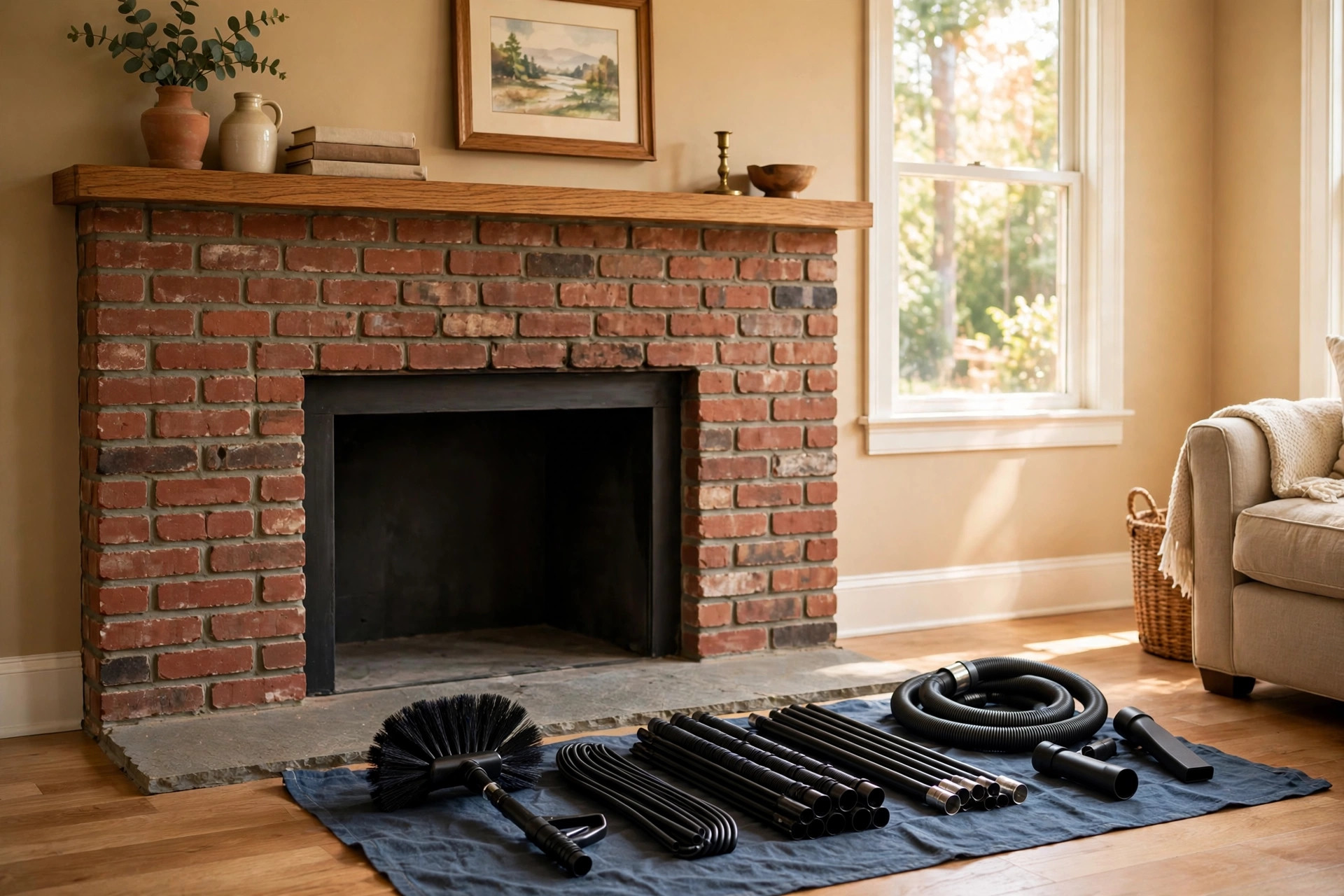
Ask what products they use. A true eco friendly chimney sweep services team will name simple tools first: polypropylene or steel rotary brushes, rods, and a vacuum with a HEPA filter. If they use any liquid cleaner, ask for the product name and check that it is non toxic and safe for flue liners. They should refuse to pour harsh solvents down a flue.
Ask how they keep your home clean. A good crew sets drop cloths from the door to the fireplace. They tape the opening shut. They run the vacuum while they brush so loose soot goes straight into the filter. At the end they should leave your room as clean as they found it. Some crews take a short video of the flue before and after the sweep so you can see the result.
Ask about training. The best sign is a certified sweep. In the United States the Chimney Safety Institute of America trains and tests sweeps. A certified sweep knows how to check flue liners, dampers, and caps. They know the signs of creosote glaze and cracked mortar. Certification does not prove a crew is green, but it proves they know the work. A trained sweep with simple tools is far safer than an untrained sweep with a chemical spray.
Ask about waste. What happens to the soot and ash they pull out? A careful crew bags it and takes it away for proper disposal. They do not rinse it down your sink or leave it in your trash cans. Creosote is a real pollutant. It should not go into your garden soil or your household waste without care.
Ask for proof of insurance. A real business carries liability cover and workers cover. If a rod scratches a liner or a ladder dents your gutter, you should not have to pay. Ask to see the papers or a copy by email before the day of the visit.
Types of Services
An eco friendly chimney sweep offers more than a quick brush up the flue. Here are the main services you may find.
Level one sweep. This is the basic yearly cleaning for a chimney with no known problems. The sweep brushes the flue from top to bottom, clears the smoke shelf, and empties the firebox. For most families that burn wood a few times a week, once a year is enough.
Level two inspection. The sweep adds a camera run up the flue. This is wise when you buy a home, after a chimney fire, or when you change stoves. The camera finds cracks in the liner, missing mortar, or bird nests that a brush cannot reach.
Creosote removal. When creosote forms a hard shiny glaze, a plain brush may not move it. An eco friendly crew will use rotary chain flails on flexible rods. The small chains spin and chip the glaze off the liner walls. This is hard work and takes time. It avoids the old chemical shortcut.
Chimney cap and crown care. The cap keeps rain and animals out of the flue. The crown seals the top of the chimney. A green sweep checks both and may fit a new cap from stainless steel. A tight cap keeps water out. Dry flues stay cleaner longer.
Damper and masonry checks. A good sweep looks at the damper, the throat, and the outer bricks. Loose mortar lets water in, and water helps creosote form. Pointing out small cracks early saves a big repair later.
How to Choose the Right Company
Start close to home. A local sweep knows your area’s wood types, your weather, and your local rules about burning. Search for firms with real street addresses, not just a phone number. Read recent reviews and look for words like on time, clean work, and no mess. A few poor reviews are normal. A long line of complaints about dust and damage is a red flag.
Get two or three quotes. A standard sweep of a wood burning fireplace often runs between 150 and 300 dollars in most parts of the country. A camera inspection adds to that. Heavy glaze removal costs more again. If one quote is far below the rest, ask why. A very cheap price can mean rushed work, no insurance, or no cleanup.
Call and talk. You can learn a lot in five minutes. A good office will tell you the sweep’s name, the time window, and exactly what is included. They will ask what fuel you burn and when the chimney was last cleaned. A poor office will dodge questions and push you to book on the spot.
Check the vehicle and the crew when they arrive. A tidy truck and clean drop cloths show pride in the work. The crew should lay protection over your floor before they open the fireplace.
Finally, trust your nose and your eyes. During the job there should be almost no smell in your room. After the job the hearth should be free of soot streaks. The flue camera view should show clean walls. A green service leaves no chemical scent behind. If the room smells of solvent, the crew was not as green as they claimed.
Cost and Price
Prices for eco friendly chimney sweep services near me vary by place and by the state of the flue. Here is a rough picture.
– Basic level one sweep: 150 to 300 dollars – Camera inspection added: 100 to 200 dollars more – Heavy creosote glaze removal: 300 to 800 dollars – New stainless chimney cap fitted: 150 to 400 dollars
A clear written quote protects both sides. Many firms give a small discount when you book the yearly sweep in spring or summer. The crews are less busy then, and your chimney is ready before the first cold snap.
Care and Upkeep Between Sweeps
You can help your chimney stay clean all season. Burn only dry seasoned wood. Green wood smokes and lays down thick creosote. Good firewood sounds hollow when you knock two pieces together. The bark is loose and the ends are cracked. It has sat in a dry stack for at least six months, better a full year.
Keep fires hot. A hot fire burns gases that would otherwise turn to creosote. Let the fire take good air. Do not shut the damper down too far while the wood is still smoking. A lazy smoldering fire is the main maker of creosote.
Never burn painted wood, plywood, or trash. These release harsh fumes and leave odd residues. They can also damage the flue liner. If you want a commercial grade chimney cleaning brush buying guide for your own light touch ups, check our related buying guide. But leave heavy work to the sweep.
Check the outside of the chimney twice a year. Look for white stains on the bricks, loose mortar, and rust on the cap. White stains mean water is moving through the masonry. Fix water entry fast. Water and soot together eat at liners.
Empty the ash box often but keep a thin bed of ash under the fire. About one inch of ash helps the next fire light well. Wear a mask when you handle ash.
If you want your whole home to stay green, pair the sweep with other clean habits. A review of eco friendly cleaning supplies for the hearth and mantel keeps soot marks off without harsh fumes. And just as you protect your home from smoke, keep pests out with a proper service plan so no birds or rodents nest in an unused flue.
Safety First
Chimney safety is simple but strict. Sweep wood burning chimneys once a year, even if you burn little. Sweep pellet stoves once a year too. Gas fireplaces need a check each year but may need less brushing.
Fit smoke alarms and carbon monoxide alarms on each floor. Test them each month. Change the batteries when the clocks change in spring and fall.
Keep a fire extinguisher near the fireplace but not too close. Make sure each adult in the house knows how to use it.
Teach children that the fireplace tools are not toys. A hot glass door can burn skin in seconds. A screen or guard in front of the opening helps. Never leave a fire burning when you leave the house or go to sleep. Bank the fire down and shut the damper only when the coals are fully cold.
The U.S. Environmental Protection Agency gives plain advice on burning wood cleanly and safely. The Consumer Product Safety Commission also warns about chimney fires and gives tips on safe fireplace use. For burn safety basics, the U.S. Department of Energy offers notes on heating your home with wood and pellets.
FAQ
How often should I have my chimney swept? Once a year if you burn wood, pellets, or coal. Even light use builds some soot. Yearly care keeps the flue clear and lets the sweep catch small problems early.
What makes a sweep eco friendly? Mechanical cleaning with brushes and HEPA vacuums, non toxic products only when needed, dust sealed out of your rooms, and proper disposal of soot and ash. No harsh chemical sprays down the flue and no chemical odor left in your home.
How long does a sweep take? A basic sweep takes about one to two hours. A camera inspection adds thirty to sixty minutes. Heavy glaze removal can take half a day.
Will there be dust in my house? There should be almost none. A good crew tapes the fireplace shut and runs a vacuum during brushing. You may see a faint haze right at the hearth that they wipe up before they leave.
Can I sweep my own chimney to save money? You can brush light soot with a proper rod and brush set. But you cannot spot hidden cracks without training and a camera. Most experts say leave the yearly service to a certified sweep and do your part by burning dry wood.
Is eco friendly sweeping more expensive? A little, sometimes. The work takes more time and better gear. The gap is small for a basic sweep. The real cost driver is the state of your flue, not the green method.
A Final Word
A clean chimney is a safe chimney. When you search for eco friendly chimney sweep services near me, look for trained crews, honest prices, and methods that respect your home and the air you breathe. Ask about their tools, their waste handling, and their proof of insurance. Then enjoy your fires with a clear mind, knowing the flue above them is clean in the greenest way.
For more help with keeping your home safe and clean, see guides from This Old House, Bob Vila, The Spruce, Family Handyman, Consumer Reports, and Good Housekeeping.
References
Bob Vila. (n.d.). Home improvement advice. https://www.bobvila.com Chimney Safety Institute of America. (n.d.). Chimney sweep certification and safety. https://www.csia.org Consumer Reports. (n.d.). Product reviews and ratings. https://www.consumerreports.org Family Handyman. (n.d.). DIY home repair and maintenance. https://www.familyhandyman.com Good Housekeeping. (n.d.). Product reviews and home advice. https://www.goodhousekeeping.com The Spruce. (n.d.). Home and garden advice. https://www.thespruce.com This Old House. (n.d.). Home renovation guidance. https://www.thisoldhouse.com U.S. Consumer Product Safety Commission. (n.d.). Product safety information. https://www.cpsc.gov U.S. Department of Energy. (n.d.). Energy efficiency and renewable energy. https://www.energy.gov U.S. Environmental Protection Agency. (n.d.). Protecting human health and the environment. https://www.epa.gov
Was this guide helpful?

About David Wilson
The My Garden US editorial team writes practical, in-depth home and garden guides for American homeowners — tested advice, no fluff.
You May Also Like

Best Shower Door Descalers With Free Shipping
May 17, 2026 0 views
Oven Cleaning Kits Price Comparison USA: A Practical Buyer’s Guide
July 31, 2026 0 views
How to Buy Tile Grout Cleaning Machines Online in Arizona
January 11, 2026 0 views