
Introduction
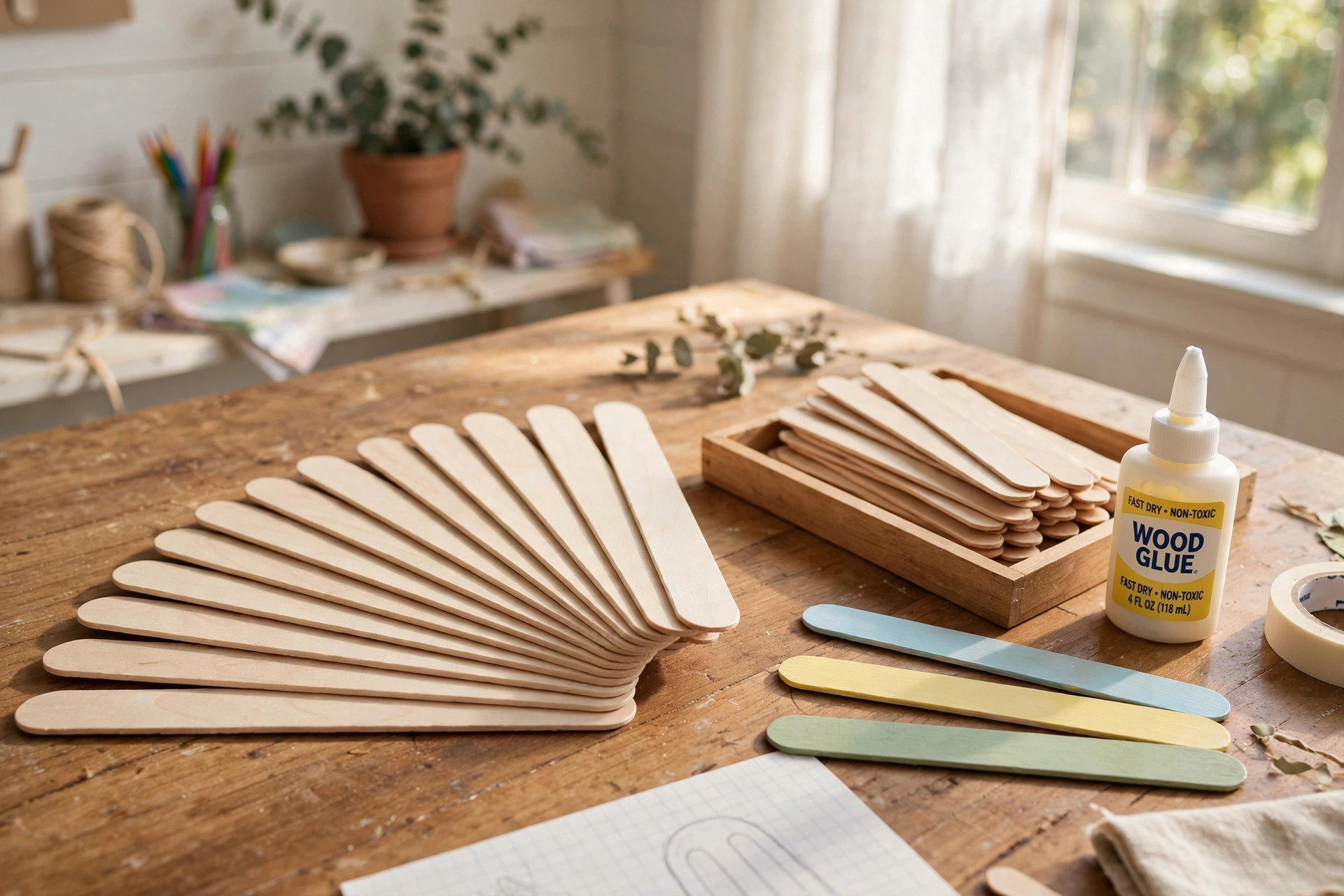
Wood craft sticks for popsicle art projects are one of the simplest craft supplies a family can buy. They are cheap, safe, and easy to find. A bag of one thousand sticks often costs less than a fast-food lunch. Yet those plain sticks can become birdhouses, picture frames, toy houses, holiday ornaments, and hundreds of other projects. Children love them because the results come fast. Adults love them because the mess stays small.
This guide will walk you through everything you need to know. You will learn why wooden sticks beat plastic imitations, how to pick the right size and finish, what glue works best, how to paint and seal your work, and how to keep young children safe. Whether you are a teacher planning a classroom unit, a parent filling a rainy afternoon, or a hobbyist building detailed models, the right sticks make the work easier and the results better.
Why Wood Craft Sticks Are Perfect for Art Projects: Wood Craft Sticks for Popsicle Art Projects
Wood is a forgiving material. It takes glue well. It holds paint well. It can be cut, sanded, and drilled with simple hand tools. A stick that is glued in the wrong place can often be pulled apart and fixed. That makes wood craft sticks ideal for beginners who are still learning.
There is also a comfort factor. Wood feels warm and natural in the hand. It smells faintly pleasant when cut. Many parents prefer wooden popsicle sticks for crafts over foam or plastic shapes because wood is a renewable material and breaks down in the soil when thrown away. A project made from plain pine sticks can be tossed in the yard waste bin at the end of its life.
Consistency matters too. Factory-made craft sticks are cut to even widths and thicknesses. When you build a small house from fifty sticks, each one lines up with the next. That evenness is hard to get when you cut your own wood by hand. For classroom use, where twenty children need the same materials, even factory sticks keep the lesson fair.
Craft sticks also teach real skills. Measuring, spacing, and joining sticks builds hand-eye coordination. Layering sticks into walls and roofs introduces basic ideas about structure. Children who build with sticks learn to plan before they glue. These are small lessons, but they last.
What to Look for When You Buy Craft Sticks
Not all craft sticks are the same. A quick look at a craft store shelf shows several grades. Knowing the differences saves money and trouble.
Wood Type and Finish
Most craft sticks are made from birch or pine. Birch sticks are harder and denser. They sand smooth and hold paint with a clean finish. Pine sticks are softer and a little lighter in color. They cut more easily, which matters for detailed work.
The finish is the bigger choice. Plain natural sticks are the most common. They have a light sanded surface and no coating. These are best for painting, staining, and gluing because finishes grip bare wood best. Some sticks are sold with a glossy sealed surface. These look nicer out of the bag but resist paint and glue. They work better for building frames and boxes that will stay natural.
Look for sticks that feel smooth on all four edges. Cheap sticks sometimes have splintered ends. Run your thumb along a sample before you buy a large bag. If the edges catch your skin, the sticks will catch small fingers too.
Colored craft sticks are also sold. They come in red, blue, green, and mixed packs. The color is dyed into the wood or applied as a thin stain. Dyed sticks save painting time for simple projects. They cost a little more per stick. For fine art work, most crafters still buy natural sticks and paint them with an acrylic paint set for beginners for better color control.
Size and Thickness
Standard craft sticks measure about four and one half inches long and three eighths of an inch wide. This is the classic popsicle stick size. It is the right choice for most projects.
Jumbo sticks run about six inches long and three quarters of an inch wide. They are useful for larger frames, signs, and structures that need more strength. Mini sticks are about two and one half inches long and work well for doll furniture and tiny models.
Thickness matters for gluing. Thin sticks bend and warp when wet glue is applied. Thicker sticks stay flat. For walls and roofs of model houses, pick the thickest sticks you can find. For flat decorations like bookmarks and ornaments, standard thickness is fine.
Many buyers check sizes at large retailers such as Michaels craft supply stores or JOANN fabric and craft stores, where stick dimensions are printed on the package. Online sellers like Walmart and Amazon list the same details in the product description.
Types of Wood Craft Sticks
The market offers more variety than most people expect. Here are the main types you will see.
Standard natural sticks. The classic choice. Smooth, unfinished, and ready for any glue or paint. Best for classrooms and general crafts.
Jumbo sticks. Twice as wide as standard sticks. Good for picture frames, signs, and sturdy boxes. They cover area faster, so large projects need fewer sticks.
Mini and micro sticks. Small sticks for fine work. Model builders use them for ladders, fences, and trim on dollhouses. They are also good for jewelry projects like earrings and pendants.
Colored sticks. Pre-dyed in bright colors. They save a painting step. The dye is usually non-toxic, but check the label if small children will handle them.
Waxed sticks. A thin wax coating gives these sticks a slight shine and some water resistance. They are popular for outdoor projects like garden markers. Paint does not stick to wax well, so they are best left natural or decorated with markers.
Craft cubes and planks. Some brands sell wider flat planks and small cubes that match the stick wood. These work well as bases and roofs when combined with standard sticks.
Specialty woodworkers sometimes move beyond sticks to wood burning. A wood burning kit for DIY crafts lets you etch names and patterns into stick surfaces for a professional look.
Cost and Price
Wood craft sticks are among the cheapest craft supplies available. A bag of one hundred standard sticks usually sells for one to two dollars at a craft store. A box of one thousand often costs five to eight dollars. The per-stick price drops sharply with larger packs.
Jumbo sticks cost a little more. A pack of one hundred jumbo sticks runs about three to five dollars. Colored sticks carry a small premium over natural sticks of the same size.
Buying in bulk is the smart move for teachers, scout leaders, and camp counselors. Warehouse clubs and online sellers offer boxes of five thousand sticks at deep discounts. Before a large order, buy one small pack and test the quality. Some bulk sticks arrive with more broken or splintered pieces than store brands.
Watch for sales at the big craft chains. Art supply retailers like Dick Blick art materials run seasonal promotions, and home improvement stores such as The Home Depot stock craft wood in the lumber and hobby aisles at competitive prices. Seasonal clearance after the holidays often brings the lowest prices of the year.
A full popsicle stick art supplies for kids starter kit, with sticks, glue, and paint, can be assembled for under twenty dollars. That is enough material for a month of weekend projects.
Care and Upkeep
Wood sticks need little care, but a few habits keep them in good shape.
Store sticks in a dry place. Wood absorbs moisture from the air. Damp sticks swell, warp, and grow rough spots. A sealed plastic bin or a zip-top bag works well. Keep the bin off concrete floors, which can pass moisture upward.
Keep sticks flat. Standing a tall box of sticks on end can bend the bottom rows over time. Laying the box flat keeps every stick straight.
Save the broken pieces. Short offcuts are useful for braces, rungs, and filler pieces in larger builds. A small jar of offcuts on the workbench saves trips to the main box.
Finished projects need a little protection. A clear sealer or varnish keeps paint from chipping and wood from graying. Spray sealers are fast and easy. Brush-on polyurethane gives a thicker coat for items that will be handled often, like toy furniture. Let each coat dry fully before you add the next. Two thin coats beat one thick coat every time.
Projects kept outdoors need more care. Even sealed wood breaks down in rain and sun over a few seasons. Bring outdoor stick crafts inside during winter if you want them to last.
Safety Tips
Craft sticks are safe for most ages, but simple rules prevent most injuries.
Watch for splinters. Inspect sticks before handing them to small children. Throw away any stick with lifted grain or sharp ends. A quick pass with fine sandpaper smooths rough spots.
Pick the right glue. White school glue is safe and washes out of clothes. For stronger bonds, a hot glue gun for craft projects works well, but hot glue can burn skin. Adults should handle the glue gun, or older children should use a low-temperature model with care.
Cut with care. Standard sticks snap cleanly along the grain if you bend them. For straight cuts, small pruning shears or a craft knife on a cutting mat work best. Craft knives are sharp and belong in adult hands. Guides from This Old House and Family Handyman show safe cutting methods for small wood pieces.
Check paint labels. Use paints marked non-toxic when children are involved. Wash brushes in a jar, not in the kitchen sink used for food. The U.S. Consumer Product Safety Commission offers guidance on safe art materials for children.
Ventilate the room. Spray paint and spray sealers give off fumes. Use them outdoors or near an open window. Dust masks help when sanding many sticks at once.
Supervise young children. Children under three may put small pieces in their mouths. Mini sticks are a choking risk for toddlers. Keep small pieces out of reach of the youngest children.
General home project advice from Bob Vila also applies here: read every product label, keep tools stored safely, and clean up sharp scraps before children or pets enter the work area.
Frequently Asked Questions
What is the best glue for popsicle stick crafts?
White craft glue works for light projects and paper-to-wood bonds. It dries clear and is easy to clean. For wood-to-wood joints that must hold weight, wood glue gives the strongest bond. A hot glue gun sets in seconds, which is useful when you need to hold pieces in place by hand. Choose based on the project: school glue for kids, wood glue for furniture and houses, hot glue for fast assembly.
Can you paint wooden craft sticks?
Yes. Natural unfinished sticks take paint very well. Acrylic craft paint is the most popular choice because it dries fast and covers in one or two coats. Sand the stick lightly first if the surface feels rough. Let the paint dry fully before gluing painted pieces, since wet paint weakens glue bonds. A clear sealer on top protects the color.
How do you cut popsicle sticks without splintering them?
Score the stick first with a craft knife and a ruler, then snap it along the scored line. This gives a cleaner break than bending alone. For many cuts, small sharp scissors or pruning shears work well. Always cut away from your body. Sand the cut end with fine sandpaper to remove any rough edge.
Are wooden craft sticks safe for toddlers?
Standard-size sticks are generally safe for children over three with adult supervision. Mini sticks are too small for toddlers and pose a choking risk. Always check for splinters before play. Use only non-toxic glue and paint. When in doubt, follow the age guidance on the product package and the safety tips from the CPSC.
How many sticks do I need for a small birdhouse?
A simple birdhouse with four walls, a floor, and a two-piece roof uses about sixty to eighty standard sticks. Walls built from vertical sticks need roughly twelve to fifteen sticks per wall. Buy a bag of one hundred to have extra for mistakes and trim pieces. Larger houses and detailed trim will need more.
Can popsicle stick projects be used outdoors?
They can, but wood and weather are not friends. Use waxed sticks or seal finished projects with an outdoor-grade sealer. Even then, expect outdoor stick crafts to last one or two seasons. Items like garden markers and bird feeders hold up better than fine detailed work. Bring pieces indoors for winter to extend their life.
A Final Word
Wood craft sticks for popsicle art projects prove that the best supplies are often the simplest. A few dollars buys hours of quiet, focused work. The skills learned at the craft table carry into school and beyond. Buy good sticks, store them dry, glue with care, and paint with joy. The plain wooden stick has been around for generations, and it is not going anywhere.
References
Amazon. (n.d.). Online shopping. https://www.amazon.com Blick Art Materials. (n.d.). Art and craft supplies. https://www.dickblick.com Bob Vila. (n.d.). Home improvement advice. https://www.bobvila.com Family Handyman. (n.d.). DIY home repair and maintenance. https://www.familyhandyman.com JOANN. (n.d.). Fabric and craft supplies. https://www.joann.com Michaels. (n.d.). Arts and crafts supplies. https://www.michaels.com The Home Depot. (n.d.). Home improvement products. https://www.homedepot.com This Old House. (n.d.). Home renovation guidance. https://www.thisoldhouse.com U.S. Consumer Product Safety Commission. (n.d.). Product safety information. https://www.cpsc.gov Walmart. (n.d.). Everyday low prices. https://www.walmart.com
Was this guide helpful?

About Michael Thompson
The My Garden US editorial team writes practical, in-depth home and garden guides for American homeowners — tested advice, no fluff.
You May Also Like
DIY Friendship Bracelet Kit for Kids Crafts: A Parent’s Guide
May 30, 2026 0 views
How to Use a DIY Candle Holder Kit for Table Decor Crafts
March 19, 2026 0 views
Wooden Bead Kit for Garland and Crafts DIY: A Plain Guide
February 16, 2026 0 views