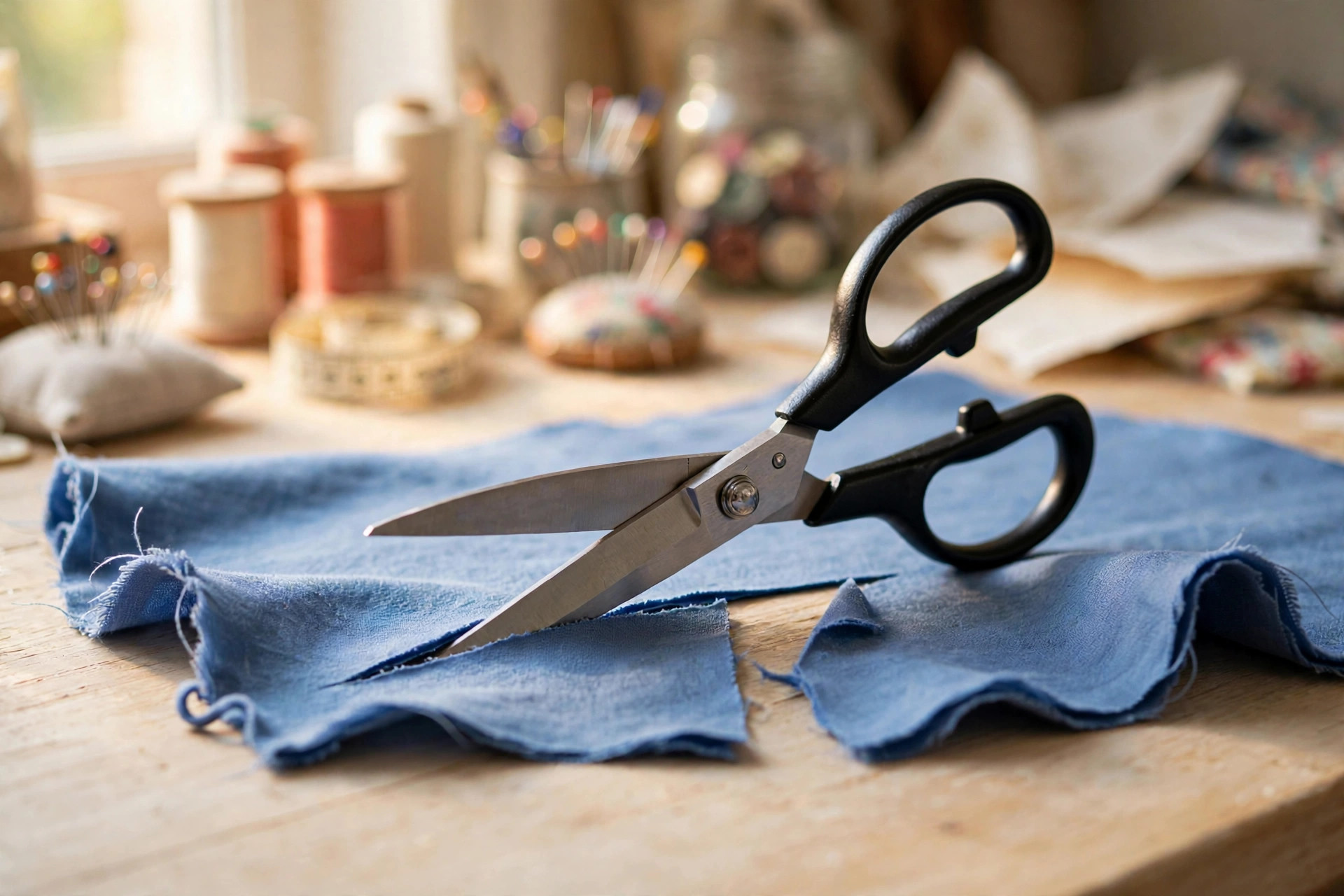

Many home craft workers ask one simple question. They want to know how to find the best craft scissors for fabric cutting sharp. A good pair of scissors can change the whole sewing project. Clean cuts make seams look neat. Ragged cuts cause thread to pull out and edges to fray. The right tool saves time and gives better results.
Scissors come in many shapes and sizes. Some work well on cotton. Others cut thick denim or thin silk. Price ranges are wide. A basic pair costs a few dollars. A professional pair costs much more. This guide explains what to look for when you shop. It covers types, prices, care, and safety. It also answers common questions at the end.
Why Sharp Scissors Matter
Cutting fabric is not the same as cutting paper. Paper is stiff. Fabric bends and shifts. A dull blade pushes cloth instead of cutting it. The edge bunches up. Threads stretch and tear. The final cut looks rough and uneven.
Sharp blades glide through cloth. The cut edge stays flat. Seams line up the way the pattern calls for. Fewer mistakes mean less wasted fabric. For quilt makers, straight clean lines matter even more. Each small piece must fit with the next one. For garment sewers, smooth curves shape sleeves and collars.
Sharpness also protects the hands. A dull tool needs more force. More force means tired hands and sore wrists. A sharp tool needs only light pressure. Long sewing days become easier. That is why experienced sewers guard their fabric scissors with care. They keep them sharp and never use them on paper.
What to Look for When You Choose: Best Craft Scissors for Fabric Cutting Sharp
Start with the blades. Stainless steel blades resist rust. Carbon steel blades hold an edge longer but need oil to prevent spots. Forged blades are thicker and stronger than stamped blades. For most home projects, forged stainless steel gives a good mix of sharpness and low upkeep.
Look at the blade length. An eight-inch pair suits large cutting tasks. It covers long pattern lines in fewer strokes. A six-inch pair gives more control on small curves. Many crafters own both sizes. They use the long pair for straight runs and the short pair for detail work.
Check the handles. Bent handles let the blade rest flat on the table. This keeps fabric from lifting while you cut. Straight handles work better for snips and small cuts. Soft grips reduce hand fatigue. Hard plastic handles last long but feel stiff after an hour of cutting.
Think about hand size and comfort. Hold the scissors before you buy when you can. The finger rings should fit without pinching. The thumb ring should allow smooth motion. A screw joint can be adjusted as it loosens over time. A rivet joint is simple but cannot be tightened.
Weight matters too. A heavier pair cuts through thick layers with ease. A lighter pair suits long sessions and thin fabrics. Try a few cuts if the store allows it. The scissors should feel balanced and steady in your hand.
Types and Options
Dressmaker shears are the most common type for fabric work. They have one straight handle and one bent handle. The blades run seven to nine inches long. They cut cotton, linen, and light wool with ease. For a general home sewing kit, this is the first pair to buy.
Tailor shears are heavier and stronger. They cut through many layers at once. They handle denim, canvas, and upholstery cloth. The extra weight helps push through thick seams. They cost more but last for many years.
Pinking shears cut a zigzag edge. This edge stops woven fabric from fraying. They work well on cotton and linen before seams are sewn. They are not meant to cut pattern lines. They trim seam allowances after sewing.
Embroidery scissors are small and sharp. They trim threads and cut tiny curves. A curved blade version reaches into tight spots. You can learn more about small detail tools in our guide to embroidery scissors small for detailed stitching.
Rotary cutters are not scissors at all. They use a rolling round blade. They cut straight lines fast and true. Many quilters prefer them for square blocks. Our article on the best rotary cutter for quilting fabric crafts explains how they work.
Some sewers keep a full set of scissors for different jobs. Our guide to the best craft scissors set for paper and fabric covers what to include in a full kit. And for the best match to your main sewing work, see our review of the best fabric scissors for sewing and quilting.
For spring-action scissors, the handle opens by itself after each cut. This design helps people with weak hands or joint pain. Serrated blades grip slippery fabric and stop it from sliding. This helps when cutting silk or satin.
Left-Handed Scissors
Most scissors suit right-handed users. The blade layout pushes the cut line into view for the right hand. Left-handed users should buy true left-handed shears. The blades are reversed so the cut stays visible. Using right-handed scissors with the left hand gives rough cuts and hand strain.
Blade Coatings
Some blades have a nonstick coating. Glue and fusible web do not stick to them. This helps crafters who work with applique and iron-on products. Titanium coatings add hardness and keep edges sharp longer. Coated blades need gentle care. Harsh cleaners can wear the coating away.
Cost and Price
Craft scissors for fabric come in three broad price groups. Budget pairs cost under ten dollars. They suit beginners and school projects. The steel is basic. They cut well at first but dull faster. They are fine for light craft work and occasional sewing.
Mid-range pairs cost ten to thirty dollars. This group holds the best value for most home sewers. Brands in this range use better steel and stronger joints. The handles feel more comfortable. With good care, these scissors stay sharp for years. Most craft guides recommend this group for regular home use.
Professional pairs cost thirty dollars and up. Some fine tailor shears cost over one hundred dollars. They use high-grade steel and precise grinding. The balance and finish are excellent. They suit heavy daily use in sewing rooms and small shops. For a home crafter, this level is a luxury, not a need.
Buying advice from craft suppliers like Michaels and Joann often points beginners to the mid-range group. Big home stores such as Home Depot also carry fabric shears in their tool aisles. Art supply shops like Dick Blick stock fine detail scissors for small work.
Do not judge by price alone. Read the blade material and length on the package. Check the warranty. A lifetime warranty often marks a well-made tool. Try the grip in your hand. A fair mid-price pair that fits your hand beats a costly pair that feels wrong.
Care and Upkeep
Good care keeps scissors sharp for a long time. The first rule is simple. Use fabric scissors only on fabric. Never cut paper, cardboard, or plastic with them. These hard materials dull the fine edge fast. Keep a separate pair of cheap scissors for paper and string.
Store shears with care. Do not toss them loose into a drawer. The blades will nick each other and dull. Use the blade guard or a sheath. Hang them on a hook or keep them in a case. Keep them away from damp places. Rust spots can pit the edge.
Wipe blades clean after use. A soft cloth takes off lint and oil from your hands. If glue sticks to the blades, use a cloth dampened with warm soapy water. Dry the blades at once. A drop of sewing machine oil on the screw joint keeps the action smooth.
Sharpening takes skill. A home sharpener made for scissors can work for light touch-ups. Follow the tool directions with care. For a full re-grind, take shears to a professional sharpener. Many sewing shops offer this service. A pro restores the factory angle and leaves the edge true.
Test sharpness on a scrap of thin cotton. Sharp blades cut a clean line with light pressure. If the cloth folds or chews, the edge needs work. Do not force dull blades. You will strain your hand and spoil the fabric.
Seasoned crafters suggest reading shop guides for care tips. Home repair sites like This Old House and Family Handyman publish tool care advice that applies to shears as well. Product review notes at Bob Vila often cover how long an edge holds up in daily use.
Safety
Scissors are safe tools when handled with care. Keep these rules in mind. Always cut away from your body. Keep the other hand clear of the blade path. Pass scissors handle first to another person. Never leave open blades on a table edge.
Keep scissors away from small children. Store them high or locked up. Child-safe craft scissors have rounded tips and weak springs. They cut paper but not skin. Adult shears stay in adult hands.
Work in good light. Poor light causes slips. A clear table helps too. Remove clutter before you start cutting. Long fabric should rest on the table, not hang off the edge. Hanging cloth pulls and makes the cut wander.
Close the blades when you set the tool down. Use the latch or guard. A sharp open blade on a chair or sofa is a real hazard. Treat shears with the same respect you give a kitchen knife.
FAQ
Can I use regular craft scissors to cut fabric?
You can, but the result will not be good. Regular craft scissors are ground for paper. The edge angle is wrong for cloth. They chew the edge and cause fraying. A pair made for fabric costs little more and works far better.
How often should I sharpen fabric scissors?
It depends on use. A home sewer who cuts a few hours a week may need sharpening once or twice a year. Heavy daily use needs sharpening every few months. Touch up early. A light touch-up keeps the edge true. Waiting until the blades are very dull means a costly full re-grind.
What is the difference between scissors and shears?
The words overlap in daily speech. In the trade, shears have longer blades, often over six inches, and one bent handle. Scissors are smaller and have two straight handles. Both cut fabric. Shears suit long cuts. Scissors suit small work and trimming.
Should I buy one good pair or a set?
Start with one good mid-range pair of dressmaker shears. Learn to use and care for them. Add pinking shears and small embroidery scissors later as projects demand. A set makes sense once you sew often and know which tools you reach for most.
Can left-handed people use regular fabric scissors?
They can, but the cut line stays hidden behind the blade. This causes errors on pattern lines. True left-handed shears fix the problem. They cost about the same as right-handed ones. It is worth buying the right type.
Do expensive scissors really cut better?
Up to a point, yes. Better steel holds an edge longer. Better grinding gives a cleaner cut. Better handles reduce fatigue. But past the mid-range, gains shrink. A thirty-dollar pair cared for well will serve most home sewers for many years. Skill and care matter more than price beyond that point.
A Short Final Word
Finding the best craft scissors for fabric cutting sharp comes down to a few clear choices. Pick forged stainless steel blades. Choose a length that fits your main projects. Make sure the handles feel right in your hand. Keep the price in the mid-range unless you sew for a living. Care for the edge by cutting fabric only and storing the tool with its guard on.
Sharp scissors turn cutting from a chore into a pleasure. Seams look neat. Patterns fit well. Hands stay fresh. With one good pair and a little care, your fabric work will look better from the very first cut. For maker-focused brand Fiskars and its scissor lines, see Fiskars for design ideas and handle options.
References
Blick Art Materials. (n.d.). Art and craft supplies. https://www.dickblick.com Bob Vila. (n.d.). Home improvement advice. https://www.bobvila.com Family Handyman. (n.d.). DIY home repair and maintenance. https://www.familyhandyman.com Fiskars. (n.d.). Garden and cutting tools. https://www.fiskars.com JOANN. (n.d.). Fabric and craft supplies. https://www.joann.com Michaels. (n.d.). Arts and crafts supplies. https://www.michaels.com The Home Depot. (n.d.). Home improvement products. https://www.homedepot.com This Old House. (n.d.). Home renovation guidance. https://www.thisoldhouse.com
Was this guide helpful?

About Sarah Mitchell
The My Garden US editorial team writes practical, in-depth home and garden guides for American homeowners — tested advice, no fluff.
You May Also Like
Best Polymer Clay for Jewelry Making Crafts
February 7, 2026 0 views
DIY Friendship Bracelet Kit for Kids Crafts: A Parent’s Guide
May 30, 2026 0 views
The Best Stamp Set for Card Making Crafts: A Complete Buyer’s Guide
March 2, 2026 0 views