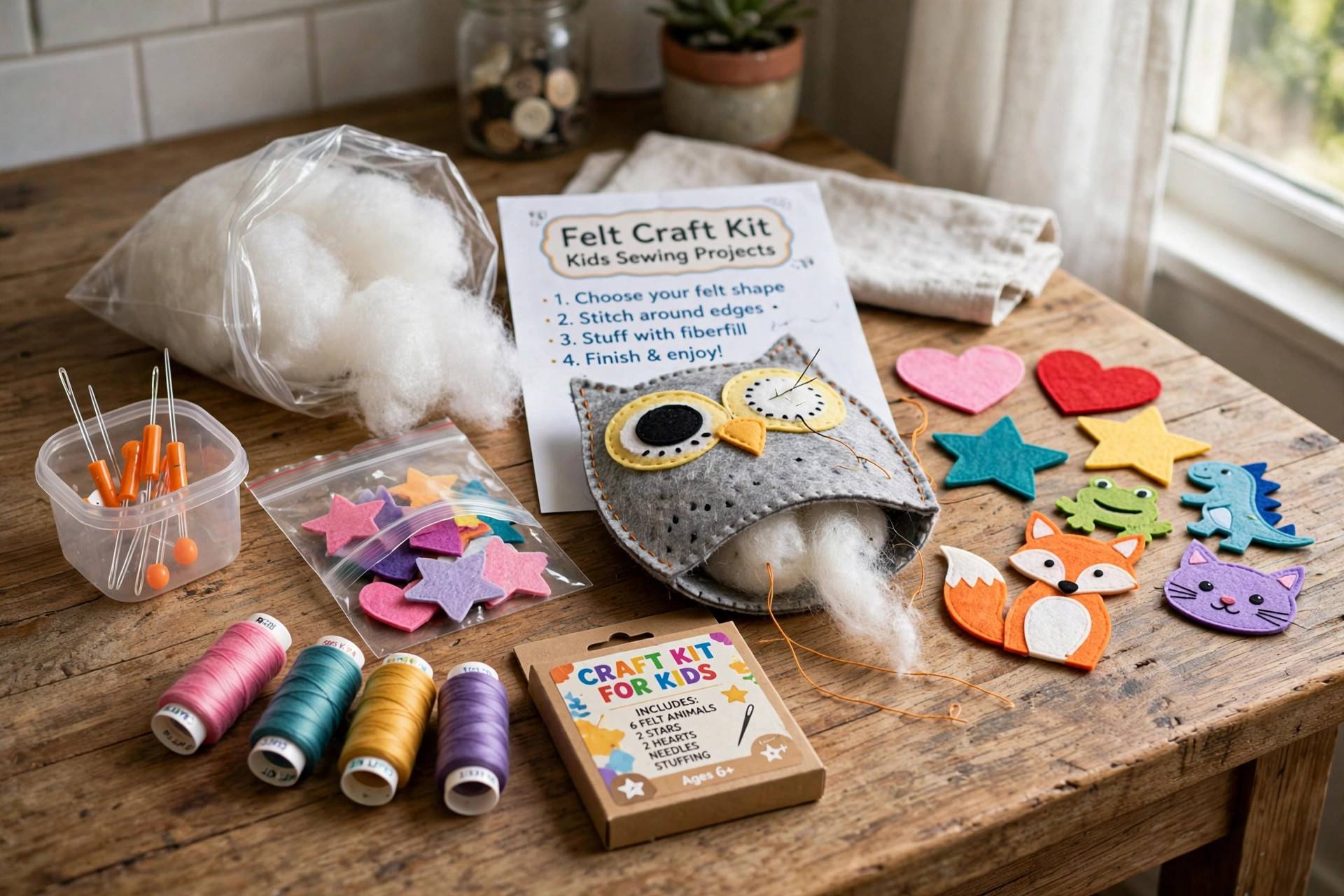

A felt craft kit for kids sewing projects home use is one of the simplest ways to teach a child to sew. The felt pieces are soft. The shapes come pre-cut. The needle has a blunt tip. A child can make a small animal, a flower, or a pillow in one sitting. There is no machine to thread. There is no sharp tool to fear. This guide explains what these kits hold, how to pick a good one, what they cost, and how to keep sewing time safe and fun.
Why a Felt Sewing Kit Matters for Kids
Sewing teaches patience. A child learns to follow steps in order. First the thread goes through the needle. Then the stitch goes through the felt. Each small step builds toward a finished toy. That sense of progress is strong for young minds.
Felt is the right fabric for a first project. It does not fray at the edges. It holds its shape when cut. It hides small mistakes well. A crooked stitch on cotton looks bad. The same stitch on felt looks fine. That forgiveness keeps children from giving up.
Hand-eye coordination grows with every stitch. The child must guide the needle through a hole. The fingers learn to work in small, careful moves. Teachers and parents have used needlework for this purpose for a long time. The craft is old, but the benefit is still real.
A felt kit also gives quiet time away from screens. Many families want activities that do not need a charger or a password. Sewing fits that need. A kit fits in a drawer. It comes out on a rainy day. Two children can work side by side with little noise.
What to Look for When You Buy: Felt Craft Kit for Kids Sewing Projects Home
Pre-cut felt pieces
The best kits include felt that is already cut into shapes. A child should spend time sewing, not cutting. Look for kits with many colors. Bright felt holds a child’s interest longer than dull felt.
Safe needles
Kids kits should use blunt plastic or large-eye metal needles with rounded tips. Sharp embroidery needles are wrong for small hands. Check the package for the needle type before you buy. If the kit does not show the needle, ask the seller.
Clear printed patterns
Each project should have a pattern printed on paper or on the felt itself. The pattern should show where the holes go. Good kits mark stitch lines with dots or small lines. A child can follow the marks without reading long directions.
Thread and stuffing
The kit should hold enough thread for every project in the box. Short thread that runs out half way causes tears. Stuffing, usually soft fiberfill, is needed for pillows and stuffed animals. Make sure it is in the box.
Age range on the box
Most kits list an age range, such as ages 5 and up or ages 8 and up. Trust that range. A kit for older kids may have tiny parts that frustrate a young child. A kit for very young kids may bore an older one.
Number of projects
Count the projects inside. A box that makes one small ornament costs less but ends fast. A box with ten or twelve projects gives many days of work. Divide the price by the number of projects to find the real cost per project.
Shoppers who enjoy comparing beginner craft supplies may also look at a best wood burning kit for diy crafts for older kids, though wood burning is for teens and adults, not small children. For craft storage ideas, big craft retailers carry organizers that fit felt sheets and thread spools. The Michaels website lists many kids craft kits with age guides. The Joann site also carries sewing supplies for young beginners.
Types of Felt Craft Kits
Felt kits come in several styles. Each style suits a different age and skill level. Most families start with the simplest type and move up as the child gains skill. All of the types below use the same basic stitches. The difference lies in the shapes, the number of steps, and the size of the finished piece. When you shop, read the project count on the box. A kit that lists only pictures on the front may hold fewer projects than it seems.
Animal sewing kits
These are the most popular. The kit makes small felt animals such as cats, dogs, owls, or foxes. Each animal uses two felt body pieces sewn around the edges. The child stuffs the body with fiberfill, then adds eyes and a nose. Animals are a good first project because the child knows what the finished toy should look like.
Pillow and cushion kits
Pillow kits are the simplest of all. The child sews two squares of felt together, leaves a gap, adds stuffing, and closes the gap. Pillows teach the running stitch well. They are quick. A child can finish one in under an hour.
Ornament and holiday kits
These kits make flat or lightly stuffed shapes such as stars, trees, hearts, or snowmen. They are often sold for holidays. The finished pieces hang on a tree or a door handle. Because they are flat, they use less stuffing and less thread.
Puppet kits
Puppet kits make finger puppets or hand puppets from felt. The child sews the edges and glues or sews on faces. Puppets add play value after the sewing is done. Two children can put on a small show with their finished puppets.
Embroidery sampler kits
Some kits teach real embroidery stitches on a felt square. The child learns the running stitch, the backstitch, and the blanket stitch. These kits suit older children who want real skill, not just a toy. For a next step after felt, families often try a cross stitch kit for beginners adults patterns once the child is ready for counted work.
Painting and drawing supplies pair well with felt projects. Many children like to draw a face on paper first, then sew it. The Blick art supply site lists markers and paints that work on felt. For plain craft blanks to paint alongside sewing projects, families also shop for wood craft blanks for painting and signs.
Cost and Price
Felt craft kits for kids are low-cost items. Most boxes sell for between 8 and 25 dollars. Small kits with one or two projects sit at the low end. Large kits with ten or more projects sit at the high end.
Price per project is the number that matters. A 20 dollar kit with twelve projects costs under 2 dollars per project. A 10 dollar kit with two projects costs 5 dollars per project. The larger box is often the better deal.
Store brands cost less than name brands. The felt may be thinner, and the thread may be shorter. For a first kit, a store brand is fine. If the child loves the craft, buy a better kit next time. Holiday sales often cut craft kit prices by half. Stock up then if you have the space.
Online prices and store prices are close. Large home stores stock kids craft kits in the craft aisle. The Home Depot website lists craft and hobby supplies, though felt sewing kits are more common at dedicated craft stores.
Care and Upkeep of Finished Projects
Felt projects last a long time with light care. Dust them with a soft dry cloth. Do not wash felt animals in a machine. The stuffing will clump, and the seams may pull open.
If a felt piece gets a spot, dab it with a damp cloth and a drop of mild soap. Let it air dry. Heat from a dryer can shrink felt and melt glue.
Check seams now and then. A child who plays hard with a felt toy may pop a stitch. A few quick stitches with matching thread will fix it. Keep the leftover thread from the kit in a small bag with the finished toy. The colors will match when a repair is needed.
Store unfinished kits in a dry place. Felt can pick up dust if left out. A zip bag or a small box keeps the pieces clean until the child is ready to sew again.
Safety Tips for Young Sewers
Even with blunt needles, sewing needs rules. Set them before the first stitch.
Keep the needle in a pincushion or a piece of cork when not in use. A loose needle on a table can prick a hand or a foot. Teach the child to count needles at the start and at the end. The count should match.
Small parts are a choking risk for toddlers. Buttons, beads, and plastic eyes should stay away from children under three. Choose kits with sewn or glued felt eyes for very young kids.
Good light matters. Sewing in dim light strains young eyes and leads to pricked fingers. A table lamp aimed at the work is enough.
An adult should sit nearby for the first few projects. The adult does not need to sew. The adult only needs to watch, answer questions, and help with knots. After two or three projects, many kids sew on their own.
For general product safety standards on children’s craft items, the CPSC publishes guides that parents can read before buying. Home repair and project guides at This Old House also show how to set up a small craft corner with good light. The Family Handyman site has simple plans for a small work table a child can use. Project ideas and how-to articles appear regularly on Bob Vila as well.
Frequently Asked Questions
What age is right for a felt sewing kit?
Most kits list ages 5 and up. A five-year-old can sew with help from an adult. Kids ages 7 to 10 often sew on their own. Kits marked 8 and up may have smaller pieces and more steps.
Are the needles in kids kits safe?
Kids kits use blunt needles that cannot easily pierce skin. They still need care. The tip can scratch, and the eye end is stiff. Teach the child to push the needle away from the hand holding the felt.
How long does one project take?
A small ornament takes 30 minutes. A stuffed animal takes one to two hours. A pillow takes under an hour. Plan for short sittings. A tired child makes mistakes and loses interest. Short daily sittings work better than one long weekend push. Praise the finished stitches, not just the finished toy.
Can the felt be washed?
Hand wash only, and only if needed. Use cool water and mild soap. Press the water out with a towel. Do not wring the felt. Let it dry flat. Machine washing will ruin most felt projects.
What if my child loses interest halfway?
Put the project in a bag and save it. Many kids come back to it days later. Do not force the work. Sewing should feel like play, not homework.
Is felt better than fabric for beginners?
Yes. Felt does not fray, so there is no need to hem edges. It is thick enough to hold without a hoop. It hides uneven stitches. Cotton and other woven fabrics are harder for small hands.
A Short Final Word
A felt craft kit for kids sewing projects home families buy with care gives more than a finished toy. It gives quiet hours, new skill, and pride in work done by hand. Pick a kit that fits the child’s age. Check that the needle is blunt and the thread is long enough. Sit close for the first project. Then step back and watch the stitches grow straighter, one small toy at a time.
References
Blick Art Materials. (n.d.). Art and craft supplies. https://www.dickblick.com Bob Vila. (n.d.). Home improvement advice. https://www.bobvila.com Family Handyman. (n.d.). DIY home repair and maintenance. https://www.familyhandyman.com JOANN. (n.d.). Fabric and craft supplies. https://www.joann.com Michaels. (n.d.). Arts and crafts supplies. https://www.michaels.com The Home Depot. (n.d.). Home improvement products. https://www.homedepot.com This Old House. (n.d.). Home renovation guidance. https://www.thisoldhouse.com U.S. Consumer Product Safety Commission. (n.d.). Product safety information. https://www.cpsc.gov
Was this guide helpful?

About Robert Taylor
The My Garden US editorial team writes practical, in-depth home and garden guides for American homeowners — tested advice, no fluff.
You May Also Like
Best Modeling Clay for Kids Crafts Home: A Simple Buying Guide
September 6, 2026 0 views
DIY Lantern Kit for Patio Decor Crafts USA: A Simple Guide
January 21, 2026 0 views
Best Paper Cutter for Scrapbooking and Cards: A Practical Guide
August 1, 2026 0 views