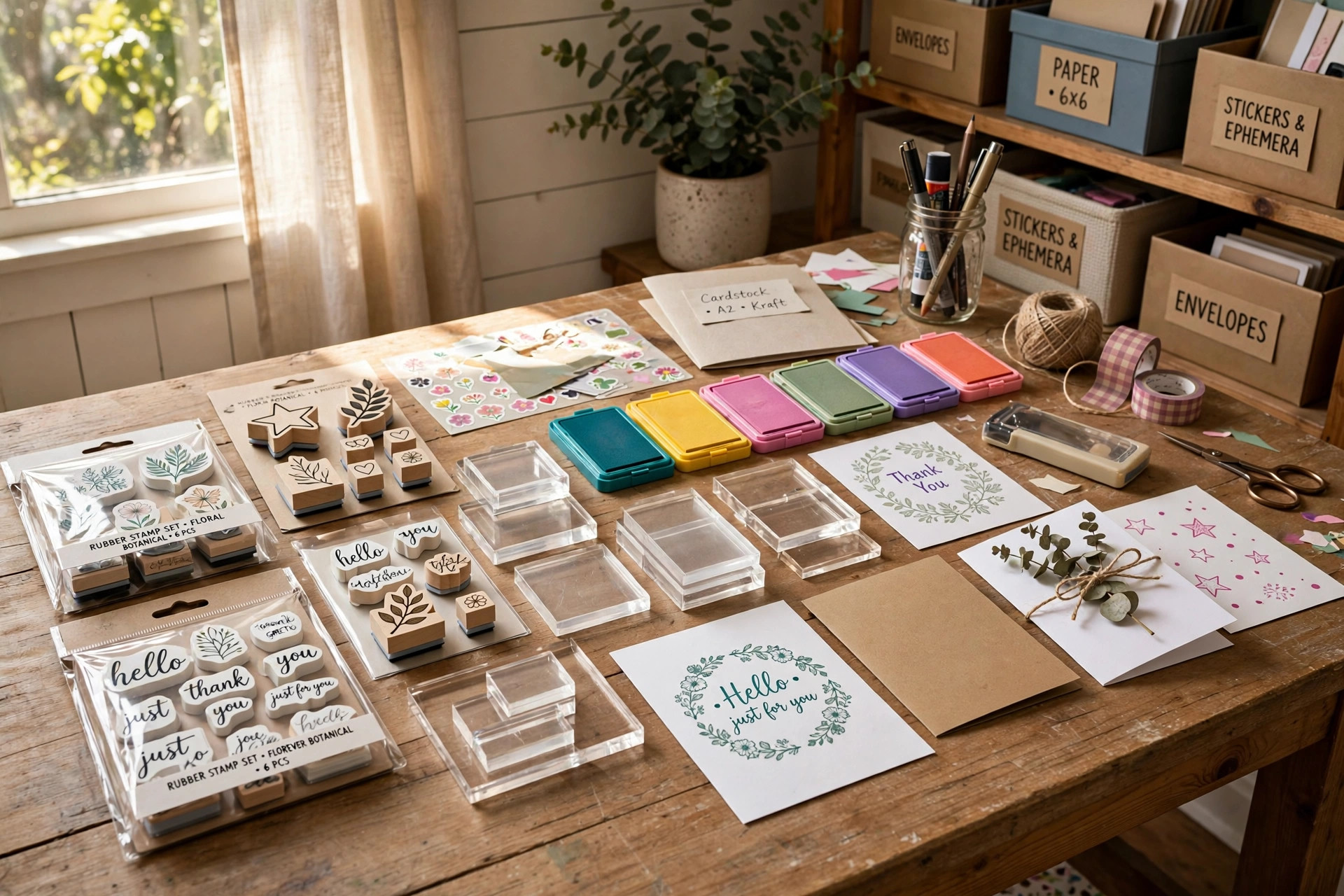

A handmade card can carry more weight than a store card. The right stamps make that work simple. If you want the best stamp set for card making crafts, you need to know what separates a good set from a poor one. This guide walks you through each step. It covers why stamps matter, what to look for, the main types, fair prices, proper care, and basic safety. By the end, you will know how to choose a set that suits your hands, your budget, and your style.
Why a Good Stamp Set Matters
Card making is a craft of small details. A crooked image or a blurry edge can spoil a card. A strong stamp set gives you clean lines every time. It also saves time. You do not need to draw each leaf or letter by hand. You press, you lift, and the image is there.
A good set lasts for years. Cheap stamps wear out fast. Their edges crack. Their foam pulls away from the backing. Then each print looks worse than the last. A well-made set stays sharp through hundreds of cards. That means lower cost per card over time.
Stamps also help beginners. Drawing skill takes years to build. Stamping gives a new crafter a pro look on the first day. That early success keeps people in the hobby. Many shops, from Michaels to JOANN, sell beginner sets for this very reason. They know a happy first card brings a customer back.
A stamp set can also tie a whole card together. One set can give you the border, the main image, and the greeting words. When all parts come from one set, they match in style. The card looks planned, not pieced together.
What to Look for When You Choose: Best Stamp Set for Card Making Crafts
Not every stamp set fits every crafter. Think about these points before you buy.
Image Quality
Look at the sample prints on the package. Lines should be smooth, not jagged. Fine details should be easy to see. If the package shows a blurry sample, the stamps inside are likely blurry too. Clear stamps made from quality photopolymer print crisp images. Cheap vinyl stamps often print with gaps and soft edges.
Mount Type
Stamps come in three main mounts. Wood-mounted stamps are classic. They feel solid in the hand. They cost more and take more shelf space. Cling stamps stick to a clear acrylic block. They store flat and cost less. Clear photopolymer stamps are fully see-through. You can see exactly where the image lands. For beginners, clear stamps are the easiest choice. You place the image with care instead of guessing.
Size and Coverage
Check the size of the largest stamp. A set meant for standard A2 cards should have images that fit a 4.25 by 5.5 inch card front. Tiny stamps force you to cluster many images. Large stamps can overpower a small card. Many crafters keep two or three sets in different sizes. One shop that stocks a wide range of sizes is Blick, which lists stamp dimensions in its product details.
Theme and Versatility
Some sets focus on one theme, such as flowers or birthdays. Others mix greetings, borders, and small icons. If you make cards for many events, pick a mixed set first. You will use it more often. If you only make holiday cards, a themed set is fine. Many card makers buy one mixed set, then add themed sets over time. Stampin’ Up! is known for sets that pair images with matching words in one pack.
Ease of Cleaning
A stamp you cannot clean is a stamp you will ruin. Smooth rubber and photopolymer wash with mild soap and water. Stamps with deep grooves or rough backs hold ink in the cracks. Avoid them. Before you buy, read reviews that mention cleaning. Crafters who sell at fairs clean stamps between every print. Their reviews tell you which sets wash fast and which stay stained.
Value for the Price
Count the stamps, not the package size. Some sets pack thirty small icons. Others hold six large images. Both can be fair deals. Ask what each stamp gives you. A set with words, borders, and images covers more ground than a set of twelve near-identical flowers. For a sense of fair market pricing, compare similar sets at Hobby Lobby and at big home stores like The Home Depot, which both carry craft aisles with stamp sets.
Types of Stamp Sets
Wood-Mounted Rubber Stamps
These are the old standard. A thick wood block holds a rubber die. They press well and last a long time. They are easy for older hands to grip. They take up real shelf space. They cost more than other types. Many crafters keep a few favorites in wood and use modern stamps for the rest.
Cling-Mount Rubber Stamps
These are rubber dies on a cling foam back. You press them onto a clear block to use them. They store in flat sleeves. They cost less than wood mounts. The foam can lose its grip after years of use. Keep them out of heat so the cling layer stays tacky.
Clear Photopolymer Stamps
These are the most common choice today. The stamps are fully clear. You see through them to place each image. They store in thin packs. They print crisp lines. They can yellow with age, but yellowed stamps still print well. Avoid cheap knockoffs. Poor photopolymer tears or turns cloudy fast.
Self-Inking Stamps
These hold their own ink pad inside the case. You press down and the image prints. They suit return addresses and repeated greetings. They are less useful for art cards. The ink is usually black and plain. Some crafters use them for the inside message of a card, then stamp art on the front.
Background Stamps
These are large stamps that cover a whole card front. They print a full pattern, such as wood grain or tiny dots. One press gives you a finished backdrop. They pair well with a small greeting stamp on top. Beginners love them because they make a card look full with little effort.
Cost and Price
Prices vary by type and brand. Here is a rough map of what to expect in American stores.
Small clear stamp sets often sell for 8 to 20 dollars. These hold a handful of images and words. They suit beginners and children. Mid-range sets from known craft brands run 20 to 40 dollars. These offer more stamps and sharper detail. Wood-mounted sets can reach 15 to 35 dollars for a single large stamp, or 40 to 80 dollars for a set. Self-inking stamps range from 10 to 30 dollars.
Do not judge a set by price alone. A 12-dollar set with crisp prints beats a 30-dollar set with soft edges. Read reviews. Look for words like “crisp,” “clean,” and “sharp.” Avoid sets where buyers note “uneven,” “gappy,” or “hard to clean.”
Sales change the math. Craft stores run frequent coupons. A 40-percent-off coupon can turn a 30-dollar set into an 18-dollar set. Holiday weekends bring deeper cuts. If you plan ahead, you can build a strong collection at half price. Project sites such as This Old House and Family Handyman sometimes cover craft room setups, and their buying guides show how to time purchases around seasonal sales.
Budget crafters can also trade. Stamp sets in good shape hold resale value. Online craft groups swap sets that no longer suit them. A set you bought for 25 dollars may sell used for 12 to 15 dollars. That lowers the real cost of trying new styles.
Care and Upkeep
Stamps reward small habits. Clean each stamp right after you use it. Dab it on a damp cloth or rinse it under cool water with a drop of mild dish soap. Pat it dry. Do not rub hard. Rough rubbing wears the fine lines.
Store stamps flat and out of sun. Heat warps photopolymer and melts foam backs. Cold is fine, but let stamps warm to room temperature before use. Keep clear stamps on their carrier sheets. The sheets stop dust from settling on the sticky side.
Inks need care too. Cap each ink pad the moment you finish. A pad left open dries in minutes. Store dye ink pads upside down so ink stays at the surface. Pigment inks sit thick on the pad. Stir them with a soft brush now and then so the color stays even.
Paper choice affects stamp life. Rough handmade paper can tear fine stamp edges over time. Smooth card stock is kinder. If you love textured paper, reserve your best stamps for smooth stock. Use older stamps on the rough sheets.
Check your stamps once a year. Look for cracks, peeling foam, and cloudy photopolymer. A cracked stamp will never print clean again. Replace it. Keep a list of the sets you own. When one wears out, you will know the exact name to reorder. Supply specialists like Scrapbook.com keep full catalogs of older sets, which helps when you need a match.
Many crafters pair stamping with other hand work. If you sew fabric accents onto cards, you may enjoy our guide to the best embroidery needles set for hand sewing. A small hot glue tool also helps attach layered pieces; see our notes on the best glue gun for wreath making crafts. For painted touches, read our review of the diy tote bag kit for painting and crafts to find paint that works on paper.
Safety
Stamping is a calm hobby, but a few safety notes apply.
Keep small stamps away from young children. A stamp the size of a coin can choke a toddler. Work at a table children cannot reach, or craft while they nap.
Read ink labels. Most craft inks are non-toxic. Some specialty inks contain solvents. Use solvent inks in a room with fresh air. Do not let children use them. Wash your hands after long sessions, even with non-toxic inks. Skin can dry out from repeated ink contact.
Heat tools need care. Some card makers use a heat gun to set embossing powder. A heat gun can burn skin in one second. Hold it by the handle. Keep it moving. Unplug it when you pause. Advice columns at Bob Vila cover heat tool safety in plain terms for home crafters.
Store blades and trimmers with guards on. A paper trimmer cuts card stock fast. It can cut a finger just as fast. Teach children that craft tools are not toys. Lock sharp tools in a box when little hands are near.
Frequently Asked Questions
How many stamp sets does a beginner need?
One or two. Start with a mixed set that holds images, borders, and greeting words. Make twenty cards with it. You will learn what you like. Then buy a second set that fills the gaps. Many beginners buy ten sets at once and use only two. Start small.
What ink works best for card making?
Dye ink suits most cards. It soaks into paper and dries fast. Pigment ink sits on top of the paper. It gives bold color and works on dark stock. It needs heat to set fully. Archival ink resists fading. Pick dye ink first, then add pigment ink when you want richer color.
Can I use the same stamps with different inks?
Yes, if you clean between colors. Press the stamp on scrap paper until the old color fades. Then wash with soap and water. Dry fully before the new ink. Skipping the wash mixes colors into mud. A quick clean takes less than a minute.
Why do my stamped images look blurry?
Four causes cover most cases. First, too much pressure. Press firm and even, not hard. Second, a worn stamp. Old stamps lose edge sharpness. Third, the wrong paper. Rough paper breaks lines. Fourth, an old ink pad. A dry pad prints patchy. Fix these four and most blur comes clear.
Are expensive stamp sets worth the money?
Sometimes. Price pays for sharp molds, quality rubber, and honest sample prints. A mid-price set from a known brand often prints as well as a costly one. Read reviews before you pay top price. Look for crisp sample images and buyers who praise clean prints.
How long do rubber stamps last?
Years. A quality rubber stamp used with care can last a decade or more. Clear photopolymer stamps last nearly as long if kept out of sun and heat. Foam cling backs fail first, often after three to five years. When the image still prints well but the cling fades, you can glue the stamp to a new foam sheet.
Final Word
The best stamp set for card making crafts is the one you will actually use. Sharp images, a mount that fits your hands, and a theme you love matter more than brand names. Start with one solid mixed set. Learn its habits. Clean it well. Store it with care. Add new sets as your style grows. A small shelf of stamps you trust will carry you through birthdays, holidays, thank-you notes, and quiet Sunday afternoons for years to come.
References
Blick Art Materials. (n.d.). Art and craft supplies. https://www.dickblick.com Bob Vila. (n.d.). Home improvement advice. https://www.bobvila.com Family Handyman. (n.d.). DIY home repair and maintenance. https://www.familyhandyman.com Hobby Lobby. (n.d.). Arts, crafts, and home decor. https://www.hobbylobby.com JOANN. (n.d.). Fabric and craft supplies. https://www.joann.com Michaels. (n.d.). Arts and crafts supplies. https://www.michaels.com Scrapbook.com. (n.d.). Paper crafts and scrapbooking supplies. https://www.scrapbook.com Stampin’ Up!. (n.d.). Paper crafting and card making supplies. https://www.stampinup.com The Home Depot. (n.d.). Home improvement products. https://www.homedepot.com This Old House. (n.d.). Home renovation guidance. https://www.thisoldhouse.com
Was this guide helpful?

About Lisa Anderson
The My Garden US editorial team writes practical, in-depth home and garden guides for American homeowners — tested advice, no fluff.
You May Also Like
DIY Jewelry Box Kit for Woodworking Beginners: A Simple Guide
June 27, 2026 0 views
Best Craft Table With Pegboard for Tools
October 3, 2026 1 views
The Best Yarn for Baby Blankets: Soft, Washable Choices That Last
April 25, 2026 0 views