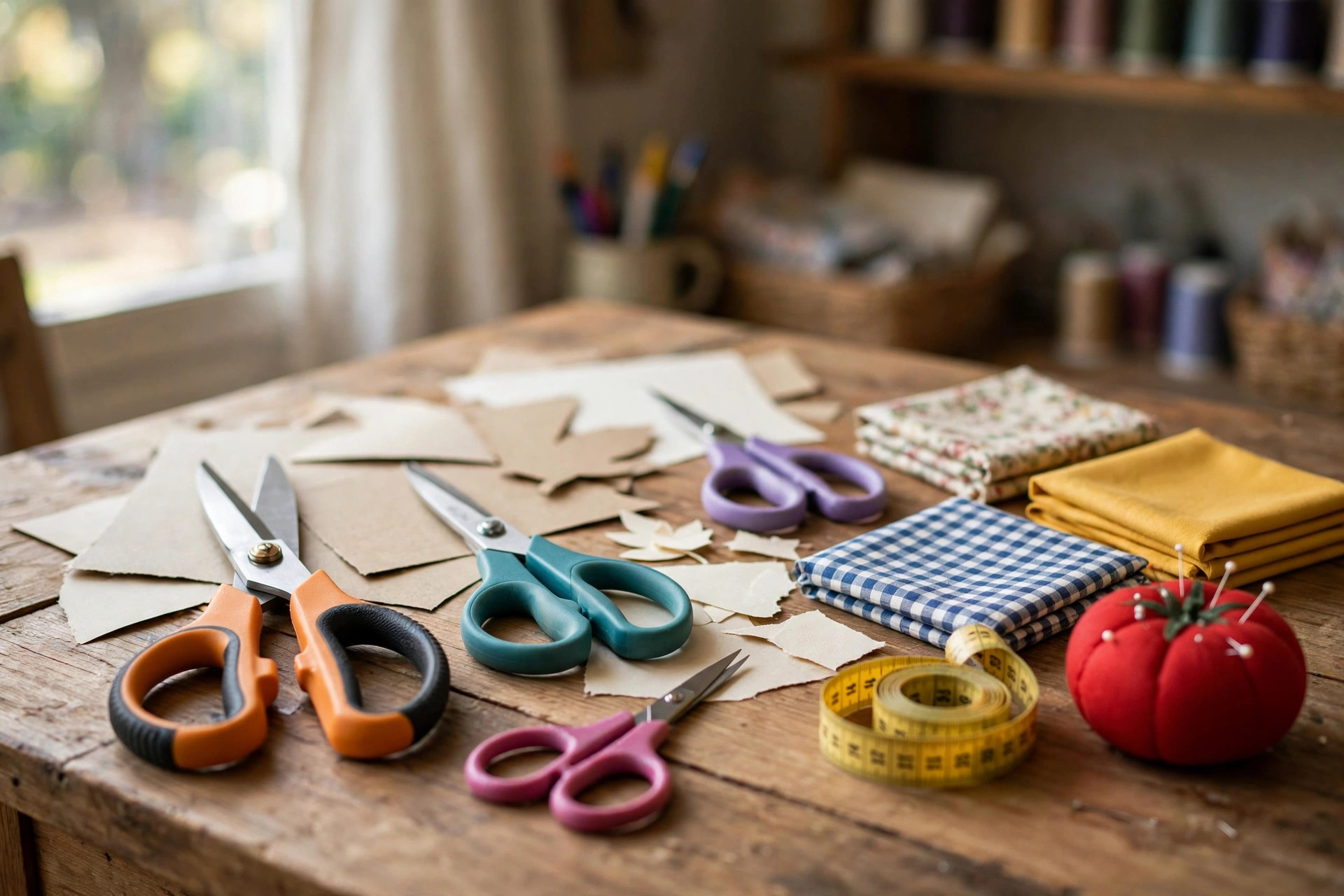

A good pair of scissors makes every craft project easier. Cheap scissors tear paper. They fray fabric. They tire your hand. The best craft scissors set for paper and fabric solves these problems at once. One set gives you the right tool for each job. You get sharp blades for clean paper cuts. You get strong shears for cloth. You get small snips for detail work. This guide explains what to look for, which types to buy, and how to care for them. It will help you choose a set that lasts for years.
Why It Matters
Scissors are the most used tool in a craft room. Most crafters reach for them more than any other tool. A set made for both paper and fabric saves time. You do not have to search the house for the right pair. You do not have to use one dull pair for everything.
Paper and fabric need different blades. Paper cuts best with short, stiff blades. Fabric needs long, sharp shears that slice in one smooth pass. When you use the wrong scissors, you damage both. Paper dulls fabric shears fast. The tiny fibers in paper wear down the edge. Dull shears then chew the cloth instead of cutting it. The result is a ragged edge that is hard to sew.
A proper set keeps each pair for its own job. Paper scissors stay with paper. Fabric shears stay with fabric. Detail snips handle thread and small cuts. Many crafters also keep a hot glue gun near their scissors, and a well-chosen best hot glue gun for craft projects home setup works hand in hand with clean-cut pieces. When every cut is clean, gluing and sewing go faster. Your finished work looks better too.
Comfort matters as much as sharpness. A long afternoon of cutting shapes or fabric panels can hurt your hand. Sets with soft-grip handles reduce that strain. They fit the hand better. They spread the pressure. If you craft often, this one feature is worth paying for.
What to Look For When You Choose: Best Craft Scissors Set for Paper and Fabric
Picking the best craft scissors set for paper and fabric comes down to a few clear points. Study each one before you buy.
Blade Material and Sharpness
Most good craft scissors use stainless steel blades. Stainless steel resists rust. It holds an edge well. High-carbon steel is even sharper. It keeps its edge longer. But it can rust if you leave it damp. For most home crafters, stainless steel is the safe pick.
Check how the blades feel when you test them. They should cut printer paper in one smooth stroke. They should cut a fold of cotton cloth without pushing the fabric. If the blades grab or fold the material, they are too dull. Some sets list their blades as titanium-coated. The coating adds life to the edge. It also helps the blades slide through sticky material like tape.
The pivot screw matters too. A screw you can adjust lets you set the tension. Tight blades cut heavy fabric. Looser blades work for light paper. Many low-cost sets use a rivet instead of a screw. Rivets cannot be adjusted. They can work loose over time.
Handles and Comfort
Handles come in straight and bent shapes. Bent handles lift the lower blade off the table. That makes it easy to cut long lines on flat fabric. Straight handles work fine for paper and detail cuts. A good set often has one of each.
Look for soft-grip handles. They are usually made of rubber or soft plastic over a hard core. They cushion your fingers. They help when you cut for a long time. Avoid handles that are hard and thin. They dig into your fingers.
Size matters. Most adults use 8-inch shears for fabric and 5- or 6-inch scissors for paper. Detail snips run about 4 inches. Try to buy a set that covers all three sizes. People with small hands should look for sets marked with smaller handles. Left-handed crafters need true left-handed blades, not just flipped handles. Brands like Fiskars have long made left-handed models a standard option.
Pieces in the Set
Count what you get. A useful best craft scissors set for paper and fabric has at least three pieces. The first is an 8-inch fabric shear. The second is a 5- or 6-inch paper scissors. The third is a small detail snip or embroidery scissors. Some sets add a pinking shear. That makes a zigzag edge that stops cloth from fraying. Others add a rotary cutter. That is useful for quilting.
Do not pay for pieces you will not use. A set with ten pairs sounds like a deal. But if five of them are weak or dull, they are clutter. Three strong pairs beat ten weak ones. This is the same rule you can follow with an acrylic paint set for beginners canvas art: quality of the pieces matters more than the count.
Types and Options
Craft scissors come in several types. Each one has a clear job.
Straight Craft Scissors
These are the classic all-rounders. They cut paper, card stock, felt, and thin cloth. Blade length runs 5 to 6 inches. They are the pair you will reach for most often. Most sets include at least one.
Fabric Shears and Dressmaker Scissors
These are longer and heavier. The blades run 8 to 9 inches. One handle is bent so the blade lies flat on the cutting table. That shape lets you cut long fabric panels in one stroke. Keep these for fabric only. Never cut paper with them. Paper will dull the edge fast.
Detail and Embroidery Scissors
Small and sharp, with blades around 3 to 4 inches. They snip thread. They cut out tiny paper shapes. They trim seam allowances. Many crafters keep one pair in the sewing kit and one at the paper table.
Pinking Shears
These blades cut a zigzag line. The zigzag keeps woven fabric from fraying. They are heavy. They need more hand strength. But for anyone who sews cloth often, they are worth owning.
Decorative Edge Scissors
These make patterns like waves or scallops. Children like them for school projects. Scrapbook makers use them for borders. They are a nice extra. They are not a must-have.
If you want ideas for how to use these tools in real projects, The Spruce Crafts and Craftsy both carry many step-by-step project guides that call for exactly these scissors.
Cost and Price
Craft scissors sets come at many price points. A basic three-piece set can cost as little as ten to fifteen dollars. Mid-range sets run twenty to forty dollars. Premium sets from known brands can reach fifty dollars or more.
For most home crafters, the sweet spot is the twenty to thirty dollar range. At that price you get stainless blades, soft grips, and a useful mix of sizes. Cheaper sets often cut fine at first. But they dull fast. They cannot be sharpened well. You end up buying again.
A higher price is worth it if you sew a lot of fabric. A fifty-dollar set with forged steel blades can last for decades. It can be sharpened many times. Over the years, that is cheaper than replacing weak scissors again and again. Retailers like Michaels, JOANN, and Blick Art Materials all carry sets across this price range. The Home Depot also stocks craft cutting tools in its tools aisle.
Watch for sales. Craft stores run deep discounts around back-to-school and the holidays. You can often buy a premium set for the price of a mid-range one. Online prices shift often. Check a few stores before you pay full price.
Care and Upkeep
Good scissors last long if you care for them. Bad habits dull them fast.
Keep fabric shears away from paper. This is the single most important rule. Tape down a paper sign on the handle if you must. Many crafters tie a ribbon on their fabric pair so no one grabs it by mistake.
Wipe the blades after use. Sticky tape and glue leave a film. A cloth with a little rubbing alcohol removes it. Dry the blades after. A drop of sewing machine oil at the pivot keeps the action smooth. Open and close the scissors a few times to work the oil in.
Store them well. A blade cover or a sheath stops the edge from hitting other tools in a drawer. A magnetic strip on the wall keeps them safe and easy to reach. Never toss scissors loose into a box with other tools. The blades nick and dull.
Sharpen when needed. A pair that pulls fabric instead of cutting it needs sharpening. You can use a scissor sharpener or take them to a pro. Fabric shears deserve a pro touch. Detail scissors can be touched up at home. How-to sites like Family Handyman, This Old House, and Bob Vila publish guides on sharpening and tool care that apply to craft scissors too.
Keep your cutting area tidy as well. A clean table stops blades from picking up grit. Many crafters pair their scissors with a good best craft storage organizer for small rooms so every tool has its own slot.
Safety
Scissors are sharp tools. A few rules keep everyone safe.
– Store scissors blade-down in a holder or with covers on. Never leave open blades on a table. – Hand a pair to someone else handle-first, with the blades closed. – Keep craft scissors away from small children. Give kids only blunt-tipped safety scissors. – Cut away from your body. Keep your free hand out of the blade path. – Do not use scissors to pry, poke, or cut wire. That chips the blades and can snap them. – Put pinking shears and large shears back right after use. They are the heaviest and the sharpest.
If a blade chips or the pivot breaks, stop using the pair. A broken scissors can close wrong and pinch. Replace it or have it repaired.
FAQ
Can I use the same scissors for paper and fabric?
You can, but you should not. Paper dulls blades fast. Once dull, the scissors will chew fabric instead of cutting it. A set with separate pairs for paper and fabric is the better plan. It costs a little more. It saves money over time.
How many pairs should a craft scissors set have?
Three is the right start. You want one fabric shear, one paper scissors, and one small detail snip. If you sew often, add pinking shears as a fourth. Anything past that is a bonus. Do not buy ten weak pairs when three strong ones will do more.
What size scissors do I need for fabric?
Eight inches is the standard for dressmaker shears. It cuts long lines in one smooth stroke. If you work with heavy cloth like denim or canvas, look for 9-inch shears with thicker blades. For quilting, many people prefer a rotary cutter plus a 5-inch scissors for curves.
How do I know when my scissors need sharpening?
Cut a fold of cotton fabric. If the edge comes out clean, the blades are fine. If the fabric folds, tears, or frays, the edge is dull. Paper test works too. Sharp scissors cut printer paper in one quiet stroke. Dull ones drag and make noise.
Are expensive craft scissors worth the money?
It depends on how often you craft. For light use a few times a month, a twenty-dollar set is fine. For weekly sewing or daily crafting, a premium set pays off. Forged steel blades hold an edge longer. They can be sharpened many times. Soft grips save your hands.
Can left-handed people use regular craft scissors?
Regular scissors put the pressure on the wrong side for a left-handed user. The blades push apart instead of cutting. True left-handed scissors have mirrored blades. If you are left-handed, buy a set made for left hands. The difference is large.
A Short Final Word
The best craft scissors set for paper and fabric is not the biggest or the priciest. It is the set you will actually reach for. Look for stainless steel blades, soft grips, and three useful sizes. Keep paper pairs and fabric pairs apart. Clean and store them well. Do that, and a good set will serve your crafts for many years. Your cuts will be clean. Your hands will thank you. And every project will start on the right foot.
References
Blick Art Materials. (n.d.). Art and craft supplies. https://www.dickblick.com Bob Vila. (n.d.). Home improvement advice. https://www.bobvila.com Craftsy. (n.d.). Craft classes and supplies. https://www.craftsy.com Family Handyman. (n.d.). DIY home repair and maintenance. https://www.familyhandyman.com Fiskars. (n.d.). Garden and cutting tools. https://www.fiskars.com JOANN. (n.d.). Fabric and craft supplies. https://www.joann.com Michaels. (n.d.). Arts and crafts supplies. https://www.michaels.com The Home Depot. (n.d.). Home improvement products. https://www.homedepot.com The Spruce Crafts. (n.d.). Craft projects and tutorials. https://www.thesprucecrafts.com This Old House. (n.d.). Home renovation guidance. https://www.thisoldhouse.com
Was this guide helpful?

About David Wilson
The My Garden US editorial team writes practical, in-depth home and garden guides for American homeowners — tested advice, no fluff.
You May Also Like
The Best Craft Table With Storage for a Sewing Room
February 21, 2026 0 views
The Best Yarn for Amigurumi Toys Soft USA Makers Trust
March 27, 2026 0 views
DIY Ornament Kit for Christmas Tree Crafts
September 12, 2026 0 views