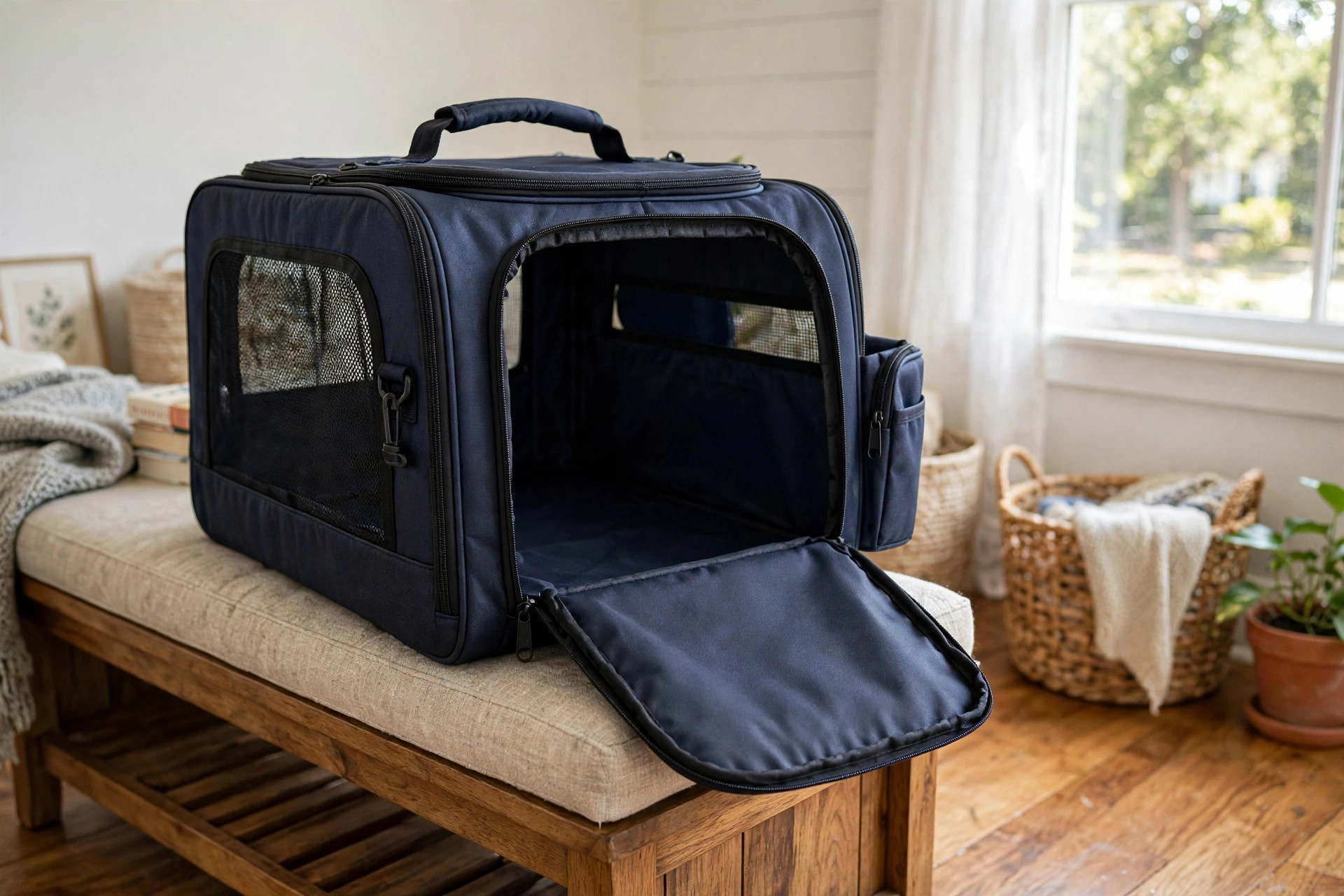

A pet carrier for cats airline approved soft sided makes flying with a cat far less stressful. It fits under the seat in front of you. It bends a little to squeeze into tight spaces. It gives your cat a dark, quiet spot during a noisy trip. This guide explains what these carriers are, how to choose one, what they cost, and how to use them on travel day.
Why It Matters
Most airlines in the United States allow cats in the cabin. The cat must stay in a carrier under the seat. Hard carriers are stiff. They often do not fit. A soft sided carrier flexes. That is why most cat owners pick a soft model for flying.
The right carrier protects your cat from drafts, loud sounds, and sudden moves. It also protects you. A carrier that meets airline rules will not be turned away at the gate. Nobody wants that surprise.
A soft sided carrier also works at the vet office, in the car, and on train rides. It is light to carry. Many have shoulder straps and rolling wheels.
What Airline Approved Means: Pet Carrier for Cats Airline Approved Soft Sided
The words “airline approved” need some care. No airline sells carriers. Each airline sets its own size rules. A carrier is only truly approved when it meets the rules of the airline you fly.
Most United States airlines want a carrier that:
– Fits under a standard seat, usually about 17 inches long, 11 inches wide, and 11 inches high. – Holds the cat fully inside with room to turn around. – Closes fully with zippers or latches. – Lets air flow through mesh panels.
Always check your airline’s pet page before you buy. Rules change. Fees change. Some airlines limit the number of pets per flight. Book your cat’s spot early. Travel guides from The Spruce Pets explain how these rules vary by carrier type.
How to Choose: Size First
Measure your cat. Note weight, body length, and shoulder height. Then compare with the carrier’s listed size. The cat must be able to stand, sit, lie down, and turn around inside.
Most adult cats weigh 8 to 12 pounds. For them, a carrier around 17 by 11 by 11 inches works well. Large cats may need a bigger model, but a bigger carrier may not fit under the seat. Check both ends.
Try the carrier at home before the trip. Place it open in the living room. Let the cat explore. Toss in a treat. Never force the cat inside. A calm cat at home will travel better.
What to Look for in a Soft Sided Carrier
Good carriers share a set of plain features. Look for each one.
Strong zippers. Cats push at seams. Cheap zippers pop open. Look for locking zippers or clips at the ends.
Mesh on at least three sides. Mesh gives air and lets the cat see out. It also lets you peek in without opening the door.
A solid base. A stiff, removable pad supports the cat. A sagging floor makes cats anxious. The pad should wash easily.
A seat belt loop. In a car, run the seat belt through the loop. The carrier stays still in a sudden stop.
Pockets. Side pockets hold papers, treats, and a small water cup. Keep vet records in one pocket on travel day.
A top opening. A door on top lets you lower the cat in gently. Side doors work too, but top loading is kinder for shy cats.
Machine-washable fabric. Travel is messy. A cover that washes saves money later. Reviews on Chewy often note which fabrics hold up to washing.
Carry options. A handle, a shoulder strap, and a back strap that slides over a suitcase handle make airport walks easier.
Types and Options
Soft sided carriers come in a few common shapes. Each suits a different trip.
Standard under-seat carriers. These are the classic box shape. They fit most airline seats. They suit short trips and calm cats.
Expandable carriers. One or two sides unzip and fold out. The carrier grows during a layover. The cat gets room to stretch. Zip the sides back before boarding.
Backpack carriers. You wear the carrier on your back. They work in crowds and on hikes, but many do not meet airline size rules. If you want one for both hiking and travel, read about a pet carrier backpack for small dogs hiking and compare sizes before you book.
Rolling carriers. Small wheels and a pull handle help in big airports. Check that the wheels do not make the carrier too tall for under-seat space.
Stroller combos. A carrier that snaps into a stroller frame helps older cats on long walks. A pet stroller for small dogs and cats travel can serve as a day carrier, though you will still need an airline sized bag for the flight.
For car trips, a different setup helps. A dog car seat cover for back seat protection shows how cars can be made pet safe, and a seat belt loop on your cat carrier gives similar security on the road.
Cost and Price
Most soft sided airline carriers cost between 30 and 120 dollars. Plain models with basic mesh run 30 to 50 dollars. Mid range models with locking zippers, washable pads, and luggage straps run 50 to 80 dollars. Top models with expandable sides or wheels run 80 to 120 dollars.
Price is not the same as fit. A 40 dollar carrier that matches your airline’s size rules beats a 120 dollar one that does not fit. Spend for good zippers and a firm base. Skip fancy extras you will not use.
Watch for sales in late summer and after holidays. Pet stores clear travel gear then. Home improvement stores such as Home Depot also stock travel carriers in their pet aisles, and prices can run lower than specialty shops.
Remember the airline fee. Most airlines charge 95 to 125 dollars each way for an in-cabin pet. Add this to your trip budget. The fee is per flight segment, not per trip.
Care and Upkeep
Clean the carrier after every trip. Remove the pad. Wash it in warm water with mild soap. Wipe the fabric shell with a damp cloth. Let everything air dry. Heat from a dryer can warp the frame.
Check zippers often. A stuck zipper on travel day is a real problem. Run a dry cloth along the teeth. A tiny bit of zipper wax helps stiff ones.
Check seams for loose threads. Cats chew weak spots. Trim threads and repair small tears with a needle before they grow.
Store the carrier open in a closet between trips. A closed, flat carrier in a damp garage can grow mildew. An open carrier in the house becomes a familiar bed. Your cat will like it more on travel day.
Rotate bedding. A familiar blanket from home calms the cat. Wash it between uses. Health notes from PetMD remind owners that clean bedding lowers stress and skin problems.
Safety on Travel Day
Feed a light meal four to six hours before the flight. A full stomach on a bumpy flight can upset a cat. Offer water before security and again at the gate.
At the security checkpoint, you must take the cat out of the carrier. The empty carrier goes through the X-ray belt. Hold your cat firmly. A harness and leash help. Ask for a private screening room if your cat is skittish. The TSA posts the current pet screening steps on its site.
Never open the carrier on the plane. Keep it under the seat for the whole flight. Do not let the cat roam. Cabin crew can ask you to close any open vent.
Do not sedate your cat unless your vet says so. Sedation can slow breathing at high altitude. Most vets advise against it. If your cat is very anxious, ask the vet about mild calming options weeks before the trip. The ASPCA offers travel guidance that matches what most vets say.
Watch the temperature. Airports and planes are warm. Mesh sides help air move. In summer, freeze a small water bottle and wrap it in cloth inside the carrier. It gives cool air for an hour or two.
Attach a tag to the carrier. Write your name, phone number, flight number, and destination. If the carrier is set down and lost, the tag brings it back.
Flying Rules to Know
Each airline has its own pet policy. Here are the usual points:
– One pet carrier per passenger, one or two cats per carrier. – The carrier counts as your personal item. – The cat must stay under the seat from gate to gate. – Health records may be needed for some states and all international trips. – Brachycephalic breeds, the flat-faced cats, face extra limits on some airlines.
The FAA sets cabin safety rules that airlines follow. For health certificates and vaccine papers, adoption resources like Petfinder link to state-by-state travel requirements.
Book direct flights when you can. Layovers add hours in a loud terminal. Morning flights run cooler in summer. Delta’s pet page at Delta shows how one major airline lists fees and limits, and most others read much the same.
Breed and care background from the AKC is written for dogs, but its travel checklists apply just as well to cats in cabins.
Common Mistakes to Avoid
Many first-time flyers make the same errors. Avoid these.
Buying too big. A giant carrier will not fit under the seat. Gate agents will refuse it. Measure first.
First use on travel day. A cat that has never seen the carrier will panic. Start training two weeks early.
Skipping the airline call. Online rules can lag. Call the airline a week before. Confirm the pet booking and the size limits.
Forgetting papers. Some states ask for a health certificate. Keep a copy in the carrier pocket and one in your bag.
No backup plan. If your cat escapes at security, know the plan. A harness, a leash, and calm hands matter most.
FAQ
How do I know a carrier is truly airline approved? There is no official approval stamp. Check your airline’s size limits. Measure the carrier. If it fits the limits and your cat fits inside, it is approved for that airline. The words on the box are only a hint.
Can two cats share one carrier? Some airlines allow two small cats in one carrier. Both must fit with room to turn around. The carrier still must fit under the seat. Call your airline to confirm. Two carriers may be easier.
What if my cat cries during the flight? Stay calm. Do not open the carrier. Talk softly. Place a hand near the mesh so your cat smells you. A familiar blanket helps. Most cats settle after takeoff.
Can I take the carrier as my carry-on bag? The pet carrier usually counts as your personal item, not your carry-on. You can still bring a normal carry-on bag. Check your airline’s baggage page.
Are expandable carriers allowed? Yes, as long as they meet the closed size limits. Keep the sides zipped shut during boarding and under the seat. Open them only in the terminal during a long layover.
How early should I book my cat’s spot? As early as you book your own ticket. Many flights cap in-cabin pets at four to six. Popular holiday flights fill pet spots fast.
A Short Final Word
A pet carrier for cats airline approved soft sided is a simple tool that solves a real problem. It fits where hard carriers cannot. It keeps your cat close and calm. Pick one that matches your airline’s size rules, train your cat early, and pack the papers. Then the flight becomes just another trip, and your cat arrives safe.
References
American Kennel Club. (n.d.). Dog care and training resources. https://www.akc.org ASPCA. (n.d.). Pet care and animal welfare resources. https://www.aspca.org Chewy. (n.d.). Pet supplies. https://www.chewy.com Delta Air Lines. (n.d.). Traveling with pets. https://www.delta.com Federal Aviation Administration. (n.d.). Passenger and cabin safety. https://www.faa.gov Petfinder. (n.d.). Pet adoption resources. https://www.petfinder.com PetMD. (n.d.). Pet health information. https://www.petmd.com The Home Depot. (n.d.). Home improvement products. https://www.homedepot.com The Spruce Pets. (n.d.). Pet care guides and product reviews. https://www.thesprucepets.com Transportation Security Administration. (n.d.). Travel security guidance. https://www.tsa.gov
Was this guide helpful?

About James Carter
The My Garden US editorial team writes practical, in-depth home and garden guides for American homeowners — tested advice, no fluff.
You May Also Like

Best Dog Door for Sliding Glass Door Installation
September 5, 2026 0 views
Best Cat Carrier for Vet Visits: Why Top-Loading Carriers Win
September 29, 2026 0 views
Best Litter Genie Refill for Odor Control USA: A Plain Guide for Cat Owners
September 4, 2026 0 views