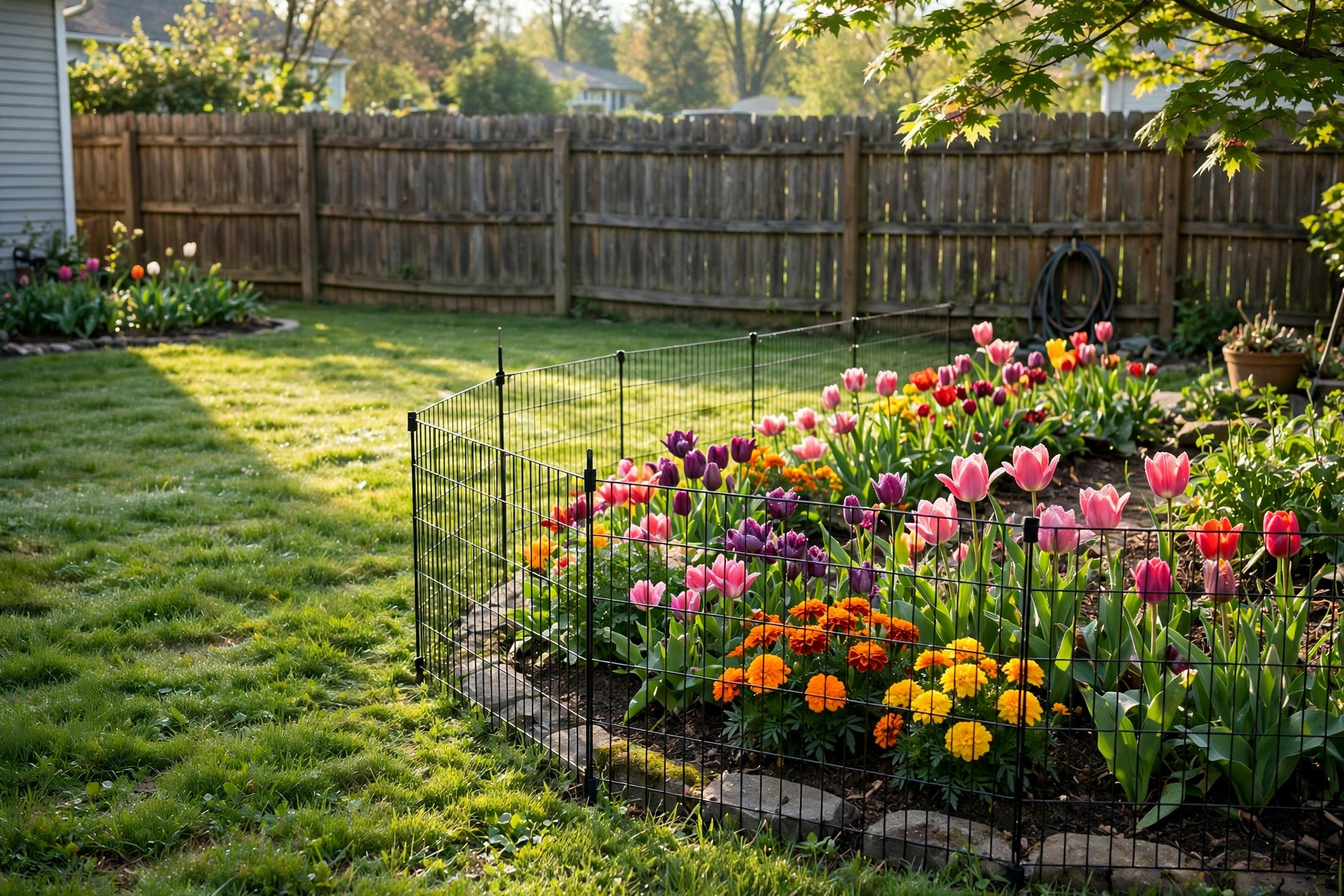

A pet fence for garden to protect flower beds can save a whole season of hard work. Many pet owners love their dogs and cats, and they also love their gardens. The trouble starts when a playful dog digs up the tulips or a cat uses the fresh mulch as a litter box. A small, well-placed fence solves this problem without harsh methods. This guide explains why a fence helps, what to look for, which types work best, what they cost, and how to keep them in good shape.
Why Your Flower Beds Need a Pet Fence
Flower beds are rich with soft soil, water, and scent. To a dog, fresh soil smells like a good place to dig. To a cat, a loose bed of mulch looks like a clean place to use the bathroom. Both animals can destroy weeks of planting in a single afternoon. A pet fence for garden to protect flower beds gives your plants a clear border. It tells your pets where they may go and where they may not go.
A fence is kinder than scolding. Pets learn rules by habit, not by words. When a low barrier blocks the bed day after day, the animal stops trying. Many owners find that one season with a fence is enough to break the habit. After that, some pets leave the beds alone even when the fence is moved.
There are health reasons too. Some fertilizers and mulches can harm pets. Cocoa bean mulch, for example, is known to be dangerous for dogs. A fence keeps curious noses away from products that were made for plants, not animals. Pet care advice from experienced keepers often lists physical barriers as the first line of defense, and resources such as The Spruce Pets give plain advice on keeping pets safe around the home and yard.
A fence also keeps neighbors’ pets and stray animals out. If your yard is open, a wandering cat from down the street may claim your flower bed. A simple fence sends a message to every animal, not just your own.
What to Look For When You Choose a Pet Fence: Pet Fence for Garden to Protect Flower Beds
Not every fence fits every garden. Before you buy, walk your yard and look at the beds you want to guard. Note the length you must cover, the height of your pet, and the look you want. A fence should do its job without ruining the view of your flowers.
Height
Height is the most important feature. The fence must be tall enough that your pet will not jump it. For small dogs and most cats, a fence of 18 to 24 inches is enough to protect a bed from digging and walking through. For medium and large dogs, you may need 30 to 36 inches. Watch your pet for a few days. Some dogs climb more than they jump. For such dogs, a fence with no footholds works better than a tall one with bars to climb.
Material
Pet fences for gardens come in wire, plastic, wood, and bamboo. Wire and plastic are light and easy to move. They cost less and they do the job for most yards. Wood and bamboo look nicer and blend with the garden. They cost more and need more care. If your area gets strong sun or heavy rain, choose a material that will not rust or crack. Powder-coated metal holds up well over time.
Ease of Setup
Most garden pet fences need no tools. They come in panels with stakes that push into the soil. This matters because you may want to move the fence as the season changes. In spring, you may guard new seedlings. In summer, you may move the fence to a vegetable bed. A tool-free design lets you change the layout in minutes. Retailers that sell a wide range of fencing options, such as Home Depot or Lowe’s, carry panels in many sizes so you can match your bed exactly.
Appearance
A garden is a place of beauty. An ugly fence can spoil the view. Look for fences with clean lines and colors that blend with plants. Black, dark green, and natural brown are good choices. Some fences have arched tops or scroll work that look like part of the garden design. A decorative pet fence for garden to protect flower beds can add charm while it does its work.
Types of Pet Fences for Gardens
Several types of pet fence for garden to protect flower beds are sold today. Each has strengths and limits. The right one depends on your pet, your beds, and your budget.
Wire panel fences. These are the most common type. They are made of steel wire formed into grids, with stakes at the bottom. They are strong, low cost, and easy to join into long runs. They work well for dogs of all sizes. The open grid lets you see the flowers through them.
Plastic mesh fences. These are light and cheap. They are good for short-term use, such as guarding new seedlings for a few weeks. They will not last as long as metal. Strong dogs can chew through thin plastic, so this type suits calm pets best.
Wood picket fences. Short wooden picket fences look classic and warm. They suit cottage-style gardens. They need paint or stain to last outdoors. They cost more than wire, but many owners feel the look is worth it.
Bamboo fences. Bamboo rolls give a natural look. They are light and easy to cut to length. They work for low borders where the goal is to block access, not to stop a jumper.
No-dig fence panels. These panels push into the ground with pointed stakes. No digging and no concrete are needed. They are the easiest type to install and move. Many pet owners choose them because the whole job takes less than an hour. A farm supply store such as Tractor Supply stocks sturdy no-dig panels that hold up to active dogs.
Electric or wireless pet fences. Some owners use buried-wire or wireless systems that train pets with a signal from a collar. These systems can work, but they need careful training and they do not block other animals. For simple bed protection, a physical fence is usually the better choice. If you are unsure which method fits your pet, ask your veterinarian. Veterinary guidance on behavior, like the material found at PetMD, can help you decide between training and barriers.
Cost and Price
A pet fence for garden to protect flower beds is one of the cheapest garden projects you can take on. Small wire panel sets start at very low prices. A set of ten panels, enough to guard a bed of about 20 feet, often costs less than a bag of good fertilizer. Larger or decorative sets cost more. Wood picket fences cost the most among common types, but they last for years with care.
Shop around before you buy. Prices change with the season. Early spring brings the most demand, and prices may rise. Late summer sales can bring good deals. Online pet supply retailers such as Chewy often carry garden pet fences with reviews from other pet owners, which helps you judge quality before you order. General home retailers such as Wayfair also list decorative options that double as garden features.
Count the full cost, not just the panels. You may need extra stakes for soft soil, or connectors to join sets from different brands. These small parts add a few dollars. Still, most owners finish the whole project for far less than the cost of replacing a ruined bed of plants.
Care and Upkeep
A garden pet fence needs little care, but a little care goes a long way. Walk the fence line once a month. Push down any stakes that have worked loose. In soft soil after rain, stakes can lift. Tighten any panels that lean.
Clean the fence in spring and fall. Wash wire and plastic with a hose to remove dirt and algae. For wood fences, check for rot at the base. Sand rough spots and add a fresh coat of paint or stain every two or three years. This keeps the fence strong and good looking.
In winter, decide whether to leave the fence up. In areas with heavy snow, a light fence may bend under the weight. Many owners take down plastic and wire panels in late fall and store them in a shed. Wood fences can stay up all year. When you store panels, stack them flat and dry so they do not warp.
A tidy yard also helps with removing pet odors from the house. When pets have clear paths and clean outdoor spaces, they track less dirt inside. A fenced garden is part of a clean home routine.
Safety Tips
Safety comes first when you put up any fence around animals. Follow these simple rules.
First, check for sharp edges. Cheap wire panels can have rough cut ends. Run your hand along the top and sides before you place the fence. File down or cover any sharp points. Pets brush against fences, and a cut can lead to infection.
Second, make sure the fence is stable. A fence that falls can trap a small animal or scare a large one into bolting. Push stakes deep into firm soil. In loose soil, use longer stakes or add a second row.
Third, watch the gaps. The space between panels and the space under the fence both matter. A small dog or cat can squeeze through a gap you would never expect. Check the fence from your pet’s eye level. If you see a gap, close it.
Fourth, keep toxic plants and chemicals behind the fence, not in front of it. The fence guards the bed, but a clever dog may still reach over a low fence. Store fertilizers and sprays in a locked shed. Animal welfare experts at the ASPCA keep lists of plants and products that are toxic to pets, and their guidance is worth reading before you plant.
Fifth, give your pet a good alternative. A dog that cannot reach the flower bed still needs a place to run and play. Dogs that spend long hours outside also need shelter, and insulated outdoor dog houses for winter keep them safe in cold months. Cats that stay indoors need their own territory too, and indoor cat trees with hiding spots give shy cats a safe place to rest. A pet with its own space is less likely to bother your plants.
Finally, never use a fence as punishment. The fence is a tool for guidance. Train with praise and treats when your pet stays out of the bed. Dog training guidance from groups like the AKC stresses kind, steady training, and a fence fits well into that approach.
Frequently Asked Questions
Will a short fence really stop my dog from digging? In most cases, yes. Dogs dig where the soil is open and easy. A fence removes the easy access. Pair the fence with training and with a proper digging spot, like a sand box, and most dogs give up on the beds within weeks.
Can cats jump over a garden pet fence? Many cats can jump higher than a low garden fence. For cats, the fence works best as a barrier to walking through, not as a wall. If your cat jumps in, raise the fence, add a second row, or use covers such as netting over prized beds. Garden care guides, including those at The Spruce, offer more ideas for cat-proofing garden beds.
Do I need to dig post holes for a pet fence? No. Most pet fences for gardens are no-dig designs. The stakes push straight into the soil by hand or with a light tap from a mallet. This is one reason the project is so simple.
How long will a wire garden fence last? A good powder-coated wire fence lasts five to ten years outdoors. Plastic mesh lasts one to three seasons. Wood lasts five to eight years with paint or stain. Sun, rain, and soil contact all affect life span.
Is it safe to use a pet fence around vegetable gardens? Yes. A fence around vegetables works the same way as around flowers. Make sure the fence material is rust-resistant and free of flaking paint, since flakes could fall into the soil. Keep the fence a few inches back from the plants so stems can grow.
What is the cheapest way to protect flower beds from pets? Short wire panel sets are the cheapest good option. They cost little, last for years, and move with ease. For a very small bed, even a simple ring of panels is enough.
A Final Word
A pet fence for garden to protect flower beds is a small change with a large payoff. It ends the daily battle between pets and plants. It keeps animals away from harmful garden chemicals. It costs little and takes less than an hour to set up. Most of all, it lets you enjoy both parts of your home life: the joy of your pets and the beauty of your garden. Choose the right height and material, keep it stable and safe, and your flower beds will bloom in peace season after season.
References
American Kennel Club. (n.d.). Dog care and training resources. https://www.akc.org ASPCA. (n.d.). Pet care and animal welfare resources. https://www.aspca.org Chewy. (n.d.). Pet supplies. https://www.chewy.com Lowe’s. (n.d.). Home improvement products. https://www.lowes.com PetMD. (n.d.). Pet health information. https://www.petmd.com The Home Depot. (n.d.). Home improvement products. https://www.homedepot.com The Spruce. (n.d.). Home and garden advice. https://www.thespruce.com The Spruce Pets. (n.d.). Pet care guides and product reviews. https://www.thesprucepets.com Tractor Supply Co. (n.d.). Farm and ranch supplies. https://www.tractorsupply.com Wayfair. (n.d.). Furniture and home goods. https://www.wayfair.com
Was this guide helpful?

About David Wilson
The My Garden US editorial team writes practical, in-depth home and garden guides for American homeowners — tested advice, no fluff.
You May Also Like

A Heated Water Dish for Outdoor Barn Cats: How to Keep Water Liquid All Winter
September 10, 2026 0 views
Best Dog Shampoo for Dry Flaky Skin Relief
August 29, 2026 0 views
Cat Door for Interior Door Installation Easy: A Simple Guide for Pet Owners
June 2, 2026 0 views