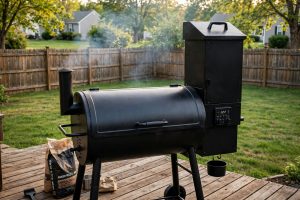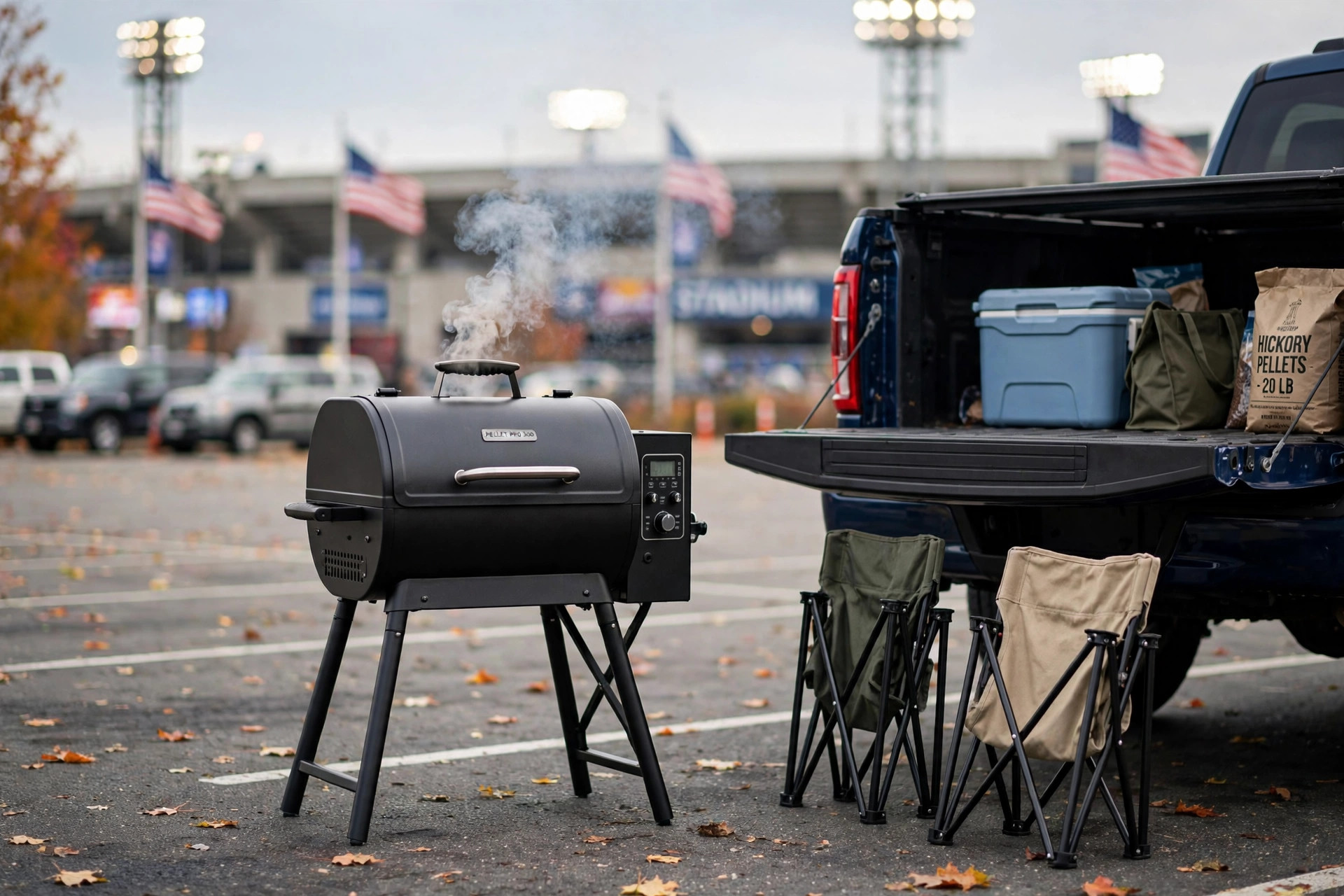

Finding the best portable pellet grill for tailgating is a smart move for any fan who takes game day food seriously. A pellet grill burns small wood pellets and feeds them into the fire on its own. You set the temperature with a dial, and the grill holds it steady. That means you can cook ribs, burgers, and wings in a parking lot without standing over hot coals. Tailgating is about good company and good food. A portable pellet grill gives you both, because it frees you from the fire so you can enjoy the day.
The idea is simple. Pellets pour into a hopper on the side of the grill. An electric auger pushes them into a fire pot. A fan blows air across the fire. A controller watches the temperature and adds more pellets when the heat drops. The result is real wood smoke with the ease of an oven. For a tailgate, where space is tight and time is short, that ease matters.
Why a Pellet Grill Works Well for Tailgating
A tailgate is not your backyard. You have one parking space, a truck bed or car trunk, and a few hours before the game. Charcoal takes time to light and steady effort to control. A gas grill is quick, but it gives no smoke flavor. A portable pellet grill sits in the middle. It lights with the push of a button. It reaches cooking temperature in ten to fifteen minutes. Then it holds that temperature while you talk with friends.
Smoke flavor is the main reward. Wood pellets come in flavors like hickory, apple, mesquite, and cherry. The grill burns them cleanly and gives food a gentle smoke taste that gas cannot match. Wings come off the grill with crisp skin and a soft smoky note. Burgers pick up flavor that reminds you of a campfire. Many fans who once cooked only on gas say they never go back after one game day with pellets.
Control is the second reward. The digital controller on most portable pellet grills works like a home oven thermostat. You choose 225 degrees for slow smoking or 450 degrees for hot searing. The grill does the rest. This matters at a tailgate because you will be pulled away from the grill. A friend arrives. The band starts playing. The controller keeps the heat steady while you are gone.
Space is the third reward. Portable models are built small. Many weigh between 40 and 70 pounds. Most have folding legs or fit on a table. A single grill can feed ten to fifteen people with wings or burgers, yet it packs into a corner of a truck bed. Compared to a full-size pellet smoker, which can weigh over 150 pounds, a portable unit is easy for one person to carry and set up.
What to Look For When You Choose One: Best Portable Pellet Grill for Tailgating
Start with cooking area. This is measured in square inches. A grill with 200 to 300 square inches of space will cook for six to ten people at once. A grill with 300 to 400 square inches will feed a larger group. Think about your usual tailgate crowd. If you always cook for a big group, buy more space. If you cook for a few close friends, a small grill is fine and easier to carry.
Weight comes next. The best portable pellet grill for tailgating is one you will actually carry. Check the weight before you buy. A grill that weighs 45 pounds is easy for most adults to lift into a truck. A grill that weighs 70 pounds may need two people. Folding legs and carry handles make the job much easier. Some models fold flat like a suitcase, which helps in a crowded trunk.
Look at the hopper size. The hopper holds the wood pellets. A small hopper holds 4 to 5 pounds of pellets. That is enough for about four to six hours of cooking at smoking temperatures. At high grilling temperatures, pellets burn faster, so a small hopper may last only two to three hours. For most tailgates, that is enough. If you plan to smoke a brisket for many hours, you will need to refill the hopper once or twice. Some owners carry a spare bag of pellets in the truck, which solves the problem.
Temperature range is important. A good portable pellet grill should reach at least 450 degrees Fahrenheit for searing burgers and steaks. The low end should drop to around 180 degrees for slow smoking. Check the numbers in the product details before you buy. A grill that cannot get hot enough will disappoint you when you want a good crust on a steak. Reviews from testing groups like Consumer Reports can help you compare real temperature performance across brands.
Power is a point many buyers forget. A pellet grill needs electricity to run the auger, the fan, and the controller. At a tailgate, there is no wall outlet. You will need a portable power source. Many owners use a small portable power station or a deep-cycle battery with an inverter. A pellet grill uses the most power at startup, when it lights the fire. After that, it uses very little. A mid-size power station can run a portable pellet grill for many hours. Plan for this cost before game day.
Build quality matters more on the road than at home. A grill that rides in a truck bed will bounce and shake. Look for a sturdy body, tight hinges, and a lid that latches shut. Stainless steel parts resist rust. Thick steel holds heat better on a cold day. A grill with thin walls may struggle to hold temperature when the wind blows in November.
Types of Portable Pellet Grills
Tabletop models are the smallest. They sit on a picnic table or the tailgate of a truck. They weigh 30 to 45 pounds. They are easy to carry and quick to set up. The cooking area is small, so they suit small groups. A tabletop model is a good pick for couples or small families.
Folding-leg models stand on the ground like a full-size grill. The legs fold under the body for travel. They weigh 50 to 70 pounds. They give more cooking area than tabletop models. They are the most common choice for tailgating because they stand at a comfortable height and still fit in a truck. Many of these are made by well-known grill makers such as Weber and Char-Broil, who both sell compact outdoor cookers worth a look.
Suitcase-style models fold into a case with a handle. They are neat and easy to carry. They tend to have less cooking space, but they pack well. If trunk space is tight, this style has an edge.
Some pellet grills sit between portable and full-size. They have wheels and a small cart. They are easy to roll but harder to lift. They work for tailgating if you have a truck with a ramp or a trailer. For most fans, a true portable with folding legs is the better pick.
No matter the type, the fire works the same way. Pellets feed into the fire pot. The fan and controller do the rest. Guides at AmazingRibs explain this process in clear detail for new owners.
Cost and Price: What You Should Expect to Pay
Portable pellet grills cost more than portable gas grills. Expect to pay between 250 and 600 dollars for a good portable pellet grill. Smaller tabletop models sit at the low end. Larger folding-leg models with better controllers sit at the high end.
Do not forget the extras. A bag of wood pellets costs 15 to 25 dollars and lasts several cooks. A portable power station costs 150 to 400 dollars, though you may already own one. A grill cover costs 20 to 40 dollars and protects the grill in the truck bed. A good meat thermometer is worth 25 to 50 dollars. Cooking sites like The Spruce Eats offer simple guides to thermometers and other basic gear.
Compare the warranty as well. Prices change with the season. Late summer sales often cut grill prices before football season. Big stores like The Home Depot carry several portable models in one place, which lets you compare weight and size in person. Compare the warranty as well. A three-year warranty is a good sign that the maker trusts the product.
Care and Upkeep
A pellet grill needs regular care, but the work is simple. After each cook, let the grill cool. Then brush the grates with a grill brush while they are still warm. Empty the grease tray if it is full. Grease left in the tray can catch fire on the next cook.
Every few cooks, clean the fire pot. Ash builds up in the pot and can block the fire. Most grills have a clean-out door or a removable pot. Scoop out the ash with a small cup. This takes five minutes and keeps the grill running well. For a full routine, our pellet grill maintenance tips for beginners walk through each step in order.
Keep pellets dry. Wood pellets soak up water fast. Wet pellets swell and jam the auger. Store pellets in a sealed bucket with a lid. Do not leave a bag of pellets in the truck bed in the rain. At the tailgate, keep the pellet bag off the ground and away from coolers that may leak.
Cover the grill between games. A cover keeps out rain and dust. It also protects the paint during the drive. If the grill will sit unused for the winter, run the hopper empty. Pellets left in the hopper for months can absorb moisture and clog the auger in spring.
Check the power cord and plug before each season. A damaged cord is a fire risk. Wipe the temperature probe clean so it reads correctly. A dirty probe can cause the controller to misread the heat.
Safety at the Tailgate
A grill is safe when you respect the fire. Set the grill on level ground, away from the truck, tents, and coolers. Keep at least three feet of clear space on all sides. Hot grease can drip, so do not set the grill near dry leaves or paper.
Never leave a lit grill alone. The controller holds the temperature, but you should still check the grill every fifteen to twenty minutes. Keep children and pets away from the hot surfaces. A portable grill sits low, and a child can touch it by accident.
Let the grill cool before you load it into the truck. The metal stays hot for thirty minutes or more after cooking. Plan your pack-up time around this. Carry heat-proof gloves for handling the grates and grease tray.
Ventilation matters. A pellet grill makes smoke and carbon monoxide, like any fire. Use it outdoors only. Never run a pellet grill inside a tent, a garage, or the cab of a truck. Keep the grill downwind of your chairs so smoke blows away from your group.
Keep a small fire extinguisher in your tailgate kit. A kitchen-size extinguisher is enough. Make sure at least one person in your group knows how to use it. This is cheap insurance for a day built around fire and food.
Frequently Asked Questions
How long does a portable pellet grill take to heat up? Most portable pellet grills reach 350 degrees in ten to fifteen minutes. Cold weather adds a few minutes. Start the grill before you unpack the food so it is ready when you are.
Can I sear steaks on a pellet grill? Yes, if the grill reaches 450 degrees or higher. Not every portable model gets that hot, so check the specifications. A grill with a direct-flame mode sears better. For thick steaks, many owners smoke first and sear last.
How many people can a portable pellet grill feed? A grill with 300 square inches of cooking space can cook about 12 burgers or 20 chicken wings at once. For a group of ten to fifteen, plan two rounds of cooking or start earlier. Slow-smoked meats like ribs take hours, so plan your menu around the game schedule.
Do I need special pellets? Use food-grade wood pellets made for pellet grills. Do not use heating pellets, which may contain binders or bark that are not safe for food. Fruitwood pellets give mild smoke. Hickory and mesquite give strong smoke. Many makers, from Broil King to Napoleon to Big Green Egg, sell their own pellets, but any food-grade brand works in any grill.
Can I cook a brisket on a portable pellet grill at a tailgate? A full brisket is too large and takes too long for most portable grills and most tailgates. A small brisket flat or a pork shoulder can work if you start very early. Our guide on how to smoke a brisket on a pellet grill covers the method step by step. For most game days, ribs, wings, and sausages are the better pick.
Is a pellet grill better than a portable gas grill for camping too? It depends on what you value. Pellet grills give better smoke flavor but need electric power. Gas grills light faster and need no power. If you also camp, read our notes on the best portable grill for camping to compare the trade-offs.
A Short Final Word
The best portable pellet grill for tailgating is the one that fits your truck, your crowd, and your budget. Pick enough cooking space for your group. Make sure you can lift it. Buy food-grade pellets and a power source. Keep the grill clean and give it room to breathe. Do these simple things, and game day food will be the best part of the day. The game is never a sure thing. The food can be.
References
AmazingRibs.com. (n.d.). Barbecue and grilling science. https://www.amazingribs.com Big Green Egg. (n.d.). Kamado grills and outdoor cooking. https://www.biggreenegg.com Broil King. (n.d.). Gas and charcoal grills. https://www.broilkingbbq.com Char-Broil. (n.d.). Gas and charcoal grills. https://www.charbroil.com Consumer Reports. (n.d.). Product reviews and ratings. https://www.consumerreports.org Napoleon. (n.d.). Fireplaces, grills, and heating products. https://www.napoleon.com The Home Depot. (n.d.). Home improvement products. https://www.homedepot.com The Spruce Eats. (n.d.). Recipes and cooking guides. https://www.thespruceeats.com Weber. (n.d.). Grills and outdoor cooking. https://www.weber.com
Was this guide helpful?

About Michael Thompson
The My Garden US editorial team writes practical, in-depth home and garden guides for American homeowners — tested advice, no fluff.
You May Also Like
Gas Grill Clearance Sale Near Me: How to Save Big on a Quality Grill
August 18, 2026 0 views
Charcoal Grill Deals Near Me USA: Where to Find the Best Bargains
August 18, 2026 0 views
Best Infrared Grill for Steaks Reviews: How to Find Your Perfect Sear
May 7, 2026 0 views