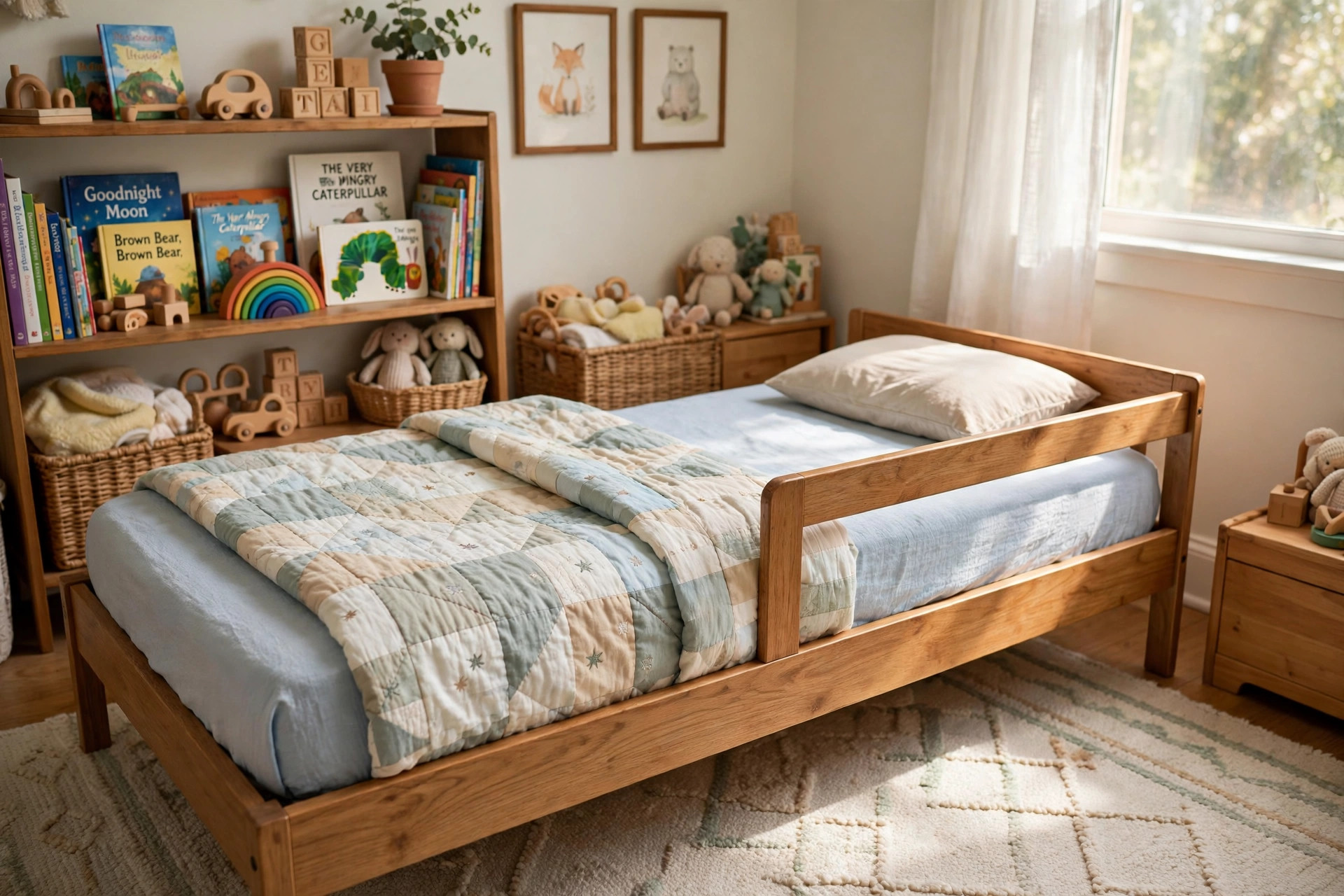

The day comes for every family. The crib that once held a tiny baby starts to feel small. Your child climbs out of it, or asks for a big-kid bed, and you know the time has come. Choosing the right toddler bedding for crib to bed transition is one of the best things you can do to make this change smooth.
Most children make this move between eighteen months and three years of age. Every child is different. Some are ready early. Some need more time. There is no prize for rushing. What matters is that the child feels safe and that the new bed fits the child well.
Why the Move to a Big-Kid Bed Matters
The crib to bed transition is more than a change of furniture. It is a step in your child’s growth. For the first time, your child sleeps in a bed that is open on the sides. The child can get up and walk around. That freedom feels big to a small person.
Good sleep helps a child grow. Bedding is part of the sleep picture. A soft sheet that fits the mattress stays in place. A light blanket that is easy to move gives warmth without weight. Familiar colors and patterns give comfort. When a child moves from a crib to a bed, much is new. The room is the same, but the bed is not. Bedding that feels soft and known can steady the child during those first nights.
Parents often ask if they should buy all new bedding for the change. You do not have to buy everything at once. Start with fitted sheets that fit the new mattress. Add a light blanket or quilt. Keep it simple. You can add more pieces later, once the child is used to the bed.
What to Look For in Toddler Bedding: Toddler Bedding for Crib to Bed Transition
Shopping for toddler bedding is easier when you know what matters most. The lists on store shelves can be long. The packages can promise much. A calm buyer looks at a few plain facts: the fabric, the fit, and the warmth.
Fabric and Material
Cotton is the most common choice for toddler bedding, and for good reason. It is soft. It lets air pass through. It washes well. Look for sheets made of pure cotton or a cotton blend with a tight weave. A fabric that feels smooth in the store will feel smooth on the bed.
Flannel cotton is a fine pick for cold months. It has a brushed surface that feels warm to the touch. Microfiber sheets are cheap and come in many patterns, but they do not breathe as well as cotton. If your child sleeps hot, stay with cotton.
Wash every new sheet before the first use. New fabric can carry dust from the factory. One wash makes it softer and cleaner.
Size and Fit
A standard toddler bed uses a crib mattress. That makes shopping simple. The mattress size is about 28 by 52 inches. Any fitted sheet made for a crib mattress will fit a toddler bed. A toddler bed with guard rails keeps the child from rolling out, and the rails work best when the sheet fits snug and does not bunch.
Read the depth on the sheet package. Many sheets fit mattresses five to eight inches thick. Pull the sheet over each corner and tug. It should grip the mattress and stay flat when the child moves.
Flat sheets are a matter of taste. Some families use them. Some skip them and use only a fitted sheet with a blanket on top. For toddlers, a fitted sheet and a light blanket are often enough.
Weight and Warmth
Toddlers move in their sleep. They kick off heavy blankets. They bunch up light ones. The best bedding for the transition is light but warm. A thin quilt or a medium blanket is a good middle ground.
Think in layers. A fitted sheet, a light blanket, and the child’s sleep clothes form one warm system. On cold nights, add a second light blanket. On warm nights, the sheet alone may do. Layers let you change the warmth without buying new bedding for each season.
Types of Toddler Bedding to Consider
Stores sell many kinds of bedding. Each type has its place. Here is a plain look at the main choices.
Sheet Sets
A sheet set for a toddler bed usually has one fitted sheet and one flat sheet. Some sets add a pillowcase. Buying a set is often cheaper than buying pieces alone. Buy at least two sets. Children have accidents at night. A spare set lets you change the bed at two in the morning without waiting for the wash.
Look for sheets with elastic all the way around, not just at the corners. Full elastic holds the sheet tight through a restless night.
Blankets and Quilts
A light quilt or a soft blanket gives warmth for the top of the bed. Choose one that is easy for small hands to pull up. Heavy quilts made for adult beds are too much for a toddler. They are hard to move and can feel smothering.
Fleece blankets are warm and wash well. Cotton quilts breathe better. Either works. The key point is size. A blanket made for a toddler or crib bed is easier to manage than one made for a twin bed. It will not drag on the floor and trip the child during the night.
Pillows
For years, sleep experts have said that babies under twelve months should sleep without a pillow. The Consumer Product Safety Commission sets out safety rules for infant sleep products, and the same careful spirit should guide the toddler years. When your child moves to a big-kid bed, a pillow is allowed, but keep it small and flat.
A toddler pillow is about 13 by 18 inches, much smaller than a standard pillow. It lifts the head just a little. Many children do fine without any pillow for a while. Watch your child. If the child folds an arm under the head or stacks a stuffed toy as a pillow, it may be time to add one.
Sleep Sacks and Wearable Blankets
Some toddlers still use sleep sacks when they leave the crib. A sleep sack is a safe way to keep a child warm without loose blankets in the bed. There is no rule that says the sack must go when the crib goes. Many families keep the sleep sack for months after the move. It gives the child a familiar feel at bedtime.
If your child is ready to leave the sack behind, make the change slowly. Use the sack with the new bedding for the first week. Then switch to a light blanket. Small steps work better than big ones.
Cost and Price of Toddler Bedding
The price of toddler bedding ranges wide. A basic fitted sheet can cost less than ten dollars. A full bedding set with sheets, a quilt, and a pillowcase can cost fifty dollars or more. Organic cotton sets often cost the most.
You do not need the most costly set to keep your child safe and warm. A mid-priced cotton sheet set from a trusted store will do the job. Stores like IKEA and Wayfair carry many simple sets at fair prices, and a shop like Pottery Barn Kids offers higher-end choices with many patterns.
Plan to buy two sheet sets and one or two blankets. For most families, that means a total spend of thirty to eighty dollars. Wash sales and clearance racks can cut that in half. What matters is the fit and the fabric, not the brand name on the tag.
A toddler bedding set with pillow for crib can be a smart buy if it matches the mattress you already own. Since most toddler beds use a crib-size mattress, bedding bought for the crib often carries over. Check the size before you buy again.
Care and Upkeep
Toddler bedding needs washing often. Sheets should go through the wash once a week, and sooner after any accident. Blankets can go two to three weeks between washes unless they are soiled.
Use warm water and a mild soap. Hot water wears out elastic faster. Skip fabric softener on a regular basis. It coats the fibers and can make cotton feel slick over time. A small cup of white vinegar in the rinse now and then keeps sheets soft without chemicals.
Dry sheets on medium heat or on a line in the sun. Pull sheets from the dryer while they are still a touch damp, then smooth them on the bed.
Check elastic and seams each month. A sheet with loose elastic will not stay on the mattress. A blanket with a torn seam can catch small fingers. Mend small tears at once, or replace the piece. Bedding is a work tool. It wears out, and that is normal.
Keep one full spare set ready at all times. Store it in the child’s room, in a drawer or a basket near the bed. At night, speed matters. A parent who can strip and remake a bed in five minutes will be back asleep much sooner.
Safety Comes First
Safety is the first rule of the crib to bed transition. The Consumer Product Safety Commission and groups like HealthyChildren.org and Zero to Three remind parents that a safe sleep space matters at every age.
Start with the bed itself. If you use a convertible crib that turns into a toddler bed, follow the maker’s directions for the change. Tighten all bolts. Check that the guard rail is fixed firm. If you buy a new toddler bed, look for one that meets current safety standards. The CPSC site lists recalls, and it is wise to check any secondhand bed there before you use it.
Place the bed with care. Keep it away from windows with cords. Blind cords are a known danger to small children. Keep the bed away from heaters, lamps with hot bulbs, and furniture the child could climb. A night light with a cool bulb gives comfort without heat.
Keep the bed simple at first. A fitted sheet, a light blanket, and one small pillow are enough. Skip large stuffed animals, thick comforters, and bed tents until the child is older. Each extra item in the bed is one more thing to manage in the dark.
Teach the new rules with patience. Show the child how to get in and out of the bed. Put a soft rug or mat beside the bed in case of falls. Some families place the mattress on the floor for the first weeks. That is a fine choice. The goal is safe sleep, not a pretty room.
Watch for climbing. Some toddlers learn to climb the guard rail. If your child climbs out often, lower the mattress if the bed allows it. If the bed has no lower setting, it may be time to remove the rail and let the child use the bed open. Talk to your child’s doctor if sleep becomes a real problem. The What to Expect site and Parents magazine both carry many parent-tested tips for rough nights.
Frequently Asked Questions
When should I move my child from a crib to a bed?
Most children move between eighteen months and three years. The right time is when the child climbs out of the crib, asks for a big bed, or outgrows the crib. Do not rush it. A child who is not ready may sleep worse in a new bed. The Sleep Foundation notes that steady bedtime habits matter more than the exact age of the move.
Can I use the same sheets from the crib?
Yes, in most cases. A standard toddler bed uses the same crib-size mattress, so crib sheets fit. This is one of the kindest parts of the change. The child keeps a sheet that already smells like home. If you are buying fresh pieces, guides at The Spruce can help you compare fabrics and sets.
Does my toddler need a pillow right away?
No. Many toddlers sleep well without a pillow for months after the move. When you do add one, choose a small, flat toddler pillow. It should lift the head only a little. If the child’s neck bends at a sharp angle, the pillow is too thick.
What is the safest blanket for a toddler bed?
A light, breathable blanket is safest. It should be easy for the child to push away. Avoid heavy adult comforters and thick quilts. Keep the blanket at chest level or lower, never over the face.
How do I handle night waking after the move?
Stay calm and steady. Walk the child back to bed with few words and little light. Keep the room dark and quiet. It helps to keep the same bedtime steps you used with the crib: bath, book, song, lights out. Most children settle into the new bed within one to two weeks.
Should the bedding match the room decor?
It can, but comfort comes first. A child who loves dinosaurs will sleep better in dinosaur sheets than in a stylish plain set. Let the child pick between two or three safe choices. That small bit of control makes the new bed feel like theirs.
A Short Final Word
The crib to bed transition is a small event with a big feeling. Your child is growing, and the bed is proof. The right toddler bedding for crib to bed transition will not do the work alone. Your calm voice, your steady routine, and your patience do most of it. But soft sheets that fit, a light blanket, and a safe, simple bed give your child the best start. Take it slow. Wash the sheets. Keep the nights quiet. Before long, the big-kid bed will feel like it was always there.
References
American Academy of Pediatrics. (n.d.). HealthyChildren.org. https://www.healthychildren.org IKEA. (n.d.). Home furnishings. https://www.ikea.com Parents. (n.d.). Parenting advice and family life. https://www.parents.com Pottery Barn Kids. (n.d.). Kids furniture and decor. https://www.potterybarnkids.com Sleep Foundation. (n.d.). Sleep information and guidance. https://www.sleepfoundation.org The Spruce. (n.d.). Home and garden advice. https://www.thespruce.com U.S. Consumer Product Safety Commission. (n.d.). Product safety information. https://www.cpsc.gov Wayfair. (n.d.). Furniture and home goods. https://www.wayfair.com What to Expect. (n.d.). Pregnancy and parenting guidance. https://www.whattoexpect.com ZERO TO THREE. (n.d.). Early childhood development resources. https://www.zerotothree.org
Was this guide helpful?

About Michael Thompson
The My Garden US editorial team writes practical, in-depth home and garden guides for American homeowners — tested advice, no fluff.
You May Also Like

Nursery Sound Machine for Baby Sleep Aid: A Calm Guide for New Parents
August 2, 2026 0 views
Nursery Glider Chair with Ottoman for Breastfeeding
May 26, 2026 0 views
Best Convertible Toddler Bed with Safety Rail for Growing Children
July 6, 2026 0 views