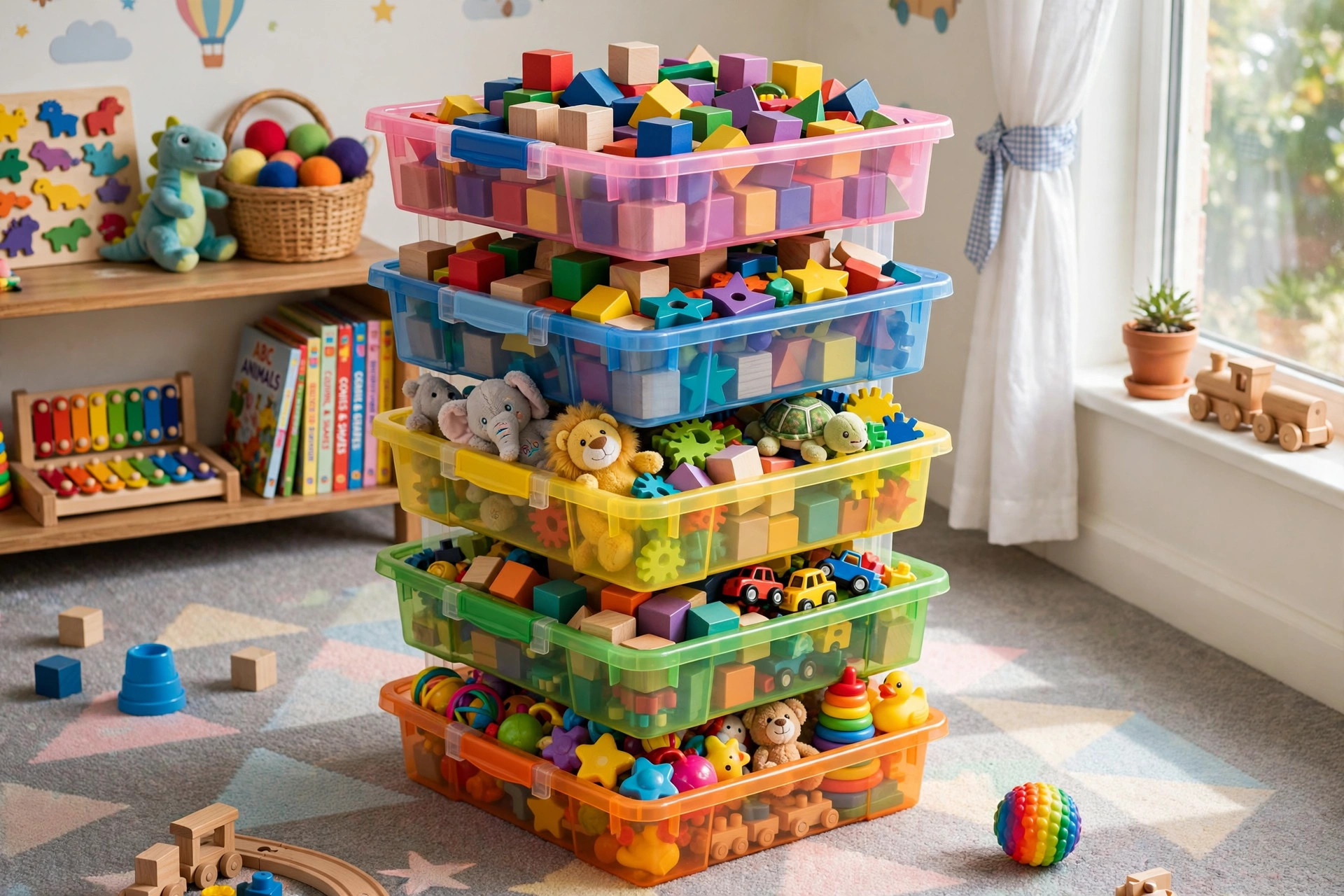

Parents across the country face the same small war every evening. Toys lie on the floor. Blocks hide under the couch. Small cars gather dust behind the curtains. A home with children needs a place for every toy, or the toys take over the home. That is why so many families now look for stackable toy storage bins for sale. These simple bins stack on top of one another. They save floor space. They teach children to put toys away. And they fit into closets, playrooms, and corners with ease.
This guide explains what to look for before you buy. It covers the main types, the price range, safety points, and care. It also answers common questions from parents. Whether you live in a small apartment or a large house, you will find useful points here.
Why Stackable Bins Matter in a Family Home
Order in the home helps the whole family. When toys have a set place, cleanup takes ten minutes instead of an hour. Children learn a habit that lasts a lifetime. A neat room also feels calmer. Stress drops when clutter goes down.
Stackable toy storage bins for sale give you this order at a fair price. They use vertical space. A tower of three bins takes the same floor space as one bin. That matters in small rooms. In a child’s bedroom, floor space is play space. Every square foot saved is a square foot gained for play.
Schools and day care centers use the same idea. They stack bins by color or size. Each class of toys gets its own bin. Blocks go in one. Dolls go in another. Art supplies go in a third. The same system works at home. You can label each bin with a picture or a word. Young children who cannot read yet learn the picture labels fast.
The bins also travel well. Many types come with lids and handles. You can carry a bin of toys to the living room and back.
What to Look For Before You Buy: Stackable Toy Storage Bins for Sale
Not every bin suits every home. A wise buyer checks a few points first.
Size and Depth
Think about the toys you own. Large building blocks need deep bins. Small cars and figures fit in shallow ones. Measure your shelf or closet before you shop. A bin that is one inch too wide wastes the whole shelf. Many sellers list exact outside and inside sizes. Read both. The inside size tells you what fits. The outside size tells you where it fits.
Stacking Strength
A stackable bin must hold the bins above it. Cheap thin plastic may bend or crack under weight. Look for bins with strong rims or lids made to hold weight. Some brands test their bins with pounds of weight. They print the limit on the box or the web page. A set meant for heavy toys should hold at least twenty pounds per bin.
Material and Build
Most bins use plastic. Polypropylene is a common choice. It is light and strong. It resists stains. Fabric bins are another option. They are soft and light. They fold flat when empty. But they hold less weight and need more care. Wood bins look fine but cost more and weigh more. Plastic remains the top pick for most families. The team at The Spruce often reviews storage bins and notes which plastics hold up best over years of daily use.
Lids and Open Fronts
Open-front bins let children see and grab toys fast. They suit playrooms where toys come out daily. Lidded bins keep dust out. They suit closets and shelves.
Color and Label Options
Bright colors help children sort toys by bin. Clear or frosted bins let you see the contents without opening. Many bins include slots for labels. You can write on paper cards and slide them in. Picture labels work for toddlers. Word labels work for school-age children.
Types and Options on the Market
The market offers many kinds of stackable toy storage bins. Here are the main ones you will meet when you search for stackable toy storage bins for sale.
Basic Plastic Stacking Bins
These are the most common. They are made of hard plastic with sloped fronts. They stack straight up. They come in sets of three, six, or twelve. Prices stay low. They last for years. They are easy to wash with a damp cloth. Stores like Home Depot carry wide ranges of these bins in stores and on their web site.
Fabric Cube Bins
Fabric bins fit inside cube shelves. Each bin is a soft cube with a firm frame. They stack only inside the shelf frame, so they suit homes that already own cube shelving. They come in many colors and prints. They are light, which helps small children carry them. Retailers such as IKEA and Wayfair sell both the bins and the cube shelves that hold them.
Stacking Bins With Wheels
Some sets sit on a wheeled frame or base. The whole tower rolls from room to room. This suits families that clean up one room and play in another. Check that the wheels lock. A rolling tower that drifts across the floor is a hazard for toddlers.
Wooden Toy Chests and Towers
Wood sets look fine in a living room. They cost more than plastic. They weigh more too. But they can serve as both storage and furniture. A wooden tower with open cubes can hold bins of any kind. Parents who want a calm look often pick wood frames and drop fabric bins inside. For design ideas, Apartment Therapy shows many playroom setups that mix bins with furniture.
Clear Stacking Drawers
Clear drawer towers work like small dressers. Each drawer pulls out. Children can see toys through the clear front. These suit small toys with many parts, like building sets and craft items. They stack well but hold less than deep bins. They also cost more per cubic inch of space.
If you like the idea of stackable systems in other rooms, you may also want to read about stackable bathroom vanity organizers or rolling storage carts for small apartments. The same stacking logic that tames toys can tame shoes and closets, as our piece on shoe storage boxes shows.
Cost and Price: What You Should Expect to Pay
Prices for stackable toy storage bins for sale run from a few dollars to well over one hundred dollars. The price depends on size, material, brand, and set count.
Single small plastic bins often sell for three to eight dollars. A set of six mid-size bins may cost twenty to forty dollars. Large sets with frames or shelves can reach sixty to one hundred dollars or more. Wooden units cost the most. A solid wood tower with six cubes can cost one hundred fifty dollars and up.
The price per bin drops when you buy sets. A set of twelve often costs less per bin than a set of three. But do not buy more bins than you need. Empty bins collect clutter of their own kind. Count your toys first. Then buy the count that fits.
Shipping costs matter when you shop on the web. Large sets are bulky. Some stores charge extra for oversize boxes. Look for free shipping deals. Warehouse clubs sometimes sell good sets at fair prices with no shipping fee at all. Walmart and Amazon list many options with shipping terms shown on each product page, so you can compare the true total cost side by side.
Sales follow the school calendar. Late summer brings back-to-school sales on home goods. January brings clearance deals as stores clear shelves. If you can wait, you can save twenty to thirty percent. Black Friday and holiday sales also cut prices on storage goods.
Do not judge by price alone. A five-dollar bin that cracks in a year costs more in the long run than a twelve-dollar bin that lasts ten years. Read the product details. Check the weight limit. Look at how buyers rate the bins after months of use. Sites like Family Handyman publish practical notes on which storage products hold up under daily family use.
Care and Upkeep
Good bins need little care. A few simple habits keep them in fine shape for years.
Wipe plastic bins with a damp cloth and mild soap. Avoid strong cleaners. For sticky spots, a paste of baking soda and water works well. Rinse and dry the bin before you stack it again.
Fabric bins need gentler care. Shake out crumbs and dust. Spot-clean stains with a damp cloth. Many fabric bins cannot go in a washing machine. The stiff frame inside may bend. Check the care tag before you wash. If a fabric bin sags, the frame may have bent. Some frames can be straightened by hand.
Teach children to handle bins with care. A bin thrown across the room will crack. A bin used as a step stool will break. Set a simple rule. Bins are for toys, not for climbing. Toddlers love to climb, so place heavy towers where they cannot tip them. Wall straps add safety. Many towers include them in the box.
Once a year, sort the toys. Children outgrow toys. Donate or pass down what your children no longer use. Fewer toys mean fewer bins.
Store empty bins in a dry place. Sunlight can fade colored plastic over time. Heat can warp thin bins. A closet or spare room works better than a hot garage.
Safety Points Every Parent Should Know
Safety comes first with any product for children. Stackable toy storage bins for sale are simple items, but a few risks need care.
Tip-over is the main risk. A tall stack of bins can fall on a small child. Place tall towers against a wall. Use the wall straps or brackets that come with the unit. If the unit came with no straps, buy them at a hardware store. They cost little and take minutes to fit. Keep heavy toys in the lower bins. Light toys go on top. This lowers the center of gravity.
Watch for sharp edges. Cheap bins may have rough mold lines along the edges. Run your finger along the rim before you give a bin to a child. Sand down rough spots with fine sandpaper. Better brands finish their edges smooth.
Check for small parts. Some stacking systems use small clips or pegs to lock bins together. These can come loose. Loose small parts are a choking hazard for children under three. If your child is a toddler, pick a system with no small loose parts.
Mind the lid. Heavy lids can pinch small fingers. Hinged lids on toy chests have caused injuries in the past. If your bins have hinged lids, check that they have a soft-close or a lid support. Or remove the lids for daily use and store them aside.
Ventilation matters for closed storage. Never let a child climb inside a large bin and close the lid. Large bins can trap air. Keep large bins in open areas where you can see your children at play.
Buy from sellers you trust. Known brands test their products to meet safety standards. The U.S. Consumer Product Safety Commission sets rules for children’s products. You can read their safety notes at CPSC. If a deal looks too good to be true, check the brand first. Very cheap bins may skip safety testing.
Frequently Asked Questions
How many stackable toy storage bins do I need?
Start by sorting all the toys into piles by type. Count the piles. Each pile gets a bin. Most families need between six and twelve bins for a full toy set. Buy fewer than you think at first. You can add more bins later. Matching bins from the same brand stack best.
Do stackable bins work in small apartments?
Yes. They are made for small spaces. A tower of four bins uses one square foot of floor. Place towers in closets, beside the couch, or at the end of a hallway. Lowe’s also lists many compact storage systems with exact sizes, which helps you plan tight spaces.
Plastic or fabric bins: which is better for toys?
It depends on the toys. Heavy toys like wooden blocks suit hard plastic. Light toys like stuffed animals suit fabric. Plastic lasts longer and wipes clean. Fabric looks softer and weighs less. Many families use both. They keep plastic bins on low shelves and fabric bins up high.
Can children reach the top bins safely?
Place daily toys in the lower bins. Top bins should hold toys that need a parent’s help, like craft kits with small parts. If a child must reach a top bin, the tower should be short and fixed to the wall. Never let a child climb the tower like a ladder.
Where can I find stackable toy storage bins for sale near me?
Most big home stores carry them. Check the storage aisle at Home Depot or Lowe’s. Discount stores and warehouse clubs often stock sets at fair prices. On the web, The Container Store specializes in storage goods and lists many bin sets with full sizes. Compare prices across two or three sellers before you buy.
How do I label bins so toddlers understand them?
Use picture labels. Take a photo of the toys inside each bin. Tape the photo to the front of the bin. Toddlers learn photos faster than words. For older children, add word labels under the photos. This builds reading skill during cleanup time.
A Short Final Word
Stackable toy storage bins for sale offer one of the simplest fixes for toy clutter. They cost little. They need little care. They teach children order. Pick the right size, stack them with care, fix them to the wall, and sort the toys once a year. Your home will stay calmer. Cleanup will take minutes. And your children will learn a habit that serves them for life.
When you shop, compare a few sellers, read the sizes with care, and put safety first. A well-chosen set of bins is a small purchase that pays back every single day.
References
Amazon. (n.d.). Online shopping. https://www.amazon.com Apartment Therapy. (n.d.). Home design ideas and inspiration. https://www.apartmenttherapy.com Family Handyman. (n.d.). DIY home repair and maintenance. https://www.familyhandyman.com IKEA. (n.d.). Home furnishings. https://www.ikea.com Lowe’s. (n.d.). Home improvement products. https://www.lowes.com The Container Store. (n.d.). Storage and organization products. https://www.containerstore.com The Home Depot. (n.d.). Home improvement products. https://www.homedepot.com The Spruce. (n.d.). Home and garden advice. https://www.thespruce.com U.S. Consumer Product Safety Commission. (n.d.). Product safety information. https://www.cpsc.gov Walmart. (n.d.). Everyday low prices. https://www.walmart.com Wayfair. (n.d.). Furniture and home goods. https://www.wayfair.com
Was this guide helpful?

About James Carter
The My Garden US editorial team writes practical, in-depth home and garden guides for American homeowners — tested advice, no fluff.
You May Also Like
Over the Door Organizers Price Comparison USA: A Plain Guide for Smart Shoppers
September 2, 2026 0 views
Bookcases With Storage Doors Price Comparison USA
January 22, 2026 0 views
How to Buy Heavy Duty Wire Shelving Online in California
May 30, 2026 0 views