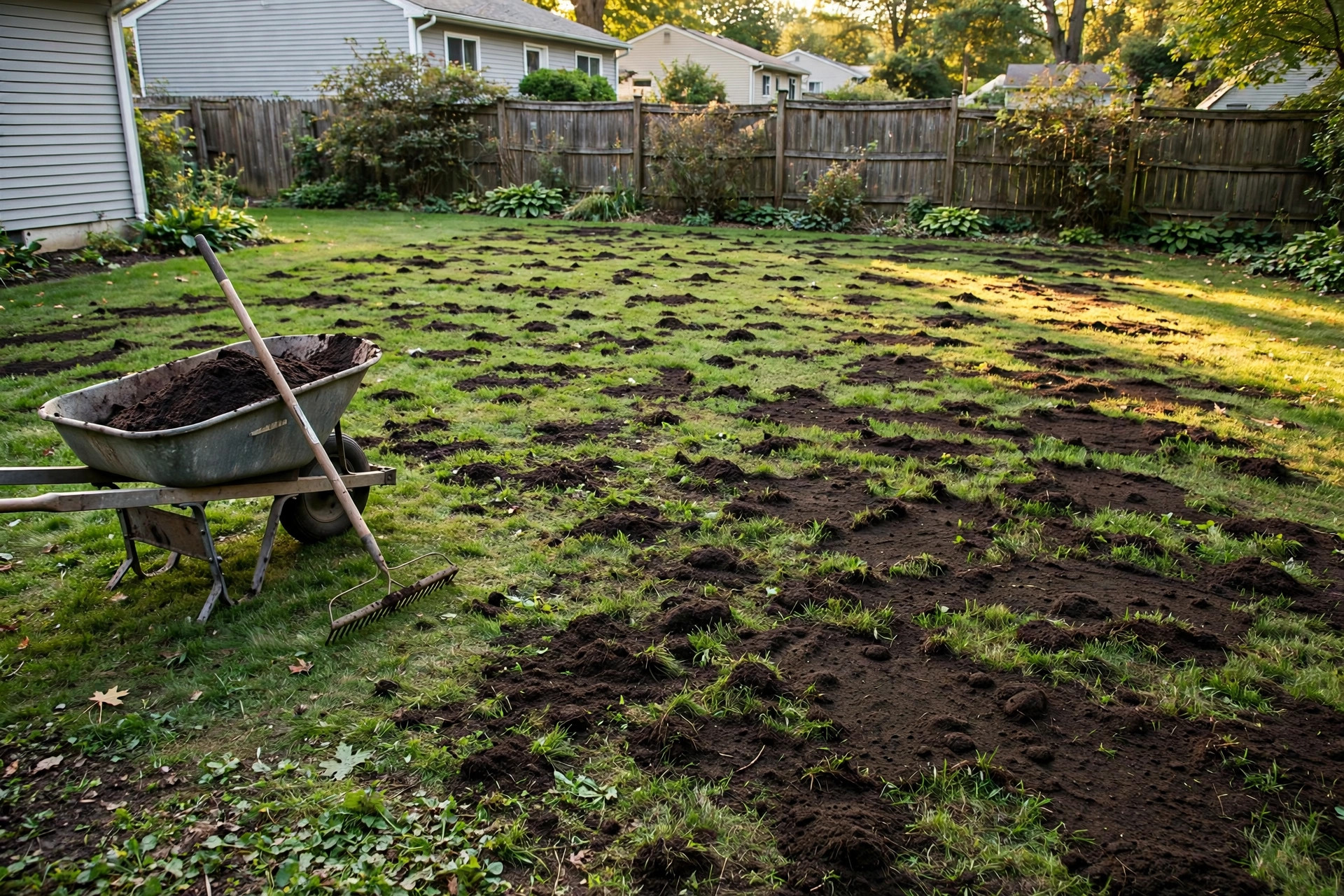

A bumpy lawn turns a simple mow into hard work. The mower bounces. The blades scalp the high spots. The low spots stay wet and thin. If you want to know how to level bumpy lawn with topsoil, you are in the right place. This guide walks you through the whole job in plain language. You will learn what causes bumps, how to choose soil, which tools to gather, and how to spread topsoil step by step. You will also find honest cost figures, care tips, and safety notes.
Why a Level Lawn Matters
A level lawn is not only about looks. It is about health, safety, and ease of care. Water drains the way it should on flat ground. Grass grows in an even mat. Roots get air and light. Mowing becomes fast and clean. A level yard is also safer to walk on, especially for children and older people. A twisted ankle on a hidden dip can ruin a summer afternoon.
Bumps also hide problems. A dip can hold water after rain. Standing water invites disease. Thin grass in low spots lets weeds move in. Fixing the shape of the lawn fixes many small problems at once. For a close look at one such problem, see this lawn fungus treatment home remedy guide.
What Causes Bumps in a Lawn: How to Level Bumpy Lawn with Topsoil
Before you start hauling soil, it helps to know why the bumps formed. Most uneven lawns trace back to a few common causes. Knowing the cause tells you which fix will last.
Common Causes of an Uneven Yard
– Settling soil. New homes often sit on backfill. That soil settles over years. Low spots appear where the ground sinks. – Poor grading. The original grade may never have been smooth. Builders level for drainage, not for beauty. – Thatch and old roots. Thick thatch lifts the surface in patches. Dead roots rot and leave small dips. – Animals and insects. Moles, voles, and grubs push soil up in mounds and tunnels. – Freeze and thaw. In cold regions, water in the soil freezes. It expands and lifts the ground. When it thaws, the ground drops unevenly. – Heavy use. Paths, play areas, and parking spots press the soil down. Ruts form along the same lines year after year. – Buried debris. Old stumps, rocks, and construction waste rot or shift under the turf. The surface follows.
How to Find the High and Low Spots
Walk the lawn after a rain. Look for puddles. Those are your low spots. Next, lay a long straight board on the ground in several places. A two-by-four that is eight feet long works well. Set it across a suspect area and look at the gap under it. Mark the edges of each dip with small flags or sticks. This simple survey takes twenty minutes. It tells you how much soil you need and where to put it. Lawn care guides at Scotts offer similar advice on reading your yard before you work.
What to Look for in Topsoil
Not all topsoil is equal. The wrong soil can bring weed seeds, clay, or trash. The right soil blends with your lawn and lets grass grow through it. Take time at the supply yard. Ask questions. Open a bag or look at the bulk pile.
Screened vs Unscreened Soil
Screened topsoil has passed through a mesh. Sticks, stones, and large clods are gone. It spreads smooth and rakes well. Unscreened soil is cheaper but rougher. It may hide glass, roots, or weed seeds. For leveling work, screened soil is worth the extra cost. You will spread thin layers. Lumps and stones will show.
Soil Texture and Mix
Good topsoil for leveling feels like moist cake crumbs. It holds shape when squeezed but breaks apart with a tap. Avoid heavy clay. It seals the surface and blocks water. Many lawn experts use a mix for leveling lawn with sand and topsoil mix. A common blend is about seventy percent topsoil and thirty percent coarse sand. The sand helps the mix settle into the turf. It drains well and does not crust over. In clay country, this blend is a friend to grass roots. If your soil is already sandy, plain screened topsoil may be enough.
Before you order, check your soil’s health. A simple test can tell you if the ground needs lime or food. Read these lawn soil pH test kit reviews to pick a kit. Testing first saves money later.
Tools You Will Need
You do not need a tractor for most lawns. Hand tools and a wheelbarrow handle the job. Gather everything before you start. Stopping mid-job to buy a rake costs time and daylight.
– Wheelbarrow or garden cart. For moving soil from the pile to the lawn. – Shovel. A flat-head shovel spreads and scoops best. – Landscape rake or leveling rake. A wide head moves soil fast. A leveling rake has a flat edge for the final pass. – Garden rake. For working soil down into the grass. – Push broom. A stiff broom sweeps soil off grass blades. – Lawn roller. A water-filled roller presses the soil into place. You can rent one for a day. – Straight board. For checking your work as you go. – String and stakes. To set a grade line on bigger jobs. – Grass seed. Match the seed to your existing grass. – Fertilizer. A starter fertilizer helps new seed take hold. – Hose or sprinkler. Water settles the soil after spreading.
Power tools help on bigger lawns. Battery-powered yard tools from makers like Greenworks and Ryobi can trim edges and clear the area first. For advice on keeping small engines in good shape, Briggs and Stratton posts useful engine maintenance tips for mowers and yard machines. Independent reviews of lawn equipment appear at Consumer Reports, which tests mowers and tools without taking sides.
How to Level Bumpy Lawn With Topsoil: Step by Step
Here is the heart of the matter. This method covers how to level bumpy lawn with topsoil on a normal home yard. It works for mild to moderate bumps, up to about two inches deep. Deeper problems need the cut-and-fill method described later.
Step 1: Mow the Lawn Short
Cut the grass lower than usual. Aim for about one to one and a half inches. Short grass lets soil reach the ground. It also shows the bumps clearly. Bag the clippings or rake them off. A clean surface is easier to work. Hand trimming around edges can be done with a cordless trimmer; makers such as Echo publish power equipment guides that help you pick the right tool.
Step 2: Mark the Low Spots
Use the board test from the earlier section. Mark every dip with a small flag. Step back and look at the pattern. Note where water sat after rain. These marks are your map. Work from them and you will not waste soil on ground that is already level.
Step 3: Mix and Stage the Soil
If you are using a sand blend, mix it now. Pile the topsoil and sand on a tarp. Turn them together with a shovel until the color is even. Stage the mix in small piles near the marked dips. A wheelbarrow load covers a good area. Do not dump the whole order in one spot. You will tire before you finish.
Step 4: Fill the Low Spots
Shovel soil into each dip. Fill it a little higher than the nearby grass. Soil settles. A fill that looks perfect today will sit low in two weeks. Overfill by about one quarter inch. Rake the soil outward from the center of each dip. Blend the edges into the high ground around it. The goal is a gentle slope, not a pancake on top of the grass.
Step 5: Work Soil Into the Turf
Take the garden rake and pull it back and forth across the filled areas. Work the soil down between the grass blades. Grass should poke through the thin layer. You should see green tips everywhere. If a spot is buried solid, rake some soil off. Grass smothered under more than half an inch of soil may die. Use the push broom to sweep the blades clean. This step takes patience. It decides whether the lawn looks good in three weeks.
Step 6: Check With the Board
Lay your straight board across each repaired spot. Look for gaps. Add soil where it is still low. Scrape it off where it is high. Check from two directions. A dip that looks fixed from the north may still show from the east. Take your time here. This check is the difference between a smooth lawn and a lumpy one.
Step 7: Roll the Lawn
Fill the lawn roller about one third full of water for a light pass. Roll the worked areas in two directions. The roller presses soil against roots and closes air gaps. Do not overdo it. A heavy roller packs the soil too hard. Roots need air. One light pass is enough for most jobs.
Step 8: Seed and Feed
Spread grass seed over the leveled spots. Use the same type of grass as the rest of the lawn. Lightly rake the seed in. Then apply a starter fertilizer at the rate on the bag. Water gently. Keep the seed damp until it sprouts. This usually takes seven to fourteen days. Home and garden advice at The Spruce covers seeding steps in plain detail for beginners.
Step 9: Water and Wait
Water the worked areas daily for two weeks. Keep the soil moist but not soggy. Stay off the new spots while the seed grows. After three weeks, mow on a high setting. Do not cut more than one third of the blade height. Your leveled lawn is now on its way.
Types of Leveling Methods
Topdressing with topsoil suits most home lawns. But not every yard needs the same fix. Match the method to the depth of the problem.
Topdressing for Mild Bumps
This is the method above. Spread thin layers of soil over the whole lawn or over marked dips. Each layer should be no more than half an inch. Let the grass grow through. Repeat in the next growing season if needed. This gentle method never tears up the lawn. It is the best answer to how to fix an uneven lawn without tearing it up. It takes time. It costs little. It works.
Cut and Fill for Deep Dips
Dips deeper than two inches need a stronger fix. Cut the turf over the dip with a spade. Roll the sod back like a carpet. Fill the hole with topsoil. Tamp it down. Roll the sod back into place. Water well. The grass recovers in days because its roots are intact. This method fixes one bad spot at a time. It costs almost nothing but labor.
Full Regrade for Severe Cases
Some yards slope the wrong way. Water runs toward the house. No thin layer of topsoil will fix that. A full regrade strips the sod, reshapes the soil with machines, and lays new turf or seed. This is a job for pros. LawnStarter lists professional lawn care services in many areas if the job is beyond hand tools. A regrade also fixes drainage at the foundation, which protects the house itself.
Cost and Price
Leveling a lawn with topsoil is one of the cheapest yard projects. Most of the cost is the soil and your time.
– Bagged screened topsoil. Two to five dollars per cubic foot bag. Good for small patches. – Bulk screened topsoil. Thirty to sixty dollars per cubic yard delivered. One cubic yard covers about one hundred square feet at two inches deep. – Coarse sand. Five to ten dollars per bag, or twenty to forty dollars per cubic yard in bulk. – Grass seed. Fifteen to forty dollars per bag, enough for spot repair. – Starter fertilizer. Ten to twenty dollars per bag. – Lawn roller rental. Fifteen to thirty dollars per day from a rental center or a garden center such as The Home Depot.
A typical quarter-acre lawn with mild bumps needs two to four cubic yards of soil. Expect to spend between one hundred and three hundred dollars on materials. Doing the work yourself keeps the price low. Hiring a crew can run five hundred to two thousand dollars depending on the yard size and the depth of the work. Prices vary by region and season. Spring often brings the best deals on bulk soil.
Care and Upkeep After Leveling
Leveling is not a one-time event. Soil moves. Grass grows. Weather works on the ground every year. A little yearly care keeps the lawn smooth for the long run.
Topdress every year or two. Spread a thin quarter-inch layer of topsoil or compost over the lawn each fall or spring. This feeds the soil and fills tiny new dips before they grow. Think of it as routine care, like an oil change for the yard.
Aerate compacted ground. Once a year, punch small holes in the lawn with a core aerator. This lets air, water, and food reach the roots. It also breaks up the hard pan that forms under foot traffic. Rentals are cheap. The job takes a morning.
Overseed thin spots. Bare patches turn into dips. They also invite weeds. Spread seed on thin areas each fall. Keep them watered until the new grass is strong.
Mow at the right height. Taller grass shades the soil and grows deeper roots. Most lawns do best at two and a half to three and a half inches. Never cut more than one third of the blade at once. Mower makers like Toro publish cutting guides for different grass types on their lawn mowers and yard equipment pages.
Water deeply, not often. One deep watering per week beats a daily sprinkle. Deep water pulls roots down. Strong roots hold soil in place. Aim for about one inch of water per week, rain included.
Safety Notes
Yard work is safe when you use common sense. Still, a few points deserve care.
– Call before you dig. If your work goes deeper than a few inches, call your local utility marking service first. Buried lines are no joke. The cut-and-fill method and any regrade can reach them. – Lift with care. A cubic foot of wet topsoil can weigh over one hundred pounds. Lift with your legs. Take breaks. Ask for help with the heavy loads. – Watch the dust. Dry soil and sand raise dust. Wear a simple dust mask on windy days. This matters most when handling bagged sand. – Keep blades sharp and guards on. Trimmers and mowers cut fast. Wear closed shoes and eye protection. – Store fertilizer and seed safely. Keep them dry and out of reach of children and pets. Read the bag for full directions.
Frequently Asked Questions
When is the best time of year to level a lawn? The best time of year to level a lawn is during the growing season of your grass. For cool-season grasses like fescue and bluegrass, early fall is best. For warm-season grasses like Bermuda and zoysia, late spring is best. The grass is growing fast then. It pushes through the new soil quickly. Avoid the heat of midsummer and the freeze of winter.
Can I use sand alone to level my lawn? Sand alone is not the best choice for most lawns. Sand drains fast and holds little food for grass. A mix works better. The standard advice for leveling lawn with sand and topsoil mix is about seventy percent topsoil to thirty percent coarse sand. This blend settles well and feeds the grass. On pure sand soils, plain topsoil may be the better pick.
How thick can I spread topsoil over existing grass? Keep each layer at half an inch or less. Grass can grow through a thin layer. Thicker layers smother it. If a dip is deeper than two inches, use the cut-and-fill method instead. You can always add a second thin layer next season.
Will leveling fix drainage problems? Light leveling fixes small puddles. It will not fix a yard that slopes toward the house. That needs a regrade with a proper slope away from the foundation. The rule is simple. Soil should fall at least six inches in the first ten feet from the house. If yours does not, call a pro.
How long before I can mow after leveling? Wait until the new seed is about three inches tall. Then mow on a high setting. This is usually three to four weeks after the work. Keep foot traffic light until then. If you only topdressed without seed, you can mow after one week. For trimming around the new spots, check walk behind string mower reviews to find a light tool that will not tear young grass.
Do I need to remove the old grass first? No. Topdressing works right over living grass. That is its great strength. Only the full regrade strips old turf. The cut-and-fill method lifts sod in one piece and puts it back. In all mild cases, the grass stays where it is.
Final Word
A bumpy lawn is a fixable lawn. Start with a walk and a straight board. Mark the dips. Bring in good screened topsoil. Spread it thin, work it in, and let the grass do the rest. The job takes a weekend, not a season. The cost stays low. The reward is a smooth yard that mows easy and looks cared for. Do a light topdress each year, and the bumps will not come back.
References
Briggs & Stratton. (n.d.). Outdoor power equipment and engine support. https://www.briggsandstratton.com Consumer Reports. (n.d.). Product ratings and buying guides. https://www.consumerreports.org Echo. (n.d.). Outdoor power equipment. https://www.echo-usa.com Greenworks. (n.d.). Battery-powered lawn and garden tools. https://www.greenworkstools.com The Home Depot. (n.d.). Home improvement and garden products. https://www.homedepot.com LawnStarter. (n.d.). Lawn care services. https://www.lawnstarter.com Ryobi. (n.d.). Power tools and outdoor equipment. https://www.ryobitools.com Scotts. (n.d.). Lawn care products and guides. https://www.scotts.com The Spruce. (n.d.). Home and garden advice. https://www.thespruce.com Toro. (n.d.). Lawn mowers and yard equipment. https://www.toro.com
Was this guide helpful?

About Jennifer Lee
The My Garden US editorial team writes practical, in-depth home and garden guides for American homeowners — tested advice, no fluff.
You May Also Like

Paver Walkway Installation Cost Near Me: A Simple Guide
June 23, 2026 0 views
The Best Electric Dethatcher for Small Lawns: A Plain Guide to Picking One
January 6, 2026 0 views
Best Lawn Roller for Leveling Uneven Ground
July 6, 2026 2 views