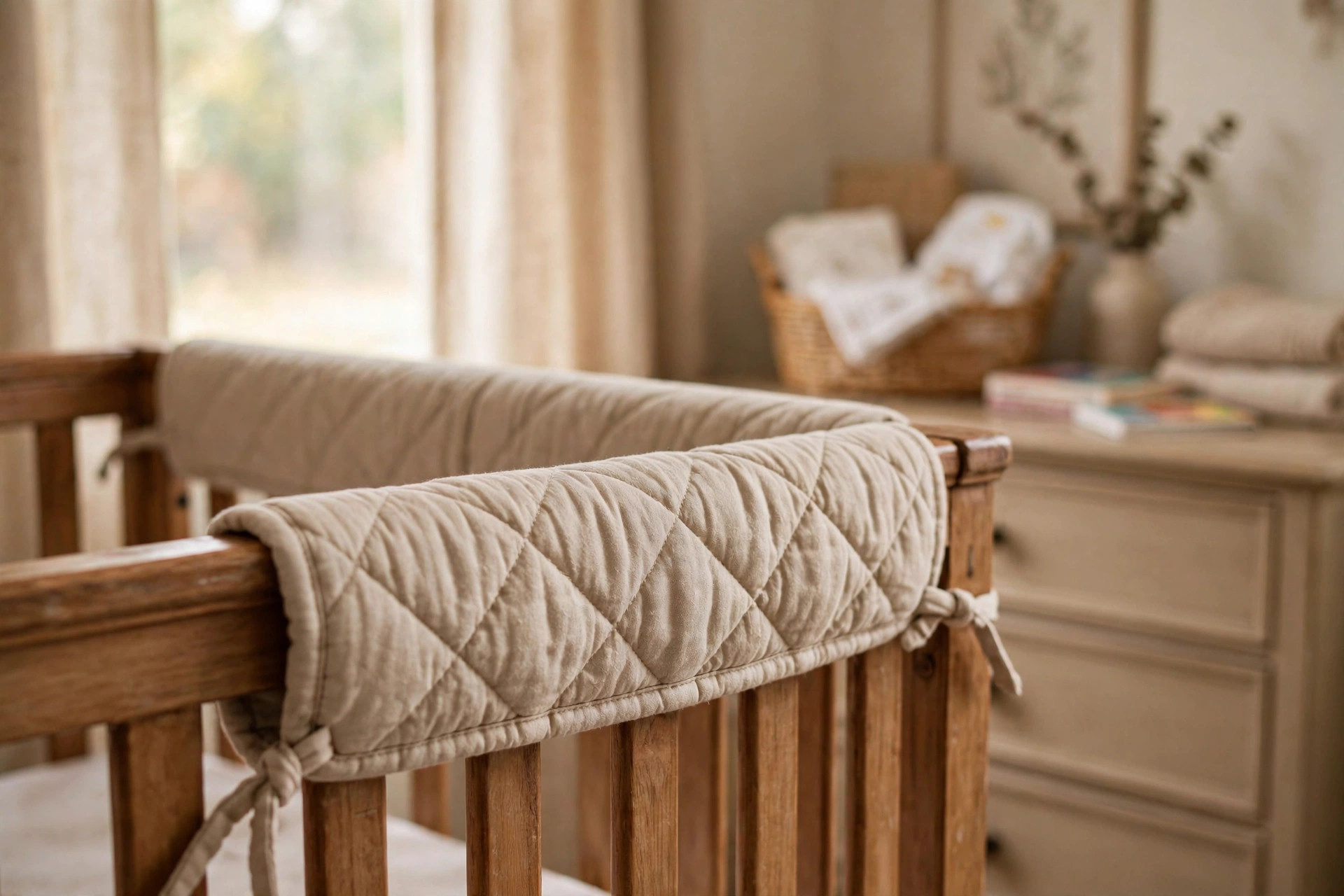

A baby learns the world with the mouth first. Long before first steps, there is teething. Gums ache, and a little child will gnaw on whatever is close. In the crib, the nearest thing is often the top rail. A crib rail guard fabric for chewing protection is a soft cover that wraps around that rail. It takes the bite so the wood and the paint do not have to.
This guide explains what these guards are, why they matter, how to pick one, and how to keep it clean. The aim is simple: protect the child and protect the crib, with no fuss.
Why It Matters
When a baby chews on a bare crib rail, two things are at risk. The first is the baby. Old cribs, and some cheap new ones, may carry paint or varnish that is not safe to swallow. A chip of paint in a small mouth is a hazard no parent wants. Even with a safe finish, splinters can break off soft wood under hard little teeth. The U.S. Consumer Product Safety Commission sets crib safety standards for good reason, and a rail guard adds one more layer of care.
The second risk is to the crib itself. Teeth mark wood fast. A few weeks of chewing can leave the top rail pitted and rough. A crib is not a cheap piece of furniture, and many parents plan to use it for a second child. A guard keeps the rail smooth and whole. When the guard wears out, you wash it or replace it. That costs far less than a new crib.
There is also comfort. Teething gums hurt. A soft fabric pad gives the child something kind to bite. It does not stop the teething, but it makes the crib a gentler place during it. Parenting guides such as What to Expect note that teething often peaks in the second half of the first year, exactly when many babies pull up and reach the rail.
What to Look for When You Choose: Crib Rail Guard Fabric for Chewing Protection
Not every rail guard suits every crib. A little care in choosing saves trouble later.
Fabric and Filling
Look for a guard made of soft, thick fabric. Quilted cotton is the common choice. The outer cloth should feel smooth against the cheek, with no rough seams on the side that faces the baby. Inside, a layer of padding absorbs the bite. Some guards use a soft fleece lining where the teeth land. This is a good sign.
Check that the fabric is washable. Teething means drool, and drool soaks in. A guard that cannot go in the washing machine will soon look and smell poor. Read the label before you buy. Machine wash and dry is the mark of a practical product.
Fit and Fastening
A rail guard must fit tight. A loose guard can slip, bunch, or hang where it should not. Measure the top rail of your crib before shopping. Note the length, the width, and whether the rail is flat or rounded. Guards come in standard lengths, and many cover just the front rail, where chewing happens most. Full sets that wrap all four sides also exist.
The guard fastens with ties, snaps, or hook-and-loop straps. Ties must be short and secure, so the baby cannot pull them loose and wrap them around a small neck. The safety rule of thumb is simple: if a strap can reach around the baby’s neck, it is too long. Good guards use short ties that knot flat against the outside of the rail. Nursery retailers such as Pottery Barn Kids and IKEA list tie length in their product details, which helps when you compare.
Safety First
Safety comes before style. The guard must lie flat against the rail with no gaps and no loose flaps. Padding should be thin enough that the guard hugs the rail, not puffy enough to shift. Never use a rail guard on a crib that is broken, has loose slats, or does not meet current safety rules. A guard does not fix a bad crib.
Also keep the crib clear. A rail guard is fine, but it does not belong with pillows, loose blankets, or stuffed toys for a young infant. Safe sleep advice from HealthyChildren.org holds firm: a bare crib is the safest crib. The guard sits on the rail, out of the baby’s sleeping space, and that is where it should stay.
Types and Options
Rail guards for chewing protection come in a few common forms.
Single front-rail guard. This is the most popular kind. It covers only the front top rail, which takes almost all the chewing. It is easy to fit and easy to wash. For most families, this is enough.
Full crib wrap set. These sets cover all four sides of the crib. They suit babies who chew every rail, or parents who want the whole crib protected from teeth marks. They cost more and take longer to put on, but they give complete coverage.
Waterproof-lined guard. Some guards add a thin waterproof layer between the fabric and the padding. Drool soaks the top but does not reach the wood. This keeps the rail dry and slows wear. Parents who wash guards often find this kind lasts longer between washes.
Organic cotton guard. A few brands offer guards made from organic cotton with natural filling. These appeal to parents who want fewer chemicals near the baby’s mouth. They wash well, though they may cost a bit more than standard cotton.
Whatever type you pick, the rule stays the same: snug fit, short ties, washable fabric.
Cost and Price
A crib rail guard fabric for chewing protection is a small purchase. Most single front-rail guards sell for between ten and twenty-five dollars. Full four-sided sets run from twenty to forty dollars. Organic or designer versions can reach fifty dollars or more.
Where you shop matters a little. Big stores like Target and Wayfair carry many brands at fair prices, and Home Depot stocks nursery basics online too. Small baby shops may charge more but often let you feel the fabric first. Buying two guards is wise. While one is in the wash, the other is on the rail. Teething does not pause for laundry day.
Do not judge by price alone. A cheap guard with long loose ties is a poor bargain. A mid-priced guard with a snug fit and short fasteners is the better buy. Independent testing groups such as Consumer Reports remind parents that safety features matter more than brand names.
Care and Upkeep
A rail guard works hard and needs regular care. Wash it at least once a week, more often when teething is at its worst. Use warm water and a mild detergent with no strong scent. Strong scents can bother a baby’s nose and skin.
Dry the guard fully before you put it back on the crib. A damp guard against wood can leave marks and may grow mildew. If the guard has a waterproof lining, check that the lining is intact after each wash. Cracked or peeling lining means it is time for a new guard.
Inspect the guard each time you wash it. Look for torn seams, loose threads, and ties that have stretched. A small tear can grow fast under little teeth. Replace the guard when the padding bunches, the fabric wears thin, or the fasteners no longer hold tight. Most guards last through one teething child. A second child usually needs a fresh one.
While the guard is off for washing, take a moment to check the rail beneath it. Make sure the wood is still smooth and the paint intact. This quick check takes seconds and keeps the crib in good shape.
Safety Notes Worth Repeating
A rail guard is a helper, not a fix. Keep these points in mind.
First, never tie anything with long cords near a baby. If the guard’s ties are longer than a few inches, shorten them or choose a different guard. Long ties are a strangulation risk.
Second, the guard must stay on the rail. If it slides down into the crib, take it off and refit it. A guard that will not stay put is the wrong size.
Third, stop using padded crib extras as the child grows. When the baby can climb or pull to stand with ease, review everything attached to the crib. What was safe at six months may not be safe at eighteen months.
Fourth, buy from sellers you trust. Well-known nursery sources and big retailers test their products and answer for them. Home care experts at The Spruce and Good Housekeeping both advise parents to check for current safety certifications before buying any crib accessory.
FAQ
At what age does my baby need a rail guard? Most babies start chewing the rail when teeth begin to push through, often between six and ten months. If you see drool marks or tiny dents on the top rail, it is time. Some parents fit the guard early so the crib stays new from the start.
Can I make my own rail guard? You can, if you sew well. Use soft washable cotton, thin even padding, and short ties that knot flat. The hard part is the fit. It must hug the rail with no gaps. Many parents find that a store-bought guard costs little more than the fabric and time of making one.
Will a rail guard fit any crib? Most fit standard cribs, but not all. Convertible cribs and older models can have odd rail shapes. Measure your rail and read the size chart before you order. A guard made for a flat rail may not grip a rounded one.
How often should I wash it? Once a week is a good rule. Wash it sooner if it smells of milk or looks stained. Keep a spare guard so the rail is never bare during wash day.
Does a rail guard replace teething toys? No. A guard protects the crib, but the baby still needs proper teething toys for the daytime. A cool teething ring soothes gums far better than a crib rail. The guard is there for the hours the baby spends in the crib.
Is a rail guard safe for newborns? A well-fitted guard on the top rail is out of a newborn’s reach and poses little risk. Still, keep the crib bare inside, and check the guard’s fit often as the baby grows and starts to pull up.
A Short Final Word
A crib rail guard fabric for chewing protection is a small thing that does a real job. It shields soft gums from hard wood and paint. It shields the crib from small sharp teeth. It washes in the machine and costs less than a family dinner out.
Choose one that fits tight, ties short, and washes well. Put it on before the first tooth marks appear. Wash it often and check it each time. Then let the baby chew in peace, and let the crib stay whole for the next child.
Small care, given early, goes a long way in the nursery. A rail guard is one of the simplest ways to give it.
Related reading: a kids wall clock for learning time decor adds charm above the dresser, a nursery wall shelf for books and decor keeps bedtime stories close, and a kids play tent with tunnel for indoor fun gives toddlers a cozy corner of their own.
References
American Academy of Pediatrics. (n.d.). HealthyChildren.org. https://www.healthychildren.org Consumer Reports. (n.d.). Product reviews and ratings. https://www.consumerreports.org Good Housekeeping. (n.d.). Product reviews and home advice. https://www.goodhousekeeping.com IKEA. (n.d.). Home furnishings. https://www.ikea.com Pottery Barn Kids. (n.d.). Kids furniture and decor. https://www.potterybarnkids.com Target. (n.d.). Retail store. https://www.target.com The Home Depot. (n.d.). Home improvement products. https://www.homedepot.com The Spruce. (n.d.). Home and garden advice. https://www.thespruce.com U.S. Consumer Product Safety Commission. (n.d.). Product safety information. https://www.cpsc.gov Wayfair. (n.d.). Furniture and home goods. https://www.wayfair.com What to Expect. (n.d.). Pregnancy and parenting guidance. https://www.whattoexpect.com
Was this guide helpful?

About David Wilson
The My Garden US editorial team writes practical, in-depth home and garden guides for American homeowners — tested advice, no fluff.
You May Also Like

The Right Toddler Table and Chair Set for Playroom Fun and Learning
August 27, 2026 0 views
Nursery Glider Chair with Ottoman for Breastfeeding
May 26, 2026 0 views
Kids Loft Bed with Desk Underneath for Teens: A Parent’s Guide
May 19, 2026 0 views