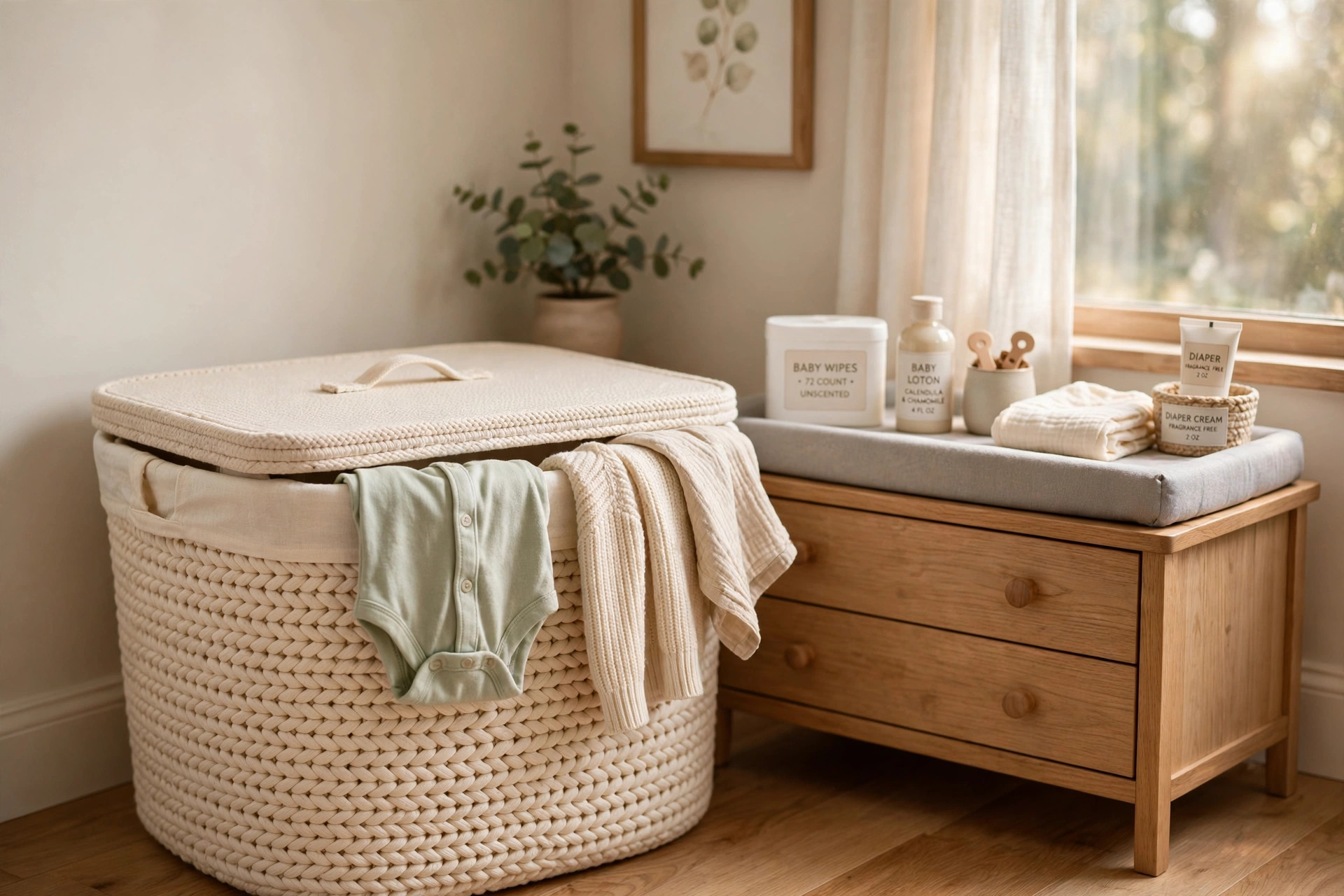

A nursery hamper with lid for odor control is one of the most useful small tools a new parent can own. Baby laundry does not smell like adult laundry. Spit-up, leaked milk, wet diapers, and blowouts all carry strong smells. An open basket lets those smells drift through the room all day and all night. A hamper with a lid traps the air inside the basket and keeps the nursery fresh. This guide explains what to look for, which types work best, what they cost, how to keep them clean, and how to use them safely around small children.
Why Odor Control Matters in a Nursery
A newborn goes through many outfits each day. Parents change bodysuits, sleepers, bibs, and sheets at all hours. Each soiled item adds to the pile. By the end of a long week, one basket can hold a full load of washing, and the smells build with each layer.
A baby sleeps in the same room as the laundry pile. Smells can bother a tired parent, but they can also make the room feel less clean. A closed lid is a simple fix. It does not need power or special filters. It just holds the air in place until wash day comes.
Odor control also matters for the whole house. The nursery door opens and closes many times a day. Each time, air moves in and out. An open basket sends smells down the hall. A lidded hamper stops this. Parents who keep a hamper with a lid often say the nursery smells fresh even when the washing is two days old.
There is another benefit. A lidded basket looks neat. A nursery is easier to keep tidy when dirty clothes are hidden from view. Guests, grandparents, and babysitters see a calm room, not a pile of stained clothes.
What to Look for When You Choose One: Nursery Hamper with Lid for Odor Control
A nursery hamper with lid for odor control is a simple product, but small details make a big difference. The lid must close well. The basket must breathe enough to stop mildew, yet stay closed enough to hold in smells. Here are the points to check.
The Lid
The lid is the heart of this product. It should sit firmly on the top and stay shut on its own. Some lids have a small gap that lets air pass, and that is fine for air flow, but a large gap lets smells escape. Look for a lid that rests flat and fits the shape of the basket.
A hinged lid is easy to open with one hand, which matters when the other hand holds a baby. A loose lid that lifts off completely works too, but it is easy to drop or misplace. Avoid lids with locks or clasps. They slow you down, and a busy parent will stop closing a lid that is hard to use.
The Liner
A washable liner makes life much easier. Many hampers come with a cloth bag that sits inside the basket. When wash day comes, you lift the bag and carry the whole load to the machine. The bag goes in the wash with the clothes, so the hamper itself stays clean.
Pick a liner that is machine washable and dries fast. Cotton and cotton blends work well. A liner with a drawstring or tie keeps it fixed to the rim. If the hamper has no liner, you can buy one that fits, or use a large cotton laundry bag as a stand-in.
Size and Shape
A nursery does not need a huge hamper. Most parents find that a basket of about 10 to 15 gallons works well. It holds three to five days of baby clothes without taking up much floor space. Tall, narrow baskets fit well in corners and beside a changing table. Wide baskets hold more, but they take up room.
Think about where the hamper will stand. Measure the space before you buy. Leave a little room above the lid so you can open it fully.
Materials
Hampers come in woven fabrics, mesh, plastic, wood, and metal. Woven fabric baskets look warm and soft, and they match most nursery styles. Plastic baskets are easy to wipe clean, and they last for years. Mesh baskets let air move, which can help against dampness, but they can also let more smell out, so they work best with a fitted lid.
Pick a material that is easy to clean and has no sharp edges. Avoid rough wicker with splinters. The basket should stand steady and not tip when you drop clothes in.
Types of Nursery Hampers With Lids
There are several common types. Each has its own strengths.
Pop-up fabric hampers. These are light, cheap, and fold flat. Many have a drawstring top instead of a hard lid. They work well for travel or for a second basket, but they give less odor control than a firm lid.
Woven baskets with lids. These look like classic hampers. They are made of cotton rope, seagrass, or woven fabric. They look lovely in a nursery and give solid odor control. They cost more, but they last.
Plastic hampers with hinged lids. These are the workhorses. They are cheap, easy to clean, and the lid stays shut. Some have small holes for air flow. They do not look as soft as fabric baskets, but they are very practical.
Tall slim hampers. These fit in tight corners and closets. The slim shape holds a surprising amount of clothes. They often have a lid that lifts off the top.
Two-section hampers. These have two bags inside one frame. Parents use one side for baby clothes and the other for bedding or towels. They are wider than a single basket, so check your floor space.
For most nurseries, a woven basket or a plastic hamper with a firm lid is the best choice. Both hold in smells well and are easy to wash.
Cost and Price
Prices vary by material and brand. Simple plastic hampers with lids cost about 10 to 25 dollars. Pop-up fabric hampers cost about 12 to 20 dollars. Woven cotton or seagrass baskets with lids run from about 25 to 60 dollars. Large or two-section models can cost 40 to 80 dollars.
The cheapest option still controls odor well if the lid fits tightly. Price does not always match quality. A 15-dollar plastic hamper with a snug lid can beat a 50-dollar basket with a loose lid. Read the product details and check the lid design before you pay more for style.
Extra liners cost about 8 to 15 dollars each. Having two liners is wise. While one liner is in the wash, the other keeps the hamper in use. This small cost pays for itself in ease.
Home goods retailers like IKEA and Wayfair carry many nursery storage options, so it is easy to compare prices and styles side by side. Specialty shops such as Pottery Barn Kids offer nursery pieces in matched sets if you want the hamper to pair with other items in the room.
Care and Upkeep
A hamper stays clean if you keep a few simple habits. Wash the liner once a week, or more often if it smells. Do not let wet clothes sit too long. Damp fabric grows mildew fast. If a piece is soaked through, rinse it in the sink and wring it out before it goes in the basket.
Wipe the inside of the hamper each month. Use warm water with a little mild soap. For plastic baskets, you can use a soft brush to reach the corners. Let the basket air dry fully before you put the liner back in. A dry basket smells better than a damp one.
A spoonful of baking soda in the bottom of the liner can soak up smells between washes. Some parents place a small open box of baking soda near the hamper. Others use a dryer sheet tucked under the liner. These tricks help, but they are not a fix for a hamper that is never washed. The real answer is regular washing.
If the hamper starts to smell even when it is empty, the smell has soaked into the material. For fabric baskets, wash the whole basket by hand and dry it in the sun. For plastic, scrub it with a mix of water and white vinegar, then rinse well. Sunlight is one of the best natural cleaners. It kills many of the germs that cause bad smells.
Parenting sites like What to Expect and Parents remind new parents that laundry piles up fast with a newborn, so a wash routine of two or three loads a week keeps both clothes and the hamper fresh. Cleaning guides from Good Housekeeping and The Spruce offer more ways to fight household smells naturally.
Safety Around Babies and Small Children
A nursery hamper must be safe for the youngest child in the house. Once a baby crawls, every object in the room becomes a toy. Once a toddler walks, the room becomes a playground. Plan for this from the start.
The hamper should be stable. A tall, narrow basket can tip if a toddler pulls on it. Place it in a corner or against a wall where it cannot fall. A basket that tips onto a small child is a real hazard.
Check that there are no small parts that can come loose. Tags, buttons, and drawstring pulls should be fixed or removed. Drawstrings longer than a few inches can wrap around a small neck, so tie them short or cut them to a safe length.
Air holes matter too. A hamper with a tight lid and no air flow can trap damp air, which grows mold. But holes should be small. A curious toddler may poke fingers through large holes and get stuck. Small vents are the best of both worlds.
The Consumer Product Safety Commission publishes nursery safety guides that cover furniture, storage, and bedding, and they are worth reading before you set up the room. Health guidance from HealthyChildren, which is run by the American Academy of Pediatrics, also covers safe sleep and nursery setup. When you plan the whole room, guides on Babylist help you check off each piece of gear.
A nursery glider slipcover for easy washing is another smart nursery item, since chairs catch spills and spit-up just like clothes do. A best nursery rug washable for easy cleaning keeps the floor soft and easy to clean when the baby starts to crawl.
Frequently Asked Questions
Do lidded hampers really stop smells?
Yes, they help a great deal. A lid keeps most of the smell inside the basket. It will not remove smells completely, but it stops them from spreading through the room. Wash the liner often, and the room will stay fresh.
How often should I wash nursery laundry?
Most parents wash baby clothes two to three times a week. A newborn wears many outfits a day, so the pile grows fast. Wash before the basket overflows. A hamper that is packed tight lets less air move, and smells build faster.
Can I use a regular laundry basket instead?
You can, but an open basket lets smells drift through the room. A basket with a lid works much better in a nursery. If you already own an open basket, look for a lid that fits it, or place the basket in a closet with the door closed.
What size hamper is best for a nursery?
A 10 to 15 gallon basket suits most nurseries. It holds three to five days of baby clothes and fits in a corner. Larger hampers take up floor space that a small room cannot spare. Smaller ones need emptying every day.
Do I need a special liner for odor control?
No special liner is needed. A plain cotton liner that you wash often does the job. Some liners are sold as odor-resistant, but frequent washing matters more than any coating. Buy two liners so one is always clean and ready.
When should I move the hamper out of the nursery?
Many families keep the hamper in the nursery for years. As the child grows, you can move it to the child’s bedroom or the laundry room. When you redecorate later, simple touches like kids bedroom wall decals removable for renters can refresh the room without paint.
A Final Word
A nursery hamper with lid for odor control is a small buy with a big effect. It keeps the room fresh, hides the mess, and makes wash day simple. Pick a basket with a lid that closes well, a liner you can wash, and a size that fits your space. Keep it clean, keep it stable, and empty it before it overflows. With these simple steps, one of the least fun parts of parenting becomes much easier to bear.
References
American Academy of Pediatrics. (n.d.). HealthyChildren.org. https://www.healthychildren.org Babylist. (n.d.). Baby registry and gear guides. https://www.babylist.com Good Housekeeping. (n.d.). Product reviews and home advice. https://www.goodhousekeeping.com IKEA. (n.d.). Home furnishings. https://www.ikea.com Parents. (n.d.). Parenting advice and family life. https://www.parents.com Pottery Barn Kids. (n.d.). Kids furniture and decor. https://www.potterybarnkids.com The Spruce. (n.d.). Home and garden advice. https://www.thespruce.com U.S. Consumer Product Safety Commission. (n.d.). Product safety information. https://www.cpsc.gov Wayfair. (n.d.). Furniture and home goods. https://www.wayfair.com What to Expect. (n.d.). Pregnancy and parenting guidance. https://www.whattoexpect.com
Was this guide helpful?

About Lisa Anderson
The My Garden US editorial team writes practical, in-depth home and garden guides for American homeowners — tested advice, no fluff.
You May Also Like
Best Nursery Storage for Small Apartment Living
January 18, 2026 0 views
Kids Wall Mirror for Bedroom Decor Safety: A Buyer’s Guide
April 5, 2026 0 views
Kids Wall Art Canvas Prints for Girls Room: A Parent’s Guide
January 4, 2026 0 views