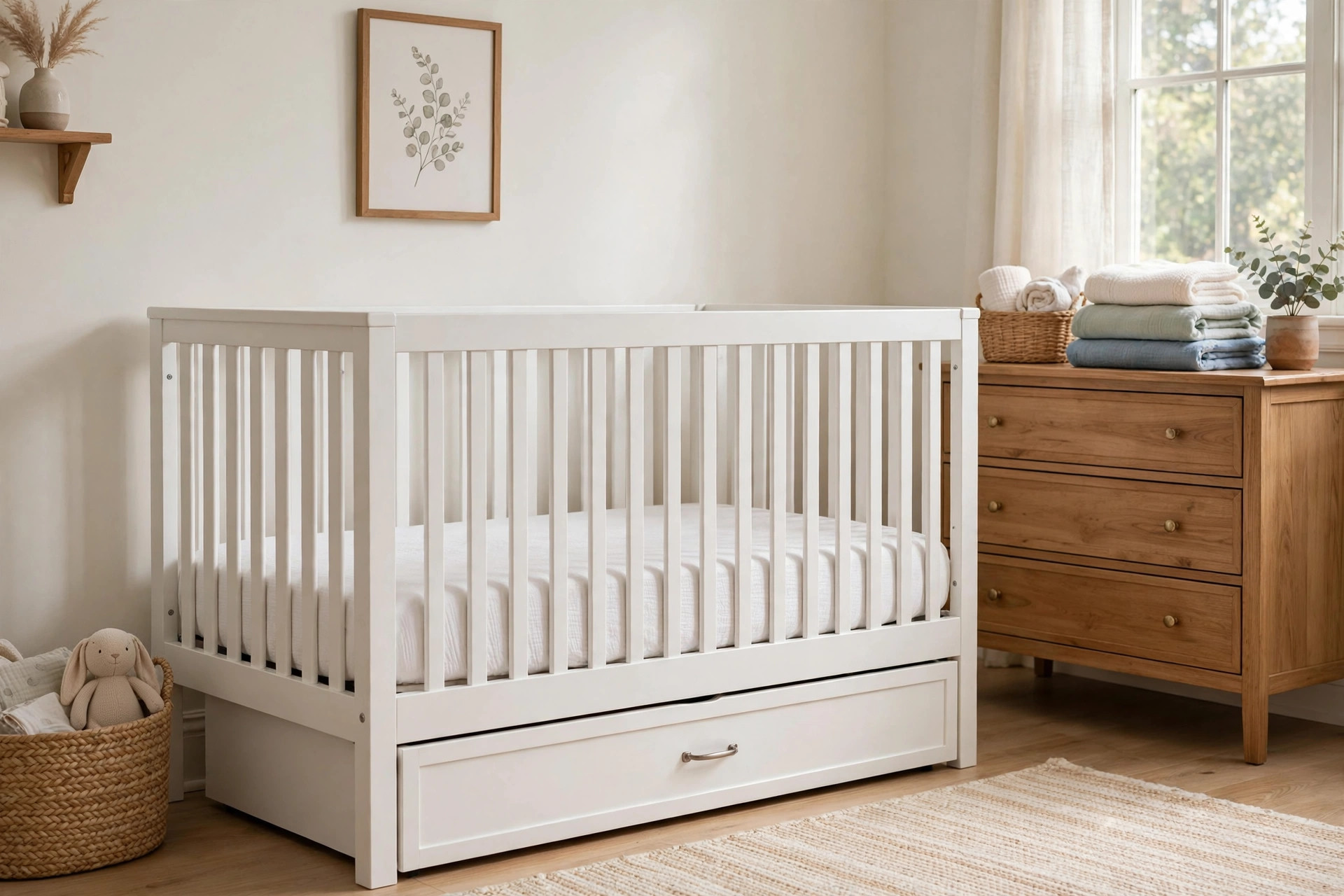

A nursery crib with drawer underneath storage is one of the most practical pieces of furniture a new parent can buy. Space in a baby’s room is often tight, and the crib already takes up the largest part of it. A built-in drawer turns the empty area under the mattress into a useful home for blankets, diapers, pajamas, and extra sheets. This guide explains why it matters, how to choose well, what it costs, and how to keep it safe and clean.
Why It Matters
Most nurseries are small. The room may hold a crib, a chair, and not much else. A separate dresser or set of storage boxes can crowd the floor and make the room hard to move through, especially in the dark during night feedings. A nursery crib with drawer underneath storage solves this problem in a simple way. The storage lives inside furniture you already own.
The drawer also saves time. When a diaper leaks at three in the morning, you do not want to walk across the hall to the linen closet. With spare sheets and sleepers stored inches away, a middle-of-the-night change takes minutes. Parents who use these cribs often say the drawer becomes their night-time station. One drawer can hold a few fitted sheets, a stack of diapers, wipes, and a clean sleeper. Everything has its place.
There is a cost saving as well. A nursery crib with drawer underneath storage removes the need for a separate storage unit or under-crib bins that slide on the floor and gather dust. Bins on casters or plain boxes tend to roll, tip, or get pushed under the bed where they are hard to reach. A built-in drawer glides out on rails and closes flush with the frame. It looks tidy and stays tidy.
What to Look for When You Choose: Nursery Crib with Drawer Underneath Storage
Safety Comes First
Safety is the most important factor in any crib purchase. In the United States, cribs must meet federal standards set by the Consumer Product Safety Commission, or CPSC. Before you buy, check the CPSC nursery product guidance for current rules on cribs, including the ban on traditional drop-side rails and the limits on slat spacing. The slats should be no more than 2-3/8 inches apart, so a baby’s head cannot slip through. Corner posts should not rise above the rails in a way that could catch clothing.
Choose a crib that is certified to the current ASTM standard for full-size cribs. A crib certified by the Juvenile Products Manufacturers Association, or JPMA, has been tested by an independent lab. Look for the certification mark on the box or the product page. A drawer adds weight and moving parts to the crib, so check that the drawer is securely attached to the frame and cannot pinch small fingers. Soft-close glides are a welcome feature. They stop the drawer from slamming, which protects both the baby’s sleep and your nerves.
Drawer Size and Glide
Not all drawers are equal. Some are shallow trays that hold little more than a spare sheet. Others are deep boxes that can store a full set of bedding. Measure the drawer before you buy. A useful drawer is at least five or six inches deep, with a full-extension glide that lets it open all the way. Partial glides leave the back third of the drawer unreachable. That back space becomes a dead zone where items sit and are forgotten.
The drawer should also move smoothly with one hand. You will often be holding the baby with the other arm. Try the display model in the store if you can. If you are shopping online, read reviews for words like “smooth,” “sturdy,” and “full extension.” A nursery dresser and changing pad combo can add more storage to the room, but the crib drawer is the one you will use most, because it sits exactly where you change and dress the baby at night.
Material and Finish
Most storage cribs are made of solid wood, engineered wood, or a mix of both. Solid wood, such as pine, rubberwood, or beech, lasts longer and holds screws better over the years. Engineered wood, like MDF, costs less and can still serve well if it is thick and sealed. Avoid cribs made of thin particleboard, which can warp in humid rooms and loosen around the drawer rails.
The finish should be non-toxic and free of lead. Water-based paints and natural oil finishes are common on modern cribs. Dark stains hide dust and wear marks better than white paint, but light finishes make a small nursery feel larger. Match the finish to the rest of the room. Many parents start with the crib and then choose a changing table and rocker to match. Browse design ideas on Apartment Therapy or HGTV to see how different finishes look in real nurseries.
Types and Options
Standard Drawer Cribs
The standard model is a full-size crib with one or two drawers under the mattress platform. Some have a single wide drawer that spans the length of the crib. Others have two smaller drawers, one on each side, so either parent can reach storage from their side of the bed. Full-size cribs measure about 52 inches long and 28 inches wide, so the drawer space is generous. The IKEA catalog and the Wayfair site both show many examples of this style in wood and white finishes.
Convertible Storage Cribs
A convertible crib changes shape as the child grows. It starts as a crib, becomes a toddler bed with a safety rail, and may later turn into a daybed or a full-size bed. When you add an under-drawer to a convertible model, you get storage that serves the room for years. The toddler stage is the real test. A toddler bed sits low to the floor, and a drawer under it is at a perfect height for a small child to open. Choose a model with a smooth soft-close drawer so little fingers stay safe. For the toddler years, you may also want to read about a convertible toddler bed with safety rail to compare rail options.
Convertible models cost more at first, but they replace three or four pieces of furniture over time. If you plan to keep the nursery set for a second child, solid wood convertible frames hold up better to a second round of assembly. Pottery Barn Kids and Graco both offer convertible lines with built-in drawers.
Compact Mini Cribs With Drawers
A mini crib is smaller than a full-size crib, usually around 38 inches long. It suits apartments, shared bedrooms, and grandparents’ houses. Some mini cribs include a shallow drawer or an open shelf under the mattress. The storage space is smaller, but so is the baby’s wardrobe at first. A few folded onesies and a pack of diapers fit easily. Mini cribs are lighter, which makes them easier to move between rooms. They do not last as long as full-size cribs, since most babies outgrow them by the first birthday.
Cost and Price
Prices for a nursery crib with drawer underneath storage vary by material and brand. Basic models in engineered wood start around 200 to 300 dollars. Mid-range solid wood models with soft-close glides and convertible frames run 350 to 600 dollars. Premium hardwood models from specialty nursery brands can reach 800 dollars or more. These ranges are estimates for the United States market and change with sales and seasons.
A storage crib costs about 50 to 150 dollars more than the same crib without a drawer. Think of it as buying two pieces of furniture in one. A separate small dresser for the nursery would cost at least 150 dollars on its own, and it would take up floor space you may not have. In that light, the drawer model is often the cheaper choice for the whole room. Target and Babyletto run frequent sales on nursery furniture, so it pays to watch prices for a few weeks before buying.
Budget tip: check outlet and open-box listings. Many stores sell floor models and returned cribs at a discount. A returned crib is still safe as long as it meets current standards and has all its hardware.
Care and Upkeep
A nursery crib with drawer underneath storage needs little care, but a few habits keep it working well. Dust the frame and the drawer front once a week with a dry cloth. Wipe spills and drool marks with a damp cloth and mild soap, then dry the spot. Harsh cleaners can damage the finish and leave fumes in the baby’s breathing space.
Clean inside the drawer once a month. Pull the drawer all the way out, shake out lint and dust, and check the glide tracks for stray hair or thread that can jam the rollers. If the drawer starts to stick, a tiny drop of silicone lubricant on the metal tracks restores the glide. Keep the drawer organized with simple dividers or small bins so sheets and clothes do not slide into a pile at the back.
Check the crib hardware twice a year. Babies shake and chew the rails, and screws can loosen over time. Tighten every bolt with the tool the maker supplied. The Spruce home care guides also suggest a plain water and mild soap wipe-down for most painted nursery furniture. This habit matters more with storage cribs, because the drawer adds weight that shifts as it opens and closes. A quick check takes five minutes and keeps the whole piece steady.
Safety
Safe sleep rules apply no matter what kind of crib you own. The American Academy of Pediatrics advises that babies sleep on their backs, on a firm flat mattress, with nothing else in the crib. No blankets, pillows, bumpers, or stuffed animals. The HealthyChildren.org site, run by the academy, explains these rules in plain language for new parents. The storage drawer does not change these rules, but it can support them. Spare sheets stored in the drawer make it easy to replace a soiled sheet in the middle of the night without reaching for a loose blanket.
Keep the drawer closed when the baby is in the crib. An open drawer is a step a climbing toddler could use to pull up and over the rail. Once your child can stand and climb, move heavy or sharp items out of the lower drawer and into a locked closet or a higher dresser. Store only soft items, like clothes and sheets, in the crib drawer from that point on.
Cord safety matters too. Many parents plug a nightlight, a sound machine, or a baby monitor near the crib. Keep all cords at least three feet from the crib and never drape them over the rail. If you use blackout curtains for nursery windows, make sure the cords are short, tied up, or cordless. Window cord accidents are rare but serious, and the CPSC has clear guidance on cordless window coverings.
Never hang a mobile with strings within the baby’s reach, and remove mobiles once the baby can push up on hands and knees. Keep the crib away from windows, radiators, and bookshelves that could tip. The What to Expect nursery safety checklist is a useful one-page review before the baby’s first night home.
Frequently Asked Questions
How much weight can the drawer hold?
Most crib drawers hold 20 to 40 pounds, which is plenty for clothes, diapers, and bedding. The exact limit is in the assembly guide or on the maker’s website. Do not store books, heavy toy bins, or a parent’s belongings in the drawer. Overloading bends the glides and makes the drawer hard to close, which can pinch fingers.
Does the drawer make the crib less safe?
No, not if the crib meets current federal standards and the drawer is part of the original design. Aftermarket drawers or homemade add-ons can weaken the frame and are not recommended. Buy a crib that was designed and tested with the drawer from the start, and follow the maker’s weight and assembly rules.
When does my child outgrow a storage crib?
A full-size crib fits most children until about age two or three, or until the child’s chest rises above the rail when standing. Convertible models extend the life of the furniture by changing into toddler beds and beyond. The drawer stays useful through all these stages. In the toddler bed stage, it becomes the child’s own low drawer for pajamas.
Can I use a secondhand crib with a drawer?
You can, but check it carefully. Cribs made before 2011 may not meet current standards, since the federal rules were strengthened that year. Look for a manufacture date on the frame. Make sure all hardware is present, the glides work, and the drawer locks or stays closed on its own. When in doubt, buy new. A crib is the one nursery item where saving money is not worth a risk.
What should I store in the drawer?
Store what you need at night within arm’s reach: fitted sheets, a few sleepers, diapers, wipes, and a small stack of burp cloths. Keep medicines, ointments, and anything in a bottle or tube in a locked or high cabinet instead. Rotate the contents as the baby grows. Newborn sizes give way to three-month and six-month sizes faster than most parents expect.
Is a drawer better than under-crib bins?
For most families, yes. Bins slide around, collect dust on the floor, and are hard to reach in the dark. A built-in drawer stays clean inside, glides out with one hand, and looks like part of the furniture. Bins cost less, so they suit a tight budget or a temporary setup. If you use bins, choose ones with lids to keep dust out.
A Short Final Word
A nursery crib with drawer underneath storage is a small idea that pays off every day. It turns wasted space into useful storage, keeps night-time supplies close, and removes one more piece of furniture from a crowded room. Choose a model that meets current safety standards, with a smooth full-extension drawer and a finish you can live with for years. Keep the drawer organized, the hardware tight, and the crib free of loose items at sleep time. Do these simple things, and this one piece of furniture will serve your family from the first night home through the toddler years.
References
American Academy of Pediatrics. (n.d.). HealthyChildren.org. https://www.healthychildren.org Apartment Therapy. (n.d.). Home design ideas and inspiration. https://www.apartmenttherapy.com Babyletto. (n.d.). Nursery furniture and decor. https://www.babyletto.com Graco. (n.d.). Baby gear and nursery products. https://www.graco.com HGTV. (n.d.). Home and garden ideas. https://www.hgtv.com IKEA. (n.d.). Home furnishings. https://www.ikea.com Pottery Barn Kids. (n.d.). Kids furniture and decor. https://www.potterybarnkids.com Target. (n.d.). Retail store. https://www.target.com The Spruce. (n.d.). Home and garden advice. https://www.thespruce.com U.S. Consumer Product Safety Commission. (n.d.). Product safety information. https://www.cpsc.gov Wayfair. (n.d.). Furniture and home goods. https://www.wayfair.com What to Expect. (n.d.). Pregnancy and parenting guidance. https://www.whattoexpect.com
Was this guide helpful?

About Emily Rodriguez
The My Garden US editorial team writes practical, in-depth home and garden guides for American homeowners — tested advice, no fluff.
You May Also Like

Nursery Crib Mobile Musical for Baby Sleep: A Complete Guide
January 22, 2026 0 views
Crib Rail Cover for Teething Protection Padded: A Parent’s Guide
September 14, 2026 0 views
The Best Nursery Dresser for a Small Baby Room
June 25, 2026 0 views