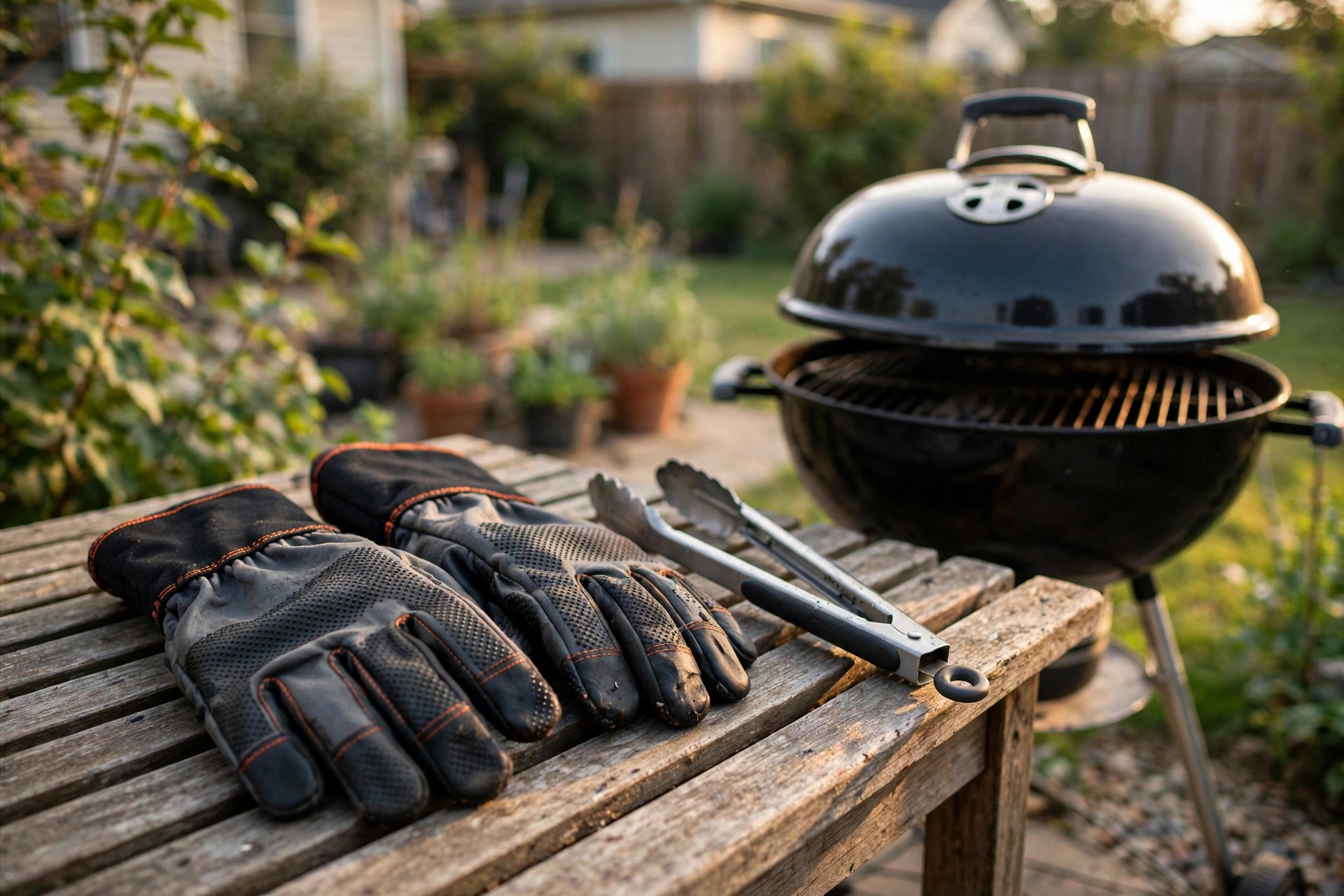

The best grill gloves heat resistant reviews all point to the same plain truth. A pair of oven mitts is not enough at the grill. Grills run far hotter than home ovens. Hot metal, hot grates, and hot coals sit close to your hands. A good pair of heat resistant grill gloves keeps you safe and lets you cook with more control. This guide walks through what matters, what to avoid, and how to read reviews with a clear head.
Why Heat Resistant Grill Gloves Matter
A gas grill can reach 500 degrees on the lid thermometer. A charcoal bed can run hotter still. Pizza ovens and smokers also reach high heat. At those temperatures, a thin cloth mitt will burn through in seconds. Burns at the grill are common and painful. Most happen when cooks move food or tools in a hurry.
Heat resistant grill gloves give you two things. They give you time. They give you grip. Time matters when you lift a hot grate or move a tray of ribs. Grip matters when your hands are wet or greasy. A glove that slips is a hazard of its own.
Reviews of these gloves often focus on the same points. Heat rating. Fit. Grip. Ease of cleaning. Each one deserves a look.
What to Look for When You Read Reviews: Best Grill Gloves Heat Resistant Reviews
The phrase best grill gloves heat resistant reviews pulls up many pages. Some are helpful. Some are just lists of products with star counts. Read them with care. Look past the score. Read the details of the test.
Heat Rating
Look for a heat rating in degrees. A good glove handles at least 500 degrees Fahrenheit. Many quality gloves handle 600 or more. Some claim 900 degrees or higher. Treat very high claims with care. They often refer to brief contact, not long handling.
Ask one question. How long can you hold a hot pan? Five seconds is often enough at the grill. You rarely need to hold hot metal for a full minute. Reviews that describe real timed tests are more useful than reviews that just repeat the number on the box.
Material
Three main materials appear in these gloves. Silicone. Aramid fabric. Leather. Each has strengths.
Silicone resists heat and is easy to clean. It grips well even when wet. It can feel stiff until it breaks in. Aramid fabric, the same kind of fiber used in fire gear, handles very high heat and stays flexible. It needs care in washing. Leather is the old standby. It handles heat and looks fine for years. It can get stiff if it gets wet and is not dried with care.
Many gloves mix materials. A fabric glove with a silicone grip pattern is common. The silicone gives grip. The fabric gives heat defense.
Fit and Forearm Coverage
Gloves must fit snug. Loose gloves slip at the wrong moment. Check the size chart before you buy. Measure your hand across the knuckles.
Length matters too. A glove that stops at the wrist leaves the forearm open. A glove that reaches halfway up the arm guards against heat when you reach across a hot grill. Many cooks prefer the longer gauntlet style for this reason. It is a simple upgrade with real value.
Types of Grill Gloves
Silicone Gloves
Silicone gloves look like mitts or heavy work gloves. They shrug off grease and water. You can rinse them at the sink. They grip wet tools well. On the down side, thick silicone can reduce feel. It can be hard to pick up small items like skewers. They can also feel hot inside after long use, since silicone traps sweat.
Aramid Fabric Gloves
These are knit gloves made from heat proof fiber, often lined inside. They look like work gloves from a shop. They stay flexible and give good feel. Many handle the highest heat ratings in reviews. The weak point is water. Wet fabric gloves pass heat fast. Keep them dry at the grill.
Leather Grill Gloves
Leather gloves are split into two styles. Thin cooking leather and thick welder style. Thick leather handles long contact with hot metal. It also takes time to break in. Leather needs care. Do not soak it. Let it dry slowly away from heat. A little leather balm now and then keeps it soft.
How Reviews Test Gloves and How You Should Judge
A fair review does more than quote the box. It should describe real use. Did the tester move hot grates? Did they lift a cast iron pan? Did they test grip on a wet tool?
Watch for reviews that only test on a cool grill. A glove can feel great at room temperature and fail at 600 degrees. Look for timed heat tests. Look for notes on dexterity. The best grill gloves heat resistant reviews will tell you if the glove can turn a sausage without tearing the skin.
Be careful with reviews that seem written to sell. Some pages list ten products with five stars each. That is not a test. It is a catalog. Pages from test labs and grilling schools carry more weight. Consumer testing groups publish method notes you can read. Retailer product pages are useful for long term user reports, since buyers return months later to note how the glove held up.
Cost and Price
Grill gloves are not dear. Most pairs sell for 15 to 35 dollars. Heavy duty pairs with long cuffs can run 40 to 50 dollars. Cheap pairs under 10 dollars exist, but they often fail early or rate low on heat tests.
Price is not a perfect guide. A 25 dollar pair can beat a 45 dollar pair in a fair test. What you pay for is usually material quality and cuff length. Read the rating and the size notes before you pay more. A mid priced glove that fits well is better than a costly glove that slips.
Buying a second pair is not waste. Many cooks keep one short pair for quick moves and one long pair for reaching across the fire. Two modest pairs beat one costly pair that only fits one task.
Common Mistakes When Buying Grill Gloves
Shoppers repeat the same errors. The first is buying by look alone. A glove that looks rugged may rate low on heat tests. Always check the number. A rating in degrees tells more than a tough photo.
The second error is skipping the size chart. Grill gloves run large in many brands. An extra large glove on a medium hand slides and drops tools. Measure your hand across the knuckles and compare it to the chart. Many reviews note if a brand runs big or small. Read those notes.
The third error is buying the cheapest pair for a high heat grill. Thin gloves work fine on a small gas grill at medium heat. They fail on a hot charcoal bed or in a pizza oven. Match the glove to your hottest cooking task, not to your average one.
The fourth error is ignoring cuff length. Short cuffs leave the wrist and forearm open. Heat rises from the grill and hits the bare arm. Long cuffs cost only a few dollars more and guard much better.
The fifth error is trusting a five star score with no text. A score with no words proves nothing. Read the written reviews. Look for details about fit, heat, and how long the glove lasted. A four star review with clear detail helps more than a five star review with no words.
The last error is keeping worn gloves too long. Heat protection fades. A glove that worked last summer may fail this summer. Check for thin spots each season and replace worn pairs. Your hands are worth more than a twenty dollar glove.
Care and Upkeep
Care keeps the glove safe. Heat protection fades when material breaks down. Clean the gloves after each cook if they are greasy. Silicone gloves rinse clean with soap and water. Fabric gloves follow the tag. Most wash cold and air dry. Leather gloves wipe clean with a damp cloth.
Check gloves before each season. Look for thin spots. Look for melted patches. Look for loose stitching. Press the palm. If you can see light through thin fabric, the glove is done. A damaged glove gives false hope. Replace it.
Storage is simple. Hang them or lay them flat. Do not fold silicone gloves tight for months. Do not leave any glove in direct sun for long. Heat and sun age the material.
Safety Tips for Grilling With Gloves
Gloves help, but they do not make you safe alone. Keep these points in mind.
First, keep gloves dry. Water carries heat through fabric fast. A damp glove burns worse than no glove at all, because you hold on longer. Keep a dry towel near the grill.
Second, wear long sleeves near open flame when you can. Gloves guard the hand. Sleeves guard the arm.
Third, never use a grill glove as a pot holder for long carries indoors. The glove is built for short hot contact at the grill. Long carries let heat soak through.
Fourth, teach young cooks to keep clear. Gloves can make a child bold around heat. Set a rule. Children stay three feet from the grill unless an adult hands them a tool.
Fifth, check your gloves in winter. Cold weather makes some materials stiff. A stiff glove drops tools. Warm them in the house before a winter cook.
Sixth, keep a burn kit near the grill. Cool water, a clean cloth, and a basic first aid kit. Quick cool water on a burn is the first step, per common first aid guidance.
Frequently Asked Questions
Are silicone or fabric gloves better for grilling? Both work. Silicone cleans easy and grips wet tools well. Fabric aramid gloves handle higher heat and give better feel. Many cooks own one of each.
What heat rating do I need? Look for at least 500 degrees Fahrenheit. Higher is better for charcoal and pizza ovens. Remember that ratings often cover brief contact. Read how the test was run.
Do grill gloves work for smokers too? Yes. Smokers run lower heat than grills, so most grill gloves are more than enough. Long cuffs help when you reach into a deep smoker chamber.
Can I wash heat resistant grill gloves? Silicone gloves wash with soap and water. Fabric gloves follow the care tag, usually cold wash and air dry. Leather gloves should not be soaked.
How long do grill gloves last? A quality pair lasts two to five grilling seasons with normal care. Grease, sun, and hard use wear them down. Replace them when you see thin or damaged spots.
Do I need gloves for a gas grill if I have long tools? Long tools help, but you still touch hot grates, pans, and lids. Gloves give backup when a tool slips or food sticks. Most grillers find them worth it.
A Short Final Word
Reading the best grill gloves heat resistant reviews is worth your time, but the choice is simple in the end. Pick a glove rated at least 500 degrees. Pick a snug fit. Pick a long cuff if you reach across the fire. Keep the gloves dry and clean. Then you can cook with a clear mind and both hands safe.
For more grilling know how, see our guides on how to grill steak on a gas grill, choosing a grill brush for cast iron grates, and wireless thermometers for grilling. Good gloves work best with the right tools, and trusted makers such as Weber and Char-Broil publish care notes for their gear. Test groups like Consumer Reports explain fair test methods, while grilling knowledge sites such as AmazingRibs and The Spruce Eats cover heat and food safety. Pellet grill makers like Traeger and kamado makers like Big Green Egg list glove tips in their cook guides, and retailers such as The Home Depot carry long term buyer reviews. Gas grill brands like Napoleon and Broil King also publish grilling safety pages worth a read.
References
AmazingRibs.com. (n.d.). Barbecue and grilling science. https://www.amazingribs.com Big Green Egg. (n.d.). Kamado grills and outdoor cooking. https://www.biggreenegg.com Broil King. (n.d.). Gas and charcoal grills. https://www.broilkingbbq.com Char-Broil. (n.d.). Gas and charcoal grills. https://www.charbroil.com Consumer Reports. (n.d.). Product reviews and ratings. https://www.consumerreports.org Napoleon. (n.d.). Fireplaces, grills, and heating products. https://www.napoleon.com The Home Depot. (n.d.). Home improvement products. https://www.homedepot.com The Spruce Eats. (n.d.). Recipes and cooking guides. https://www.thespruceeats.com Traeger. (n.d.). Wood pellet grills. https://www.traeger.com Weber. (n.d.). Grills and outdoor cooking. https://www.weber.com
Was this guide helpful?

About Jennifer Lee
The My Garden US editorial team writes practical, in-depth home and garden guides for American homeowners — tested advice, no fluff.
You May Also Like
Best Grill Basket for Vegetables Reviews
September 26, 2026 0 views
Finding the Best BBQ for Large Gatherings: Honest Reviews and Buying Advice
March 10, 2026 0 views
How to Grill Lobster Tails at Home Like a Cookout Pro
July 27, 2026 0 views