
When your child enters the teen years, the bedroom changes. Clothes pile up. Morning routines take longer. A dresser that worked for a small child now feels too short, too plain, or too crowded. That is why many parents look for the best kids dresser with mirror for teens. One piece of furniture can hold clothes, keep the room tidy, and give a teen a proper place to get ready in the morning. A mirror on top saves wall space. It also turns the dresser into a small dressing station. This guide explains what to look for, what the choices are, what they cost, and how to keep the piece in good shape for years.
Why a Dresser With a Mirror Suits the Teen Years
The teen years bring new habits. Teens care more about how they look. They spend more time choosing clothes. They fix their hair. A dresser with a mirror answers all of that in one place.
A mirror also helps in small rooms. Many teen rooms are tight. A standing mirror takes up floor space. A dresser-top mirror uses space that is already there. The room stays open. The floor stays clear.
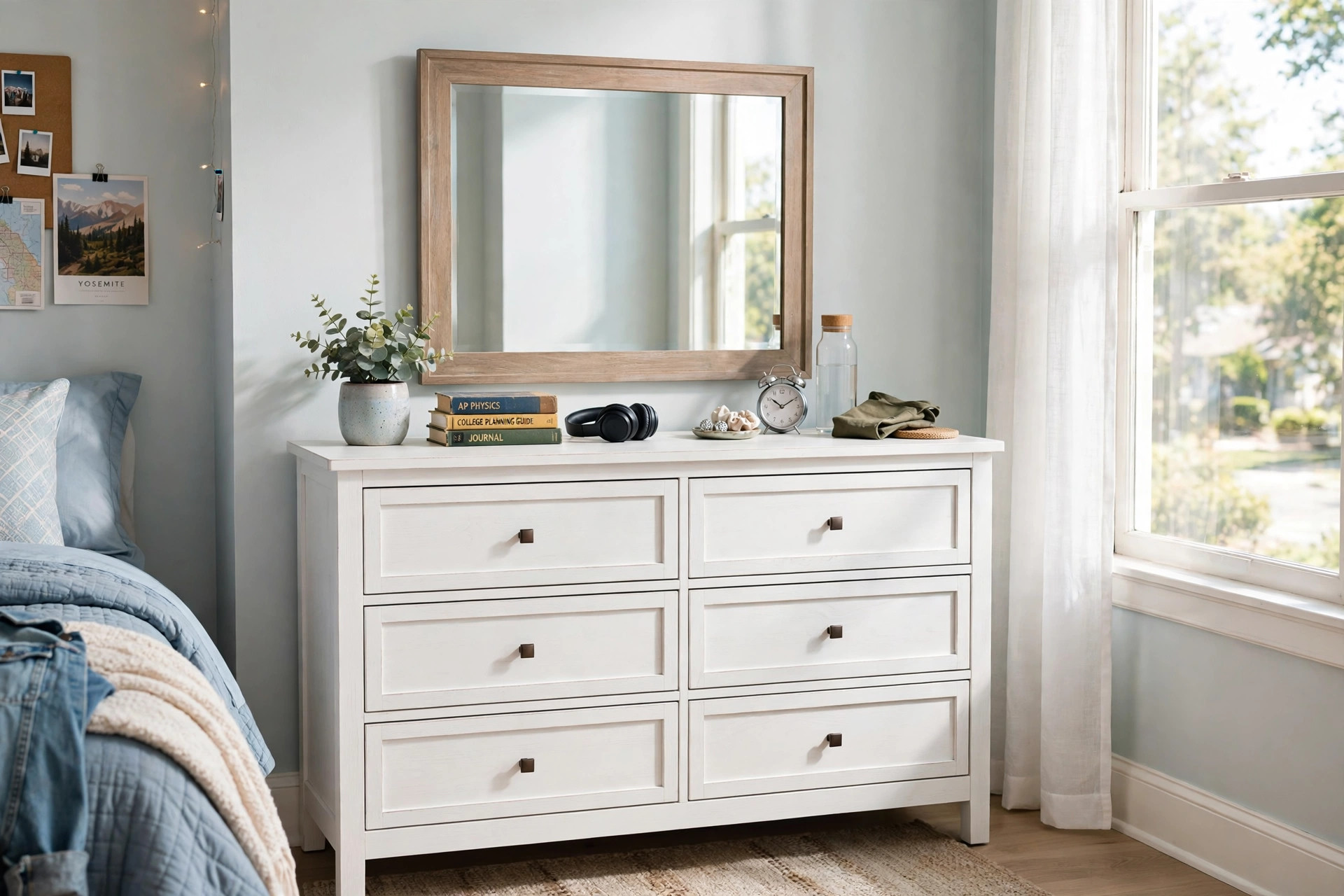
There is a storage gain too. A teen owns more clothes than a small child. School clothes, sports gear, and weekend outfits all need a home. A six-drawer dresser holds a full week of outfits with room to spare. Deep drawers swallow jeans and sweaters. Top drawers hold socks and small items.
Teens also want their room to feel grown up. A plain kids dresser can feel babyish. A dresser with clean lines and a mirror feels older. It suits the teen while still fitting a family home. Many parents buy this piece once, in the early teen years, and keep it through high school.
What to Look for When You Shop: Best Kids Dresser with Mirror for Teens
A dresser is a long-term buy. It should last ten years or more. The points below will help you judge quality before you pay.
Size and Drawer Count
Measure the wall first. Most teen dressers run 48 to 60 inches wide. Leave room for the door to swing. Leave room to walk past. Write the numbers down and take them to the store.
Count the drawers next. Four drawers may be enough for a small room. Six drawers suit most teens. Eight drawers serve a teen with lots of clothes. Watch the drawer depth too. Shallow drawers fit socks and shirts. Deep drawers fit jeans and sweatshirts. A good dresser mixes both.
Wood and Build Quality
Solid wood lasts longest. Pine, oak, and rubberwood are common in kids dressers. They take wear well. They can be sanded and repainted if the teen changes taste.
Wood veneer over particleboard costs less. It can look fine. But it chips more easily. It does not survive moves as well. If the family may move, solid wood is the safer pick.
Pull the drawers out in the store if you can. They should glide. They should not wobble. Dovetail joints, the small interlocking cuts at the corners, mark a strong drawer. Metal ball-bearing slides run smooth and hold weight. Cheap plastic slides wear out fast.
The Mirror
The mirror is the feature that sets this dresser apart. Look at how it attaches. The best designs bolt the mirror to the dresser back. The bracket should be thick and screwed tight. A mirror that only leans on the wall can tip.
Check the mirror size. A mirror that spans most of the dresser width is most useful. It lets a teen see head and shoulders. Tall cheval-style mirrors on short posts can work too, but they wobble more.
The mirror edge matters. A framed mirror hides the glass edge. That looks better and is safer. A frameless mirror should have a smooth, polished edge. Beveled edges catch light nicely and look finished.
Style and Finish
Teens change taste fast. A neutral finish adapts. White, gray, natural wood, and soft black match most room themes. They also match bedding from stores like IKEA and Wayfair, so future updates stay easy.
Avoid strong themes painted on the wood. A dresser covered in cartoon art looks old to a teen in two years. Keep the dresser plain. Let the teen add style with posters, bedding, and small decor instead.
Safety Features
A tall dresser can tip. Teens climb on drawers to reach high shelves. This is a real danger. Choose a dresser that comes with an anti-tip kit. The kit is a strap or bracket that anchors the dresser to the wall. Use it. Every unit sold in the United States must now meet federal stability rules, and the U.S. Consumer Product Safety Commission explains why anchoring matters and which rules apply.
Drawers should have stops. Stops keep a drawer from pulling all the way out and falling. Hinges and knobs should be smooth, with no sharp edges. Round knobs are kinder than sharp metal pulls.
The mirror should be anchored as well. If it mounts on the dresser back, tighten all bolts. If it hangs on the wall above, use proper wall anchors. A falling mirror is a serious hazard.
Types and Options
Dressers with mirrors come in several forms. Each suits a different room.
Standard six-drawer dresser with mirror. This is the most common type. It is wide, low, and stable. The mirror mounts on the back. It fits most teen rooms and holds the most clothes.
Tall chest with mirror. A tall chest is narrow and high. It saves floor space. It suits small rooms. But it tips more easily, so wall anchoring is a must. The mirror sits higher, which suits older teens.
Dresser with hutch mirror. Some designs add a small hutch, a low shelf unit, between the dresser and the mirror. The shelf holds books, photos, and small items. This is handy for teens who like to keep things close.
Vanity-style dresser. A vanity dresser is lower, with a wide mirror and a knee hole in the middle. It works as both dresser and desk. It suits a teen who wants a makeup or grooming spot. The drawers sit on each side.
Double dresser. A double dresser is very wide, with two columns of drawers. It holds clothes for a teen with a large wardrobe. It needs a wide wall. The mirror can span the full width.
Wood finish choices run from painted white to dark espresso. Painted finishes wipe clean. Stained wood shows grain and hides scratches. For a teen room, painted white or gray is the most popular pick. It brightens the room and matches most styles sold at Pottery Barn Kids.
Cost and Price
Prices vary by material and brand. Here is what to expect in the United States.
Under $200. Dressers in this range are usually particleboard with veneer. They work for a few years. They suit a tight budget or a room that will change soon.
$200 to $450. This is the sweet spot for most families. You can find solid pine or rubberwood dressers with mirrors in this range. Build quality is decent. The piece should last through high school.
$450 to $800. This range brings hardwood, better drawer slides, and nicer mirrors. Finishes are smoother. These dressers can move with the teen to a first apartment.
Over $800. Premium dressers use solid oak or maple. Joinery is fine. Mirrors are large and well framed. These are heirloom pieces.
Watch for sales. Major holidays bring discounts on kids furniture. Consumer Reports notes that furniture prices swing widely by season, so timing a purchase can save real money. Delivery fees add up. Measure your doorways too. A 60-inch dresser does not fit through every door.
Think about value, not just price. A $350 solid wood dresser that lasts ten years costs $35 a year. A $150 particleboard unit replaced twice costs more in the end.
Care and Upkeep
A little care keeps the dresser looking good for years.
Dust the top and mirror weekly. Use a soft dry cloth on the wood. Use glass cleaner and a lint-free cloth on the mirror. Spray the cleaner on the cloth, not on the mirror. This keeps liquid out of the frame.
Wipe spills fast. Water rings mark wood. A teen may leave a wet glass on the dresser. A small tray or mat on the top prevents this. Coasters are cheap and they work.
Tighten the hardware once a year. Drawer pulls loosen. Mirror bolts loosen. A few turns with a screwdriver keep everything firm. Check the wall anchor at the same time. Make sure the strap is still tight.
Keep the dresser out of direct sun. Sun fades finish unevenly. It can warp wood over time. If the dresser must sit near a window, close the blinds in the afternoon.
Teach the teen to open one drawer at a time. Open drawers shift weight forward. One open drawer is fine. Three open drawers can tip a unit that is not anchored. This small habit adds real safety.
For room planning help, sites like The Spruce and Apartment Therapy show how to place a dresser so it gets light without sun damage and stays clear of walkways.
Safety First
Safety deserves its own section. Furniture tip-over hurts thousands of children and teens each year in the United States.
Anchor the dresser to the wall on day one. Do not wait. The kit comes in the box. It takes ten minutes. The U.S. Consumer Product Safety Commission offers clear guides on anchoring dressers and other tall furniture.
Anchor the mirror too. A bolted mirror can still shift if bolts loosen. Check them twice a year.
Keep heavy items low. Put books and heavy gear in the bottom drawers. Light clothes go up top. This lowers the center of gravity.
Never let small children climb the dresser. In a shared room, a teen’s dresser draws younger siblings. Move step stools away. Keep tempting items off the top.
If you buy used, check for recalls. Older dressers may lack anti-tip kits. What to Expect and HealthyChildren.org both cover nursery and kids room safety basics that still apply as children grow.
Pairing the Dresser With the Rest of the Room
A dresser does not stand alone. It should fit the teen’s whole room.
Match the wood tone to the bed. You do not need a full set. But a white dresser next to a dark bed can clash. If the teen already has a kids loft bed with desk underneath for teens, pick a dresser finish that sits well beside it.
Think about the desk too. Many teens do homework in their room. If space is tight, a vanity-style dresser can double as a desk. If the room holds a separate desk, keep the dresser top clear for the mirror and a lamp. A teen who needs a real study spot may pair the room with the best kids desk with hutch for homework.
Add storage where the dresser falls short. Under-bed drawers work well. A teen with lots of folded clothes may also want the best kids bed with storage drawers underneath to keep extras out of sight.
Leave the mirror zone clear. The space in front of the mirror is the grooming spot. Do not pile books there. A small tray for a brush and hair ties is enough. Good light helps. A lamp on the dresser or a wall light nearby makes the mirror far more useful in the morning.
FAQ
What size dresser is best for a teen? A 48 to 60 inch wide dresser suits most teens. Six drawers hold a full wardrobe. Measure the wall and the doorways before you buy. Leave space to walk past the open drawers.
Is a mirror on a dresser safe for teens? Yes, when it is fixed well. The mirror should bolt to the dresser back or hang on proper wall anchors. The dresser itself must be anchored to the wall. Check the bolts twice a year.
What is the best wood for a teen dresser? Solid pine, rubberwood, or oak last longest. They survive moves and daily use. Particleboard with veneer costs less but chips and wears faster.
How much should I spend? Most families spend $200 to $450. That buys a solid wood dresser with a good mirror that lasts through high school. Cheaper units work for a short time. Pricier units last into adulthood.
Can a dresser with a mirror work in a small room? Yes. The mirror uses no floor space. A tall chest saves even more room. Keep the top clear and anchor everything to the wall.
Should the teen help pick it? Yes. A teen who picks the finish will take better care of it. Give two or three parent-approved choices. Let the teen make the final call.
A Short Final Word
The best kids dresser with mirror for teens is not the priciest one. It is the one that fits the room, holds the clothes, and stands firm against the wall. Measure first. Choose solid wood if the budget allows. Bolt the mirror. Anchor the unit. Then let the teen make it their own. A well-chosen dresser serves through high school and often moves on to the first apartment. That is money well spent.
References
American Academy of Pediatrics. (n.d.). HealthyChildren.org. https://www.healthychildren.org Apartment Therapy. (n.d.). Home design ideas and inspiration. https://www.apartmenttherapy.com Consumer Reports. (n.d.). Product reviews and ratings. https://www.consumerreports.org IKEA. (n.d.). Home furnishings. https://www.ikea.com Pottery Barn Kids. (n.d.). Kids furniture and decor. https://www.potterybarnkids.com The Spruce. (n.d.). Home and garden advice. https://www.thespruce.com U.S. Consumer Product Safety Commission. (n.d.). Product safety information. https://www.cpsc.gov Wayfair. (n.d.). Furniture and home goods. https://www.wayfair.com What to Expect. (n.d.). Pregnancy and parenting guidance. https://www.whattoexpect.com
Was this guide helpful?

About David Wilson
The My Garden US editorial team writes practical, in-depth home and garden guides for American homeowners — tested advice, no fluff.
You May Also Like

Nursery Night Light With Dimmer for Feeding: A Simple Guide
February 13, 2026 0 views
Nursery Glider Recliner for Small Apartment: A Complete Guide
September 4, 2026 0 views
Crib Rail Cover for Teething Protection Padded: A Parent’s Guide
September 14, 2026 0 views