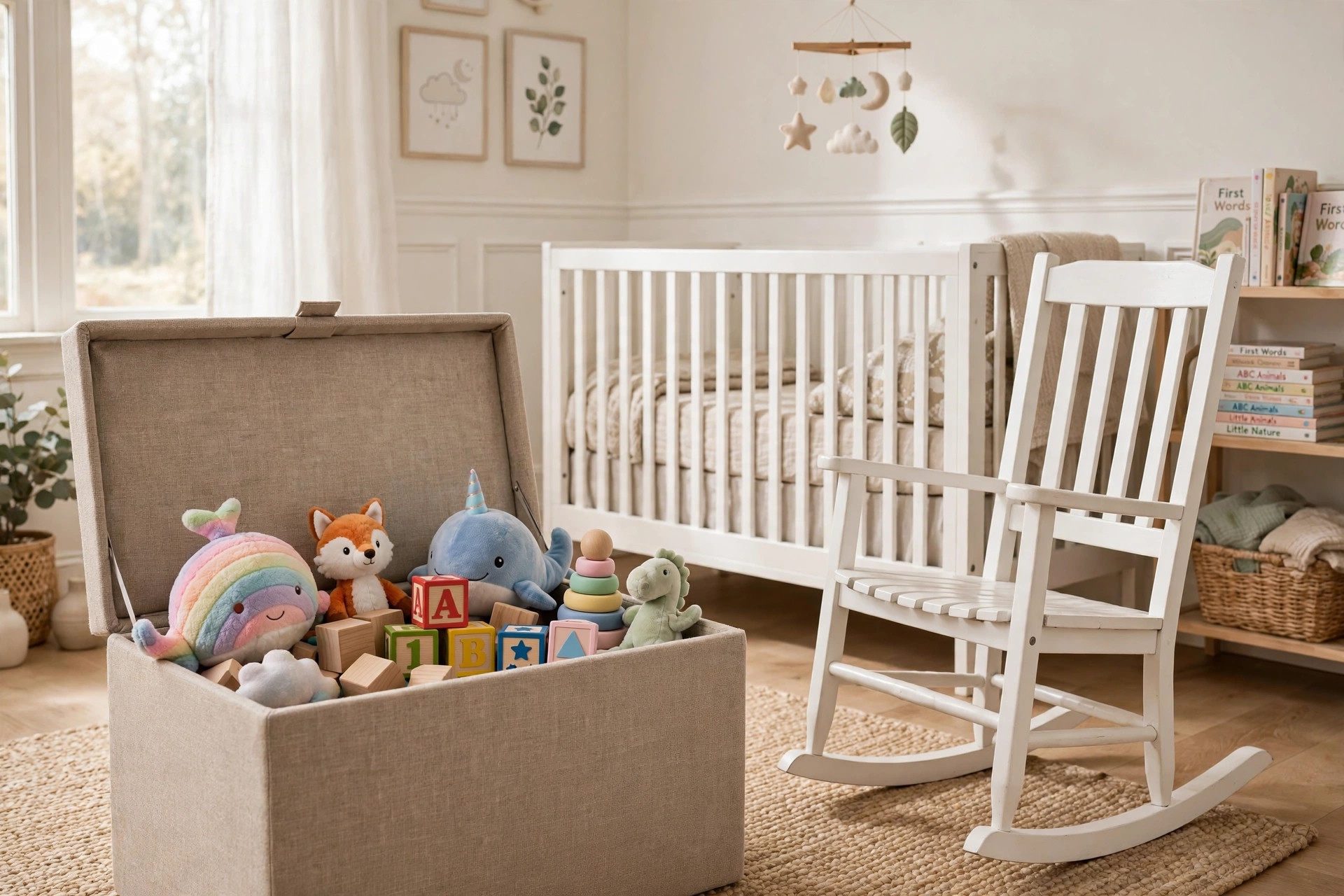

Every nursery fills up with toys faster than parents expect. Blocks, stuffed animals, books, and rattles spread across the floor each day. A storage ottoman can solve this problem in a simple way. It holds toys out of sight. It also gives parents a soft seat or a footrest beside the rocking chair. The best nursery storage ottoman for toys does both jobs well. It keeps the room tidy and it stays safe for small children.
Many parents pick an ottoman without much thought. They look at the color and the price and bring it home. Then they learn that the lid is too heavy. Or the hinges pinch little fingers. Or the inside is too small to hold the toys they own. This guide will help you avoid those mistakes. It explains what matters, what to look for, and how much you should expect to pay.
Why a Storage Ottoman Matters in a Nursery
A nursery is a small room with a big job. It must hold the crib, the changing table, the chair, and all the supplies a baby needs. Floor space runs out fast. When toys scatter across the rug, the room feels messy. It also becomes harder to clean. A toy left on the floor can trip a tired parent at night. It can also end up near the crib, where it does not belong.
A storage ottoman answers this need without taking up extra room. It works as two pieces of furniture in one. The top gives you a place to rest your feet while you feed the baby. The inside swallows the toys in seconds when guests arrive. Unlike a toy box, it does not look like a toy box. The room keeps its calm look even with a full toy collection inside.
Cleanup with a storage ottoman takes about a minute. You lift the lid, toss the toys in, and close it. That is far easier than sorting toys onto shelves. For busy parents, this simple habit keeps the nursery pleasant day after day. Many nursery design writers, such as the team at HGTV, note that hidden storage is one of the best ways to keep a small child room looking neat.
What to Look for When You Shop: Best Nursery Storage Ottoman for Toys
Size and Capacity
Start with size. Measure the spot where the ottoman will sit. A good nursery storage ottoman for toys should fit beside the glider or at the foot of the crib without blocking walkways. Leave at least two feet of clear space around doors. A common size is about 17 inches high and 20 to 25 inches wide. That size seats one adult for a short rest and holds a fair number of toys.
Think about what you will store. If you have large stuffed animals, you need a wide opening. If you have many small blocks and books, depth matters more. A good test is to gather the toys into one pile and measure the pile. Then compare it with the inside dimensions listed on the box or the web page. Retailers like IKEA and Wayfair usually list inside measurements. Read them before you buy.
Lid and Hinges
The lid is the part that causes the most trouble. A heavy lid can fall on small fingers. A lid with no hinge can slide off and hit a child. Look for a lid with slow-close hinges or a soft hinge that holds the lid open at any angle. These hinges stop the lid from slamming shut. They cost a little more, but they are worth it in a room with toddlers.
The lid should also be easy for an adult to lift with one hand. You will often hold the baby in the other arm. A lid that needs two hands to open will annoy you every day. Some ottomans have a tray top that flips over. These can be handy, but check that the tray locks in place. A loose tray can slide off and startle a child.
Materials and Fabric
Nursery furniture takes a beating. Spit-up, spilled milk, and sticky hands all find their way to the ottoman. Choose fabric that wipes clean or has a removable cover. Microfiber and performance fabrics hold up well. Cotton canvas is soft and washes well, but it stains more easily. Leather and faux leather wipe clean in seconds, though they can feel cold in winter.
Avoid fabric that sheds fibers, since babies mouth everything. Light colors show stains fast, so medium tones or patterns are more forgiving. If you love a light color, make sure the cover comes off for washing.
Stability and Base
The ottoman should sit flat and solid. Push it gently in the store or read reviews about wobble. A tippy ottoman can spill a toddler who climbs on it. Wide, low ottomans are more stable than tall, narrow ones. Check the feet. Felt pads protect wood floors. A flat base works best on carpet.
Types and Options
Storage ottomans come in several shapes. Each shape suits a different room.
Round ottomans look soft and fit well in corners. They have no sharp corners, which is a plus around toddlers. The inside space is smaller than it looks because of the curved walls. They work best for soft toys and blankets.
Square and rectangular ottomans hold the most. Their straight walls waste no space. A rectangle can also serve as a bench at the foot of the crib. Many parents use a long rectangular ottoman as a window seat for toy storage.
Cube ottomans are small and light. One cube holds few toys, but two or three together can work well in a tight corner.
Ottomans with trays have a flat tray on the lid for a bottle or a book during night feeds. Check that the tray locks in place.
Storage benches are the big cousins of ottomans. They are longer and often have dividers inside. If your toy pile is large, a bench may serve you better than a standard ottoman. Just check that the lid hinges are child-safe, since a long lid is heavier.
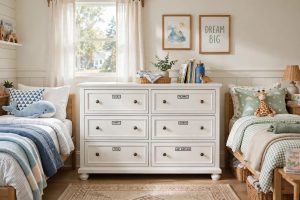
Some parents also pair the ottoman with matching room pieces. A toddler bedding set with curtains matching can tie the whole nursery look together, and small touches like kids dresser knobs replacement for fun decor add charm without much cost.
Cost and Price
Prices for a nursery storage ottoman vary by size, fabric, and brand. A small cube ottoman may cost as little as 30 dollars. A mid-size round or square ottoman in washable fabric usually runs between 60 and 120 dollars. Large benches and premium brands can reach 200 dollars or more. Most families find a good option in the 70 to 100 dollar range.
Do not judge by price alone. A cheap ottoman with a flimsy lid may last only a year. A well-made one can serve through two or three children and then move to the living room. Look at the frame. Solid wood or strong engineered wood frames last longer than thin particle board. Read reviews from other parents. They will tell you if the hinges failed after six months or if the fabric pilled.
Sales help. Big home stores such as Home Depot run regular sales on storage furniture. The Container Store also carries sturdy storage pieces that work well in a nursery. Buying during a sale can save 20 to 30 percent.
Watch for hidden costs. Some ottomans need assembly. Most are simple, but check whether tools are included. Delivery fees can add up for large pieces. If you order online, check the return policy. An ottoman that looks right on screen may feel wrong in the room. A store with free returns saves you trouble.
Care and Upkeep
A storage ottoman needs little care, but a few habits will keep it looking good for years. Vacuum the fabric once a week with an upholstery brush. This picks up dust and crumbs before they work into the fibers. Wipe the inside with a damp cloth every month. Toys bring in dirt, and the inside of the ottoman can get dusty.
Treat spills at once. Blot, do not rub. For washable covers, follow the label. Let the cover air dry rather than using high heat.
Check the hinges twice a year and tighten any loose screws. If a hinge starts to slam, replace it or add a soft-close pad.
Rotate the toys now and then. A storage ottoman makes it easy to swap toys in and out. Keep half the toys in a closet and rotate them monthly. The child gets “new” toys, and the ottoman never overflows. Parenting guides at What to Expect often recommend toy rotation to keep playtime fresh.
If the ottoman starts to smell musty, leave the lid open for a day in a well-aired room. A small box of baking soda inside for a night can help. Do not use strong sprays or scented cleaners inside. Babies breathe close to these surfaces, and strong scents can bother them.
Safety First
Safety is the most important part of this purchase. The U.S. Consumer Product Safety Commission, found at CPSC.gov, sets rules for children furniture. Toy chests with lids must have supports that keep the lid from falling. While an ottoman is not sold as a toy chest, the same danger exists. A heavy lid can hurt a child badly.
Follow these rules:
– Choose a lid that stays open on its own or closes very slowly. – Keep the ottoman away from windows with cords. Cords are a strangling risk for small children. – Do not let children climb inside the ottoman. Teach toddlers that it is for toys, not for hiding. – Check for small parts. Buttons, feet, and trim should be firmly fixed. Loose parts are choking hazards. – Make sure the fabric and foam meet fire safety rules. Look for labels that state this. – Keep the ottoman stable. Anchor tall pieces to the wall if there is any risk of tipping.
Health experts at HealthyChildren.org remind parents that nursery furniture should be checked often as the child grows. What was safe at three months may need a second look at eighteen months.
Also think about placement. Put the ottoman where you can see it from the nursing chair. If the child opens it while you feed the baby, you will notice. Do not place it where the lid can hit the crib bars when opened. Give every piece of furniture room to work.
Frequently Asked Questions
What size storage ottoman is best for a nursery?
For most nurseries, an ottoman about 17 inches high and 20 to 25 inches wide works well. It fits beside a glider without crowding the room. Measure your space first and leave clear paths to the door and the crib.
Are storage ottomans safe for toddlers?
They can be safe if you choose well. Pick a lid with slow-close or stay-open hinges so it cannot slam on fingers. Make sure the piece is stable and will not tip when a toddler leans on it. Teach children not to climb inside. Check screws and hinges twice a year. When in doubt, follow the safety guidance from the CPSC.
What should I store in a nursery ottoman?
Soft toys, board books, blankets, and dress-up clothes are ideal. These items are light and fill the space well. Avoid storing heavy items that make the ottoman hard to move. Also avoid small toys with tiny parts if a baby brother or sister may reach them. Keep diapers and creams in a separate caddy where you can reach them fast.
How do I clean a fabric storage ottoman?
Vacuum it weekly with an upholstery attachment. Blot spills right away with a clean cloth. If the cover comes off, machine wash it on gentle and air dry. For spots on fixed fabric, use a mild soap and water mix, then blot dry. Skip harsh chemicals. Strong cleaners can leave fumes that bother a baby.
Can a storage ottoman replace a toy box?
In a nursery, yes, for most families. An ottoman holds a good share of toys and looks better than a plain toy box. It also gives you a seat. For older children with large collections, you may still want shelves or bins as well. Many parents find that an ottoman plus one low shelf covers all their needs until the child starts school.
Where should the ottoman sit in the nursery?
The most useful spot is beside the nursing chair or glider. You can rest your feet and reach toys without standing. Another good spot is at the foot of the crib, where a long ottoman can double as a bench. Keep it out of the main walkway and away from window cords. Make sure the lid can open fully without hitting anything.
A Short Final Word
The best nursery storage ottoman for toys is not the prettiest one in the store. It is the one that fits your room, opens safely with one hand, holds the toys you own, and cleans up without a fight. Take ten minutes to measure your space and list what you will store. Read reviews from other parents. Check the hinges with your own hands if you can. A small bit of care now buys you years of tidy, calm nursery days.
When the room is ready, you may want to finish the look. A best kids chair for desk ergonomic support can serve the child later as homework years arrive, and design ideas from Bob Vila, Apartment Therapy, or Pottery Barn Kids can inspire the rest of the space. Start with the ottoman, keep it safe, and enjoy the order it brings.
References
American Academy of Pediatrics. (n.d.). HealthyChildren.org. https://www.healthychildren.org Apartment Therapy. (n.d.). Home design ideas and inspiration. https://www.apartmenttherapy.com Bob Vila. (n.d.). Home improvement advice. https://www.bobvila.com HGTV. (n.d.). Home and garden ideas. https://www.hgtv.com IKEA. (n.d.). Home furnishings. https://www.ikea.com Pottery Barn Kids. (n.d.). Kids furniture and decor. https://www.potterybarnkids.com The Container Store. (n.d.). Storage and organization products. https://www.containerstore.com The Home Depot. (n.d.). Home improvement products. https://www.homedepot.com U.S. Consumer Product Safety Commission. (n.d.). Product safety information. https://www.cpsc.gov Wayfair. (n.d.). Furniture and home goods. https://www.wayfair.com What to Expect. (n.d.). Pregnancy and parenting guidance. https://www.whattoexpect.com
Was this guide helpful?

About Lisa Anderson
The My Garden US editorial team writes practical, in-depth home and garden guides for American homeowners — tested advice, no fluff.
You May Also Like
Crib Sheet Saver for Quick Diaper Changes: A Parent Guide
June 29, 2026 0 views
The Best Kids Bookshelf Rotating for Small Room Spaces
May 10, 2026 0 views
Kids Bookshelf with Toy Bins Combo Unit: A Complete Guide
August 27, 2026 0 views