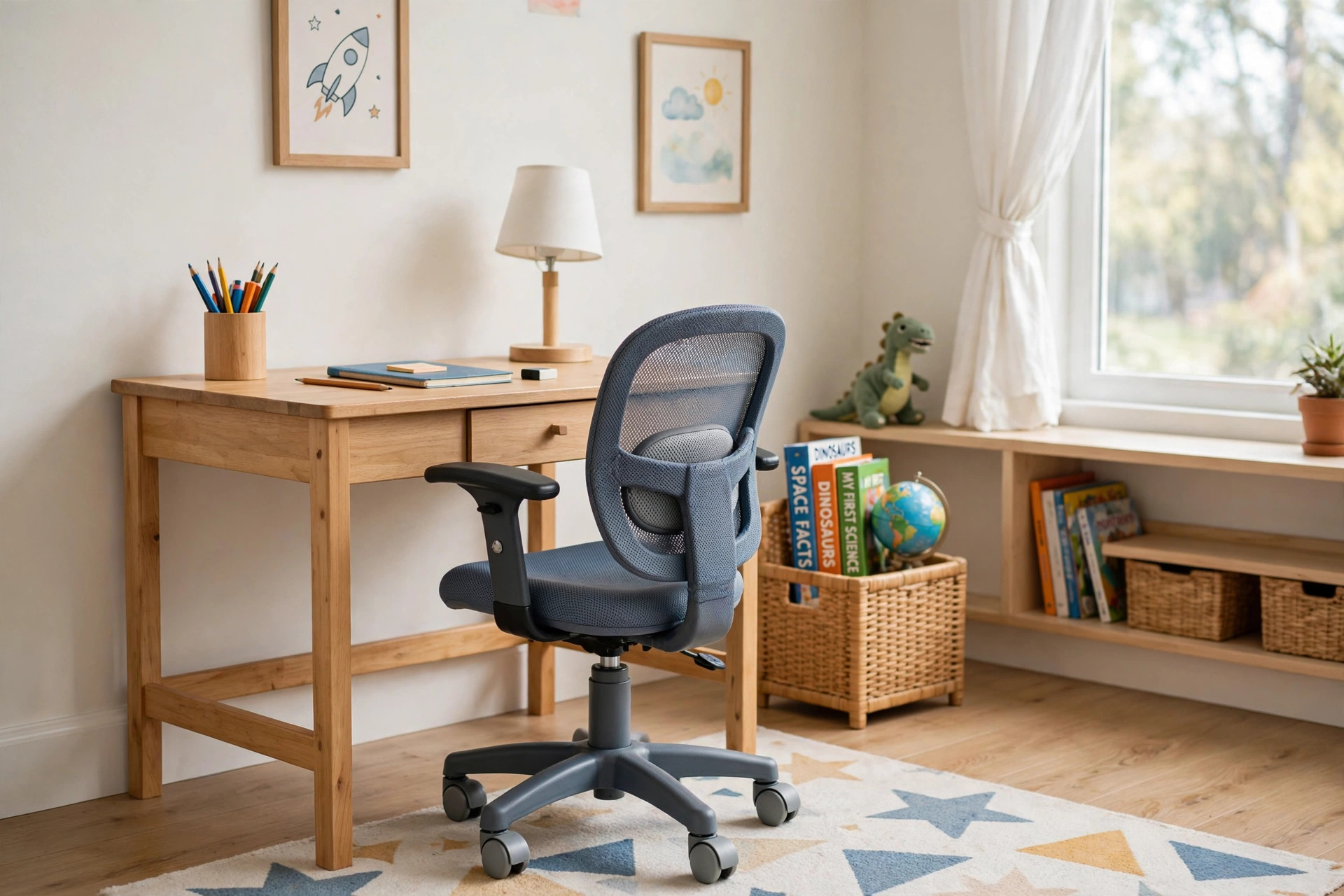

A child who sits for homework each day needs a seat that fits the body. The best kids chair for desk ergonomic support does more than look pretty in a bedroom. It holds the back upright, lets the feet rest flat on the floor, and keeps the shoulders relaxed while the child writes or reads. Poor seating leads to slouching, stiff necks, and tired legs. This guide explains what to look for, how much to spend, and how to keep the chair safe through years of use.
Why Good Seating Matters for Children
Children grow fast. A chair that fits today may be too low next year. Bones and muscles are still forming during the school years. Long hours in a poor chair can train the body into bad habits. Slouching at the desk puts strain on the lower back. A seat that is too high lets the feet dangle, which cuts blood flow to the legs. A seat that is too deep pushes the child to perch on the edge, so the back gets no support at all.
Good posture at the desk also helps the mind. A child who sits tall can breathe more freely. The eyes stay at a steady distance from the book or screen. The arms rest at a natural angle, so writing feels easier and the hand gets less tired. Teachers and parents both report that children focus better when they are comfortable. The American Academy of Pediatrics publishes guidance on children’s posture and daily habits that support healthy growth.
Many parents learn this the hard way. They buy a cute chair that matches the room. Within weeks the child stops using it. The child prefers the kitchen chair or the sofa. The problem is rarely the color. It is the fit. A chair built for looks first and comfort second will not hold a child’s attention at the desk.
How to Choose the Best Kids Chair for Desk Ergonomic Support
Seat Height and Depth
The single most important measure is seat height. When the child sits back in the chair, the feet should rest flat on the floor. The knees should bend at roughly a right angle. The thighs should lie flat on the seat without pressure under the knees. If the feet cannot reach the floor, add a footrest rather than buying a taller chair. Seat depth matters too. There should be a small gap, about two fingers wide, between the back of the knee and the front edge of the seat.
Back Support
Look for a chair back that follows the natural curve of the spine. Lumbar support is the term used for the gentle inward curve at the lower back. Many independent product testing groups check whether a chair back truly supports the lower spine or just looks curved. A slight recline of about one hundred degrees is natural for reading. A lockable tilt can help, but it is not required for younger children.
Adjustability
An adjustable kids desk chair for growing children lasts far longer than a fixed chair. Height adjustment lets the seat grow with the child. Some models also adjust the backrest height or the seat depth. Pneumatic levers are easy for a child to use, but check that the lever sits where small hands can reach it. For very young children, a simple twist knob may be safer than a lever under the seat.
Materials and Build
The frame should feel solid when the child leans back. Five-star bases with smooth casters work well on hard floors. On carpet, casters can stick, so a fixed base or larger wheels may suit the room. Seat padding should be firm enough to hold its shape but soft enough for long homework sessions. Mesh backs let air flow and work well in warm rooms. Fabric covers in dark colors hide stains from juice and markers. Many parents browse affordable children’s furniture to compare simple, sturdy options before buying.
Types of Kids Desk Chairs
Adjustable Task Chairs
The classic office-style chair, sized down for children, is the most common choice. It spins, rolls, and adjusts in height. Armrests are optional. Many children find armrests get in the way at a desk, since they bump into the table edge. If you choose armrests, pick ones that slide under the desk top or adjust in height.
Saddle and Kneeling Chairs
Some families like saddle stools or kneeling chairs. These seats tilt the pelvis forward and spread the legs. Fans say the design keeps the back straight without much effort. Critics say the knees can ache after a long session. These designs suit short study periods better than long homework marathons.
Fixed Wooden Chairs
A plain wooden chair with a shaped back can work well for a younger child. Wood lasts for years and cleans with a damp cloth. The drawback is the lack of adjustment. Pair a wooden chair with a kids desk with hutch for homework at the right height, and check the fit every few months as the child grows.
Activity Chairs
For playrooms and creative corners, a toddler table and chair set for playroom serves a different purpose. These sets sit low to the floor and suit art projects more than long writing sessions. Keep them separate from the study chair in your mind. Play seating does not need full ergonomic support.
Cost and Price: What to Expect
Prices for kids desk chairs range widely. Basic fixed chairs cost about twenty to forty dollars. Mid-range adjustable chairs with lumbar support run from sixty to one hundred fifty dollars. High-end ergonomic models with full adjustments can reach two hundred dollars or more. For most school-age children, a chair in the sixty to one hundred twenty dollar range offers the best balance of support and value.
Price does not always equal quality. Read the listed weight limit and the height range before you buy. A chair rated for a wide age range may fit loosely at both ends. Parenting resources often remind buyers that fit matters more than brand name. Specialty kids’ furniture stores carry models with solid warranties, while wide selections of kids’ furniture make it easy to compare dozens of designs side by side.
Watch for hidden costs. Some chairs ship unassembled with tools included, which is fine. Others need extra parts for a footrest or replacement casters. Check the return policy. A chair that looks right online may feel wrong once the child sits in it for an hour.
Care and Upkeep
A kids chair takes hard daily use. Spinning, leaning back, and rolling across the floor wear the parts down. Check the screws and bolts every three months. Tighten anything that feels loose. A wobbly chair teaches bad sitting habits and can tip over.
Clean the seat cover as the maker directs. Most fabric seats clean with mild soap and water. Mesh backs collect dust, so wipe them with a damp cloth each month. Leather and faux leather need a gentle cleaner to avoid cracks. Keep food and drinks away from the desk when possible. Crumbs in the seat mechanism make the height lever stick.
Teach the child a few simple habits. Sit all the way back. Keep both feet on the floor or on a footrest. Stand up and stretch every thirty minutes. These habits protect the back far more than any chair alone. Health guidance for families from child health experts supports regular movement breaks during study time.
Set a calendar reminder to recheck the fit twice a year. Children can grow two inches in a single school year, and the chair that fit in September may be too low by March. When the seat no longer adjusts high enough, it is time to move to the next size up rather than letting the child hunch. Keep spare bolts and the assembly key in a small bag taped under the seat so a quick fix is never far away. A five-minute tune-up in January and again in August keeps the chair rolling, spinning, and supporting for the full school year.
Safety First
Safety rules for children’s chairs follow federal safety standards. Look for a stable five-point base that resists tipping. The chair should not tip when the child leans back or reaches to the side. Casters should roll smoothly without catching on rug edges, which can jerk the chair forward.
Check for pinch points where small fingers can get caught, especially in folding or adjustable parts. Avoid chairs with exposed sharp edges or rough welds. Paints and finishes should be lead-free and non-toxic. If the chair has a gas lift cylinder, make sure the child cannot pull it apart. Children should never stand on a rolling chair or use it as a step stool.
Weight limits matter. A chair built for a forty-pound child will wear out fast under a teenager. Match the chair to the child’s current size, not the size you hope they will stay at. Home experts often suggest testing the chair with the child’s school bag on the lap, since children sit with extra weight in real life.
Frequently Asked Questions
At what age should a child get an ergonomic desk chair?
Most children need a proper study chair when homework starts, usually around age five or six. Before that, a simple low seat for play is enough. Once the child sits at a desk for thirty minutes or more each day, invest in real back support.
How do I know if the chair fits my child?
Have the child sit all the way back. The feet should rest flat on the floor, the knees should bend at a right angle, and there should be a two-finger gap behind the knees. The lower back should touch the chair back without a large gap.
Are armrests good or bad for kids?
It depends on the desk. Armrests can support tired shoulders during long reading sessions. But low armrests bump into the desk and push the child too far back. If you choose them, pick adjustable armrests that fit under the desk top.
How long should a kids desk chair last?
A well-built adjustable chair should last three to five years of daily use. Fixed chairs last longer but fit for a shorter time. Replace the chair when the child outgrows the height range or when parts loosen beyond repair.
Is a gaming chair a good study chair?
Gaming chairs look fun, but many are built for teens and adults, not small children. The high backs and deep seats often swallow a young child. A properly sized ergonomic chair fits better and usually costs less.
Should the chair match the desk height?
Yes. The desk and chair work as a pair. With the child seated, the elbows should rest at about desk height with the shoulders relaxed. If the desk is too high, raise the chair and add a footrest. If the desk is too low, the child will hunch over it no matter how good the chair is.
A Final Word
The best kids chair for desk ergonomic support is the one that fits your child today and grows with them tomorrow. Focus on seat height, real back support, and solid build. Keep the price in a sensible range. Check the fit every few months, keep the parts tight, and teach simple sitting habits. A good chair will not do the homework, but it will make the hours at the desk far easier on a growing body.
References
American Academy of Pediatrics. (n.d.). Child health resources. https://www.aap.org American Academy of Pediatrics. (n.d.). HealthyChildren.org. https://www.healthychildren.org Consumer Reports. (n.d.). Product reviews and ratings. https://www.consumerreports.org IKEA. (n.d.). Home furnishings. https://www.ikea.com Pottery Barn Kids. (n.d.). Kids furniture and decor. https://www.potterybarnkids.com The Spruce. (n.d.). Home and garden advice. https://www.thespruce.com U.S. Consumer Product Safety Commission. (n.d.). Product safety information. https://www.cpsc.gov Wayfair. (n.d.). Furniture and home goods. https://www.wayfair.com What to Expect. (n.d.). Pregnancy and parenting guidance. https://www.whattoexpect.com
Was this guide helpful?

About Robert Taylor
The My Garden US editorial team writes practical, in-depth home and garden guides for American homeowners — tested advice, no fluff.
You May Also Like

Kids Night Light with Timer for Bedtime Routine: A Parent’s Guide
May 6, 2026 0 views
Nursery Wall Mural Peel and Stick Forest: A Calm Woodland Look for the Baby Room
March 5, 2026 0 views
Nursery Wall Art Set for Baby Boy Room: A Simple Buying Guide
August 26, 2026 0 views