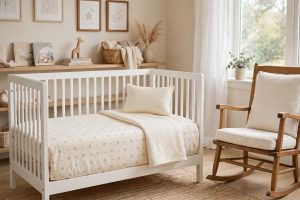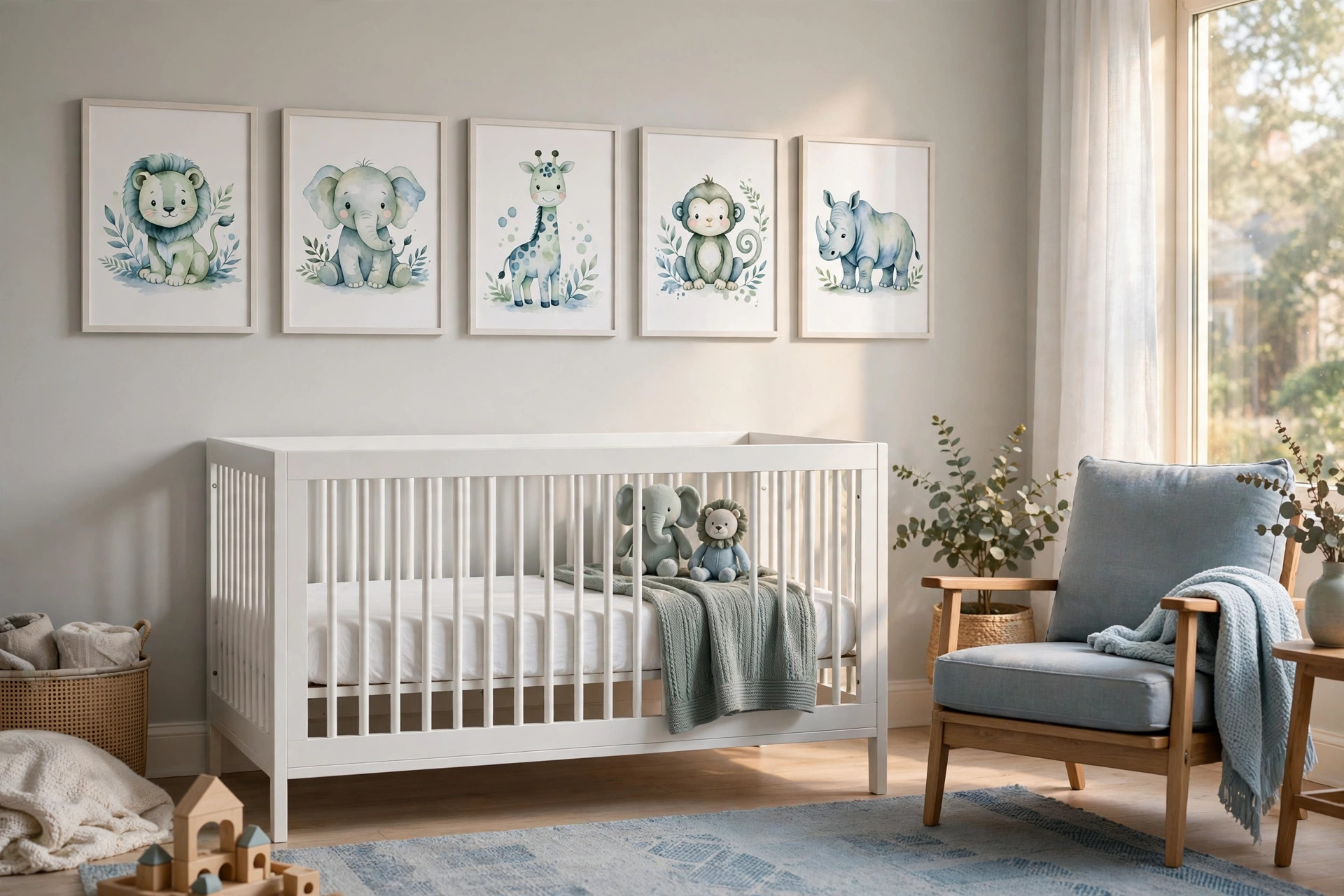

A nursery wall art set for baby boy room decor is one of the easiest ways to give a newborn room warmth and character. Walls are the largest bare surface in most nurseries. A well chosen set fills that space without clutter. It sets the mood of the room. It can tie the crib, the rug, and the curtains into one clear theme. Parents often spend weeks picking a crib or a glider. Wall art gets picked last. That is a pity, because it shapes the feel of the whole room. This guide walks through the choices in plain words. It covers what to look for, the main types, fair prices, care, and safety. It answers the questions parents ask most.
Why a Wall Art Set Matters
A single picture on a large wall can look lost. A set of three, four, or six matching prints looks planned. The pieces share colors and a theme. That shared look gives the room order. Order matters in a nursery. The room is used at night, half asleep, with a crying child. A calm wall helps. Soft shapes and gentle colors soothe tired eyes. Bright, busy walls can do the opposite.
Wall art also grows with the child. A boy who is a newborn today will be a toddler tomorrow. Art with animals, stars, the moon, or simple shapes works for both stages. It does not need to be replaced when the crib leaves. It is a small cost for years of use.
There is a practical side too. Rented homes often ban paint. Families who rent need decor they can take down without marks. Light frames and removable wall decals solve that problem. Many wall art sets use simple hooks or picture strips. They leave no holes.
What to Look for in a Set: Nursery Wall Art Set for Baby Boy Room
Not every set suits every room. A few basic points help narrow the choice.
Size and Scale
Measure the wall first. Tape a paper rectangle on the wall to test the size. A common mistake is buying art too small. One small print above a wide crib looks odd. Most buyers do well with a set that spans about two thirds of the crib width. Three prints, each eight by ten inches, suit a narrow wall. Six prints, each eleven by fourteen inches, suit a wide wall. Small spaces do better with fewer, larger pieces than many tiny ones. Advice from small-space nursery guides often makes this same point.
Colors and Theme
Blue is the classic choice for a boy room, but it is not the only one. Sage green, warm gray, cream, and soft navy all work well. The best color plan uses two or three colors. More than that can look messy. Pick colors that already appear in the room. A rug, a blanket, or the curtains can set the lead. Then find art that repeats those tones. If you plan a themed room, match the art to it. Popular themes for boys include jungle animals, ocean scenes, outer space, and simple alphabet prints. Home design collections show how repeated color keeps a nursery calm.
Materials and Frames
Paper prints are the cheapest option. They need frames to look finished. Canvas prints cost more but come ready to hang. Wooden signs and metal letters add texture. Glass fronts on frames look sharp, but they add weight and can break. In a child room, acrylic fronts are safer than glass. Light frames are easier to hang straight. They also put less strain on the wall.
Main Types of Wall Art Sets
Most sets fall into three groups. Each has clear strengths.
Printed Poster Sets
These are flat paper prints, sold in groups of three to six. They are the cheapest option by far. Prices often start under twenty dollars for the whole set. The buyer adds frames. That lets the buyer match frames to the room. It also lets the buyer swap prints later. The weak point is quality. Cheap prints can fade in sunlight. Ink on thin paper can curl in a damp room. Look for prints on thick card stock or archival paper. Those last longer.
Framed Canvas Sets
Canvas sets cost more, often fifty to two hundred dollars. The canvas is stretched over a wooden frame. The art wraps around the edges. There is no glass and no frame needed. The result looks soft and modern. Canvas is lighter than framed glass art. That makes hanging simpler. Canvas also handles small bumps well. The main risk is sagging. Cheap canvas can loosen over time. Good canvas uses kiln-dried wood bars that hold shape.
Wooden and Metal Piece Sets
These sets mix materials. Wooden animal shapes, metal stars, and painted letters are common. They add depth to the wall. They catch light in ways flat prints do not. They suit farmhouse and rustic rooms well. They cost more than paper and often weigh more. Heavy pieces need real wall anchors. That matters for renters. Pieces bought from dedicated kids decor shops often include hanging hardware.
Cost and Price Guide
Prices for a nursery wall art set for baby boy room decor span a wide range. Paper print sets run from fifteen to sixty dollars before frames. Simple frames add ten to thirty dollars each. A full framed wall of six prints can reach two hundred dollars with frames included.
Canvas sets run from fifty to two hundred dollars for three to five pieces. Large statement pieces cost more. Wooden or mixed material sets run from forty to one hundred fifty dollars.
Handmade sets from small sellers cost the most. They often start at eighty dollars and rise fast. The buyer pays for one-of-a-kind art.
To keep cost down, buy the prints and frames apart. Large discount stores and broad online furniture stores sell frames cheap. Big chains like IKEA sell plain frames at low prices that fit most prints. Watch for sales around holidays. Nursery decor often goes on sale in spring and fall.
A fair price is one where the set lasts three to five years. A thirty dollar paper set that fades in one year is worse than an eighty dollar canvas set that lasts five. Cost per year of use is the true measure.
Care and Upkeep
Nursery art needs little care, but some care helps it last.
Dust the frames once a month with a soft dry cloth. Damp cloths can harm paper and wood. Keep art away from direct sun where possible. Sun bleaches ink and fades blue tones fast. If the art hangs near a window, rotate it once a year. That spreads the light damage.
Check hanging hardware twice a year. Picture strips lose grip over time. Nails loosen in drywall. A frame that falls near a crib is a hazard. Re-seat loose hooks at once.
In damp climates, watch for mold on paper backs. A small gap between the frame and the wall helps air move. Do not hang paper art in a room with no vent. A nursery with a humidifier needs care too. Keep the humidifier away from the wall art. Guides from home decor sites repeat this advice often.
Clean fingerprints on acrylic fronts with a soft cloth and plain water. Glass cleaner can cloud acrylic. For glass fronts, use a small amount of glass cleaner on the cloth, never sprayed on the glass.
Safety First
Safety comes before style in any nursery. Heavy frames above the crib are the main risk. A frame that falls can hurt a child. Hang art above the crib only with secure hardware. Use two hooks per piece for wide frames. Avoid glass fronts over the sleeping area. Acrylic is lighter and will not shatter.
Small parts are the second risk. Wooden letters and shapes can pull off the wall. A toddler who can stand will reach for them. Make sure every piece is fixed firm. Keep small decor out of reach of standing height.
Ink and paint safety matters too. Some cheap imported prints use inks with heavy metals. Some painted wood pieces use lead paint. Buy from sellers who state their inks and paints are non-toxic. The safety rules for nursery products set by the federal government are worth a look. They cover paint, small parts, and hanging products. Pediatric guidance also reminds parents that the sleep area must stay clear of loose items. Art belongs on the wall, never inside the crib.
If the set came with a strong smell, air it out before hanging. Volatile compounds from cheap paint and glue fade in a few days in open air. Do not hang smelly art in a closed nursery.
Hanging Tips
Plan the layout on the floor first. Lay the pieces out and move them until the group looks right. Take a photo of the layout. Then copy it on the wall.
Keep the center of the group at adult eye level when you stand. In a nursery, slightly lower is fine, since parents spend time sitting. Leave two to three inches between pieces. Even gaps look tidy.
Use a level. Crooked art is easy to miss when you hang it tired. Mark the spots with painter tape before you drive any nail. For picture strips, clean the wall with rubbing alcohol first. The strips hold best on clean, dry paint.
FAQ
How many pieces should a nursery wall art set have?
Three to six pieces suit most walls. Three works over a narrow dresser. Five or six work over a wide crib. More than six can crowd a small room. Match the count to the wall width.
What colors suit a baby boy room best?
Soft blue, navy, sage green, gray, and cream all work well. Two or three colors keep the room calm. Bright red and neon tones can overstimulate. Pastels and muted tones suit a sleep space.
Can I hang wall art above the crib?
Yes, with care. Use secure hooks, two per wide frame. Avoid glass fronts over the crib. Check the hardware twice a year. Keep the art flat against the wall so a child cannot grab an edge.
Are canvas prints better than paper prints for a nursery?
Canvas costs more but lasts longer and needs no frame. Paper is cheaper and easy to swap. Canvas suits a long-term room. Paper suits renters and tight budgets.
How do I keep the art from fading?
Keep it out of direct sun. Rotate pieces near windows once a year. Choose prints with archival inks. UV-protective acrylic fronts help too.
What themes work for a baby boy nursery?
Jungle animals, ocean life, outer space, mountains, and simple ABC prints are popular. They all work from newborn through toddler years. Pick a theme you will still like in three years.
A Short Final Word
A nursery wall art set for baby boy room decor is a small project with a large effect. Measure the wall. Pick two or three calm colors. Choose safe materials and secure hardware. Spend what fits the budget, but weigh cost per year of use. The result is a room that feels finished and calm. That calm is a gift to the child and to the tired parents who will spend many nights there.
Parents planning the full room often pair wall art with other soft decor. A soft nursery rug warms the floor for tummy time. A peel-and-stick forest mural can turn one whole wall into a scene. For more ideas, new-parent resources and paint and decor ideas both offer broad nursery galleries.
References
American Academy of Pediatrics. (n.d.). HealthyChildren.org. https://www.healthychildren.org Apartment Therapy. (n.d.). Home design ideas and inspiration. https://www.apartmenttherapy.com HGTV. (n.d.). Home and garden ideas. https://www.hgtv.com Houzz. (n.d.). Home design and remodeling. https://www.houzz.com IKEA. (n.d.). Home furnishings. https://www.ikea.com Pottery Barn Kids. (n.d.). Kids furniture and decor. https://www.potterybarnkids.com The Spruce. (n.d.). Home and garden advice. https://www.thespruce.com U.S. Consumer Product Safety Commission. (n.d.). Product safety information. https://www.cpsc.gov Wayfair. (n.d.). Furniture and home goods. https://www.wayfair.com What to Expect. (n.d.). Pregnancy and parenting guidance. https://www.whattoexpect.com
Was this guide helpful?

About Lisa Anderson
The My Garden US editorial team writes practical, in-depth home and garden guides for American homeowners — tested advice, no fluff.
You May Also Like
Nursery Wall Hanging Macrame for Boho Decor: A Warm Welcome for the Baby Room
September 24, 2026 0 views
Kids Bookshelf with Toy Bins Combo Unit: A Complete Guide
August 27, 2026 0 views
Nursery Wall Mount for Baby Monitor Camera: A Simple Guide for New Parents
August 4, 2026 0 views