If you want to know how to clean gas grill burners properly, you have come to the right place. The burners are the heart of your gas grill. They are the tubes or plates where the gas flows out and the flame begins. When they are clean, your grill heats fast, cooks even, and uses less gas. When they are dirty, you get yellow flames, cold spots, and food that sticks and burns in some places while staying raw in others. A dirty burner can also be unsafe. Grease and debris can block the small flame holes, and gas can build up where it should not.
The good news is that cleaning the burners is not hard. It takes basic tools, about one hour, and no special skills. This guide shows you how to clean gas grill burners properly from start to finish. You will learn what tools you need, how to take the burners out, how to clean them step by step, and how to keep them in good shape all year. Whether you grill once a week or once a month, this simple habit will add years to your grill and make every meal taste better.
Why Burner Cleaning Matters
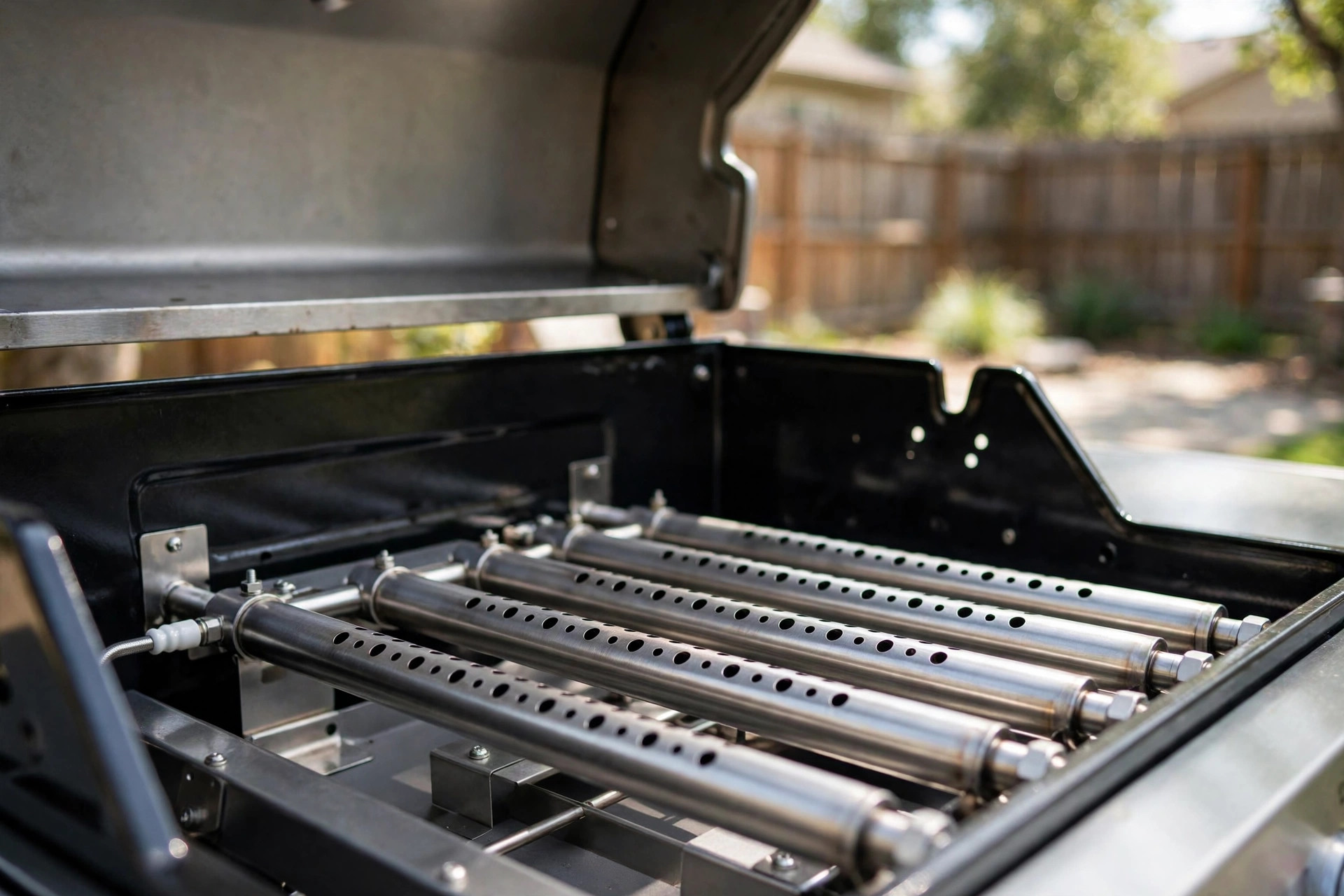
A gas grill burner does one simple job. It spreads gas through small holes called ports, and the gas burns with a steady blue flame. Over time, grease drips down, food bits fall through the grates, and rust forms from heat and weather. These things clog the ports. When ports are clogged, less gas comes out. The flame turns yellow or orange instead of blue. Yellow flames are cooler and make more soot, which dirties your food.
Clogged burners also create uneven heat. One side of the grill may be very hot while the other side stays cool. Steaks cook too fast on one side and stay undercooked on the other. Many people blame the grill or the meat, but the real cause is often dirty burners. A simple cleaning can fix it.
There is also a safety reason. Grease buildup inside the grill can catch fire. Gas that cannot escape through blocked ports may travel back into the burner tube, a problem called flashback. This can damage the valves and hoses. Regular cleaning keeps gas flowing the right way and keeps your family safe at cookouts.
What to Look For Before You Start: How to Clean Gas Grill Burners Properly
Before you begin, gather your tools. You do not need much. A stiff wire brush, a small bottle brush or pipe cleaner, a thin piece of wire or a paper clip, dish soap, warm water, a bucket, and dry cloths will do most of the job. A putty knife helps scrape thick grease. Many grill owners also like a shop vacuum to suck out loose ash and debris from the bottom of the grill box.
Work outside with good light. Never work on a hot grill. Wait at least two hours after the last cook, or let the grill sit overnight. Make sure the gas tank valve is turned off all the way. If your grill is hooked to a natural gas line, close the shut-off valve on the line. You can also unhook the tank for extra safety while you work.
Look at your grill manual first. Different grills have different burner shapes, and the manual shows how to lift the burners out. If you no longer have the manual, most makers keep digital manuals online. Note how the burners sit, how many screws hold them, and where the igniter wire connects. A quick photo with your phone helps you put it all back the same way.
How to Clean Gas Grill Burners Properly, Step by Step
Take the Burners Out
Open the lid and remove the cooking grates. Set them aside for grate cleaning. Next, lift out the heat tents or flavorizer bars that sit over the burners. Under them you will see the burners themselves. Most burners are held by one or two screws at the back, or they simply lift out of slots. Remove the screws, unclip the igniter wire, and lift each burner up and out. Place them on a table covered with newspaper.
Brush and Scrape
Start with the wire brush. Brush the outside of each burner firmly to remove rust, scale, and dried grease. Brush along the tube, not across it, so you do not push dirt into the ports. Use the putty knife to scrape any thick spots. Work over the newspaper so the mess stays in one place.
Clear the Ports
The ports are the tiny holes where the flame comes out. Each one must be open. Take a thin wire or an opened paper clip and push it gently into each port. Twist once and pull it out. This breaks up spider webs, rust flakes, and grease plugs. Do not make the holes bigger. The size of the port controls the flame, so keep the wire thin and use a light touch. A bottle brush can also sweep through tube-style burners to clear the inside.
Wash With Soap and Water
Mix warm water with a squirt of dish soap in a bucket. Wipe each burner with a cloth or sponge dipped in the soapy water. Rinse with clean water. Do not soak burners for a long time, and do not use oven cleaner or other strong chemicals. Harsh chemicals can pit the metal and leave bad smells when you light the grill. Plain soap and water are enough for normal dirt.
Dry Fully and Check
Shake off the water and dry each burner with a clean cloth. Then set the burners in the sun for thirty minutes to make sure no water sits inside. Hold each burner up to the light and look through the ports. Every port should show a clear dot of light. If a port is still dark, clear it again with the wire. While you have the grill open, vacuum the grill box to remove loose debris from the bottom.
Put It Back and Test
Set the burners back in place, replace the screws, and reconnect the igniter wire. Put the heat tents and grates back on. Reconnect the gas tank and turn the valve on slowly. Light the grill and turn all burners to high. Watch the flames. They should be mostly blue with small yellow tips. Let the grill run for ten minutes to burn off any last residue. If one burner still shows yellow flames or cold spots, take it out and clean that section again. A burner that will not burn blue after two cleanings may be worn out and need replacement.
Types of Burners and What Changes
Not all gas grill burners are the same. The most common type is the tube burner, a straight or H-shaped steel tube with ports along its length. These are simple to clean with the brush-and-wire method above. Cast stainless burners last longer and resist rust better than plain steel burners. Ceramic or infrared burners look different: they have a flat surface with thousands of tiny holes. Infrared burners should not be scrubbed hard or poked with wire, since the surface is fragile. For infrared burners, burn off grease on high heat for fifteen minutes, then brush lightly with a soft brass brush once cool.
Some grills also have a sear burner or a side burner. Clean these the same way as the main burners. Check the venturi tubes, the short tubes where gas and air mix before entering the burner. Spiders love to build nests in venturi tubes, and a nest can block gas flow. A bottle brush pushed through the tube clears them out. This small step prevents many ignition problems.
Cost and Price
Cleaning your burners costs very little. A good grill brush runs five to fifteen dollars. A set of bottle brushes costs under ten dollars. Dish soap, wire, and cloths are things most homes already have. If you prefer a ready-made kit, grill cleaning kits with brushes, scrapers, and drip-pan liners sell for fifteen to thirty dollars at home stores. Compare that to the cost of a new set of burners, which can run thirty to eighty dollars, or a whole new grill at several hundred dollars. One hour of cleaning each season saves real money.
If your burners are rusted through, warped, or cracked, cleaning will not save them. Burner replacement parts are easy to find from the grill maker or a parts store. Match the part to your grill model number before you order.
Care and Upkeep
The best way to keep burners clean is to prevent buildup. After each cook, turn all burners to high for ten to fifteen minutes with the lid closed. This burns off drips and crumbs. Then brush the grates while they are still warm. This two-minute habit cuts deep-cleaning work in half. You may also want to learn how to clean stainless steel grill grates to keep the whole cook box in good shape.
Cover your grill when it is not in use. A fitted cover keeps rain and dust out and slows rust. If you live where winters are cold, do a full deep clean before the grill sits idle. Our guide on how to winterize gas grill for storage walks through that step by step. Check the gas hoses once a year for cracks. If your grill uses a regulator, check that the flames still burn strong and even; a weak regulator can look like dirty burners.
Plan one deep burner cleaning per year at minimum. Heavy grillers who cook several times a week should do it twice a year. Mark it on the calendar like changing smoke alarm batteries. Small, steady care beats a big rescue job every time.
Safety
Gas and fire demand respect. Always turn off the gas before you remove any part. Work in open air, never in a closed garage. Keep children and pets away while parts are out. Do not use a wire brush with loose bristles near food surfaces; a stray bristle can end up in food. Check your brush before each use and replace it when bristles bend or fall out.
If you smell gas while the grill is off, do not light it. Turn off the tank valve, step away, and call your gas supplier or the fire department. If flames appear under the grill where they should not be, turn off the gas and close the lid to smother them. Keep a fire extinguisher rated for grease fires within reach of your cooking area. Safe habits make cookouts fun instead of frightening.
Frequently Asked Questions
How often should I clean my gas grill burners? Do a deep cleaning at least once a year. If you grill more than twice a week, clean them every six months. A quick burn-off after each cook keeps them in good shape between deep cleanings.
What are the signs that my burners need cleaning? Yellow or orange flames, uneven heat, cold spots on the grill, food taking longer to cook, and a gas smell that was not there before. All of these point to clogged ports.
Can I use oven cleaner on grill burners? No. Oven cleaner is too harsh for burner metal. It can pit the surface and leave chemical residue that burns off into your food. Warm water and dish soap are safer and work just as well.
Should I oil the burners after cleaning? No. Oil on burners burns off right away and makes smoke. Oil belongs on the cooking grates, not the burners. Keep burners dry and clean.
How long do gas grill burners last? Plain steel burners last three to five years with normal care. Stainless steel burners can last eight to ten years or more. Regular cleaning, a grill cover, and dry storage all help burners last longer.
My flames are still yellow after cleaning. What now? Check the venturi tubes for spider nests and make sure the air shutters are open. If the gas tank is low, refill it. If everything is clean and the flames are still yellow, the regulator or valves may need service. When in doubt, call a grill service tech.
A Final Word
Now you know how to clean gas grill burners properly. It is a simple job with a big payoff: hotter flames, even cooking, lower gas use, and a safer grill. Set aside one hour, gather a brush and some soap, and give your burners the care they deserve. Your next cookout will taste the difference. For more outdoor cooking know-how, the team at AmazingRibs and the guides at Big Green Egg offer deep dives on heat control and grill care.
References
AmazingRibs.com. (n.d.). Barbecue and grilling science. https://www.amazingribs.com Big Green Egg. (n.d.). Kamado grills and outdoor cooking. https://www.biggreenegg.com Broil King. (n.d.). Gas and charcoal grills. https://www.broilkingbbq.com Char-Broil. (n.d.). Gas and charcoal grills. https://www.charbroil.com Consumer Reports. (n.d.). Product reviews and ratings. https://www.consumerreports.org Family Handyman. (n.d.). DIY home repair and maintenance. https://www.familyhandyman.com Napoleon. (n.d.). Fireplaces, grills, and heating products. https://www.napoleon.com The Home Depot. (n.d.). Home improvement products. https://www.homedepot.com The Spruce Eats. (n.d.). Recipes and cooking guides. https://www.thespruceeats.com Traeger. (n.d.). Wood pellet grills. https://www.traeger.com Weber. (n.d.). Grills and outdoor cooking. https://www.weber.com
Was this guide helpful?

About Jennifer Lee
The My Garden US editorial team writes practical, in-depth home and garden guides for American homeowners — tested advice, no fluff.