
A Good Swing Suits a Wide Porch
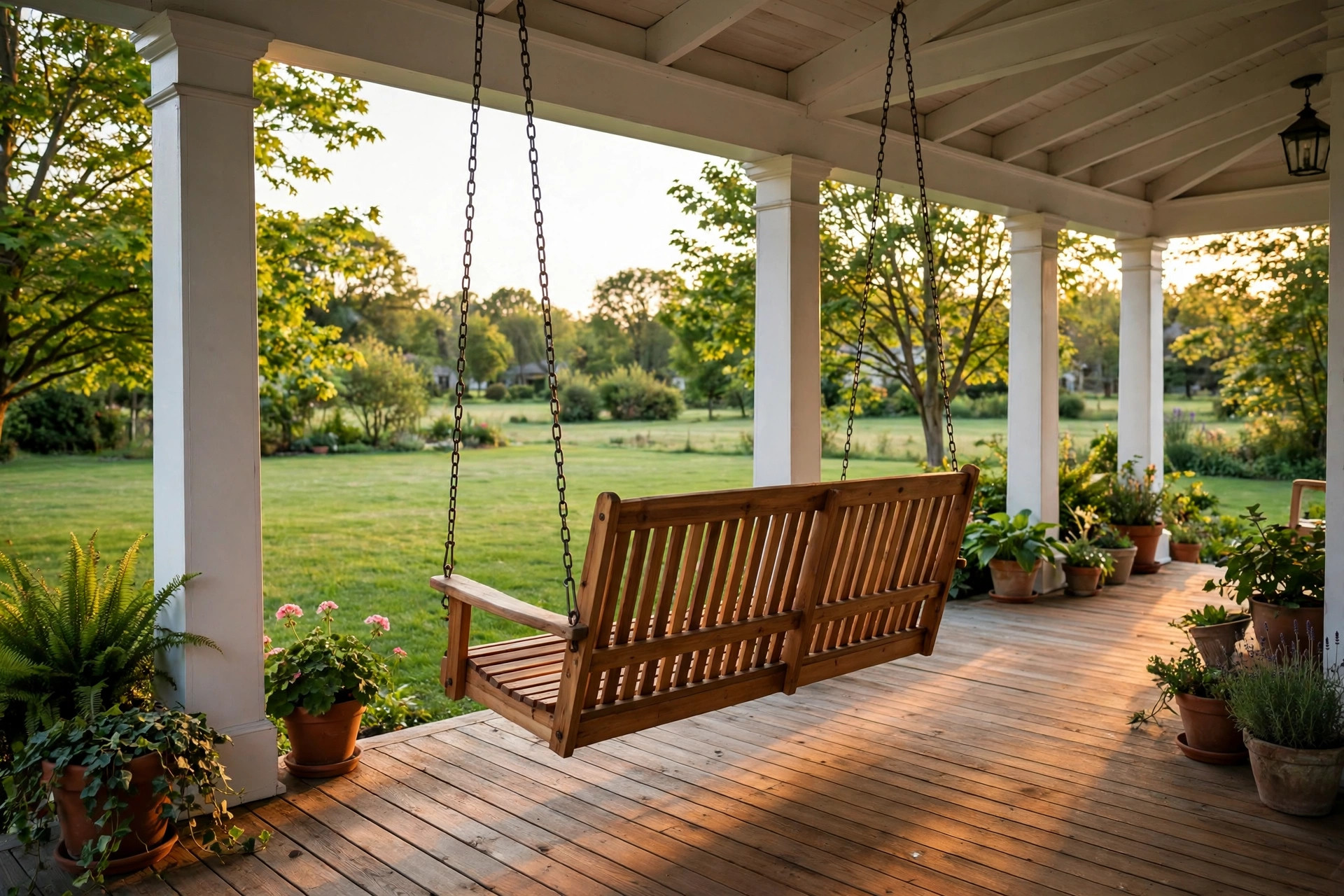
A wide front porch asks for a seat that fills the space. A narrow glider would look lost against a ten-foot stretch of railing, and a single chair would leave the porch bare. That is why the search for the best outdoor swing for large porch areas starts with scale. The swing should be wide enough to hold two or three people in comfort, heavy enough to stay steady in a breeze, and well hung from the porch structure so it moves with a smooth, easy motion.
For many American homes, the porch swing is a memory as much as a piece of furniture. Grandparents sat on one. Evening conversations took place on one. A large porch gives you room to keep that tradition alive with a swing of real size. This guide covers what to look for, which materials hold up, what a good swing costs, how to hang it safely, and how to keep it in fine shape for years.
Why a Large Porch Needs a Larger Swing: Best Outdoor Swing for Large Porch
A large porch changes the rules of proportion. Furniture that works on a small stoop looks undersized on a porch twelve or sixteen feet wide. A full-size swing, usually four to six feet across, gives the porch a clear center. It fills the space without crowding it, and it leaves room on both sides for planters, rocking chairs, or a table.
Size also brings comfort. A wider bench gives each sitter more room and spreads the weight across the hanging chains. Two adults and a child can share a five-foot swing with room to spare. A porch swing sized for two people may work on a narrow porch, but on a large porch it leaves a gap that breaks the look of the whole space.
There is a practical point as well. Large porches often have higher ceilings and wider spans between posts. A heavier swing with longer chains suits that build. The extra length of chain gives the swing a gentle, long arc that feels calm and steady.
What to Look for When You Choose
Seat Width
Measure your porch first. A swing that is four feet wide suits a porch of about ten feet. A five-foot swing suits a porch of twelve to fourteen feet. Six-foot swings exist for very wide porches, but they need extra strong support and may need four chains instead of two. Leave at least eighteen inches of clearance on each side so the swing does not strike the railing or the wall.
Weight Capacity
Check the rated weight limit before you buy. A good full-size porch swing holds 400 to 600 pounds. Look at the hardware rating too. Chains, hooks, and springs should each carry the full rated load. Retailers such as Home Depot list these ratings in the product details, which makes comparison easy.
Materials
The frame material sets the life span of the swing.
Wood is the classic choice. Cedar and teak resist rot and insects without paint. Pine is cheaper but needs stain or sealer to last. A wooden swing feels warm and looks at home on a wood porch. It will weather to a soft gray if left unfinished, which many owners like.
Metal frames, usually steel or wrought iron, are strong and need little care beyond rust control. Powder-coated finishes last many years. Metal swings suit modern or farmhouse porches. Review sites such as The Spruce note that powder coating is the key to a long life for metal outdoor seating.
Recycled plastic lumber, made by brands such as Polywood, looks like painted wood but needs no stain and will not rot. It costs more at first but saves money on upkeep over time.
Wicker and rattan give a soft, airy look but do best under a roof. A large porch with a full cover is a fine place for wicker, since rain rarely reaches the swing.
Hanging Hardware
A swing is only as safe as its hanging gear. Stainless steel or zinc-coated chains resist rust. Swivel hangers let the swing move in all directions and keep the chains from twisting. Comfort springs add a soft bounce and take strain off the mounting point. Buy hardware rated for at least the same weight as the swing, and check that it is made for outdoor use.
Comfort Features
Deep seats, a gentle tilt in the backrest, and contoured slats make a long sit easy. Wide armrests hold a coffee cup. Some swings come with cushions, but cushions add to the cost and need storage in wet weather. Many owners buy the frame first and add cushions later.
Types and Options
Classic Bench Swing
The classic bench swing is a simple wooden bench hung by two chains. It has slats for the seat and back, and it comes in widths of four, five, or six feet. This is the most common choice for a large porch and the easiest to match with other wooden furniture.
Canopy Swing
A canopy swing has a roof or fabric top that gives shade. It suits porches where the sun reaches the swing for part of the day. The canopy adds weight and catches wind, so it needs a sturdier mount. Home magazines such as HGTV often show canopy swings as a way to add a finished look to a wide porch.
Convertible Swing
Some swings fold flat into a bed. A patio swing bed for adults gives you a seat by day and a napping spot on warm afternoons. These are heavy and need strong mounting, but they turn a large porch into a true outdoor room.
Hanging Chair Swing
For a large porch that already has a bench swing, a hanging chair at one end adds variety. It seats one person and moves in a small circle. It does not replace a full-size swing, but it can round out a long porch nicely.
Glider Swing
A glider moves on a frame rather than hanging from chains. It stands on the porch floor, which removes all worry about ceiling mounts. The base takes up floor space, though, so a glider suits a deep porch better than a narrow one.
Cost and Price
Price depends on material, size, and brand. Simple pine bench swings start around one hundred to two hundred dollars. Cedar and teak swings run from three hundred to eight hundred dollars. Recycled plastic swings from well-known makers cost four hundred to one thousand dollars. Metal canopy swings fall in the three hundred to six hundred dollar range. Hardware adds fifty to one hundred fifty dollars if it is not included; mounting kits from stores like Lowe’s run in that range. High-end swings from catalog brands such as Frontgate can pass one thousand dollars, but they often include the hardware and a long warranty.
When you compare prices, look at what is included. A cheap swing with no chains, hooks, or cushions may cost as much as a mid-range swing once you add the missing parts. Sites like Wayfair show many options side by side, which helps with fair comparison.
Care and Upkeep
A porch swing on a large covered porch lives an easy life, since the roof keeps off most rain and sun. Even so, some care keeps it sound.
Wood swings need a coat of sealer or stain every one to three years, depending on how much weather reaches them. Wash the wood with mild soap and water first, let it dry, then apply the finish on a dry day.
Metal swings need only a wash and a check for chips in the coating. Touch up bare spots with paint made for metal to stop rust before it starts.
Recycled plastic swings need the least care. A wash with soap and water is enough. Bird droppings and pollen wash off with ease.
Take cushions inside during storms and at the end of the season. Store them dry. Clean cushion covers by the maker’s instructions, and air out the foam before storage.
Check the chains and hooks once a year. Look for stretched links, cracks, or rust that goes deep. A swing is a moving load, and a worn link can fail without warning.
Safety on a Large Porch
Safety starts with the structure. The swing must hang from a beam or joist strong enough to hold the full weight of the swing plus its riders in motion. A porch ceiling joist of two-by-eight or larger is usually fine, but an old or damaged beam may not be. When in doubt, ask a carpenter to check the framing.
Use a stud finder and drill a small pilot hole to find the center of the beam. Mount the hanger through the beam with a through-bolt and washer, not a screw, when the swing is heavy. The bolt should pass all the way through the wood with a nut and washer on top.
Keep the swing at least three feet from any stair edge or railing opening so riders do not slide off the end. Small children should use the swing only with an adult near. The federal safety site CPSC is a good source for general product safety guidance.
Test the swing before regular use. Sit in the center, then shift to one end, and feel for any tilt or creak. Check that the chains hang straight and the swing does not twist. Retest after any storm that shook the porch.
Fitting the Swing Into the Porch Design
A large porch gives you room to build a full scene around the swing. Place it in the center or slightly to one side, facing the street or the yard view. Leave walking space behind it and at both ends.
Pair the swing with a rocking chair for the porch at the far end to balance the space. A small side table between them holds drinks. Planters at the porch posts frame the view and soften the edges. Design sites such as Article show how a few large pieces beat many small ones on a wide porch.
Lighting matters too. A porch swing used at night needs a warm light overhead or nearby. A ceiling fan above the swing adds cool air on hot evenings and keeps the bugs away. Keep the swing clear of the fan blades by at least two feet.
Color choice sets the mood. A natural cedar swing fits a rustic porch. White paint fits a colonial or coastal porch. Dark green or black fits a modern farmhouse. Match or echo the trim of the house so the swing looks planned, not added on.
Common Mistakes to Avoid
Buyers of porch swings make a few common errors. The first is buying a swing that is too small for the porch. On a large porch, a four-foot swing is the minimum, and five feet often looks better.
The second is mounting the swing to weak framing. Porch ceilings often hide thin boards rather than real beams. Check before you hang.
The third is using rope instead of chain to save money. Rope stretches, frays, and breaks down in sun. Chain costs more but lasts far longer and moves with less friction.
The fourth is ignoring the swing weight. A six-foot oak swing with a canopy can weigh over one hundred pounds before anyone sits on it. Add three adults and the total load passes eight hundred pounds. The mount must handle that in motion, not just at rest.
Consumer testing groups such as Consumer Reports remind buyers to read weight ratings and warranty terms before they commit, since a swing is a long-term piece.
Frequently Asked Questions
What size porch swing fits a large porch best?
A swing four to five feet wide fits most large porches. Measure the porch and leave at least eighteen inches of clearance on each side. A five-foot swing suits porches twelve to fourteen feet wide.
How much weight should a porch swing hold?
Look for a rating of at least 400 pounds for two adults. Swings rated at 500 to 600 pounds are better for larger families and give a margin of safety. Check the hardware rating too, since the mount must match the swing.
Can I hang a swing from any porch ceiling?
No. The swing must hang from a solid beam or joist that can carry the full load in motion. Thin ceiling boards are not enough. If you are unsure about the framing, have a carpenter check it before you hang the swing.
What is the best material for a porch swing?
Cedar and teak are the best woods because they resist rot and insects. Recycled plastic lumber needs the least care and lasts the longest. Powder-coated metal is strong and low cost. Each choice suits a different budget and style.
How do I keep the swing from hitting the wall or railing?
Hang it with enough clearance, at least eighteen inches on each side. Use chains of equal length and check that the mount is centered over the seat. Comfort springs help, but they add a little swing travel, so allow for it.
Should the swing have a canopy?
A canopy gives shade on a sunny porch, but it adds weight and catches wind. On a fully covered porch, a canopy is not needed. On a porch with open sides or partial cover, a canopy can make the swing usable at midday.
A Short Final Word
The best outdoor swing for large porch spaces is the one that fits the porch, carries the family in safety, and invites a long sit at the end of the day. Start with the size, choose a material that suits your climate and your care habits, and hang it from strong framing with good hardware. Done right, a porch swing becomes the heart of the home for decades. Buyers who want a second view can read how-to advice from home experts at Bob Vila before they decide.
References
Article. (n.d.). Modern furniture. https://www.article.com Bob Vila. (n.d.). Home improvement advice. https://www.bobvila.com Consumer Reports. (n.d.). Product reviews and ratings. https://www.consumerreports.org Frontgate. (n.d.). Outdoor furniture and decor. https://www.frontgate.com HGTV. (n.d.). Home and garden ideas. https://www.hgtv.com Lowe’s. (n.d.). Home improvement products. https://www.lowes.com Polywood. (n.d.). Outdoor furniture. https://www.polywood.com The Home Depot. (n.d.). Home improvement products. https://www.homedepot.com The Spruce. (n.d.). Home and garden advice. https://www.thespruce.com U.S. Consumer Product Safety Commission. (n.d.). Product safety information. https://www.cpsc.gov Wayfair. (n.d.). Furniture and home goods. https://www.wayfair.com
Was this guide helpful?

About David Wilson
The My Garden US editorial team writes practical, in-depth home and garden guides for American homeowners — tested advice, no fluff.
You May Also Like

Best Outdoor Bench for Garden Reviews: A Practical Buyer’s Guide
September 19, 2026 0 views
Outdoor Serving Cart With Cooler Reviews: How to Pick the Right One
September 12, 2026 0 views
Outdoor Side Table for Adirondack Chairs: A Complete Buyer’s Guide
May 16, 2026 1 views