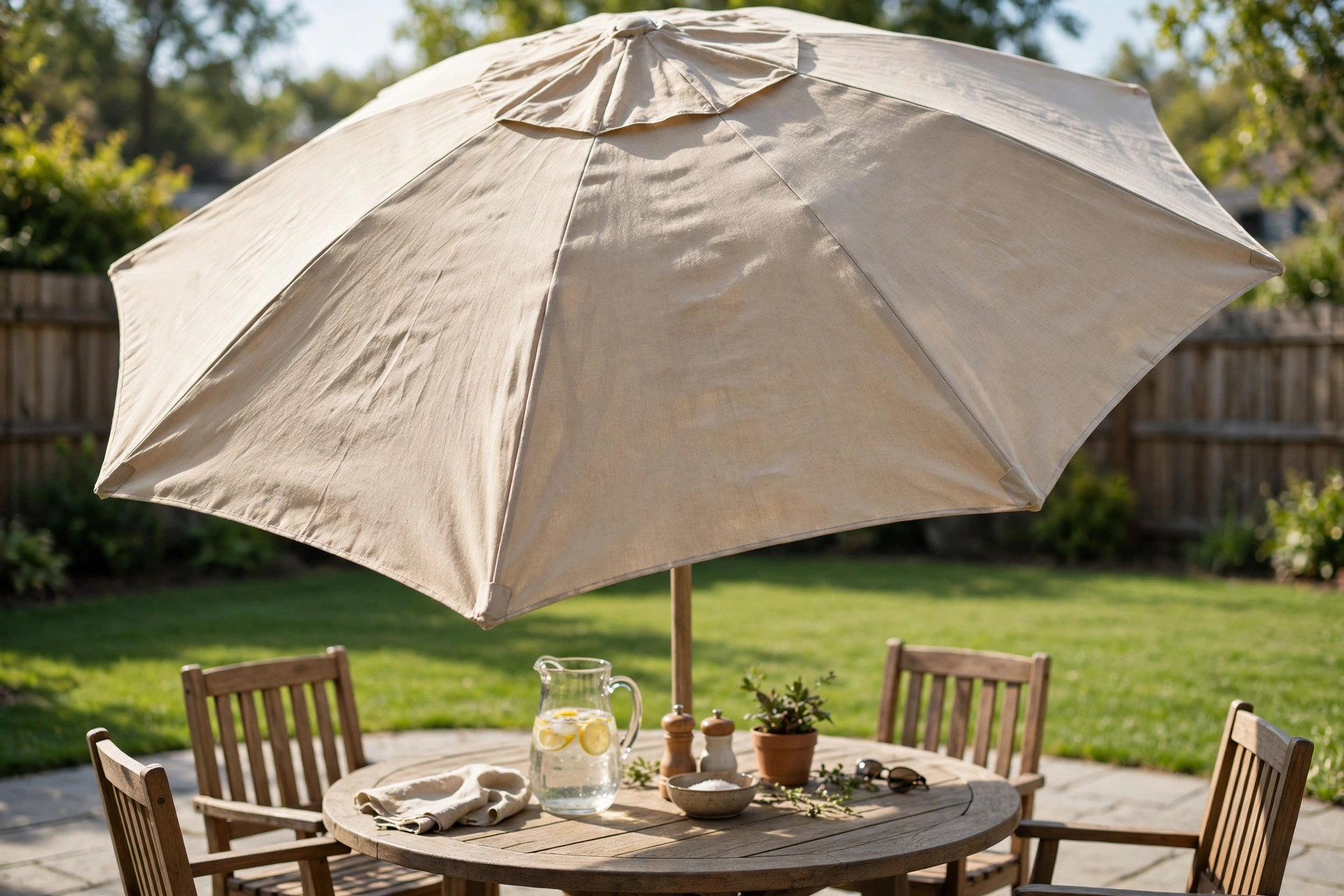

A patio umbrella takes the full force of the weather. Sun, rain, pollen, dust, and bird droppings all land on the fabric. Over time the canopy grows dull, stained, or spotted with mold. Learning how to clean outdoor umbrella fabric is one of the simplest ways to protect your shade and make it last for years. The work takes less than an hour, and it calls for nothing more than warm water, mild soap, and a soft brush. This guide walks through the whole process in plain steps, from the first rinse to the final drying.
Why It Matters
A dirty umbrella is more than an eyesore. Dirt and grime hold moisture against the fabric. That moisture feeds mildew and weakens the weave. A canopy left dirty through a wet season may tear, fade, or fail much sooner than it should.
Regular washing brings back color and keeps the material strong. A clean umbrella also keeps rain rolling off instead of soaking in. Bird droppings and tree sap, if left in place, can eat through the water-resistant coating on the fabric. A simple wash each season stops that damage before it starts.
A clean umbrella is also safer. Heavy layers of mold on fabric can release spores into the air around the table where your family eats. A wash each spring and fall keeps the fabric healthy and the air under it clean.
What You Will Need: How to Clean Outdoor Umbrella Fabric
Gather these items before you start. Most of them are already in your home.
– A garden hose with a spray nozzle – A bucket of warm water – Mild dish soap or laundry detergent – A soft-bristle brush or sponge – A large soft towel – White vinegar or a store-bought fabric cleaner – A step ladder or stable stool – Rubber gloves
Avoid harsh cleaners. Bleach, strong detergents, and pressure washers can strip the finish from the fabric. They can also tear the seams. Mild soap is safer and works just as well. If you want product ideas, the buying guides at Consumer Reports compare gentle cleaning goods for outdoor gear.
Step-by-Step: How to Clean Outdoor Umbrella Fabric
Step 1: Open the Umbrella Fully
Open the umbrella all the way and lock it in place. Tilt it if your stand allows it. A fully open canopy is easier to reach and lets water run off as you work. Make sure the pole is secure in its base so it does not tip while you scrub.
Step 2: Shake Off Loose Dirt
Start with a dry pass. Use the soft brush to sweep loose leaves, dust, and cobwebs from the canopy. Work from the top point down toward the edge. This step keeps grit from grinding into the fabric when you add water.
Step 3: Rinse With the Hose
Spray the whole canopy with the hose. Use a steady, gentle stream, not a hard jet. Rinse both the top and the underside. This removes surface dust and wets the fabric so the soap can work.
Step 4: Mix Your Cleaning Solution
Fill the bucket with warm water. Add two or three tablespoons of mild dish soap. Stir gently. The water should feel slick but not thick with suds. For a deeper clean, add one cup of white vinegar to the bucket. Vinegar cuts through grease and helps stop mildew.
Step 5: Scrub the Fabric
Dip the brush in the soapy water and scrub one panel at a time. Use light, even strokes. Follow the weave of the fabric. Work the solution into stained areas and let it sit for ten to fifteen minutes on tough spots. The underside of the canopy often holds the most grime, since cooking smoke and dust settle there. Give it extra care.
Step 6: Rinse Thoroughly
Hose the canopy again until the water runs clear. Soap left in the fabric can attract dirt later, so rinse well. Lift the edges and rinse the underside too. Run your hand over a panel. If it feels slick, rinse once more.
Step 7: Treat Stubborn Stains
Some marks need a second pass. For bird droppings, soak the spot with the soapy mix and let it sit for twenty minutes before scrubbing. For tree sap, press a soft towel with a little rubbing alcohol against the spot, then wash as normal. For rust marks from the frame, dab lemon juice on the stain, let it sit in the sun for an hour, then rinse. Never use a wire brush or a scouring pad. They will shred the fabric.
Step 8: Let It Dry Completely
Leave the umbrella open in the sun until it is fully dry. This may take two to four hours. Do not close the canopy while it is damp. Folding wet fabric traps moisture and grows mold in a matter of days. Test with your hand. When every panel feels dry on both sides, you may lower the umbrella.
How to Handle Mold and Mildew
Black or green spots on the canopy mean mold or mildew. Act quickly, because the spots spread and stain the fabric for good.
Mix one part white vinegar with three parts water in a spray bottle. Spray the spotted areas until they are damp. Let the mix sit for fifteen minutes. Then scrub with the soft brush and rinse well. For heavy patches, mix one cup of baking soda into a gallon of warm water and scrub with that instead.
After the wash, let the umbrella dry in full sun. Sunlight kills the last of the spores. If the spots come back each season, your umbrella may sit in too much shade. Move it to a sunnier spot, and wash it more often through the wet months. The home care library at The Spruce has useful photo guides on spotting early mold on outdoor fabrics.
Types of Umbrella Fabric
Not all canopies wash the same way. Check the tag on your umbrella before you scrub.
Solution-dyed acrylic. This is the most common fabric for quality umbrellas. The color runs through the fiber, so it resists fading. You can wash it with mild soap and a brush. Many owners compare care tips across patio brands on Wayfair before choosing a replacement canopy.
Olefin. This fabric is tough and sheds water well. It cleans easily with soap and water. Avoid hot water, which can loosen the weave.
Polyester. Budget umbrellas often use polyester. It cleans well but fades faster in strong sun. Use the gentlest soap you have, and store the umbrella in shade when not in use.
Canvas or cotton duck. Old-style canvas umbrellas need care. Use a mild soap and never soak the fabric for long. Let canvas dry slowly in open air.
If the tag is gone, treat the fabric as polyester and use the gentlest method. You can also check the care notes from your retailer. Stores like Lowe’s and IKEA publish care sheets for the umbrellas they sell.
Cost and Price
Cleaning a patio umbrella costs very little. A bottle of dish soap, a brush, and water come to a few dollars at most. A gallon of white vinegar costs even less. Store-bought outdoor fabric cleaners run about eight to twenty dollars, but mild soap does the same job in most cases.
Compare that to the price of a new umbrella. A basic market umbrella costs forty to one hundred dollars. A good cantilever or large offset umbrella can cost three hundred dollars or more. Regular washing protects that investment. Many shoppers read reviews of the best patio umbrella for wind reviews before buying, and those same reviews praise models whose fabric washes well.
A professional cleaning service charges fifty to one hundred fifty dollars for an umbrella. That is rarely needed. A do-it-yourself wash gives the same result for the price of a bucket of soapy water.
Care and Upkeep
One deep wash each season is enough for most umbrellas. Wash in spring before you open the patio for the year, and again in fall before you store the umbrella away.
Between washes, shake the canopy after storms. Brush off leaves and pollen once a month. Close the umbrella when strong wind is forecast. Wind tears dirty, weakened fabric faster than clean fabric.
Consider a cover. Weatherproof patio furniture covers heavy duty options fit over the whole umbrella and pole. A cover keeps dust and bird droppings off the fabric between uses. It also blocks ultraviolet light, which is the main cause of fading.
If your umbrella shares space with other patio pieces, wash them together. The steps in our guide on how to clean outdoor furniture cushions use the same soap and brush method. Doing the whole set at once saves time.
For new umbrellas, look at care notes before you buy. Retailers such as Frontgate, Article, and Polywood list fabric types and washing tips on their product pages. The home inspiration team at HGTV also shows how clean, well-kept umbrellas lift the look of a whole patio.
Safety
Safety is simple but worth a note.
– Place the ladder on flat ground and have someone hold it if you can. – Wear rubber gloves when you use vinegar or store-bought cleaners. – Keep cleaners away from children and pets until the rinse is done. – Never mix bleach with vinegar or other cleaners. The fumes are harmful. – Make sure the umbrella base is heavy enough that the stand does not tip while you scrub.
Work on a calm day. A light breeze is fine, but a strong gust can catch the open canopy and knock the stand over.
FAQ
How often should I clean my patio umbrella?
Wash it twice a year, in spring and fall. Wipe or brush it once a month in between. Umbrellas under trees or near the coast may need a third wash in midsummer.
Can I put the umbrella canopy in the washing machine?
No. Machine washing tears the seams and can bend or break the frame parts if you try to wash them attached. Always wash the canopy by hand while it sits on the frame.
Will a pressure washer damage the fabric?
Yes, in most cases. The hard stream can force water through the coating and rip the seams. A garden hose with a spray nozzle is strong enough for a full clean.
How do I get bird droppings off the canopy?
Soak the spot with warm soapy water for twenty minutes. Then scrub gently with the soft brush and rinse. Act fast, because droppings stain if they dry in the sun for days.
Can I use bleach on white umbrella fabric?
Avoid bleach even on white fabric. It eats the water-resistant finish and can leave yellow spots. White vinegar and baking soda brighten white fabric without the damage.
What if the fabric smells musty after washing?
The smell means moisture was trapped. Open the umbrella fully and let it sit in direct sun for several hours. The sun and fresh air will clear the odor. Next time, make sure the canopy is bone dry before you close it.
A Final Word
Learning how to clean outdoor umbrella fabric is a small skill with a large payoff. An hour of work each season keeps the colors bright, stops mold before it spreads, and adds years to the life of the shade you paid good money for. Open the umbrella, rinse, wash, scrub, rinse again, and let the sun do the last of the work. Your patio will thank you.
References
Article. (n.d.). Modern furniture. https://www.article.com Consumer Reports. (n.d.). Product reviews and ratings. https://www.consumerreports.org Frontgate. (n.d.). Outdoor furniture and decor. https://www.frontgate.com HGTV. (n.d.). Home and garden ideas. https://www.hgtv.com IKEA. (n.d.). Home furnishings. https://www.ikea.com Lowe’s. (n.d.). Home improvement products. https://www.lowes.com Polywood. (n.d.). Outdoor furniture. https://www.polywood.com The Spruce. (n.d.). Home and garden advice. https://www.thespruce.com Wayfair. (n.d.). Furniture and home goods. https://www.wayfair.com
Was this guide helpful?

About Jennifer Lee
The My Garden US editorial team writes practical, in-depth home and garden guides for American homeowners — tested advice, no fluff.
You May Also Like

Best Outdoor Furniture for a Desert Backyard: A Practical Guide
March 14, 2026 0 views
Outdoor Bench for Front Porch Reviews: A Plain Buying Guide
August 3, 2026 0 views
The Best Patio Heater for Large Backyard Spaces: A Full Buying Guide
February 14, 2026 0 views