A search for the best pinch pleat drapes for new england homes often starts with a simple wish. A homeowner wants windows that look finished and feel warm. Pinch pleat drapes answer that wish well. They carry a tailored look that suits the old colonial houses, saltboxes, and capes of New England. Their neat pleats gather the fabric into full, even folds. The result is classic, never fussy. This guide explains what to look for, which fabrics work in cold northern homes, what the drapes cost, and how to keep them in good shape for years.
Why Pinch Pleat Drapes Suit New England Homes
New England houses have a certain character. Many were built before central heat was common. Their windows are tall and often drafty. Their rooms favor wood, plaster, and simple lines. Pinch pleat drapes fit this setting for several reasons.
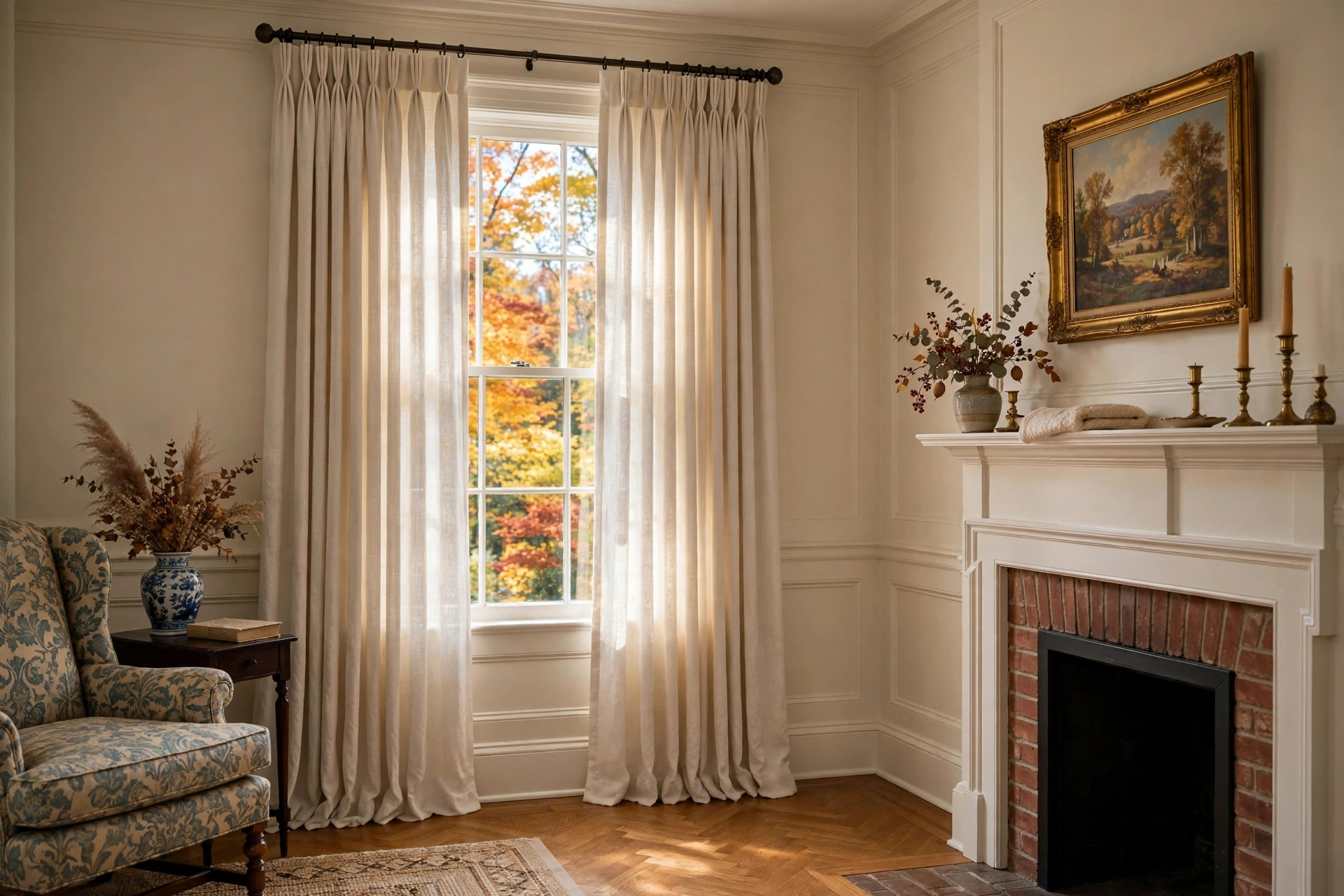
First, the pleats add fullness. A pinch pleat panel holds two to three times the width of the window in fabric. That fullness traps a layer of still air between the drape and the glass. Still air is a poor conductor of heat. In a Vermont farmhouse or a Boston brownstone, that small gain matters on a January night. The room holds its warmth a little longer. The furnace runs a little less.
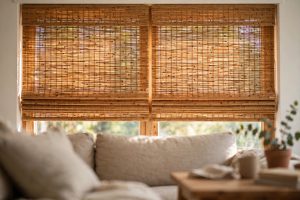
Second, the style matches the region. Pinch pleats have been hung in American homes for many decades. They appear in colonial revival houses, in old colonials themselves, and in seaside cottages from Maine to Connecticut. They read as proper and settled. They do not shout. A noise reducing bamboo roman shade for texas homes serves a different climate and a different style. New England calls for something weightier and more traditional.
Third, pinch pleats hang well on the rods that suit old houses. A sturdy wood or bronze rod with rings carries the pleats cleanly. The drapes open and close with a smooth pull. They stack back neatly to let in the short winter sun. In summer they block the bright afternoon glare that heats a west-facing room.
How to Choose Pinch Pleat Drapes: Best Pinch Pleat Drapes for New England Homes
Measure First
Good drapes start with good numbers. Measure the window width and add at least four to eight inches on each side. This extra space lets the open panels stack off the glass. It keeps the view clear in daylight. Measure height from the top of the rod to the floor. Most rooms look best when the rod sits four to six inches above the window frame and the panels just kiss the floor or break slightly upon it. Measuring guides from The Spruce walk through the same steps with pictures.
For full pinch pleats, order panels that total at least twice the rod width. A 60-inch rod needs about 120 inches of panel width. Thin panels look starved when closed. Full panels close with a rich, gathered face.
Choose the Pleat Style
Pinch pleats come in a few common forms. Two-finger pleats look slim and modern. Three-finger pleats are the classic choice for New England rooms. Four-finger pleats give a deeper, more formal gather. For most colonial and cape houses, three-finger pleats strike the right balance. They look tailored without looking stiff.
Ask whether the pleats are sewn in or made with removable pin hooks. Sewn-in pleats hold their shape wash after wash. Pin hooks let you adjust the hang and make the panels easier to press. Both work. Sewn pleats ask less of the owner over time.
Pick the Header and Lining
The header is the stiff band at the top that holds the pleats. A buckram header is standard and holds up well. Look for one that is sewn firmly and does not buckle. Lining matters more in New England than in milder states. A cotton or cotton-blend lining protects the face fabric from sun and adds body. A thermal or interlining adds real warmth. In a drafty 1800s farmhouse, interlined drapes can make a room feel several degrees warmer. The extra weight is worth the cost in winter.
Fabrics and Options for Cold-Climate Rooms
Wool Blends
Wool-blend fabrics are a natural pick for New England. They hang with a soft hand and resist wrinkles. They also insulate. A wool blend in a solid or a small herringbone suits a study or a dining room. IKEA’s curtain fabric guide explains how different weaves affect the hang of a panel. It reads as warm and quiet. Wool blends cost more than cotton, but they last many years with care.
Linen and Linen Blends
Linen gives a lighter, more relaxed look. It suits summer homes on the Cape and coastal cottages. Pure linen wrinkles and lets in more light. A linen blend with cotton holds its shape better. For year-round New England houses, a lined linen panel works in spring and summer rooms. In winter it can feel thin unless it carries a full lining.
Cotton Duck and Velvet
Cotton duck is a sturdy plain weave that blocks light well when lined. It suits family rooms. Velvet is the warmest-looking choice of all. A cotton velvet in deep green or rust can carry a whole room through a long winter. Velvet picks up dust and pet hair, so it asks for regular brushing. For homes with dogs or cats, a smooth cotton or a treated fabric may serve better. Readers with pets may also want to look at practical best custom made curtains online for american homes guidance when comparing fabric choices.
Blackout and Thermal Linings
Many homeowners pair pinch pleats with a blackout lining for bedrooms. The dark sleep helps on summer mornings when the sun rises before five. Thermal interlining sits between the face fabric and the back lining. It adds weight and warmth without changing the look from the front. In older homes with single-pane windows, this sandwich of layers is one of the cheapest ways to cut drafts.
Cost and Price
Prices vary with fabric, size, and whether the panels are ready-made or custom. A pair of ready-made lined pinch pleat panels in cotton may cost between 120 and 300 dollars. Wool blends and velvets run from 250 to 600 dollars a pair in standard sizes. Interlined custom panels made to the exact window can run from 500 to 1,500 dollars or more per pair.
Labor adds to custom work. A workroom charges for the pleating, lining, and finishing. Shipping adds more, since full panels are heavy. Still, custom drapes fit perfectly. They fall exactly to the floor. They match across a pair. For tall colonial windows that come in odd sizes, custom is often the only way to get a proper fit.
Do not forget the hardware. A good rod, rings, brackets, and finials for one window can cost 80 to 250 dollars. The Home Depot’s drapery hardware selection shows the range of rods and rings rated for heavy panels. Heavy interlined panels need strong brackets screwed into studs or solid blocking. Cheap rods will bow under the weight. Spend once on solid hardware and it will serve for decades.
When you shop, check the return policy before you order. Fabric looks different under home light than in a showroom. Many sellers allow returns of ready-made panels, from big stores like Lowe’s and Wayfair to specialty drapery shops like Blinds.com. Custom work is usually final sale. Order a fabric swatch first. Live with the swatch for a few days. See it in morning and evening light before you commit.
Care and Upkeep
Pinch pleat drapes ask little, but they do ask something. Dust them with a vacuum brush attachment once a month. Pay attention to the pleats, where dust settles into the folds. In homes near the sea, salt air can stiffen fabrics over time. A yearly shake-out on a dry day helps.
Most cotton and linen panels can be machine washed on gentle, then hung to dry and pressed while damp. Wool blends and velvets usually need dry cleaning. Always read the care tag before the first wash. If you are unsure, take one panel to a cleaner who knows draperies. The cost of one test clean is less than the cost of ruined fabric.
Sun is the slow enemy of draperies. South and west windows in New England get strong summer sun. Lining extends the life of the face fabric by taking the worst of the rays. Rotate which panels sit in the brightest windows if you can. When a panel begins to fade at the edges, a workroom can often turn the fabric or add new lining to buy more years. Bob Vila’s drapery care articles cover these upkeep tricks in plain detail.
Store spare panels flat or rolled, never folded tight. A tight fold pressed for years will never fully leave the fabric. Keep them in a dry closet away from heat. Cedar blocks keep moths away from wool blends.
Safety Around Windows and Drapes
Draperies share the window with cords, blinds, and shades. Keep all cords out of the reach of small children and pets. Use cord cleats or cordless products where children sleep and play. The U.S. Consumer Product Safety Commission’s window covering guidance is worth reading before you buy anything with a cord. Homeowners comparing where to buy valances for windows in arizona or any other treatment should keep the same rule in mind: cordless is safest where children are.
Mount rods and brackets with care. A full panel of interlined wool is heavy. Use wall anchors rated for the load, or better, screw into the stud. A rod that pulls out of plaster can injure a child or damage the wall. Test the mount by pulling down firmly before you hang the panels. Family Handyman’s mounting tutorials show how to anchor heavy rods into studs.
Keep drapes clear of heat. Radiators under windows are common in old New England houses. A panel that rests on a hot radiator can scorch or, in rare cases, catch fire. Leave at least a few inches of clearance, or choose a shorter length for windows above radiators. Electric baseboard heaters ask for the same caution.
Frequently Asked Questions
Do pinch pleat drapes really help with drafts?
They help, but they are not a cure. Full, lined panels slow the cold air that slides down the glass. Interlined panels do this best. They work well with storm windows and good weatherstripping. They cannot fix a failed window seal. Think of them as one layer in a warm room, not the whole answer.
Should the drapes touch the floor?
For most living rooms and dining rooms, yes. Panels that just touch the floor or break slightly look finished and hide uneven old floors. In kitchens or rooms with baseboard heat, a sill-length or apron-length panel is safer and easier to clean. Choose the length for the room you have, not the room in a catalog.
Can I hang pinch pleats on a traverse rod?
Yes. Traverse rods are made for pinch pleats. The pin hooks slide into carriers that glide along a track. A cord or a baton draws the panels. This setup suits wide windows and doors where hand-drawing heavy panels would be a chore. Make sure the rod is rated for the panel weight.
How wide should each panel be?
Each panel should cover half the rod width times the fullness factor. With a fullness of two, each panel on a 60-inch rod is about 60 inches wide. Ready-made panels often come in 50-inch widths. Two pairs may be needed for a wide window. It is better to have slightly too much fabric than too little.
Are pinch pleats out of style?
They are not. Pleat styles move in cycles, but the three-finger pinch pleat has stayed in use for a very long time. It suits traditional houses, which is why it endures in New England. In a modern room, a two-finger pleat on a slim rod can look fresh. The form is old. The appeal is steady. Apartment Therapy’s curtain guides show how classic pleats fit both old and new rooms.
How long do good pinch pleat drapes last?
With lining and normal care, a well-made pair lasts ten to fifteen years. Velvet and wool blends often last longer. Sun-facing panels wear faster. Re-lining a good panel can add five more years. Cheap unlined panels may look tired in three or four.
A Short Final Word
The best pinch pleat drapes for new england homes are the ones that fit the house, the climate, and the way you live. Choose full panels, a proper lining, and fabric that suits the room. Measure with care. Hang the rod high and wide. Keep cords safe and panels clear of heat. Do these simple things and the drapes will warm the room, frame the view, and look right for many winters to come.
References
Apartment Therapy. (n.d.). Home design ideas and inspiration. https://www.apartmenttherapy.com Blinds.com. (n.d.). Window blinds, shades, and shutters. https://www.blinds.com Bob Vila. (n.d.). Home improvement advice. https://www.bobvila.com Family Handyman. (n.d.). DIY home repair and maintenance. https://www.familyhandyman.com IKEA. (n.d.). Home furnishings. https://www.ikea.com Lowe’s. (n.d.). Home improvement products. https://www.lowes.com The Home Depot. (n.d.). Home improvement products. https://www.homedepot.com The Spruce. (n.d.). Home and garden advice. https://www.thespruce.com U.S. Consumer Product Safety Commission. (n.d.). Product safety information. https://www.cpsc.gov Wayfair. (n.d.). Furniture and home goods. https://www.wayfair.com
Was this guide helpful?

About Jennifer Lee
The My Garden US editorial team writes practical, in-depth home and garden guides for American homeowners — tested advice, no fluff.