Good patio furniture for cold climates reviews are hard to find. Most reviews are written in warm states. They test chairs in spring sun. They never see a hard freeze. If you live in Minnesota, Maine, Vermont, or upstate New York, you need reviews that speak to your winters. Snow, ice, road salt, and months of freezing rain punish outdoor furniture. This guide reviews what holds up and what fails. It covers the materials that survive, the types of sets that work best, what to pay, how to care for your pieces, and how to keep them safe through the cold months.
Why Cold-Weather Reviews Matter
A chair that feels solid in a showroom can fall apart after one winter. Metal can rust. Cheap wicker can crack. Cushions can mold. Wood can split. These failures do not show up in summer reviews. They show up in March, when you pull the covers off and find damage.
Cold-climate reviews focus on freeze-thaw cycles. Water gets into small cracks. It freezes and expands. The crack grows wider. By spring, the frame is broken. This happens to cast aluminum of poor quality. It happens to painted steel. It happens to plastic that is not rated for cold.
Reviews written for cold climates also look at salt damage. In northern cities, de-icing salt drifts onto patios. Salt eats metal frames. It stains wood. A good review will tell you which finishes resist salt.
Wind is another problem. Winter storms bring strong gusts. Light chairs blow across the yard. Heavy frames stay put. The best patio furniture for cold climates reviews point this out. Weight matters as much as looks.
How to Read Reviews for Cold Climates: Patio Furniture for Cold Climates Reviews
Not every review is honest. Learn to read them with care.
Look for Location Details
Good reviews name the state or region. A reviewer in Colorado faces dry cold. A reviewer in Michigan faces wet cold. Wet cold is harder on furniture. Moisture plus freezing is the worst mix. Seek reviews from people who live where you live.
Check How Long They Owned the Set
A review written one week after delivery tells you nothing about winter survival. Look for reviews written after two or three full winters. These long-term reviews are the most honest. They show real wear.
Watch for Material Claims
Sellers claim “all weather” on many products. The term has no legal meaning. It is marketing. True cold-weather furniture names the material. Powder-coated aluminum. High-density polyethylene. Teak. Stainless steel. These terms tell you something real.
Materials That Survive Winter: Reviewed
High-Density Polyethylene (HDPE) Lumber
HDPE lumber is recycled plastic formed into boards that look like wood. Brands like Polywood build whole collections from it. In cold-climate reviews, HDPE scores very high. It does not absorb water. It does not crack in freezes. It needs no paint. Salt wipes off with a hose.
The weight is a plus. HDPE chairs are heavy. They do not blow away. The color runs through the board, so scratches do not show. The main drawback is price. A full HDPE set costs more than wood or steel. But over ten winters, the cost per year is low.
Powder-Coated Aluminum
Aluminum does not rust. That is its great strength. Powder coating adds a tough skin over the metal. Cold-climate reviews rate cast aluminum well, as long as the coating is thick. Thin coating chips. Chips let in water. Water freezes and lifts the coating further.
Check the weight. Cast aluminum is heavier than tube aluminum. Heavy frames resist wind. Many buyers at Lowe’s leave their aluminum sets out all winter with covers. The frames hold up fine.
Teak and Cedar
Teak is a dense hardwood. It holds natural oils. Those oils resist water and rot. Teak can sit outside for years. In cold reviews, teak earns respect. It weathers to a silver gray if left alone. Many owners like the gray look.
Cedar is lighter and cheaper than teak. It resists insects and decay. But cedar is softer. It can split in hard freezes. Cedar needs a sealant for the best winter results. If you want wood, teak is the safer cold-climate choice.
Wrought Iron and Steel
Wrought iron is strong and heavy. It never blows away. But it rusts. In wet cold climates, rust appears fast. Powder coating slows it down. It does not stop it forever. Once rust starts at a chip or scratch, it spreads.
Steel sets are often cheap. Reviews from cold regions warn against them. The legs rust first. Then the joints weaken. If you buy steel, plan to store it indoors all winter. Even then, check the joints each spring.
Wicker and Rattan
Natural wicker fails fast in cold. It soaks up water. It cracks in freezes. Avoid it for year-round use. Resin wicker is different. It is woven from plastic over an aluminum frame. Good resin wicker survives winters well. Cheap resin wicker turns brittle in deep cold. Look for reviews that mention temperatures below zero.
Types of Sets Worth Considering
Conversation Sets
A conversation set has a sofa, two chairs, and a coffee table. It is the most popular patio buy. For cold climates, choose one with a heavy frame. HDPE or cast aluminum work best. Deep seating needs cushions. Plan to store cushions indoors from November to March. No cushion survives a wet winter.
Dining Sets
Dining sets take the most abuse. Tables hold snow. Water pools on flat tops. Look for tables with slatted tops. Slats let water drain. Check that the table has an umbrella hole with a cap. An open hole lets water into the frame. Many shoppers compare dining sets on Wayfair, where long-term owner reviews are common.
Rocking Chairs and Gliders
Porch rockers see less snow than yard furniture. A covered porch protects them. Still, cold air and dampness reach the porch. Teak and HDPE rockers hold up best. Avoid pine rockers. Pine soaks up moisture and splits.
Fire Pit Sets
Fire pit chat sets are popular in cold regions. They extend the season. You can sit outside in October and April. The fire pit itself must handle heat cycles. Steel fire pits rust fast. Look for cast aluminum or copper bowls. Keep a lid on the pit when not in use. Water in a cold pit freezes and cracks the bowl.
Storage Benches and Boxes
A storage box for cushions is a smart buy in cold climates. It keeps cushions dry between uses. Look for a box with a sealed lid. Deck boxes from home stores work well. Our guide to patio furniture storage ideas for winter covers placement and ventilation in detail.
Cost and Price Ranges
Cold-weather patio furniture costs more than basic sets. The materials that survive winter cost more to make. Here are honest price ranges for a four-piece set.
Budget sets ($300 to $700): Steel frames with thin coating. Fine for one or two seasons. Must be stored indoors each winter. Rust is likely by year three.
Mid-range sets ($700 to $1,500): Better aluminum. Thicker coating. Heavier frames. Some HDPE pieces. These survive three to five winters with care and covers.
High-end sets ($1,500 to $3,500): Full HDPE or teak. Built to last ten years or more. Heavy enough for wind. Minimal care needed. The reviews at Frontgate often cover this range, with owners reporting on long-term winter wear.
Luxury sets ($3,500 and up): Designer teak and marine-grade materials. Made for coastal and mountain homes. The price is high, but the life span matches it.
Do not forget the cost of covers. Good heavy-duty covers cost $50 to $150 each. They pay for themselves by adding years to a set.
Care and Upkeep Through Winter
Care is simple if you start early. Do the work in October, before the first hard freeze.
Clean Before You Cover
Wash every piece with mild soap and water. Rinse well. Let it dry for a full day. Trapped moisture causes mold. It also feeds rust. Do not use harsh cleaners. They strip protective finishes.
Cover or Store
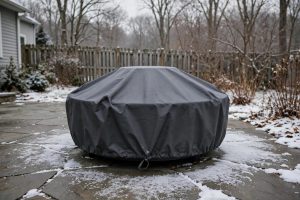
You have two choices: cover or store indoors. Covers work well for heavy HDPE and aluminum sets. Choose covers with vents. Vents let air move. They stop condensation. Tie the covers tight. Winter wind will pull loose covers off.
Storage indoors is better for steel, wood, and anything with cushions. A garage or shed works. If you must store outside, place pieces on a raised deck, not bare ground. Ground contact wicks up water.
Cushions Need Special Care
Take cushions inside. Every fall. No exceptions. Even “outdoor” fabric rots in wet cold. Wash the covers. Dry them fully. Store them in a dry room. Cedar closets and dry basements are ideal. A damp garage will mildew them.
Check Hardware in Spring
When you uncover the set, check every bolt and screw. Freeze cycles loosen hardware. Tighten what you can. Replace rusted screws. A small repair in April stops a big failure in July.
Metal Rust Prevention
Treat small chips before winter. Sand the spot. Apply touch-up paint made for metal. This stops rust from spreading. For more detail, see our guide on metal patio furniture rust prevention tips. A half hour of work each fall adds years to a steel or iron set.
Safety in Cold Weather
Cold weather brings real hazards to the patio. Take them seriously.
Slippery Surfaces
Ice forms on metal tables and chairs. It also forms on stone patios. Wipe down seats before use. Keep a bag of sand or salt near the door. But keep de-icing salt off metal furniture. Salt speeds rust. Sweep the patio after salting.
Snow Load
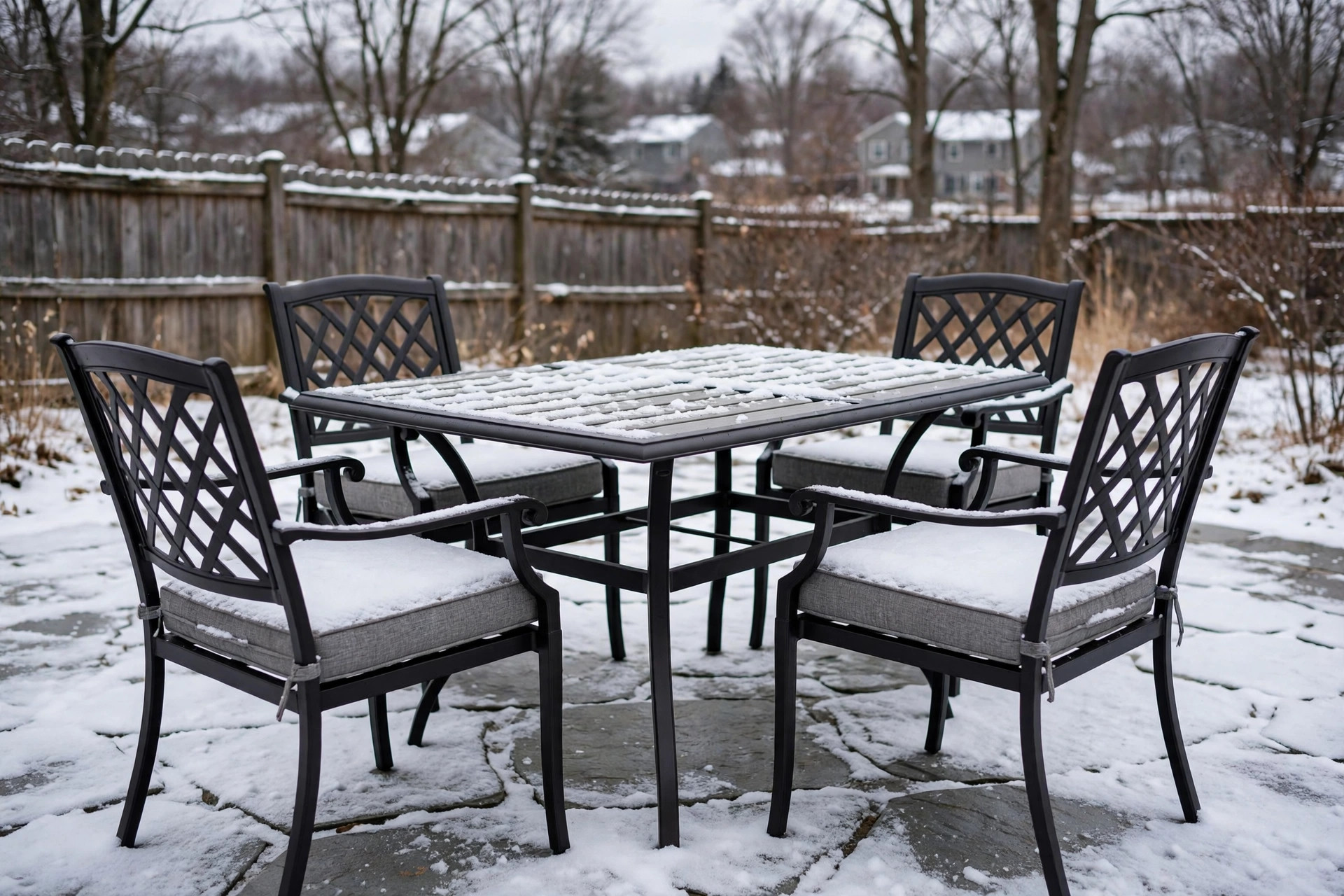
Heavy snow bends weak frames. Brush snow off tables and chairs after storms. Do not let it pile up for weeks. Glass-top tables are at risk. Cold glass is brittle. A heavy snow load can crack it. Covers shed snow better than bare tops.
Fire Pits and Heaters
Portable heaters and fire pits are common in cold regions. Keep them at least three feet from furniture. HDPE and resin melt near open flame. Never use a fire pit under a covered porch. Carbon monoxide is a silent killer. Use pits only in open air.
Electrical Safety
Outdoor lights and heaters need outdoor-rated cords. Cold makes cheap cords stiff and cracked. Cracked cords are a shock risk. The U.S. Consumer Product Safety Commission publishes winter safety guidance for outdoor electrical products. Check cords each fall and replace damaged ones.
FAQ
Can patio furniture stay outside all winter?
HDPE and quality aluminum can stay out with covers. Steel, wood, and natural wicker should come inside. Cushions must always come inside. When in doubt, store it.
What is the best material for freezing temperatures?
High-density polyethylene is the top pick. It does not absorb water, so there is nothing to freeze and crack. Powder-coated aluminum is a close second. Teak is the best wood choice.
Do I need covers if I store furniture in a shed?
Covers are not needed in a dry shed. But dust and mice are real problems. A light cover keeps pieces clean. It also stops scratches when pieces sit close together.
How cold is too cold for resin wicker?
Cheap resin wicker turns brittle below about 20 degrees Fahrenheit. Quality resin wicker with UV stabilizers handles colder weather. Check owner reviews from your region before you buy.
Should I oil teak before winter?
You can, but it is not required. Teak oil keeps the brown color. Skipping oil lets the wood turn gray. Both choices are fine for the wood. Do not use varnish. Varnish peels in freeze cycles.
When should I buy for the best price?
Late August and September bring clearance sales. Stores clear summer stock. You can save 30 to 50 percent. Buy in fall, store through winter, and set up in spring. Design sites like HGTV and advice columns at The Spruce both note that end-of-season shopping is the smartest time to buy.
A Short Final Word
The best patio furniture for cold climates reviews share one theme. Material matters more than brand. Buy heavy frames. Buy water-proof materials. Store cushions inside. Cover what you leave out. A mid-range set cared for well will outlast a luxury set left to rot. Read reviews from people who face your winters. Their words are worth more than any ad. Then buy once, and enjoy your patio for years. Independent testing labs like Consumer Reports and how-to guides at Bob Vila remain useful places to double-check any model before you spend.
References
Bob Vila. (n.d.). Home improvement advice. https://www.bobvila.com Consumer Reports. (n.d.). Product reviews and ratings. https://www.consumerreports.org Frontgate. (n.d.). Outdoor furniture and decor. https://www.frontgate.com HGTV. (n.d.). Home and garden ideas. https://www.hgtv.com Lowe’s. (n.d.). Home improvement products. https://www.lowes.com Polywood. (n.d.). Outdoor furniture. https://www.polywood.com The Spruce. (n.d.). Home and garden advice. https://www.thespruce.com U.S. Consumer Product Safety Commission. (n.d.). Product safety information. https://www.cpsc.gov Wayfair. (n.d.). Furniture and home goods. https://www.wayfair.com
Was this guide helpful?

About Lisa Anderson
The My Garden US editorial team writes practical, in-depth home and garden guides for American homeowners — tested advice, no fluff.