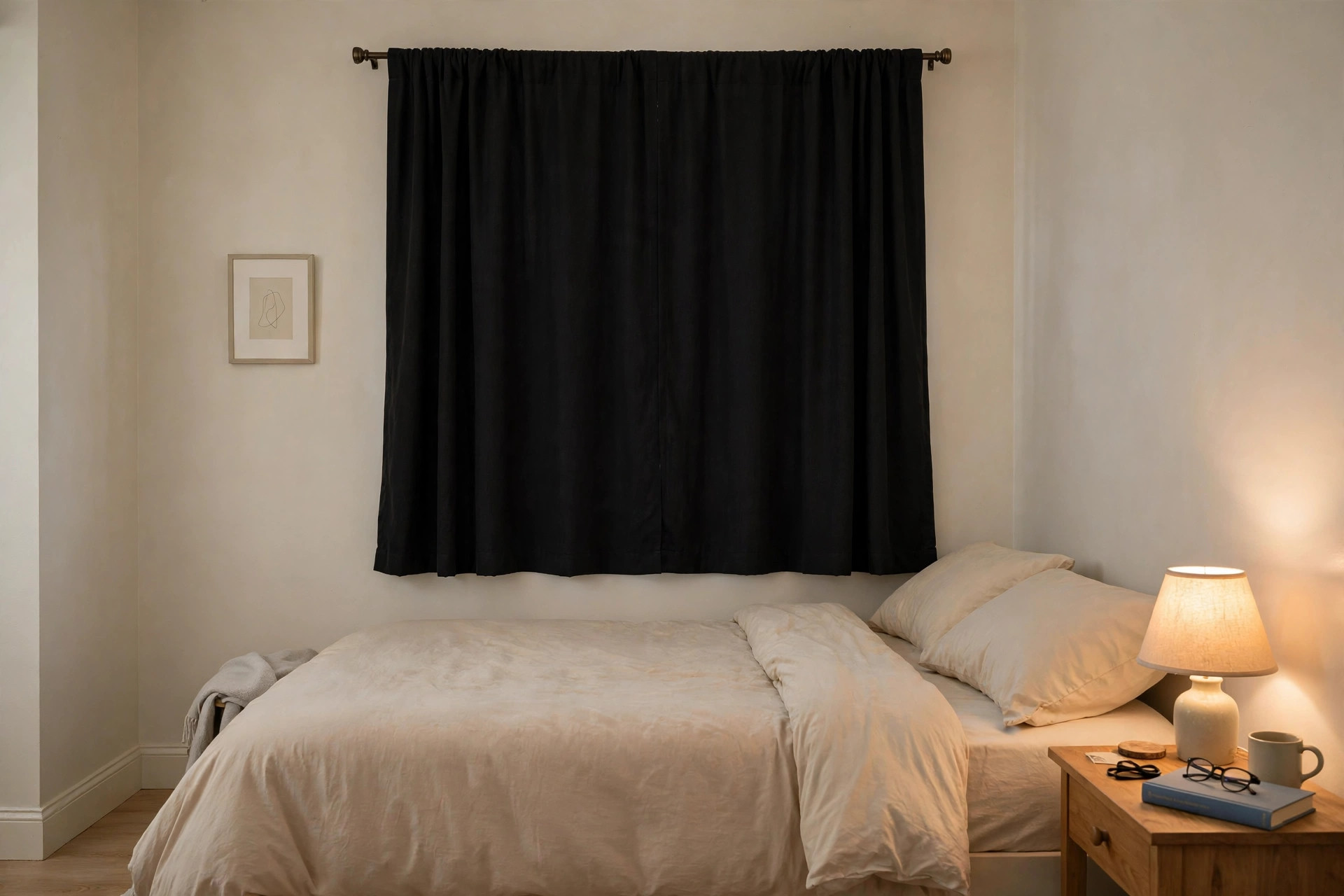

Sleep is hard to find in a small apartment. Street lamps glow through thin glass. Morning sun arrives long before the alarm. Noise from the hall drifts under the door. The best blackout curtains for bedrooms for small apartments answer all three of these problems at once. They block the light, soften the sound, and give a small room a calm, finished look. This guide explains what to look for, which types suit small spaces, what they cost, and how to care for them.
Why Blackout Curtains Matter in a Small Apartment Bedroom
A bedroom in a small apartment has little margin for error. The window is often close to the bed. There may be only one wall of windows, but they face the street, the parking lot, or a neighbor’s lit porch. Thin curtains or plain blinds do not stop this light. Even a small line of light around a blind can keep a light sleeper awake.
True blackout curtains block between ninety-five and one hundred percent of outside light when fully closed. That difference changes how the room feels at night. A dark room helps the body keep its natural sleep rhythm. Many people fall asleep faster and wake up less often once the room is truly dark.
There are other gains too. Heavy curtain fabric adds a layer between the window glass and the room. In winter it slows heat loss. In summer it slows heat gain from strong sun. The curtains also soften sound. They will not make a room silent, but thick panels take the edge off street noise and voices from the hallway. In a small apartment, where every room serves many purposes, this added quiet is worth a great deal.
A pair of blackout curtains also makes the bedroom look better. A small room can look bare with an empty window. Floor-length panels add softness and height. A plain room with good curtains looks planned and cared for. For renters, this is one of the easiest ways to make a small space feel like home without painting or changing a single fixture.
What to Look for When You Choose: Best Blackout Curtains for Bedrooms for Small Apartments
Not every curtain marked “blackout” works the same way. Read the label and check a few points before you buy.
Fabric Weight and Lining
The blackout effect comes from the lining, not the face fabric. Many good curtains use a triple-weave fabric that blocks light without a separate coating. Others use a foam or rubber backing. Triple-weave cloth feels like normal fabric and is easier to wash. Foam-backed curtains block light well but can stiffen with age and may peel after many washes. For a bedroom that gets daily use, triple-weave fabric is the safer long-term choice.
True Blackout Against Light-Filtering
Stores sell two kinds of dark curtains. “Room darkening” curtains cut most light but let a soft glow through. “Blackout” curtains stop nearly all of it. If your goal is full darkness for sleep, choose blackout. If you only want privacy and less glare, room darkening may be enough and often costs less.
Size and Coverage
In a small apartment, the right size matters more than in a large house. Buy panels wider than the window. When closed, the panels should overlap in the middle and reach past the sides of the frame by at least four to six inches on each side. This overlap stops light from leaking around the edges, which is the most common reason blackout curtains disappoint their owners.
For height, measure from the rod to the floor, and let the panels just touch the floor or fall one inch below. Puddling looks nice in a large room but collects dust and trips feet in a tight bedroom. If the ceiling is low, hang the rod a few inches above the frame. This trick makes the window look taller and draws the eye up, which helps a small room feel larger.
Color and Fabric Face
Dark colors block light a little better, but the lining does most of the work, so you do not have to choose a dark color if you dislike it. Light-colored blackout curtains exist and work nearly as well. In a small bedroom, medium tones or light neutrals keep the room from feeling heavy. Pair them with light walls for a calm look, or choose a warm color to make the room feel cozy. You can browse fabric and color choices at large home retailers such as IKEA or Wayfair before you decide.
Types and Options Suited to Small Spaces
Several styles work well in tight bedrooms. Each has its own strengths.
Grommet-top panels. These have metal rings at the top that slide on a rod. They hang in clean folds, open and close with one pull, and are easy to take down for washing. They are the most common choice and are simple to find in many sizes.
Rod-pocket panels. The top has a sewn pocket that the rod slides through. They gather more tightly and look softer, but they are harder to open and close each day. In a small bedroom, the gathered look can add welcome softness.
Back-tab panels. Fabric loops on the back slide over the rod. From the front they look like a tailored pinch-pleat curtain. They open smoothly and look more formal. They suit a bedroom that doubles as a guest room.
Portable blackout shades. These are cut-to-fit panels that attach to the window glass with suction cups or adhesive strips. They are a good answer for renters who may not drill holes for rods. They also work behind existing curtains for a double layer. The U.S. Department of Energy notes that layered window coverings can cut heat loss through windows, so this pairing helps with both light and energy bills.
Thermal curtains. These have an added insulating layer. They are thicker and heavier than plain blackout panels. In a cold climate they reduce drafts around old windows. If your apartment has older single-pane glass, thermal blackout curtains are a smart pick. Lighter linen-look options exist too, such as the style discussed in our guide to thermal white linen curtain panels for sale, though pure linen without a blackout lining will not darken a room fully.
Shutters and blinds as a second layer. Some people pair blackout curtains with plantation shutters or blinds. The hard layer blocks light at the glass, and the soft layer adds insulation and style. If you are curious about this approach, see our piece on the top rated plantation shutters for midwest homes. For most small bedrooms, however, well-fitted blackout curtains alone are enough.
Cost and Price
Blackout curtains are one of the cheaper home improvements a renter can make. A pair of ready-made panels for a standard window usually costs between twenty and eighty dollars. Larger windows or custom sizes can run past one hundred dollars per pair.
Price depends on fabric weight, lining type, and brand. Budget panels from big-box stores block light well and last a few years. Mid-range panels have better stitching, softer fabric, and stronger grommets, and they often last five years or more. You can compare prices across many brands at The Home Depot and Lowe’s, where customer reviews help you judge light-blocking claims before you buy.
Do not forget the rod and hardware in your budget. A simple metal rod costs ten to twenty dollars. A wraparound rod, which curves back to the wall at each end, costs a little more but greatly cuts edge light leaks. For a small bedroom, a wraparound rod is one of the best small upgrades you can buy.
Custom curtains cost more but solve odd sizes. Small apartments often have narrow windows or windows set low in the wall. A local workroom or an online custom shop like Blinds.com can make panels to your exact measurements. Measure twice before ordering. Custom work is final sale.
Hanging and Fitting in a Small Room
Good hanging makes cheap curtains look costly. Poor hanging ruins costly curtains. Follow these steps for a clean fit in a tight space.
First, mount the rod wider than the window. Extend it four to six inches past the frame on each side. When you open the curtains, the panels stack over the wall, not over the glass. This lets full daylight in during the day and makes the window look larger.
Second, mount the rod higher than the frame. Three to six inches above the top of the frame is right for most rooms. If the ceiling is low, go nearly to the ceiling. The long line of fabric draws the eye upward.
Third, use enough panels for fullness. Two panels that just meet in the middle will look flat and thin. For a window three feet wide, buy panels that total at least five to six feet of fabric width. The folds should stay visible even when the curtains are closed. This fullness is what blocks the last lines of light at the edges.
Fourth, close the center gap. Where the two panels meet, overlap them by an inch or two. Some people add a small magnetic tie or a strip of hook-and-loop tape behind the overlap. This simple step stops the thin line of light that appears in the middle on bright mornings.
Renters who cannot drill should look for tension rods, which press between two walls, or adhesive hooks rated for the curtain weight. Many of these hold well on smooth walls and come off cleanly at move-out time. Decorating ideas for rented rooms appear regularly on HGTV and The Spruce, where small-space writers show real apartments and real solutions.
If you want outdoor fabric for a balcony door near the bedroom, keep in mind that outdoor cloth is built for weather, not for blocking light. Our notes on the best outdoor patio curtains for sale cover that topic in full.
Care and Upkeep
Blackout curtains last longer with simple care. Dust them every few weeks with a vacuum brush attachment or a lint roller. This keeps the fabric fresh and stops dust from building up in the folds.
Wash them as the label directs. Triple-weave curtains usually go in the machine on a gentle cycle with cold water. Foam-backed curtains need more care. Wash them gently and never wring them. High heat can damage the blackout coating on both types, so dry on low heat or hang them to dry. Take them out of the dryer while still slightly damp and hang them at once. This avoids ironing, which can harm the backing.
Sun fades the face fabric over time, even through a closed curtain. Turn the panels around once a year if the sun hits one side harder. Check the grommets and stitching each season. A loose thread is easy to fix and hard to ignore once it spreads.
Safety
A few safety points deserve care in a small bedroom. Keep curtains away from baseboard heaters and space heaters. Fabric near a heat source is a fire risk. Leave at least three feet of space between a portable heater and any curtain.
Choose cordless tops for the bedroom. Old corded blinds caused harm to small children, and the U.S. Consumer Product Safety Commission has long warned about cord hazards near windows. Grommet, rod-pocket, and back-tab curtains have no cords at all, which makes them a safe choice by design. If you add a tie-back, use a fabric band rather than a cord with a loop.
Mount hardware into a stud or use strong wall anchors. Heavy blackout panels pull on the rod, and a falling rod in the night is both a fright and a danger. A simple stud finder costs little and prevents the problem.
Frequently Asked Questions
Do blackout curtains work in a small apartment bedroom with one window? Yes. One window is the easiest case. A single pair of well-fitted panels can darken a small room almost fully. Measure carefully and mount the rod wider than the frame to stop edge leaks.
Will blackout curtains make my small bedroom look smaller? Not if you hang them well. Light-colored fabric, a high rod, and panels that stack off the glass make the room feel taller and wider. Heavy dark fabric hung too low can feel bulky, so mount high and choose a soft color.
Can I use blackout curtains if I am a renter and cannot drill? Yes. Tension rods work between window frames or narrow walls. Strong adhesive hooks hold light and medium panels on smooth walls. Portable blackout shades that stick to the glass need no rod at all. All of these come off cleanly when you move.
Do blackout curtains help with noise? They help a little. Thick panels absorb some sound and take the edge off street noise. They do not block loud noise the way a sealed window would. For the best result, keep the panels fully closed and use a full, heavy fabric.
How do I clean blackout curtains without ruining the lining? Follow the care label. Most triple-weave curtains wash on gentle with cold water and dry on low. Keep foam-backed panels out of high heat. Vacuum the folds between washes to keep dust down.
Are expensive blackout curtains worth the extra money? Sometimes. Mid-range panels usually have better fabric, neater stitching, and stronger grommets than the cheapest sets. But light-blocking itself is mostly about fit and lining, not price. A well-fitted budget pair often beats a costly pair hung too narrow.
A Short Final Word
The best blackout curtains for bedrooms for small apartments are not the most costly or the most stylish. They are the ones that fit the window well, close fully, and suit the size of the room. Measure twice. Mount the rod wide and high. Choose a lining you can wash. In a small apartment, this one change brings darker nights, quieter mornings, and a room that feels like it was made for rest.
References
Blinds.com. (n.d.). Window blinds, shades, and shutters. https://www.blinds.com HGTV. (n.d.). Home and garden ideas. https://www.hgtv.com IKEA. (n.d.). Home furnishings. https://www.ikea.com Lowe’s. (n.d.). Home improvement products. https://www.lowes.com The Home Depot. (n.d.). Home improvement products. https://www.homedepot.com The Spruce. (n.d.). Home and garden advice. https://www.thespruce.com U.S. Consumer Product Safety Commission. (n.d.). Product safety information. https://www.cpsc.gov U.S. Department of Energy. (n.d.). Energy efficiency and renewable energy. https://www.energy.gov Wayfair. (n.d.). Furniture and home goods. https://www.wayfair.com
Was this guide helpful?

About Emily Rodriguez
The My Garden US editorial team writes practical, in-depth home and garden guides for American homeowners — tested advice, no fluff.
You May Also Like

Custom Valances for Windows for Sale: A Practical Buying Guide
August 23, 2026 0 views
Where to Buy Machine Washable Curtains in Florida
August 3, 2026 0 views
Custom Light Filtering Roller Shades Buying Guide
January 24, 2026 0 views