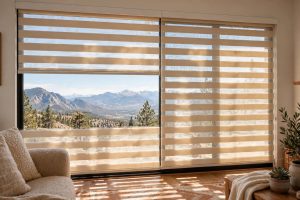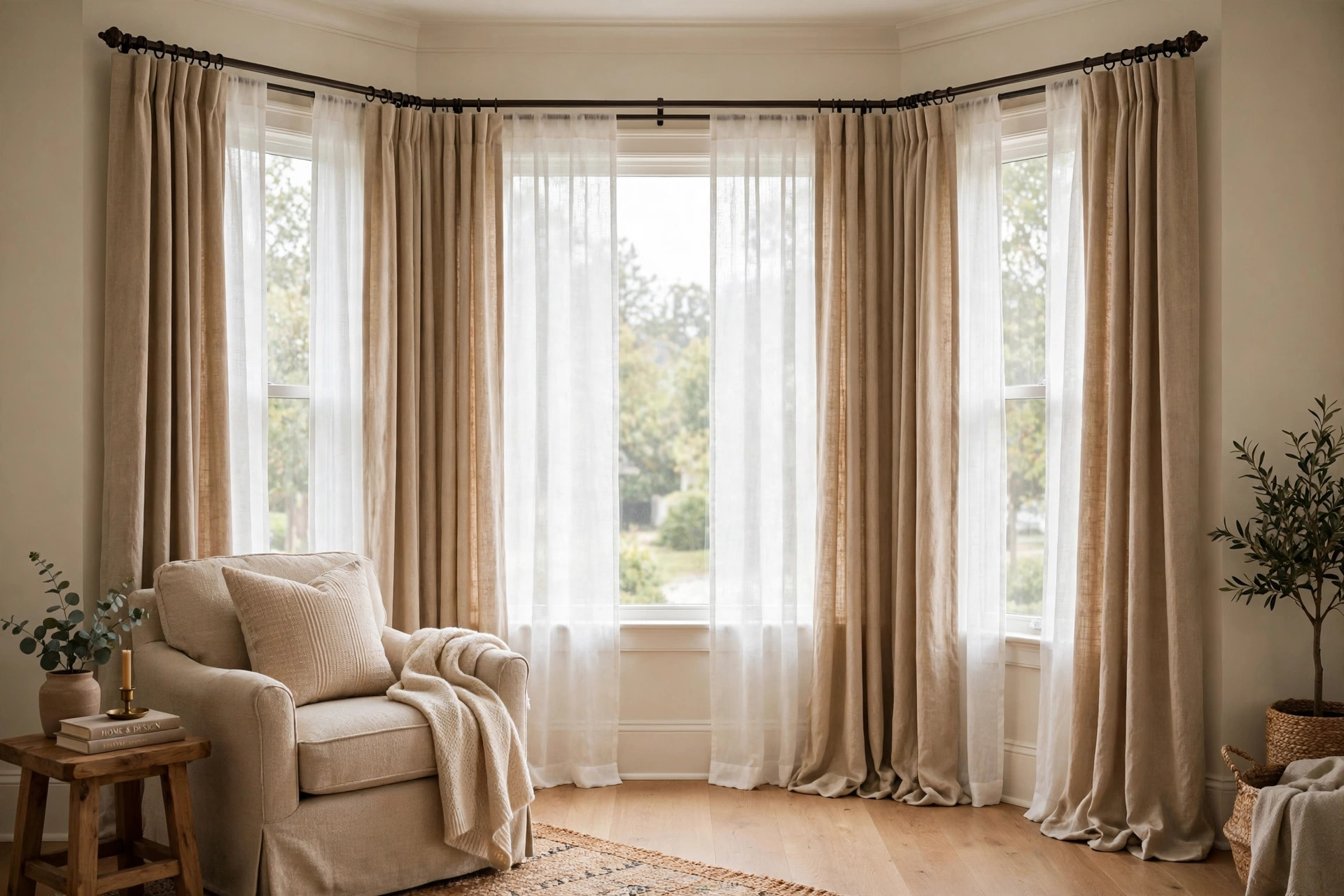

Many shoppers who search for noise reducing bay window curtain rods for sale share one plain wish. They want a quieter room. Traffic hums past all day. Dogs bark at night. Trucks roll by at dawn. A bay window lets in fine light, but it also lets in sound. Before you buy, it helps to know one honest fact. The rod itself does not stop noise. The thick drapes it holds do the real work. But the right rod still matters a great deal. It holds heavy fabric up. It seals the edges. It fits the angles of the bay. This guide walks through the rod styles that work, what they cost, how to choose, and how to pair them with drapes that truly quiet a room.
Why It Matters
A bay window is a lovely feature. It is also a weak spot for sound. A bay has more glass than a flat window of the same width. Glass is thin and hard. Sound waves pass through it with ease. The angled sides of a bay add more joints and more edges. Each edge can leak a little sound.
Standard straight rods make the problem worse. They span only the front face of the bay. They leave the side windows bare. Gaps at the corners let street noise pour in. Heavy drapes can help, but only if they cover the whole bay.
Thick, lined drapes absorb sound. The fabric soaks up high-frequency noise such as voices, horns, and barking. It does far less for deep bass, such as truck rumble. Still, most buyers notice a clear change. A room feels calmer. Sleep comes easier. This is why searches for noise reducing bay window curtain rods for sale keep rising in busy towns and cities.
Set honest hopes. Drapes will not make a room silent. They soften noise by a clear step. For many homes near a road, that step is enough to change daily life.
How to Choose: What to Look For: Noise Reducing Bay Window Curtain Rods for Sale
Measure the Bay First
Measure each face of the bay, not just the front. Bays differ. Some are wide and shallow. Some are deep with sharp angles. Write down the width of the center face and both side faces. Note the angle where they meet. Bring these numbers when you shop. A rod bought for the wrong angle will not fit, and returns waste time.
Check the Weight Rating
Drapes that block noise are heavy. Lined velvet, thick cotton duck, and triple-weave blackout panels weigh far more than sheers. A flimsy rod will sag in the middle within weeks. Look for rods rated for heavy drapes. For wide bays, add a center support bracket. The noise reducing pinch pleat drapes that pair best with these rods are some of the heaviest panels on the market, so plan for their weight.
Fit the Angles
A bay needs a rod that bends or joints. Two main designs serve this need. Bendable track rods curve by hand to match the bay angles. Jointed bay rod sets use corner pieces that pivot. Both work well. Tracks glide smooth and suit heavy fabric. Jointed rods look more like classic decor.
Seal the Edges
Sound leaks at edges. Rods that return to the wall at each end, called wrap-around or return rods, pull the drapes tight against the wall. This seals the sides. It stops light gaps too. For the best noise result, the drapes should also stack wide enough to cover the full window, plus a few inches on each side.
Mount It Strong
Heavy rods need strong mounts. Screw brackets into wall studs when you can. When no stud lines up, use good wall anchors rated for the load. Do not rely on small nails. A rod full of heavy drapes can pull loose and damage the wall.
Types and Options
Bendable Curtain Track
A bendable track is a slim rail you curve by hand. It follows the exact angles of your bay. Carriers slide inside the rail, so drapes glide with a light pull. Many buyers of noise reducing bay window curtain rods for sale end up here, because tracks handle heavy fabric better than most decorative rods. Tracks also mount to the ceiling, which helps tall bays. The plain look suits modern rooms. You can hide the track behind a valance for a softer style.
Jointed Bay Window Rod Sets
These sets include straight sections plus corner joints that pivot. You set the joints to match your bay angles. They look like normal decorative rods, with finials at the ends. They come in steel, aluminum, and wood. Steel holds the most weight. Wood looks warm and classic but costs more. Check that the corner joints lock tight. Loose joints let the rod droop over time.
Wrap-Around Return Rods
Return rods bend back to the wall at each end, forming a wide U or C shape. This design pulls the drape edges flush to the wall. It blocks side light and side sound leaks. For noise control, this small detail makes a real difference. Many home decorating guides point to return rods as the best shape for bedrooms on busy streets.
Ceiling-Mounted Tracks
For bays with little wall space above the window, a ceiling track is the answer. The track screws into the ceiling joists or uses strong anchors. Drapes hang from floor to ceiling. This full coverage blocks more sound than a short rod. It also makes ceilings look taller. The trade is a more modern look, which may not suit every room.
Double Rods for Layering
A double rod holds two layers. Many owners hang sheers on the back rod and heavy noise drapes on the front rod. By day, the sheers give soft light. By night, the heavy drapes close for quiet. If you like this setup, read about double curtain rod brackets before you buy, since the brackets must carry both layers.
Pairing With Shades
Some owners add a shade behind the drapes for extra help. A honeycomb or bamboo shade adds another layer of fabric. Shoppers reading about noise reducing bamboo roman shades for this purpose should measure the bay faces just as carefully. Two thin layers often beat one thick layer for softening mid-range sound.
Cost and Price
Prices vary with style, length, and material. Here are fair ranges seen in the United States market.
– Bendable tracks: about $25 to $60 for a set long enough for a standard bay. – Jointed bay rod sets: about $40 to $120, with wood at the top end. – Wrap-around return rods: about $35 to $90. – Ceiling-mounted tracks: about $30 to $80.
Do not forget the drapes. The drapes cost more than the rod in most cases. Budget panels start near $30 per panel. Good lined panels run $60 to $150 per panel. A wide bay may need four to six panels.
Where to shop? Big home stores carry bendable tracks and bay sets in most locations. Hardware retailers stock similar ranges. Online marketplaces offer the widest choice of sizes and finishes. Ready-made rod kits suit simple bays at low prices. For an exact fit, custom shops like Blinds.com cut tracks to your measurements.
Before you pay, read independent product tests when they cover hardware, and skim home improvement advice on mounting heavy rods. A little research saves a return trip. Watch for free shipping offers, which can cut the total cost of heavy items.
Care and Upkeep
A good rod needs little care, but a few habits keep it working well.
Dust the rod with a dry cloth each month. Dust builds up on tracks and slows the carriers. Once a year, wipe the track channel with a damp cloth and let it dry. A tiny drop of silicone lubricant on the carrier wheels keeps them gliding. Do not use oil, which attracts dust.
Check the brackets twice a year. Heavy drapes pull down day and night. Screws can loosen. Tighten them before they work free. Check corner joints on jointed sets at the same time.
Wash or vacuum the drapes as their label directs. Dusty drapes weigh more and look dull. Most lined panels do best with a vacuum brush each month and a professional clean once a year. Keep the fabric clear of the track so it does not catch.
Safety
Safety comes first with heavy window hardware. A rod loaded with thick drapes is heavy. Mount every bracket into a stud or a rated wall anchor. Keep the weight limits on the package and respect them. Do not let children climb on drapes or pull on rods. Secure finials tight so they cannot fall on small heads.
If you pair the rod with corded shades or blinds, follow cord safety rules. Cords pose a real strangling risk to young children and pets. Choose cordless shades, or fit cord cleats high on the frame and wrap cords out of reach. For room layout ideas that keep cords away from cribs and play areas, browse room decorating ideas with child safety in mind. Owners of older homes can find old-house renovation advice on dealing with plaster walls, which need different anchors than drywall.
Frequently Asked Questions
Do curtain rods really reduce noise?
No, not by themselves. A bare rod stops no sound. The heavy drapes hanging from the rod absorb sound. The rod helps by holding that heavy fabric and sealing it against the wall. A well-fitted bay rod with lined drapes can soften traffic and voices by a clear step. It will not silence a room.
What is the best rod for a bay window?
A bendable track or a jointed bay rod set. Both follow the bay angles. Tracks glide best under heavy fabric. Jointed sets look more decorative. For the best noise result, choose a style that returns to the wall at the ends, so no gap leaks sound.
Can I install it myself?
Yes, in most cases. You need a drill, a level, a tape measure, and a stud finder. Measure twice. Mark the bracket spots with the level. Drill pilot holes. Fix brackets into studs or rated anchors. Most sets install in one to two hours. If your walls are plaster or concrete, buy the right anchors first.
How much should I spend?
A fair total for rod plus brackets runs $40 to $120 for most bays. Add $120 to $600 for lined drapes, based on panel count and fabric. Spending more on the drapes matters more for noise than spending more on the rod.
Will heavy drapes damage my walls?
Not if you mount well. Use studs or rated anchors. Space brackets to share the load. Check them each year and tighten as needed. The real risk comes from weak mounts, not from the weight itself.
Final Word
Shopping for noise reducing bay window curtain rods for sale is really shopping for a system. The rod, the brackets, and the drapes work as one team. Fit the rod to your bay angles. Anchor it strong. Choose heavy lined drapes. Seal the edges to the wall. Do these four things and your bay window will look fine and sound much calmer. Start with careful measurements, and the rest follows. Keep the receipt and the mounting hardware. If a joint loosens or a track carrier wears out in the first year, most sellers will send a spare part at no charge.
References
Blinds.com. (n.d.). Window blinds, shades, and shutters. https://www.blinds.com Bob Vila. (n.d.). Home improvement advice. https://www.bobvila.com Consumer Reports. (n.d.). Product reviews and ratings. https://www.consumerreports.org HGTV. (n.d.). Home and garden ideas. https://www.hgtv.com IKEA. (n.d.). Home furnishings. https://www.ikea.com Lowe’s. (n.d.). Home improvement products. https://www.lowes.com The Home Depot. (n.d.). Home improvement products. https://www.homedepot.com The Spruce. (n.d.). Home and garden advice. https://www.thespruce.com This Old House. (n.d.). Home renovation guidance. https://www.thisoldhouse.com U.S. Consumer Product Safety Commission. (n.d.). Product safety information. https://www.cpsc.gov Wayfair. (n.d.). Furniture and home goods. https://www.wayfair.com
Was this guide helpful?

About Emily Rodriguez
The My Garden US editorial team writes practical, in-depth home and garden guides for American homeowners — tested advice, no fluff.
You May Also Like

Best Rod Pocket Curtains for First Time Homeowners
September 4, 2026 0 views
Machine Washable Bay Window Curtain Rods for Sale: A Full Buying Guide
July 28, 2026 0 views
Best Light Filtering Roller Shades for California Apartments
June 14, 2026 0 views