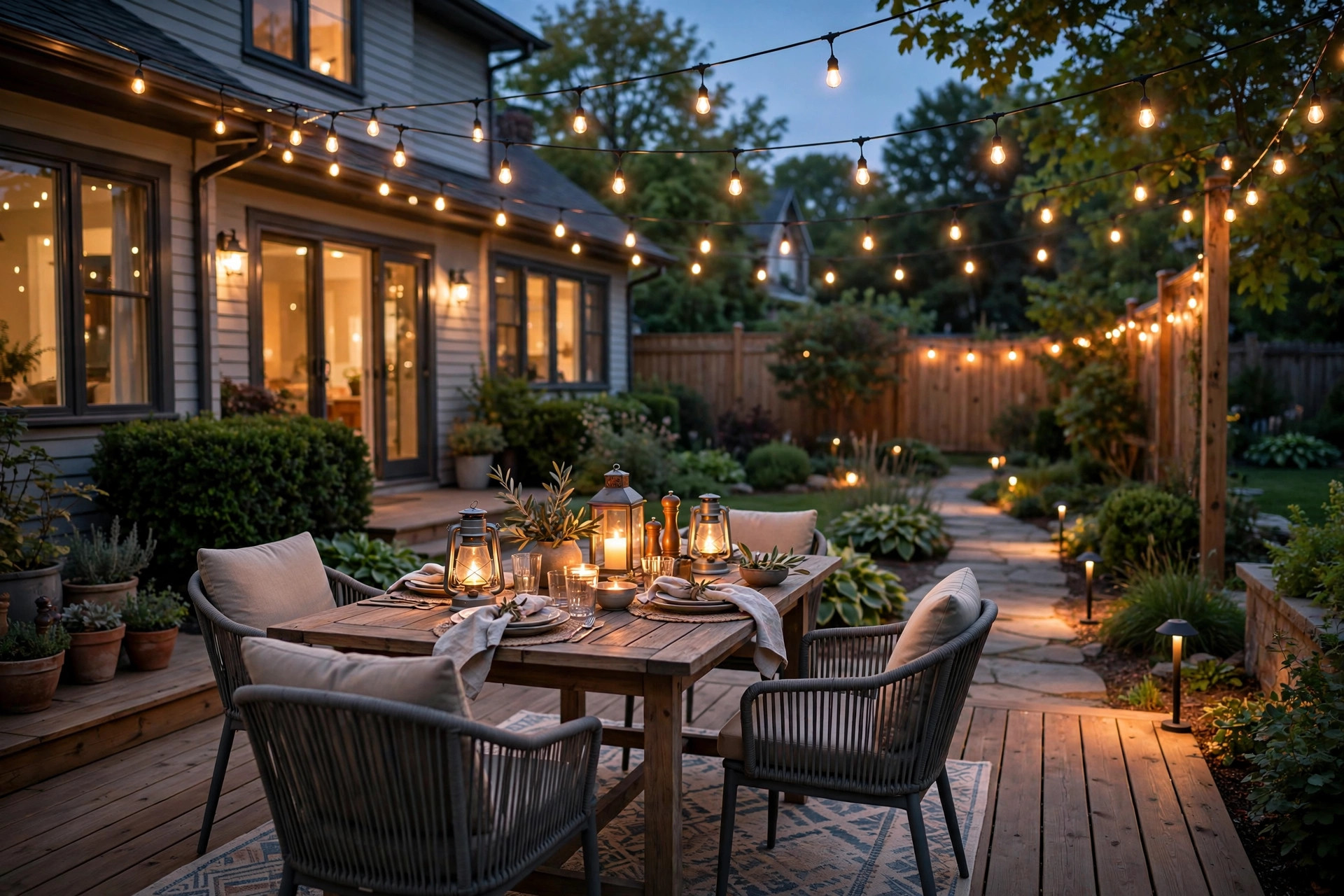

A good party does not end when the sun goes down. With the best patio lights for evening entertaining, a plain backyard becomes a place where guests linger, talk, and enjoy the night. Light sets the mood. It marks the edges of the space. It helps people see their food, their drinks, and each other. This guide will help you choose patio lights that fit your yard, your budget, and the kind of evenings you like to host.
Why Patio Lighting Matters
Most patios get little use after dark. The furniture sits empty. The grill cools. The whole yard goes dark and quiet. A few well-placed lights change that. They invite people outside. They make a small deck feel bigger. They make a large yard feel close and warm.
Light also keeps guests safe. Steps, pool edges, and uneven paths are hard to see at night. A lit walkway prevents trips and falls. Good lighting lets the host move around with plates and glasses without worry. The best patio lights for evening entertaining do two jobs at once. They make the space beautiful, and they make it safe.
There is a third reason. A party with light feels planned. Guests notice the glow of string lights overhead or the soft pool of light from a lantern on the table. It tells them the host cared. It sets the tone before the first drink is poured.
How to Choose: What to Look For: Best Patio Lights for Evening Entertaining
Start with the size of your space. A small deck needs only one or two strands of string lights. A large yard may need layers: overhead lights, table lights, and path lights together. Walk your patio at night before you buy. Note the dark corners and the spots where guests will sit, eat, and walk.
Brightness
Outdoor lights are measured in lumens. For mood lighting, less is more. Each bulb at 20 to 40 lumens gives a soft, warm glow. Bright floodlights have their place near grills and stairs, but over the dining table they feel harsh. Look for warm white light, about 2200 to 2700 Kelvin on the box. Cool white light looks blue and cold. Warm light looks like candlelight.
Many string light guides explain that warm color temperature is the key to a cozy evening feel.
Power Source
Patio lights come in three main types of power. Plug-in lights run on house current. They are the brightest and most reliable. They need an outdoor outlet, and the cords must be rated for outdoor use.
Solar lights charge in the sun during the day and turn on at dusk. They need no wiring at all. Reviews of solar patio lights for ambiance can help you pick models with strong batteries. Solar lights are weaker than plug-in lights, and they fade on cloudy days.
Battery lights sit in the middle. They are easy to place anywhere, but batteries must be changed or charged. Rechargeable batteries keep the cost down over time.
Weather Rating
Check the box for an IP rating. IP44 means the light can handle rain. IP65 means it can handle heavy rain and dust. Anything you hang outside for the season should be at least IP44. Cheap indoor lights will fail after the first storm.
Controls
Timers and remotes make life easier. A timer turns the lights on at dusk and off at bedtime. Smart plugs let you control plug-in lights from a phone. Dimmers let you lower the brightness late in the evening when the talk turns quiet. Many shoppers compare smart features on home improvement retailers before they buy.
Types of Patio Lights
String Lights
String lights are the classic choice. They are long strands of small bulbs, hung in rows or draped in swoops. They give even, gentle light over a wide area. Globe-style bulbs are popular for parties. Edison-style bulbs have a vintage look that suits older homes.
Hang them high enough that tall guests cannot bump their heads. Nine or ten feet above the deck is a good height. Use poles, trees, or the house wall to anchor each end. A guide to hanging string lights on a patio walks through the tools and knots you need.
Lanterns
Lanterns sit on tables, steps, or the ground. They give pools of light where people gather. Paper lanterns are cheap and pretty for a single party. Metal and glass lanterns last for years. Many take a simple candle or a battery tea light. Some have built-in LED panels with a warm flame effect.
Place a lantern at the center of each table. Add a few along the steps. The effect is soft and old-fashioned, like a village festival.
Path and Step Lights
Path lights are small stakes pushed into the ground along a walkway. They mark the route from the house to the patio. Step lights attach to stair risers or deck posts. They are usually dim on purpose. Their job is guidance, not decoration. Solar models work well here because they turn on by themselves at dusk. Design ideas from outdoor living editors show how path lights shape the look of a yard.
Spotlights and Uplights
A spotlight aimed up at a tree turns the branches into a ceiling of leaves. One aimed at a garden wall adds depth to the yard. Uplights are placed on the ground and point upward. They are small and easy to hide behind plants. A few of them make a plain yard look designed.
Fire Pits and Torches
Real flame adds drama. Tabletop fire bowls, tiki torches, and chimineas all count as light sources. They also give warmth on cool nights. Keep open flames away from low string lights, awnings, and patio umbrellas. Never leave a live flame without an adult watching it.
Wall and Post Lights
If your patio has walls, pillars, or a fence, wall-mounted lights add a finished look. Many run on house current and are installed like indoor sconces. They light the edges of the space and free up the table. Solar post caps sit on top of deck posts and fence posts. They are simple to add and need no wiring.
Smart and Color-Changing Lights
Some LED strands change color from a phone app. They can glow warm white for dinner and shift to blue for a late-night swim. They cost more than plain strands. They also need a Wi-Fi or Bluetooth link. They are fun for hosts who like to change the mood through the night. Shoppers often compare ratings on consumer testing sites before choosing a smart brand.
Cost and Price
Patio lights range from a few dollars to several hundred. Here is what to expect in plain numbers.
– Basic string lights: 15 to 40 dollars per 25-foot strand. A medium patio needs two or three strands. – Solar path lights: 3 to 10 dollars each in packs. Ten lights for a walkway cost 30 to 80 dollars. – Lanterns: 10 to 60 dollars each, depending on size and material. – Smart LED strands: 40 to 100 dollars per strand. – Professionally installed wall lights: 100 to 300 dollars per fixture, with labor.
A full setup for a medium patio often costs 150 to 400 dollars. Start with string lights over the main seating area. Add table lanterns and path lights later. You do not need to buy everything at once. Budget-friendly picks at large retailers let you light a small deck for under one hundred dollars.
Running costs are low. LED bulbs use very little power. A strand of 25 LED bulbs may use only a few watts. Solar lights cost nothing to run. Even plug-in lights add only pennies to the monthly bill.
Care and Upkeep
Patio lights last longer with simple care. Bring paper lanterns and cheap battery lights inside during storms. Wipe glass lanterns with a damp cloth once a month. Dust cuts the light they give.
Check string lights each spring before the party season. Look for cracked bulbs and frayed wires. Replace any damaged strand. A single bad bulb on an old series-wired strand can kill the whole line. Modern parallel-wired strands keep working when one bulb fails.
Solar lights need clean panels. Wipe the small solar panel with a damp cloth every few weeks. A dirty panel charges slowly. Replace rechargeable batteries in solar lights every one to two years. When the light fades by midnight, the battery is likely worn out.
Store lights for the winter in cold climates. Coil string lights loosely. Do not wrap them tight around a nail. Keep them in a dry box. Take batteries out of battery lights before storage. This small work each fall saves money each spring. Maintenance tips from home care guides cover the same routine for all outdoor fixtures.
Safety
Outdoor electricity and water do not mix. Use only cords and lights marked for outdoor use. Keep plug connections off the ground where rain pools. Use an outdoor-rated power strip with a cover.
Do not overload one outlet. Read the wattage on each strand and add them up. A standard outdoor circuit handles 1800 watts, but it is wise to stay far below that. LED lights make this easy because they draw so little.
Keep paper lanterns and fabric shades away from grill heat and open flames. Place tiki torches at least six feet from anything that can burn. Keep a fire extinguisher near the grill. As a rule, never leave flames alone and keep fuel stored away from the house.
Watch the cords. Tape them down where guests walk. A cord across a dark path is a trip hazard. Run cords along walls and under rugs when you can.
FAQ
How many string lights do I need for a patio?
Measure the length and width of your patio in feet. For a simple back-and-forth pattern, you need about one and a half times the length of the space in lights. A 12 by 16 foot deck needs roughly 50 to 75 feet of string lights, which is two to three strands. Buy one extra strand. It is easier to have too much than to reorder.
Are solar patio lights bright enough for a party?
Solar lights work best as accent light, not main light. They mark paths, glow in lanterns, and outline planters. For the dining table, plug-in string lights are brighter and steadier. If you want an all-solar setup, buy more lights than you think you need, and place the panels where they get full sun all day.
What color light is best for evening entertaining?
Warm white, between 2200 and 2700 Kelvin. It flatters skin tones and makes food look good. Cool white looks clinical. Colored lights are fun for themed parties but tiring for long evenings. Stick with warm white for the main lights and add color only as an accent.
Can I leave patio lights out in the rain?
Only if they are rated for it. Look for IP44 or higher on the box. That means they can handle splashing water and rain. Bring paper lanterns and indoor-rated decorations inside. Even rated lights last longer if they are sheltered from the worst storms.
How high should I hang string lights?
Hang them 9 to 10 feet above the deck or patio floor. That is high enough for tall guests to walk under and low enough to give good light. Over a dining table, 7 to 8 feet above the tabletop works well. Use a tape measure. Guessing often leads to lights that are too low.
Do LED patio lights save money?
Yes. An LED bulb uses about one tenth the power of an old incandescent bulb. A full patio of LED string lights may cost less than one dollar a month to run. The bulbs also last far longer, often 25,000 hours or more. You replace them less often.
A Final Word
The best patio lights for evening entertaining are the ones that fit your space and your habits. Start simple. Hang one strand of warm string lights. Set a lantern on the table. Light the path to the door. Then sit outside after dark and see how it feels. Add more where the dark spots remain.
Good light turns a patio into a room. It holds people a little longer. It makes ordinary evenings feel like occasions. Pick lights that are safe, weatherproof, and warm in color, and your backyard will be ready for guests all season long. For more outdoor ideas, browse patio furniture collections, outdoor living inspiration, and furniture guides.
References
Article. (n.d.). Modern furniture. https://www.article.com Bob Vila. (n.d.). Home improvement advice. https://www.bobvila.com Consumer Reports. (n.d.). Product reviews and ratings. https://www.consumerreports.org Frontgate. (n.d.). Outdoor furniture and decor. https://www.frontgate.com HGTV. (n.d.). Home and garden ideas. https://www.hgtv.com IKEA. (n.d.). Home furnishings. https://www.ikea.com Lowe’s. (n.d.). Home improvement products. https://www.lowes.com The Home Depot. (n.d.). Home improvement products. https://www.homedepot.com The Spruce. (n.d.). Home and garden advice. https://www.thespruce.com
Was this guide helpful?

About Jennifer Lee
The My Garden US editorial team writes practical, in-depth home and garden guides for American homeowners — tested advice, no fluff.
You May Also Like

Outdoor Side Tables Set of Two: A Plain Guide for the American Patio
August 15, 2026 0 views
How to Seal Outdoor Wood Furniture So It Lasts for Years
July 21, 2026 0 views
Outdoor Console Table for Patio Reviews: A Plain Guide to Buying Well
July 29, 2026 0 views