
When you decide to buy exterior lighting fixtures online in the USA, you gain a wide choice that no single store can match. You can compare hundreds of wall lanterns, post lights, flood lights, and path lights from your kitchen table. You can read honest reviews from other homeowners. You can check prices across many sellers in one evening. Yet the large choice can also feel confusing. This guide will walk you through the whole process in plain steps. You will learn why outdoor light matters, what to look for, how to measure, what it costs, how to keep it working, and how to stay safe. By the end, you will know how to place an order with confidence.
Why Exterior Lighting Matters
A good light by the front door does more than help you find the key. It tells a guest that this house is cared for. It marks the step and the walk so no one trips in the dark. A study by many home safety groups notes that well-lit entries make homes less inviting to thieves. The idea is simple. A burglar prefers dark corners. A bright porch light removes those corners.
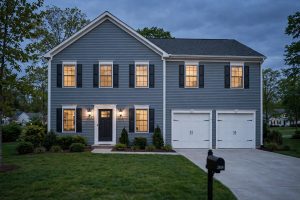
Light also shapes how a house looks from the street. Builders call this “curb appeal.” A pair of matching lanterns on either side of the front door gives balance. A single warm light over a garage door makes the whole face of the house feel settled. When you buy exterior lighting fixtures online in the USA, you see the fixture against real homes in customer photos. This helps you judge the look before you spend.
Outdoor light extends the use of your yard. A deck light lets the family eat outside after sunset. A path light guides the way to the gate. A flood light over the driveway helps you unload the car at night. Each spot has a job. Each job needs the right fixture. This is why so many homeowners now plan their outdoor light the way they plan a room inside the house.
What to Look for When You Buy Exterior Lighting Fixtures Online: Buy Exterior Lighting Fixtures Online in the Usa
Shopping online is different from shopping in a store. You cannot lift the fixture or feel its weight. So you must read the details with care. The most trusted sellers show clear photos from several angles, exact measurements, and the full list of parts in the box. A good product page will also list the rating for outdoor use. Look for the words “wet rated” or “damp rated.” A wet-rated fixture can stand full rain. A damp-rated fixture is fine under a porch roof but not in open rain.
Finish and Material
The finish is the surface color and coating on the metal. It must stand up to sun, rain, and winter cold. Solid brass and solid copper age well and often carry long warranties. Cast aluminum is common and costs less. It resists rust if the powder-coat finish is sound. Cheap stamped steel can rust within two years in wet climates. Customer reviews often mention rust. Read them. They are the best guide to how a finish holds up over time.
Match the finish to the trim of your house. Oil-rubbed bronze suits a brick or brown-sided home. Matte black fits most styles. Polished copper or brushed nickel can lift a white or gray house. When you buy exterior lighting fixtures online in the USA, the finish names are fairly standard across brands. This makes it easier to compare a lantern from one maker with a post light from another.
Bulb Type and Light Output
Most new fixtures take LED bulbs or have LEDs built in. LED bulbs use little power and last many years. Built-in LED fixtures often last even longer, but you cannot swap the bulb when it fails. You replace the whole fixture. With socket-based fixtures, you can choose the bulb. You can also change the color of the light. Warm white light, around 2700 to 3000 kelvin, feels welcoming at a front door. Cooler white light, around 4000 kelvin or higher, suits a driveway or a work area.
Brightness is measured in lumens. A wall lantern by the door is usually 450 to 800 lumens. A flood light for the driveway may be 2000 lumens or more. Path lights are often under 200 lumens. Aim the light down. Use shades that keep glare out of the eyes of people walking past.
Types of Outdoor Fixtures You Can Buy
The market offers many types. Each type serves one clear purpose. Knowing the names will help you search.
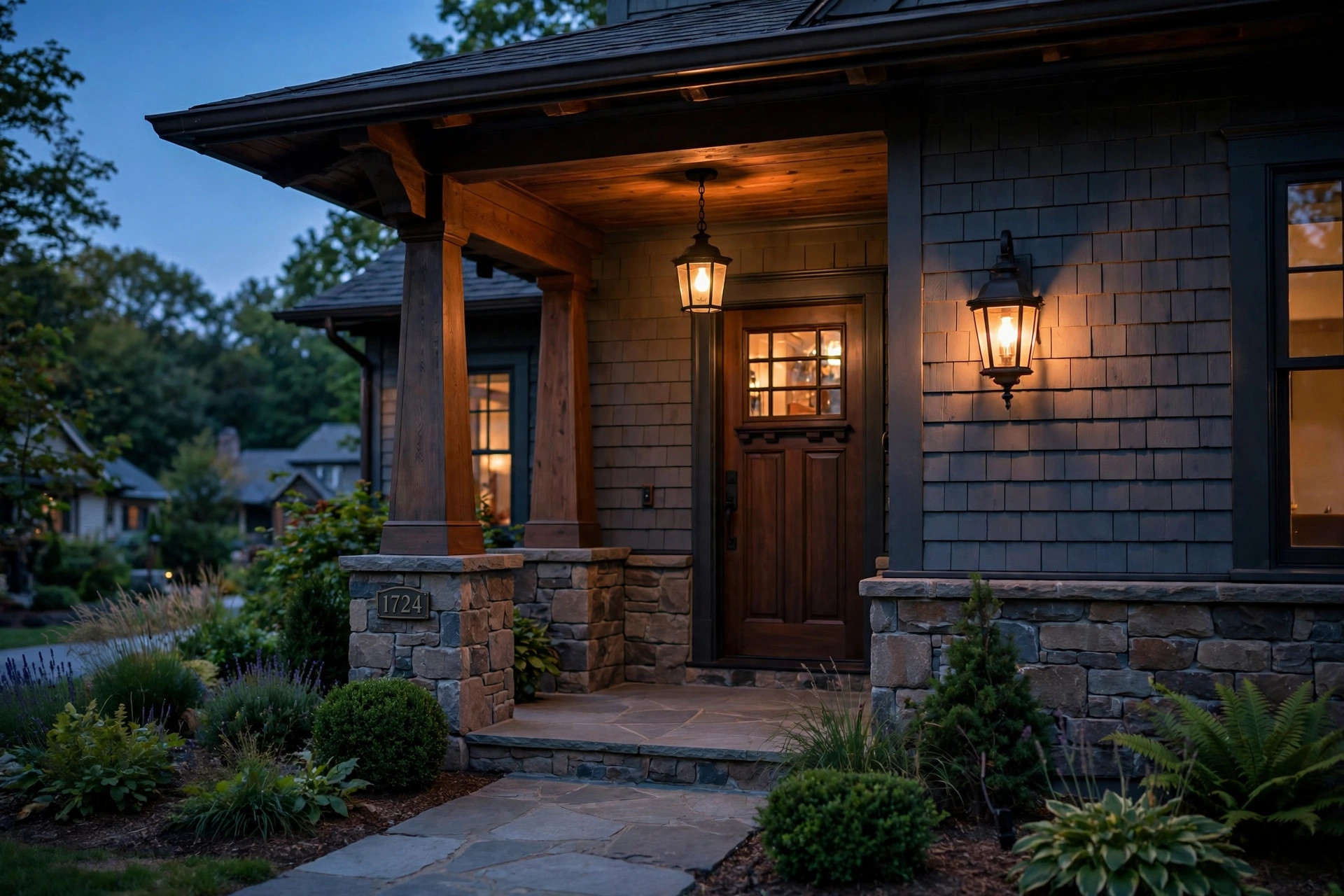
Wall lanterns mount on the wall beside the door or on the garage. They are the most common choice. Post lights sit on top of a lamp post by the walk or at the end of the driveway. They give a classic look. Flood lights mount high on the wall or under the eave. They throw a wide beam over a large area. Many now come with motion sensors. Path lights are short stakes that line a walkway or a flower bed. They mark the path with soft pools of light. Spot lights aim a narrow beam up at a tree, a flag, or the front of the house. Step lights sit low on a stair riser or a deck post. They mark each step.
Ceiling lights hang from the porch ceiling. Recessed can lights can be built into a soffit. String lights are for decks and patios. They give a festive feel but are not true security light. When you buy exterior lighting fixtures online in the USA, you can filter by type on most sites. Start with the job the light must do. Then choose the type. Then choose the style.
How to Measure and Choose the Right Size
Size errors are the most common complaint in online reviews. The fixture that looked fine in the photo turns out to be tiny on the wall. Measure before you order.
A wall lantern beside the front door should be about one-quarter to one-third the height of the door. For a standard 80-inch door, look for a lantern between 20 and 27 inches tall. If you mount two lanterns, one on each side, each can be a little smaller. A lantern over the garage door should be about one-quarter of the door height. A post light should match the scale of the yard. A tall post, 7 or 8 feet high, suits a long driveway. A shorter post suits a small garden.
Check the width too. The junction box behind the fixture is usually 4 inches across. The back plate of the fixture must cover it with room to spare. A back plate of 5 to 6 inches wide is safe for most boxes. Also check the projection. This is how far the fixture sticks out from the wall. Near a door that swings, keep the projection under the reach of the door.
Write down your numbers. Keep a tape measure by the door. Then compare with the dimensions on the product page. This one habit saves more returns than any other step.
Cost and Price of Exterior Lighting Fixtures
A basic wall lantern from a big home store may cost 25 to 60 dollars. A mid-range fixture with a solid metal body and a five-year warranty may cost 80 to 200 dollars. A high-end solid copper or brass lantern can cost 300 dollars or more. Post lights cost more because they include the post. Expect 150 to 500 dollars for a quality post light set. Flood lights with motion sensors run 30 to 150 dollars. Solar path lights are the cheapest. A set of six can cost 30 to 80 dollars. Hard-wired low-voltage path lights cost more but last longer.
Watch the total cost, not just the fixture price. An electrician may charge 150 to 300 dollars to install one fixture if no wiring exists. If the wiring is already there, you can often swap a fixture yourself in under an hour. Bulb costs matter too. LED bulbs cost more up front but last years. A fixture with a built-in LED saves bulb costs but may need full replacement in 10 to 15 years.
Online prices change often. Use the review count as a rough guide to value. A fixture with thousands of reviews and a rating above four stars has been tested by many buyers. Check the shipping cost and the return policy before you pay. Some sellers charge return shipping on bulky items. A free return policy removes much of the risk when you buy exterior lighting fixtures online in the USA.
Care and Upkeep Through the Seasons
Outdoor fixtures face weather every day. A little care each season keeps them working and looking fine.
In spring, wipe the glass with a soft cloth and mild soap. Dust and pollen cut the light. Check the seals and gaskets around the glass. Replace any that are cracked. In summer, trim plants that grow over the fixture. Leaves hold moisture against the metal. Check that vents and weep holes are clear so water can drain. In fall, tighten the mounting screws. Heat and cold can loosen them. Check the photo-cell if the fixture has one. A dirty sensor keeps the light on all day. In winter, brush snow off the fixture so it does not melt and refreeze inside. Do not spray de-icing salt near the light. Salt eats metal finishes.
For LED bulbs, there is little upkeep beyond cleaning. For motion sensors, test the range twice a year. Walk through the zone and see when the light trips. Adjust the aim so it does not trip for cars on the street. Keep spare bulbs on hand.
Safety When You Shop and Install
Safety starts with the buy. Choose fixtures listed by a testing lab such as UL or ETL. The listing mark should appear in the product photos or the specs. It means the fixture passed basic safety tests. For any fixture that faces rain, buy wet-rated. For a porch with a roof, damp-rated is fine.
Safe install matters more. Turn off the breaker before you touch any wire. Test the wires with a non-contact tester before you work. Match black to black, white to white, and ground to ground. Cap each joint with a wire nut. Tuck the wires neatly into the box. If the box is old or loose, replace it. A fixture is only as safe as the box that holds it.
Outdoor wiring must be in cable rated for outdoor use. Buried cable for path lights must sit at the depth the code requires in your area. This is often 6 inches for low-voltage cable and deeper for line-voltage cable. When in doubt, hire a licensed electrician. A short call costs little compared with a fire. Keep ladders away from power lines. Never work on a wet ladder or in the rain.
Frequently Asked Questions
Can I install an exterior light fixture myself?
Yes, if a junction box and switch wire already exist, most homeowners can swap a wall lantern themselves. The job takes basic tools and about an hour. Turn off the breaker first. If there is no wiring, or if you must run new cable through walls, hire a licensed electrician.
What does wet-rated mean on a light fixture?
Wet-rated means the fixture is built to face direct rain and snow. The seals keep water out of the electrical parts. Damp-rated means the fixture can face moisture in the air but not direct water. Use damp-rated fixtures only under a covered porch or eave.
How many lumens do I need for a front porch light?
A single wall lantern of 450 to 800 lumens is enough for most front doors. For two lanterns, 450 lumens each works well. A flood light over the driveway often needs 1500 to 3000 lumens. Path lights need far less, often 100 to 200 lumens each.
Are solar path lights worth buying?
Solar path lights are cheap and easy. You push them into the ground and they work. They give soft light for a few hours after dark. They fade in winter when days are short. For a main walk or a security spot, hard-wired low-voltage lights are brighter and more reliable.
Should the light by my front door match my garage lights?
They do not have to be the same fixture, but they should share a finish and a style family. Matching finishes give the house a planned look. Many brands sell whole collections. You can buy a wall lantern, a post light, and a ceiling light from one collection so all the finishes match.
How long do LED outdoor fixtures last?
A quality LED bulb lasts 15,000 to 25,000 hours. A fixture with a built-in LED may last 30,000 to 50,000 hours. That is many years of night use. The weak point is often the driver or the seals, not the LED itself. A long warranty is a good sign of a well-made fixture.
A Final Word
To buy exterior lighting fixtures online in the USA is to take charge of how your home meets the night. Start with the job each light must do. Measure the space. Read the specs and the reviews. Choose a listed, weather-rated fixture from a seller with a fair return policy. Install it with care, or call a professional. Then step out to the curb at dusk and look back at your house. The right light makes it feel like home. Related guides you may find useful include our look at professional grade exterior lighting for California apartments, our notes on low maintenance outdoor wall lanterns, and a companion piece on siding color visualizer tools. You can browse large selections of fixtures at Home Depot and Lowe’s, and read project advice from This Old House, Family Handyman, and Bob Vila. Lighting makers such as Quoizel, Progress Lighting, and Hinkley show full collections on their sites, while siding makers James Hardie and CertainTeed offer ideas for pairing fixtures with exterior finishes.
References
Bob Vila. (n.d.). Home improvement advice. https://www.bobvila.com CertainTeed. (n.d.). Building materials and exterior products. https://www.certainteed.com Family Handyman. (n.d.). DIY home repair and maintenance. https://www.familyhandyman.com Hinkley Lighting. (n.d.). Outdoor wall lighting. https://www.hinkley.com James Hardie. (n.d.). Fiber cement siding and exterior products. https://www.jameshardie.com Lowe’s. (n.d.). Home improvement products. https://www.lowes.com Progress Lighting. (n.d.). Outdoor lighting fixtures. https://www.progresslighting.com Quoizel. (n.d.). Outdoor lighting collections. https://www.quoizel.com The Home Depot. (n.d.). Home improvement products. https://www.homedepot.com This Old House. (n.d.). Home renovation guidance. https://www.thisoldhouse.com
Was this guide helpful?

About Michael Thompson
The My Garden US editorial team writes practical, in-depth home and garden guides for American homeowners — tested advice, no fluff.
You May Also Like
Durable Composite Decking Materials for Sale: A Practical Buyer’s Guide
January 25, 2026 0 views
Top Rated Exterior Trim Replacement Reviews
August 18, 2026 0 views
Buy Mailbox Posts Online in Florida: A Complete Guide
April 7, 2026 0 views