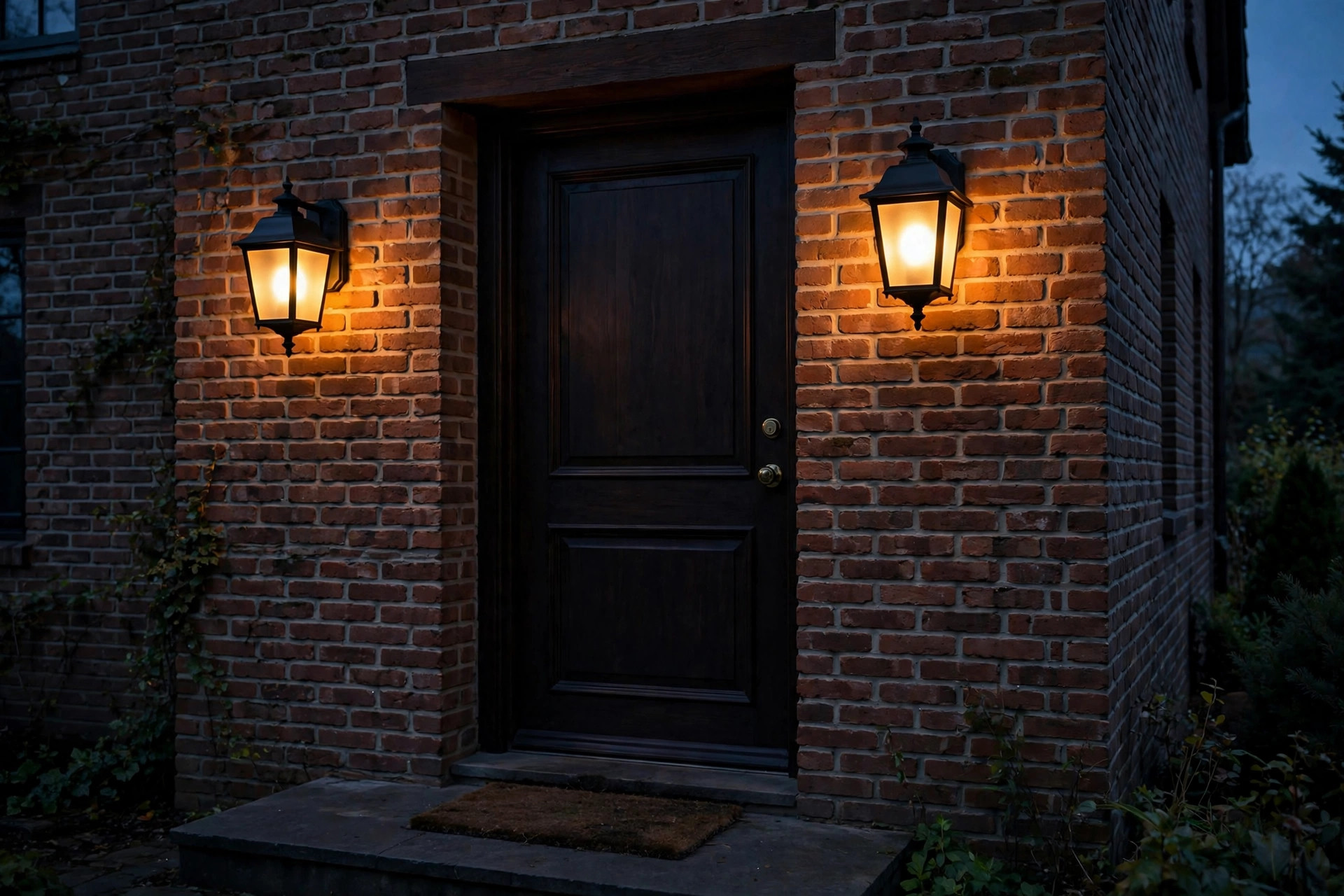

Many homes sit dark after sunset. A dark entry makes guests pause at the steps. It also makes a house look empty, even when it is not. Light at the door solves both problems at once. This guide covers low maintenance outdoor wall lanterns for sale. These fixtures mount to the wall beside doors, on garages, and around patios. They light the way and look tidy for years. You do not need to paint them, oil them, or fuss with them each season. The sections below explain why they matter, what to look for, what types you can buy, what they cost, and how to keep them working. Safety notes and answers to common questions close the piece.
Why It Matters
Light at the front door does quiet, steady work. It lets you see the lock before you reach for the key. It shows guests where the step ends and the porch begins. It helps delivery drivers find the house number in the dark. These small things add up every evening.
A lit entry also helps with safety. Homes with dark corners invite trouble. A thief prefers shadow. A bright wall lantern makes the doorway visible from the street. Neighbors and passing cars can see the front of the house. That alone discourages many problems.
Curb appeal is another gain. Real estate agents have said for years that lighting sells homes. A warm lantern glow makes a house look cared for. It frames the front door, which is the first thing a visitor notices. Buyers and guests form an opinion in seconds. Light gives them a good one.
Low maintenance designs add one more point: they save time. Old fixtures needed new paint, new glass, and fresh bulbs often. Modern wall lanterns use sealed parts and long-life bulbs. Many need no more than a wipe with a cloth once a year. For busy owners, that is the whole point of shopping for low maintenance outdoor wall lanterns for sale instead of plain cheap lights.
What to Look For: Low Maintenance Outdoor Wall Lanterns for Sale
Not every lantern earns the “low maintenance” label. The details below separate the good buys from the short-lived ones.
The Housing Material
Die-cast aluminum is the common choice for long life. It resists rust and costs less than brass or copper. Steel housings are cheaper still, but they can rust where paint chips. Composite resin lanterns never rust at all. They feel light, and they hold up well in rain. If you live near the sea, choose marine-grade or powder-coated aluminum. Salt air eats cheap metal fast.
The Finish
A baked powder-coat finish beats plain paint. It bonds to the metal in heat and resists chips. Dark bronze, matte black, and charcoal hide dust and water spots. Polished or brushed finishes look smart but show marks sooner. Read the product page for the words “weather resistant” or “corrosion resistant.” These terms mean the maker tested the finish outdoors.
The Lens and Glass
Frosted glass or polycarbonate lenses spread light softly and hide dirt. Clear glass shows fingerprints and water marks faster. Sealed lens units keep insects out of the housing. Bugs love porch light, and a sealed fixture keeps them from filling the globe. That one feature cuts cleaning in half.
The Light Source
Integrated LED lanterns lead the field for low upkeep. The diode is built in and rated for 25,000 to 50,000 hours. That can mean 10 to 20 years of normal evening use. You never change a bulb. Models with replaceable bulbs give you more choice, and LED bulbs last for years too. Avoid old-style incandescent fixtures if you want low maintenance. They burn out often and waste power.
The Size and Scale
A lantern that is too small looks lost on a big wall. As a rule, the fixture should be about one-third the height of the door. For a standard 6-foot-8 door, look for lanterns 10 to 14 inches tall. Wide garages need larger fixtures or pairs. Match the lantern to the house, not just to the price tag.
Types and Options
Shoppers will meet three main types of outdoor wall lanterns. Each suits a different home and wiring setup.
Hardwired Lanterns
These connect to the home’s electrical box at the wall. They turn on with a wall switch, a timer, or a dusk-to-dawn sensor. Hardwired models give the steadiest light and the widest choice of styles. They are the best pick when a fixture box already exists by the door. An electrician can add a box where one is missing. The work costs more up front, but the result is clean and permanent. Most professional grade exterior lighting fixtures in this class mount to a standard junction box in minutes.
Solar Wall Lanterns
Solar models carry a small panel that charges a battery by day. They need no wiring at all. You hang them on a screw or bracket and let the sun do the work. They suit fences, sheds, and spots far from the house. The trade-off is brightness. Most solar lanterns glow softer than wired ones. They also dim on cloudy stretches. Newer panels and lithium batteries have improved this. Still, for a main entry, wired light remains the stronger choice.
Motion Sensor Lanterns
These stay dim or off until movement trips the sensor. Then they flash to full brightness. They save power and surprise no one at the door. Many owners pair a sensor lantern at the garage with steady lanterns at the front door. Look for adjustable range and time settings. A sensor that trips at every passing car will annoy the street.
Style Notes
Lantern styles range from colonial to modern farmhouse to clean modern lines. Black gooseneck barn lights suit country homes. Glass-pane carriage lanterns fit older brick colonials. Slim rectangular boxes match new construction. The finish and shape should echo the home’s other hardware, like the house numbers and the door handle. A matched set reads as one design, not a pile of parts.
Cost and Price
Prices for low maintenance outdoor wall lanterns for sale fall into clear bands. Knowing them keeps your budget honest.
Budget models run from about 25 to 60 dollars. These are often resin or thin aluminum with basic finishes. They work, but expect shorter life. Many store brands live in this band. Shoppers comparing prices can browse large selections at The Home Depot and Lowe’s to see how store brands stack against name brands.
Mid-range lanterns cost 60 to 150 dollars. This is the sweet spot for most homes. You get die-cast aluminum, powder-coat finishes, sealed lenses, and integrated LEDs. Warranties run three to five years. Most buyers in this band buy once and stop thinking about the fixture.
Premium models run 150 to 400 dollars and more. Solid brass, copper, and hand-finished pieces live here. They age into a patina and can last decades. Copper lanterns slowly turn green-brown, which many owners love. These suit high-end homes and historic renovations.
Add labor to the math if you need wiring. An electrician may charge 100 to 250 dollars to add or move a fixture box. Solar models skip that cost entirely. Also check the price of the whole wall, not just the light. A new lantern on worn siding still looks tired. If the siding needs work, an insulated vinyl siding price guide can help you plan the larger project before you pick the fixture.
Care and Upkeep
Even low maintenance fixtures need a little attention. A short routine each year keeps them bright.
Wipe the lens with a damp cloth in spring. Dust and pollen cut light output over months. A soft cloth and mild soap are enough. Never use harsh cleaners on powder-coat finishes. They can dull the surface.
Check the seals each fall. Look for cracked gaskets where the lens meets the housing. A failed seal lets water in, and water kills electronics. Replacement gaskets are cheap. Many makers sell them as small parts kits.
Trim plants away from the fixture. Bushes that press against a lantern hold moisture on the finish. They also block the light. Keep a clear gap of six inches or more.
For hardwired units, check the mounting screws once a year. Houses settle, and screws loosen. A firm mount keeps water from running behind the fixture and into the wall.
Solar owners should clean the panel with a damp cloth every few months. A dusty panel charges poorly. Replace the rechargeable battery every two to three years, or when nights grow dim. Most models use a standard battery size.
Dusk-to-dawn sensors need a clear view of the sky. A sensor blocked by an eave may never trigger. Aim the sensor eye away from the lantern’s own glow, or it may flicker on and off. Guides at The Spruce and Bob Vila walk through common sensor fixes with plain step lists.
Safety
Outdoor electrical work deserves respect. Turn off the breaker before you touch any wiring. Test the wires with a non-contact tester. If you are not sure, hire an electrician. A wrong connection can start a fire inside the wall.
Use only fixtures rated for outdoor use. The box will say “wet location” or show a UL or ETL mark. Wet-location ratings mean the fixture can take direct rain. Damp-location models suit covered porches only.
Keep the bulb wattage at or below the fixture rating. With LEDs this is rarely a problem, since they draw little power. Still, check the label.
Mount the lantern at the right height. The center of the fixture should sit about 66 inches above the porch floor, or just above eye level. Too low, and it blinds guests. Too high, and it throws shadows on the steps. When lighting steps and rails, pair the lantern with solid hardware; a guide to exterior stair railings helps you match the rail to the light.
For renters and new buyers, note that some neighborhoods have rules about light spill. A shielded lantern points light down, not into the neighbor’s window. Full cutoff designs please most codes.
Frequently Asked Questions
How long do low maintenance outdoor wall lanterns last?
Integrated LED models often last 10 to 20 years of normal use. The LED itself is rated in tens of thousands of hours. The finish may fade first. Powder-coated aluminum holds color well, but strong sun will wear any finish over time.
Can I install a wall lantern myself?
If a wired box already exists, many owners do it themselves in under an hour. Turn off the breaker, connect matching wires, and mount the bracket. If no box exists, or the wiring looks old, call an electrician. This Old House and Family Handyman both publish careful wiring walk-throughs for readers who want to learn the steps first.
Are solar lanterns bright enough for a front door?
They are fine as accent light, but most fall short as the only entry light. For a main door, choose a wired LED lantern. Use solar units for side gates, sheds, and garden walls where soft light is enough.
What does “dusk to dawn” mean on a lantern?
It means a built-in sensor turns the light on at sunset and off at sunrise. You leave the wall switch on. The fixture handles the rest. This is the most hands-off setting, and it fits the low maintenance idea well.
Do I need two lanterns or one?
One lantern suits a narrow entry or a single garage door. Wide entries and double garage doors look better with a pair, one on each side. Symmetry reads well from the street. For very wide facades, add a third over the center.
Will a lantern work on any siding?
Yes, with the right mounting block. Lanterns mount fine on brick, stucco, wood, and vinyl siding. Vinyl needs a mounting block so the fixture sits flat. Makers like James Hardie and CertainTeed publish mounting details for their siding systems that keep water out of the wall.
A Short Final Word
A wall lantern is a small purchase that pays back every night. It lights the lock, steadies the step, and warms the face of the house. Low maintenance models ask almost nothing in return. Pick a sealed LED fixture in a baked finish, size it to the door, and mount it at eye level. Clean the lens once a year and leave the rest to the fixture. Shoppers who start with low maintenance outdoor wall lanterns for sale and follow these basics will buy once and enjoy the glow for years.
References
Bob Vila. (n.d.). Home improvement advice. https://www.bobvila.com CertainTeed. (n.d.). Building materials and exterior products. https://www.certainteed.com Family Handyman. (n.d.). DIY home repair and maintenance. https://www.familyhandyman.com James Hardie. (n.d.). Fiber cement siding and exterior products. https://www.jameshardie.com Lowe’s. (n.d.). Home improvement products. https://www.lowes.com The Home Depot. (n.d.). Home improvement products. https://www.homedepot.com The Spruce. (n.d.). Home and garden advice. https://www.thespruce.com This Old House. (n.d.). Home renovation guidance. https://www.thisoldhouse.com
Was this guide helpful?

About Lisa Anderson
The My Garden US editorial team writes practical, in-depth home and garden guides for American homeowners — tested advice, no fluff.
You May Also Like
How to Read Top Rated Deck Building Contractors Reviews Before You Hire
June 10, 2026 0 views
Brick Veneer Siding Reviews and Buying Guide
February 1, 2026 0 views
Budget Friendly Fiber Cement Siding Panels Buying Guide
August 22, 2026 0 views