
Stairs get risky when the cold sets in. A thin coat of ice can turn two or three steps into a hazard. Budget friendly exterior stair railings for cold climates give you a safe handhold without a big bill. A rail costs far less than a hospital visit. This guide shows which materials stand up to freeze and thaw, what to look for when you shop, how much each option costs, and how to keep the rail in good shape year after year.
Why Railings Matter More in Cold Weather
A stair rail is a safety tool. In warm months it helps guests and older family members keep their balance. In winter it becomes vital. Frost forms on step edges first. Snow hides the lip of a tread. A person who slips on the top step has nothing to grab without a rail.
Local building codes often require a handrail when stairs have four or more risers. Check your town rules before you build. The Consumer Product Safety Commission offers plain advice on home fall safety that is worth a look.
A rail also protects your house value. Buyers in northern states notice entry stairs right away. A solid, straight rail tells them the home was cared for. That is a small win that pays back when you sell. Good upkeep habits around the whole exterior matter too, from gutters to siding; if you are sprucing up the outside anyway, see our guide on weather resistant soffit and fascia repair for homeowners.
What to Look for in a Cold-Climate Railing: Budget Friendly Exterior Stair Railings for Cold Climates
Cold is hard on outdoor building parts. The same freeze and thaw cycle that cracks roads will crack a cheap rail. Keep these points in mind as you shop.
Freeze and thaw strength. Water seeps into small cracks. It freezes and expands. That split grows each winter. Wood must be treated or painted to block water. Metal must be coated so it does not rust where the paint wears off.
Grip in gloves. You will use this rail with gloves on. A thin round rail is easy to grip through a thick mitten. A wide flat rail is not. Aim for a rail that is one and a quarter to two inches wide at the grip.
Rust and corrosion resistance. Salt from driveways and road spray reaches porch stairs. It eats plain steel. Pick galvanized steel, aluminum, or vinyl-clad metal. Each resists salt far better than raw iron.
Simple mounts. Wall mounts and post mounts take the load. In cold ground, posts can heave when the soil freezes. Surface-mount brackets on the stair stringer or the house wall move less. Choose kits with heavy brackets and lag bolts.
Low upkeep. The best budget pick is the one you do not have to repaint each spring. Look for factory-applied finishes with long warranties. A ten-year warranty on a rail finish is a good sign.
Types of Budget-Friendly Railings That Handle Winter
Galvanized Steel Pipe Railings
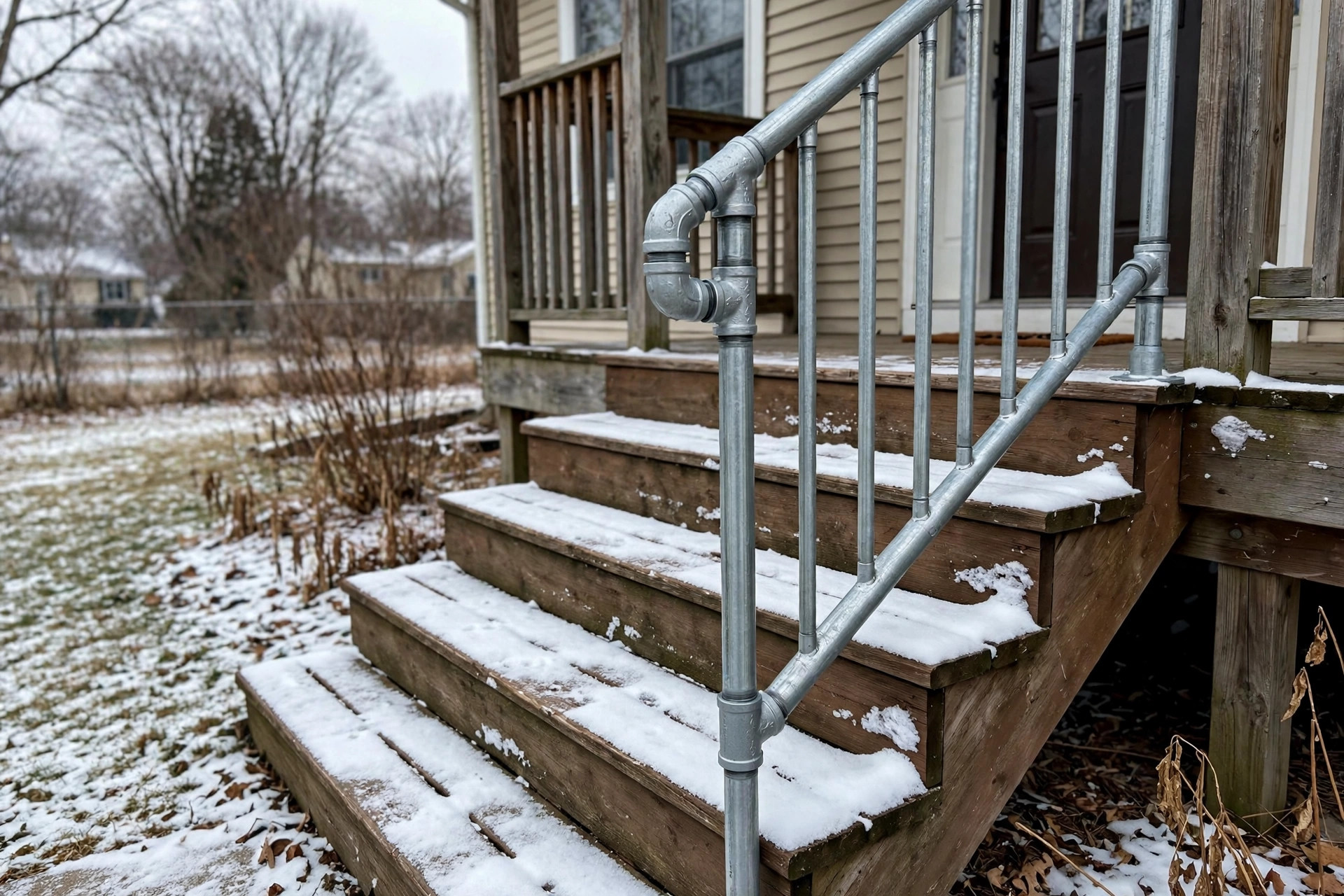
Galvanized steel is the workhorse of cheap exterior railings. The zinc coat keeps rust away. Pipe kits come in set lengths with elbows and wall brackets. A handy homeowner can install one in an afternoon with a drill and a wrench.
These rails look plain. That is their charm. They suit farmhouses, older colonials, and rental properties. Paint them any color with rust-proof paint if you want a warmer look. Cost per linear foot is among the lowest of all choices. Details on steel railing kits are easy to find at big home stores like Home Depot and Lowe’s.
Aluminum Railings
Aluminum is light and never rusts. It is a fine pick for cold climates because it does not crack in the freeze cycle. Pre-cut rail kits cost more than steel pipe but less than wood built from scratch. The parts click or screw together with no welding.
Aluminum feels thinner than steel. Pick a rail with a full one-and-a-half-inch top rail so the grip feels firm. Powder-coated finishes in white or black last for years with no repaint.
Pressure-Treated Wood Railings
Wood is still the cheapest way to build a rail if you own a saw. A pressure-treated two-by-four rail on wood posts can be built for very little money. It matches wooden porches and decks.
Wood needs work. It must be sealed or painted, and the finish must be renewed every two to four years. In harsh winters, wood can check and splinter. Sand rough spots each spring. Wood railings suit owners who do not mind a weekend of upkeep now and then. For project ideas and step-by-step methods, Family Handyman and This Old House both publish clear guides.
Vinyl and Composite Railings
Vinyl railings wrap a metal or wood core in plastic. The surface sheds snow and ice. You never paint them. They cost more up front than wood but save money over time.
Cheap vinyl can grow brittle in deep cold. Buy railings rated for northern use. Ask the seller about the cold-temperature rating before you order. In mild cold zones they perform well.
Cable and Wrought-Iron Styles
Cable railings look modern but cost too much for a tight budget. Save them for a deck project with more funds. Basic wrought-iron-look railings made from steel tube give the classic feel at a lower price. Make sure they are powder-coated, not just painted, so the coat lasts through salt and snow.
Cost and Price Guide
Prices below are typical for the United States in 2026. Labor costs vary by town.
– Galvanized steel pipe kit: $15 to $40 per linear foot for parts. A simple two-step rail kit can cost under $100 total. – Aluminum rail kit: $30 to $80 per linear foot for parts. – Pressure-treated wood: $10 to $25 per linear foot for lumber, plus brackets and screws. – Vinyl rail kit: $40 to $90 per linear foot for parts. – Professional install: adds $200 to $600 per rail section, depending on length and mount type.
Do-it-yourself work cuts the bill in half or more. A wall-mounted pipe rail on two steps is a fine first project. Longer runs or rails set in concrete posts may be worth hiring out. If you are planning other exterior work at the same time, such as a roof, read our metal roofing installation cost guide usa to budget the whole job.
Watch for sales at the end of the building season. Stores clear rail kits in fall. Buying off-season can save 20 percent or more. Also compare prices online before you drive to the store.
Installation Tips for Cold Climates
Mount above the frost line of worry. Posts set in soil can heave in winter. If you must set posts, dig below your local frost depth and use concrete footings. A wall-mounted rail avoids the problem entirely.
Angle the rail right. The top of the rail should sit 34 to 38 inches above the step nose, measured straight up. Keep that height steady along the slope of the stairs.
Leave room for snow. Do not mount the rail so close to the steps that shoveled snow piles against it. Give the shovel a clear path.
Use coated fasteners. Galvanized or stainless lag bolts resist rust. Cheap zinc screws streak rust down the rail in one winter.
Seal every hole. When you drill into wood, dab sealer or caulk into the hole before you set the bolt. Water that enters a bare hole will freeze and split the wood.
Mind the returns. Rails should return into the wall or post at the ends. An open rail end can catch a coat or bag. Most kits include return elbows.
Cold-weather homes lose a lot of heat through weak spots, and entry areas are no exception; the U.S. Department of Energy has free guides on sealing air leaks around doors and entries, which pair well with a stair project. And if your entry project grows into new windows, our budget friendly vinyl replacement windows buying guide can help you keep costs down.
Care and Upkeep Through the Winter
A little care each season keeps a cheap rail safe for a decade.
Fall: Tighten all bolts before the first freeze. A loose bracket will work looser as ice forms behind it. Brush off leaves that hold moisture against the rail base.
Winter: Knock ice off the rail gently. Do not hit it with a metal shovel. Use a plastic scraper or warm water. Keep de-icer off the rail where you can. Salt sprays corrode even coated metal over time.
Spring: Wash the rail with soap and water. Look for rust spots, loose mounts, and cracked paint. Touch up paint on steel right away. Sand splinters on wood rails and reseal them.
Summer: This is the season for bigger jobs. Repaint wood rails. Replace worn brackets. Check that posts still stand plumb after the spring thaw.
Vinyl and aluminum need only the wash. That is their main selling point for busy owners.
Safety Notes
A rail is only as safe as its build. Follow these rules.
– One rail is the minimum. Two rails, one on each side, are better for wide stairs. – Keep the gap under the rail small enough that a child cannot slip through. Most codes call for gaps under four inches. – Never use a rail as a ladder tie-off or a bike lock point. The extra load can loosen mounts. – Light the stairs. A rail helps the hand, but the eye needs to see the step edge. A simple motion-sensor light near the door is cheap and works well. – Teach children and guests to use the rail in icy weather. Habits save more falls than hardware.
Bob Vila’s site carries many reader-tested how-to pieces on exterior stair projects, and The Spruce has clear explainers on stair safety basics.
Frequently Asked Questions
What is the cheapest exterior stair railing for cold climates? A galvanized steel pipe rail kit is usually the cheapest ready-made choice. It resists rust, handles freeze and thaw, and installs with basic tools. Pressure-treated wood can be cheaper if you build it yourself and already own the tools.
Will a metal railing feel too cold to grip in winter? Bare metal does feel cold. Wear gloves, as most people do in winter. Vinyl-clad and wood rails feel warmer to the touch. A dark powder-coated rail also warms a bit in winter sun.
Can I install a stair railing myself? Yes, for simple wall-mounted rails on two to four steps. You need a drill, a level, a tape measure, and the kit hardware. Follow the kit instructions and your local code for height and strength. Hire a pro for long runs or rails set in concrete.
How long does a budget railing last in a cold climate? Galvanized steel and aluminum last ten to twenty years with light care. Pressure-treated wood lasts eight to twelve years if you reseal it on schedule. Vinyl lasts fifteen years or more but costs more at the start.
Do I need a permit to add a stair railing? Many towns require a permit for exterior stair work. Rules differ by place. Call your local building office before you start. It is a short call and it keeps you clear of fines.
What keeps ice off stair rails? No rail stays ice-free on its own. Knock ice off with a plastic scraper. Keep the rail painted or coated so ice bonds less. Good drainage under the stairs helps too, since standing water becomes ice.
A Short Final Word
You do not need a big budget to make stairs safe in winter. A simple galvanized pipe rail or a pressure-treated wood rail does the job when it is chosen and mounted with cold weather in mind. Spend your money on strong mounts, rust-proof fasteners, and a finish that stands up to salt. Do the small upkeep each fall and spring. Your stairs will stay safe, and your wallet will stay full.
For more exterior know-how, makers like James Hardie and CertainTeed publish maintenance guides for siding and trim that sit beside any stair project.
References
Bob Vila. (n.d.). Home improvement advice. https://www.bobvila.com CertainTeed. (n.d.). Building materials and exterior products. https://www.certainteed.com Family Handyman. (n.d.). DIY home repair and maintenance. https://www.familyhandyman.com James Hardie. (n.d.). Fiber cement siding and exterior products. https://www.jameshardie.com Lowe’s. (n.d.). Home improvement products. https://www.lowes.com The Home Depot. (n.d.). Home improvement products. https://www.homedepot.com The Spruce. (n.d.). Home and garden advice. https://www.thespruce.com This Old House. (n.d.). Home renovation guidance. https://www.thisoldhouse.com U.S. Consumer Product Safety Commission. (n.d.). Product safety information. https://www.cpsc.gov U.S. Department of Energy. (n.d.). Energy efficiency and renewable energy. https://www.energy.gov
Was this guide helpful?

About Robert Taylor
The My Garden US editorial team writes practical, in-depth home and garden guides for American homeowners — tested advice, no fluff.
You May Also Like

Top Rated Fiber Cement Siding Panels Buying Guide
April 26, 2026 0 views
Professional Grade Outdoor Security Cameras With Free Shipping: A Buyer’s Guide
March 19, 2026 0 views
Top Rated Brick Veneer Siding for Texas Homes
January 17, 2026 0 views