
Why a Good Cleaning Caddy Matters
A cleaning caddy is a simple tool, but it changes the way you clean. This commercial grade all purpose cleaning caddies buying guide starts with that truth. A weak caddy cracks, tips over, or falls apart in a few months. A strong one lasts for years. It carries heavy bottles without bending. It keeps chemicals upright so they do not spill. It saves time because everything is in one place.
Commercial grade caddies are built for daily work. Janitors use them. Housekeeping crews use them. Busy homeowners use them too. The plastic is thicker. The handle is stronger. The compartments are deeper. When you buy one, you buy fewer replacements. That saves money over time.
If you clean a home, an office, or a rental unit, a good caddy is one of the best small purchases you can make. This guide shows what to look for, what kinds exist, what they cost, and how to keep them in good shape.
What a Commercial Grade Cleaning Caddy Is: Commercial Grade All Purpose Cleaning Caddies Buying Guide
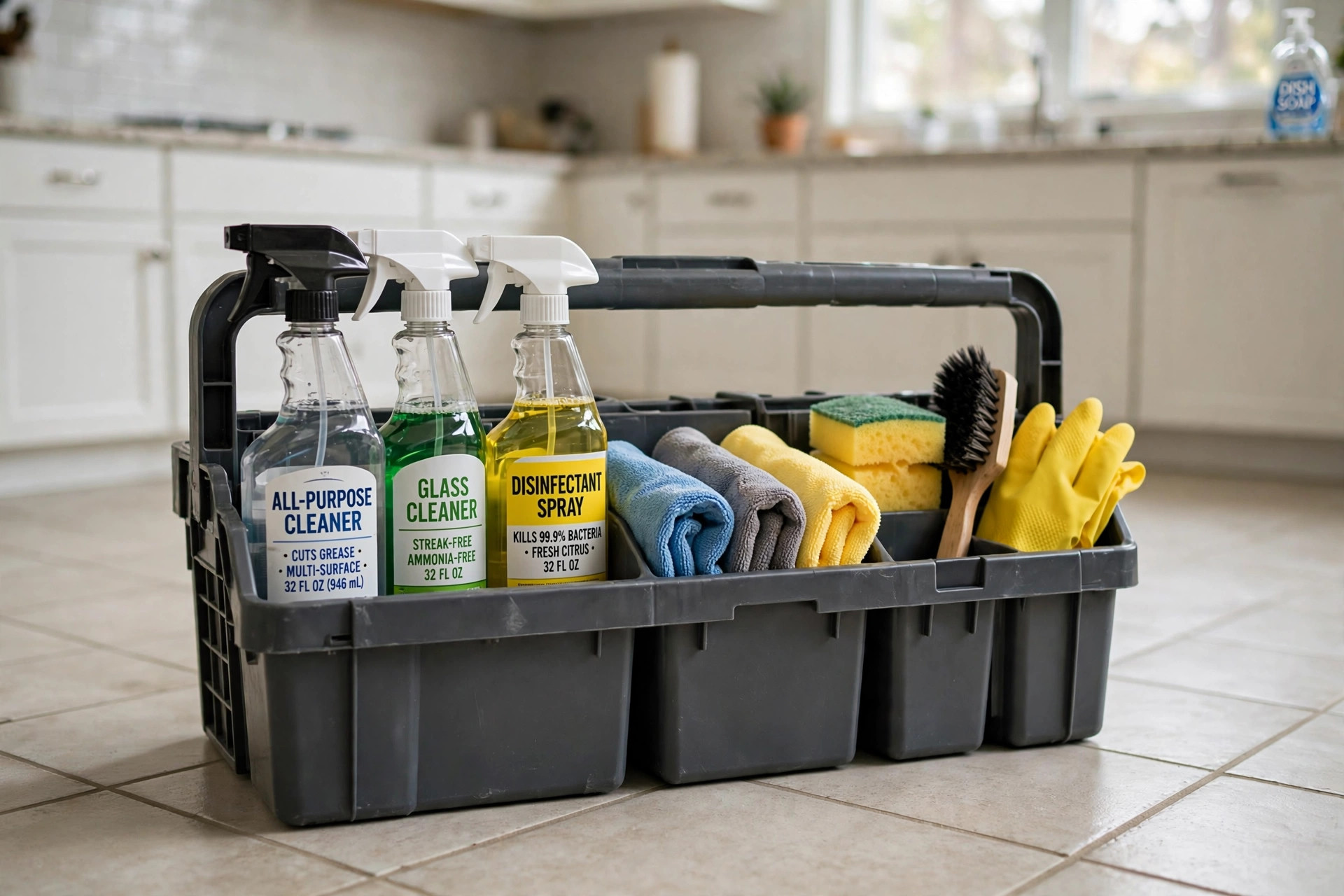
A cleaning caddy is a portable carrier for cleaning supplies. It has a handle on top and open sections below. You fill it with spray bottles, sponges, brushes, and cloths. You carry it from room to room. Everything you need is at your side.
Commercial grade means the caddy is made for heavy use. The walls are thicker than a store-brand caddy. The handle is tested for weight. The base is wide so it does not tip. Many models resist harsh chemicals. They do not warp when bleach or strong cleaners spill on them.
These caddies are common in hotels, schools, hospitals, and offices. They are also a good choice for anyone who cleans often at home.
Types of Cleaning Caddies
Plastic Caddies
Plastic caddies are the most common. They are light, cheap, and easy to wash. High-density polyethylene holds up well to chemicals. Look for thick walls and a wide base. Cheap plastic caddies crack at the handle. Good ones do not.
Heavy Duty Caddies with Dividers
These have built-in dividers that create separate sections. Each section holds a bottle or tool. Dividers keep tall bottles from tipping. They also keep wet sponges away from dry cloths. Many professional models have a large center section for tall spray bottles.
Large Carry Caddies and Buckets
Some caddies are bucket style. They have a round or square shape with a deep well. These hold more supplies. They can also carry water. The handle is often padded for comfort. Bucket caddies work well for floor work and large jobs.
Tool and Apron Style Caddies
Some cleaners prefer a caddy that hangs on a belt or fits in an apron. These are small and hold just a few bottles. They are good for quick jobs. For full house cleaning, a larger carry caddy is better.
Rolling Caddies
Rolling caddies have wheels and a tall handle. They are best for big buildings. You push them down hallways instead of carrying them. They hold many bottles and tools. For a home, a rolling caddy may be more than you need.
How to Choose the Right Caddy
Size and Capacity
Think about what you carry. Count your bottles. Most all purpose cleaners need room for four to six spray bottles. Add space for sponges, brushes, and gloves. A caddy that is too small forces you to make extra trips. A caddy that is too large is heavy to carry.
Measure your tallest bottle. It should stand upright in the caddy with room to spare. Tall bottles that stick out too far will tip when you walk.
Material Strength
Pick a caddy made of thick, rigid plastic. Squeeze the walls. If they flex a lot, the caddy is weak. Check the handle joint. That is where cheap caddies break first. The handle should feel solid when you lift a full load.
Chemical resistance matters. Strong cleaners can eat cheap plastic. Look for labels that mention chemical resistance. A caddy that resists bleach and solvents will last much longer.
Handle Design
A good handle makes a big difference. It should be wide enough for a comfortable grip. Some handles have a soft coating. This helps when the caddy is heavy. The handle should be centered so the caddy balances when you lift it.
Compartments and Layout
Open caddies with a few dividers work well for most people. You want to see everything at a glance. Deep sections hold tall bottles. Shallow sections hold small tools. A caddy with at least one deep well is best for spray bottles.
Stability
Set the caddy down and press on the edge. It should not tip easily. A wide flat base is best. Narrow caddies fall over on stairs and uneven floors. Rubber feet add grip on tile and hardwood.
Weight
The caddy itself should be light. You will fill it with heavy bottles. A heavy empty caddy just adds to the load. Plastic models weigh less than metal ones and still hold up well.
Cost and Price
Prices for commercial grade all purpose cleaning caddies fall in a clear range. Simple plastic caddies cost between ten and twenty dollars. These are fine for home use. They last a few years with regular care.
Mid range caddies cost between twenty and forty dollars. These have thicker walls, better handles, and smart dividers. Most professional cleaners use caddies in this range. They are the best value for most buyers.
Heavy duty and rolling caddies cost between forty and ninety dollars. These are built for daily commercial work. They hold more and last longer. If you clean for a living, this is where to look.
Buy once and buy well. A twenty five dollar caddy that lasts five years costs less than a ten dollar caddy that breaks every year. Compare prices across stores before you buy. Online and local prices can differ a lot.
Watch for bulk packs if you outfit a crew. Some sellers offer sets of three or six caddies at a lower price per unit. That can cut costs for a small business. Check shipping costs too. Large caddies are bulky and some sellers charge extra freight. Factor that into the true price.
Do not pay extra for gimmicks. Fancy colors and brand names do not make a caddy stronger. Focus on wall thickness, handle design, and chemical resistance. Those are the features that matter in daily use. A plain strong caddy always beats a fancy weak one.
Filling Your Caddy: What to Put in It
A well stocked caddy makes cleaning faster. Most cleaners carry these basics:
– All purpose spray cleaner – Glass and mirror cleaner – Bathroom cleaner – Disinfectant spray or wipes – Microfiber cloths – Sponge or scrub pad – Small brush for grout and corners – Gloves – Trash bags
Keep heavy bottles in the center. Put light items on the sides. This keeps the caddy balanced. Wipe up spills right away. Dried cleaner can stain the plastic.
Replace sponges and cloths on a regular schedule. A worn sponge holds germs. It also cleans less well. Keep a few fresh microfiber cloths in the caddy at all times. They pick up dust and polish surfaces without streaks. Fold them flat so they stack neatly in one section.
Do not overload the caddy. A heavy caddy is hard to carry up stairs. It also puts stress on the handle. If you need more than six bottles, make two trips or use a rolling caddy. Your back and your handle will thank you. Label any bottle you pour into a plain container. Never guess what is inside an unlabeled bottle.
For tips on choosing cloths and tools to pack in your caddy, see our guide to microfiber cleaning cloth sets price comparison usa and our wet dry shop vacuums reviews and buying guide for bigger messes. If you want help picking a scrubber to go with your caddy, read our cordless electric scrubbers price comparison usa.
Care and Upkeep
A commercial grade caddy needs little care. Rinse it out after each use if cleaners spill inside. Dried chemicals can weaken plastic over time. A quick rinse with warm water is enough.
Wash the caddy once a week with soap and water. Let it air dry. Do not leave it in a hot car for long. Heat can warp plastic over time.
Check the handle joint every few months. If it feels loose, tighten any screws. If the handle is molded and cracks, it is time for a new caddy. Inspect the base for cracks. A cracked base can split and spill everything.
Store the caddy in a cool, dry place. Keep it out of direct sun when not in use. Sunlight breaks down plastic over years. A simple storage closet works fine.
Safety
Cleaning supplies can be dangerous if mixed. Never pour cleaners together in the caddy. Keep each bottle in its own original container with its label. The label tells you what to do if there is a spill or splash.
Bleach and ammonia must never mix. The fumes can harm your lungs. Keep these bottles apart in the caddy. Make sure the caps are tight before you carry it.
Wear gloves when you handle strong cleaners. Keep the caddy away from children and pets. Store chemicals high or in a locked cabinet. Read the safety labels on every bottle you carry.
The EPA offers clear guidance on safe use of household cleaning products. It is worth reading before you stock your caddy.
Frequently Asked Questions
What is the best material for a commercial grade cleaning caddy?
Thick high-density polyethylene is the best choice for most users. It is light, strong, and resists chemicals. It does not rust. It is easy to wash. Avoid thin plastic. It cracks at the handle under a full load.
How many bottles should a cleaning caddy hold?
Most good caddies hold four to six standard spray bottles. That is enough for a full home cleaning kit. Larger bucket caddies hold more. Count your bottles before you buy and make sure they all fit standing upright.
Are commercial grade caddies worth the extra cost?
Yes. They last much longer than cheap caddies. A strong caddy carries heavy loads without cracking. It stays stable on floors and stairs. Over two or three years, one good caddy costs less than replacing cheap ones.
Can I use a cleaning caddy for car detailing?
Yes. Many people use cleaning caddies for car care. The same design works well. Load it with interior cleaner, glass cleaner, and microfiber towels. Just wash it out before switching between home and car supplies.
How do I clean a stained caddy?
Wash it with warm soapy water and a brush. For stubborn stains, soak it for a few minutes. Rinse well and let it air dry. Avoid harsh solvents on the plastic. They can weaken it over time.
Where should I buy a commercial grade cleaning caddy?
Check home improvement stores and janitorial supply shops. Online stores have a wide range too. Read reviews before you buy. Look for comments about handle strength and bottle fit. Guides from Consumer Reports and The Spruce can help you compare models.
A Short Final Word
A commercial grade all purpose cleaning caddy is a small tool with a big payoff. Pick one with thick plastic, a strong handle, and a stable base. Stock it with the basics. Keep it clean and dry. It will serve you well for years.
Good tools make hard work easier. This is one of the simplest upgrades you can make to your cleaning routine.
For more background, see Bob Vila, Family Handyman, and This Old House. See Good Housekeeping for more detail. See also Target for further detail.
References
Bob Vila. (n.d.). Home improvement advice. https://www.bobvila.com Consumer Reports. (n.d.). Product reviews and ratings. https://www.consumerreports.org Family Handyman. (n.d.). DIY home repair and maintenance. https://www.familyhandyman.com Good Housekeeping. (n.d.). Product reviews and home advice. https://www.goodhousekeeping.com Target. (n.d.). Retail store. https://www.target.com The Spruce. (n.d.). Home and garden advice. https://www.thespruce.com This Old House. (n.d.). Home renovation guidance. https://www.thisoldhouse.com U.S. Environmental Protection Agency. (n.d.). Protecting human health and the environment. https://www.epa.gov
Was this guide helpful?

About Lisa Anderson
The My Garden US editorial team writes practical, in-depth home and garden guides for American homeowners — tested advice, no fluff.
You May Also Like

Budget Friendly Shower Door Descalers With Free Shipping
June 6, 2026 0 views
Cordless Grill Cleaning Brushes for Sale: A Practical Guide
February 14, 2026 0 views
Commercial Grade Gutter Cleaning Tools With Free Shipping: A Plain Buyer’s Guide
April 21, 2026 0 views