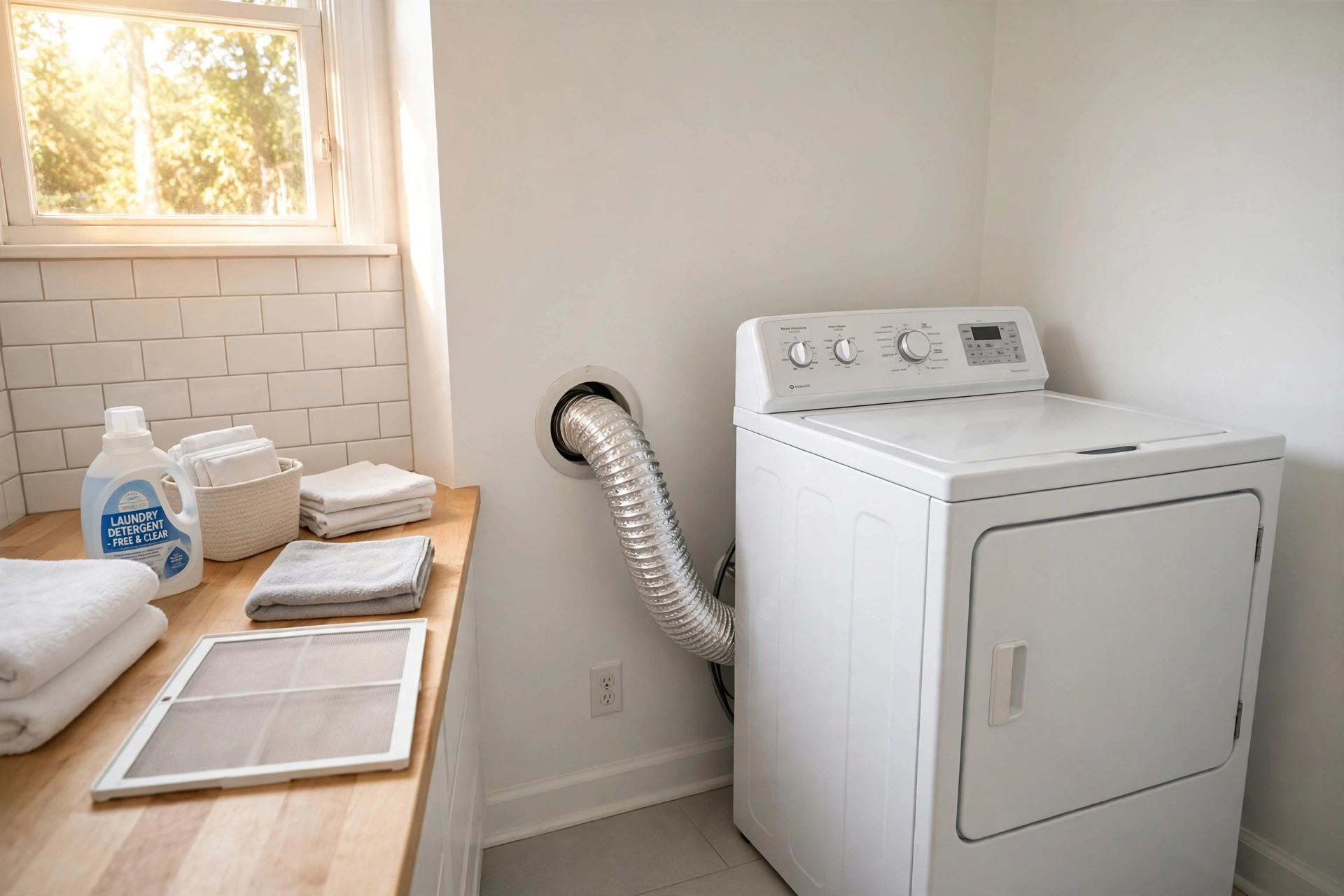

A clothes dryer is one of the hardest working machines in a home. It runs for hours each week, pushes out heat, and collects lint with every load. Over time, that lint builds up inside the vent duct. Quiet dryer vent cleaning services for homeowners remove this hidden buildup while keeping noise low and disruption small. The result is a dryer that dries faster, runs cooler, and poses less risk to the house.
Many people do not think about the vent at all. The dryer still works, so they assume all is well. But a slow dryer is often the first warning sign. Clothes take two cycles to dry. The laundry room feels warmer than it should. A musty smell drifts out when the machine runs. These are signs that air is not moving freely through the duct. A cleaning service clears the blockage and restores full airflow.
Why a Clean Dryer Vent Matters
The dryer vent carries hot, moist air from the machine to the outside of the house. As clothes tumble, tiny fibers break loose. Most are caught by the lint screen. The rest travel into the duct. Over months and years, they form a thick lining inside the vent pipe. This lining slows the flow of air.
When air cannot move, the dryer works harder. Heat builds up inside the drum. Drying times grow longer. Energy bills rise. The motor strains. Parts wear out sooner. A clogged vent can take years off the life of a dryer.
The more serious concern is safety. Lint is highly flammable. Heat from the dryer can ignite a heavy buildup of lint inside the vent. Fire safety experts warn that thousands of home fires each year begin with clothes dryers, and clogged vents are a leading cause. Regular cleaning is one of the simplest ways to reduce this risk. Reports from national fire safety authorities describe how quickly lint can catch fire when airflow is blocked. Federal product safety officials also track dryer-related incidents and publish guidance for safe dryer use.
Clean vents also save money. A free-flowing vent lets hot air escape fast, so clothes dry in a single cycle. This lowers electricity or gas use. Energy guidance from the U.S. Department of Energy notes that household appliances run best when their vents and filters are clear. Over a year, the savings from shorter drying times add up. Homeowners also avoid the cost of early dryer repairs or replacement.
What to Look For in a Quiet Service: Quiet Dryer Vent Cleaning Services for Homeowners
The word “quiet” matters more than it might seem. Dryer vent cleaning involves brushes, vacuums, and air compressors. Some of these machines are loud. For families with babies, pets, or people who work from home, a noisy service can be a real problem. A quiet service uses low-noise equipment and works with care to keep the house calm.
Low-Noise Equipment
Ask what tools the company uses before you book. Some technicians run high-powered compressors that roar like a leaf blower. Others use compact rotary brush systems with quiet vacuum motors. The quieter setups are just as effective. They spin flexible brushes through the vent while a vacuum pulls lint out. The noise level is closer to a household vacuum than to construction equipment.
A good company will tell you plainly what to expect. They should be able to describe their tools and how loud they are. If they cannot answer, that is a warning sign.
Professional Conduct
A quiet service is also a careful one. Technicians should move through the home without rushing. They should wear shoe covers, lay drop cloths, and clean up lint that falls during the work. Independent product testing and home service reviews often stress that the mark of a good contractor is how they treat the home, not just the job itself.
Check whether the company is licensed and insured in your state. Insurance protects you if anything is damaged. Experience matters too. A technician who has cleaned hundreds of vents will spot problems that a beginner might miss, such as a crushed duct or a bird nest at the outside cap.
Reviews and References
Read reviews from other homeowners. Look for comments about noise, cleanliness, and courtesy. One or two complaints are normal for any business. A pattern of complaints about mess or rudeness is not. Ask the company for references if you want more confidence. A long-standing local business should have happy customers willing to speak for it.
Types of Dryer Vent Cleaning Services
Not every cleaning job is the same. The right service depends on the age of your home, the length of your vent, and how long it has been since the last cleaning.
Standard Vent Cleaning
This is the most common service. The technician disconnects the dryer, brushes out the full length of the vent duct, and vacuums the lint away. They also clean the lint screen housing and the area behind the dryer. The outside vent cap is cleared of lint and debris. Most homes need this once a year. The visit usually takes less than an hour.
Deep Duct Cleaning and Inspection
Older homes or homes with long vents may need more. In a deep cleaning, the technician inspects the entire duct with a camera. They look for crushed sections, disconnected joints, and heavy grease buildup. Some vents run through walls or under floors, and these are harder to reach. The camera shows exactly what is going on inside. Home care guides recommend this level of inspection when a dryer has been slow for a long time.
Vent Repair and Replacement
Cleaning sometimes reveals damage. Flexible plastic or foil ducts can tear or sag. Some older homes still have smooth plastic hose, which is a fire hazard and should be replaced with rigid metal duct. A full-service company can make these repairs on the spot. This saves a second appointment and gets the vent back to safe condition at once. Do-it-yourself advice for homeowners often notes that rigid metal duct is the safest choice for dryer vents.
New Home and Move-In Checks
If you have just bought a house, the dryer vent may never have been cleaned. A move-in check is a smart idea. The technician clears the vent and confirms that the duct runs straight to the outside. Some vents are blocked by construction debris. Finding this early prevents problems from the start.
Cost and Price
The price of dryer vent cleaning depends on where you live and how complex the job is. For a standard cleaning in a single-story home, most homeowners pay between seventy-five and two hundred dollars. Longer vents, roof-top vents, and vents with heavy buildup cost more.
A deep cleaning with camera inspection adds to the price. This service often runs between one hundred fifty and three hundred dollars. Vent repairs are priced by the job. Replacing a short section of duct might cost fifty to one hundred dollars. A full vent replacement in a two-story home can cost several hundred.
Be wary of prices that seem too low. A twenty-dollar cleaning is unlikely to be thorough. The technician may only vacuum the lint screen and call it done. Ask exactly what the price includes. A fair written quote should list the services, the time expected, and any extra charges.
Some companies bundle vent cleaning with other home care work. A window cleaning service visit or a chimney sweep appointment can sometimes be combined for a discount. If you are already scheduling seasonal upkeep, ask about package deals. Homeowners who compare costs for window cleaning service companies often find that bundling routine services saves both time and money. The same logic applies to dryer vents and related chores like chimney sweep services, which share the goal of keeping home systems safe.
Care and Upkeep Between Visits
A professional cleaning resets the vent, but daily habits keep it clear longer. The simplest habit is to clean the lint screen after every load. This takes ten seconds and catches most fibers before they reach the duct. Wash the screen with soap and water every few months to remove invisible film from dryer sheets.
Do not overload the dryer. A packed drum traps heat and pushes more lint into the vent. Dry heavy items like towels and jeans separately from light clothes. This shortens drying time and reduces lint.
Check the outside vent cap twice a year. Make sure the flapper opens freely when the dryer runs. Clear away leaves, snow, and any nests. A blocked outside cap traps moist air inside the duct, which turns lint into a damp mat that is hard to remove.
Repair know-how for homeowners also points out that the space behind the dryer should stay clean. Lint collects there too. Pull the dryer out once a year, or have the technician do it during the cleaning, and vacuum the floor and walls behind it. A quality HEPA vacuum with a hose attachment works well for this task.
Safety
Dryer vent safety is not only about lint. Gas dryers produce carbon monoxide. A blocked vent can push this gas back into the home. Every home with a gas dryer should have a working carbon monoxide detector near the laundry area. Test it each month and replace the battery twice a year.
Never run the dryer when no one is home or while you sleep. This is the advice of fire officials everywhere. If a fire starts while the family is awake and present, it can be caught early. An unattended dryer gives a fire time to spread.
Keep the area around the dryer clear. Do not store cardboard, rags, or cleaning chemicals near the machine. These items add fuel if something goes wrong. Veteran builders and home renovation experts remind homeowners that laundry rooms need clear space for air to move around appliances.
If the dryer ever smells hot or burns, stop it at once. Unplug it if you can do so safely. Do not run it again until a technician has checked the vent. A burning smell is a warning that heat is building where it should not.
Frequently Asked Questions
How often should a dryer vent be cleaned? Most homes need a professional cleaning once a year. Households with large families, pets, or heavy laundry loads may need it twice a year. If you notice longer drying times or excess heat, schedule a visit sooner. Household cleaning experts agree that annual cleaning is the baseline for safety.
How long does a cleaning take? A standard cleaning usually takes forty-five minutes to one hour. Deep cleanings with camera inspection take longer, often up to two hours. The technician should not rush. Thorough work takes time.
Will the service be loud? A quiet service uses low-noise equipment, but some sound is unavoidable. Expect noise similar to a household vacuum. The loudest part is the brush spinning inside the vent, and it comes in short bursts. Ask the company about their tools when you book so there are no surprises.
Can I clean the vent myself? You can clean the lint screen and the short duct behind the dryer. Long vents, roof vents, and vents that run through walls are best left to professionals. Store-bought brush kits help, but they cannot match a professional vacuum system. Environmental guidance for homes also notes that indoor air quality improves when vents and ducts are maintained properly.
How do I know the vent is clogged? Common signs include clothes that need two cycles to dry, a hot laundry room, a burning smell, and the outside vent cap staying closed during a cycle. Excess lint around the dryer door is another clue. Any of these signs means it is time for a cleaning.
Does vent cleaning really save energy? Yes. A clear vent lets moist air escape quickly, so the dryer finishes in one cycle. Shorter cycles use less gas or electricity. Over a year, the savings can cover the cost of the cleaning.
A Final Word
A dryer vent is easy to forget and hard to ignore once it causes trouble. Quiet dryer vent cleaning services for homeowners take care of the job without noise, mess, or stress. Once a year, a careful technician clears the lint, checks the duct, and leaves the dryer running like new. The home is safer, the clothes dry faster, and the machine lasts longer. It is a small task with a large return, and every homeowner should have it on the calendar.
References
Bob Vila. (n.d.). Home improvement advice. https://www.bobvila.com Consumer Reports. (n.d.). Product reviews and ratings. https://www.consumerreports.org Family Handyman. (n.d.). DIY home repair and maintenance. https://www.familyhandyman.com Good Housekeeping. (n.d.). Product reviews and home advice. https://www.goodhousekeeping.com National Fire Protection Association. (n.d.). Fire safety information and codes. https://www.nfpa.org The Spruce. (n.d.). Home and garden advice. https://www.thespruce.com This Old House. (n.d.). Home renovation guidance. https://www.thisoldhouse.com U.S. Consumer Product Safety Commission. (n.d.). Product safety information. https://www.cpsc.gov U.S. Department of Energy. (n.d.). Energy efficiency and renewable energy. https://www.energy.gov U.S. Environmental Protection Agency. (n.d.). Protecting human health and the environment. https://www.epa.gov
Was this guide helpful?

About Lisa Anderson
The My Garden US editorial team writes practical, in-depth home and garden guides for American homeowners — tested advice, no fluff.
You May Also Like

The Best Cordless Electric Scrubbers for Midwest Homes
September 29, 2026 0 views
Window Cleaning Robots Reviews and Buying Guide
July 18, 2026 0 views
Powerful Grill Cleaning Brushes for Sale: What to Know Before You Buy
April 28, 2026 0 views