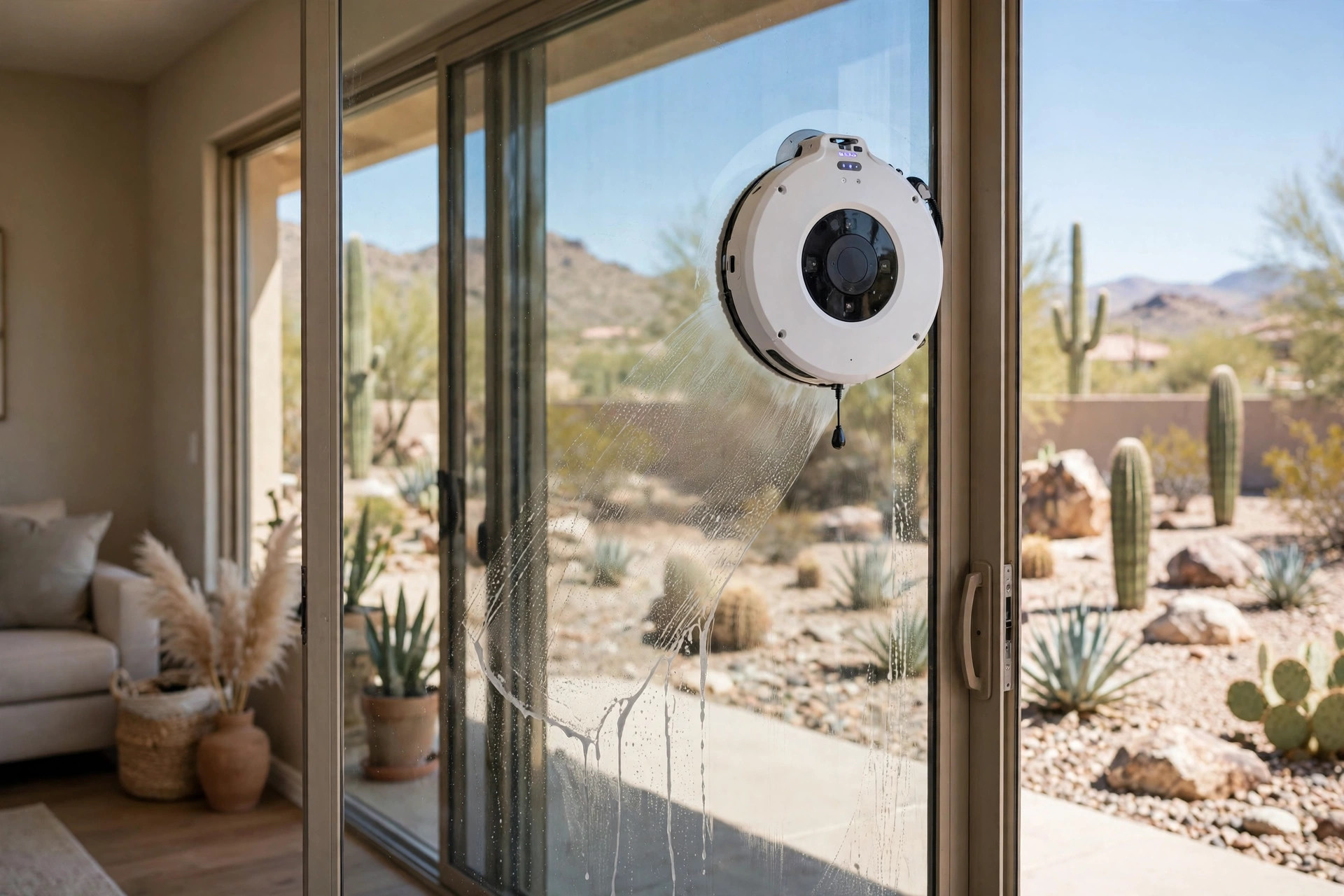

If you plan to buy window cleaning robots online in Arizona, this guide will help you. The choice looks simple at first. A small robot climbs your glass and leaves it clean. In practice, the Arizona climate changes what you should buy. Dust storms coat windows fast. Hard water leaves spots. Summer heat beats on the glass for hours. The right robot can save you real work. The wrong one ends up in a closet. Read on before you click the buy button.
Why It Matters in Arizona
Arizona is hard on glass. Wind carries fine dust from the desert floor. The dust settles on every window in the house. After a storm, a clean window can turn brown in one afternoon. People in Phoenix, Tucson, and Mesa wipe glass more often than people in most other states. A window cleaning robot handles this weekly grime without a ladder.
Sliding glass doors are common in Arizona homes. Many homes have large patio doors that face the yard. These doors collect handprints, nose prints from dogs, and dust on both sides. A robot that cleans both sides of the glass in one pass is worth more here than in a cooler state with small windows.
Cost is another reason. Hiring a window washer in Arizona runs about a hundred dollars or more per visit for a normal house. Two or three visits a year cost as much as a good robot. The robot pays for itself in the first year if you use it often. That is the main reason so many Arizona buyers shop for these machines online.
How to Choose the Right One: Buy Window Cleaning Robots Online in Arizona
Start with your windows. Walk through your home and count the glass. Note the size of each pane. Note the frames. Some robots struggle with narrow panes under 16 inches wide. Some fail on curved glass or glass with thick muntin bars. Most standard Arizona windows and sliding doors work fine with any major brand.
Suction and Grip
The robot sticks to the glass with suction. Stronger suction holds better on dusty glass. Look for a stated suction power above 2,500 pascals if the brand lists it. Many brands do not list numbers. In that case, read buyer reviews from other Arizona owners. Dusty glass is the true test. A weak robot slides off or stalls halfway through a pass.
A safety cord comes with almost every robot. The cord ties to a window frame or a heavy object indoors. Use it every time. If the suction fails on an upper floor, the cord is the only thing between the robot and the driveway. Never skip this step.
Navigation and Path
Older robots wander in random paths. Newer ones plan a route. They move in neat rows, top to bottom, then side to side. The planned path cleans faster and misses fewer spots. It also uses less cleaning fluid. For large Arizona patio doors, planned navigation cuts the job time in half. Pay extra for it if your doors are wide.
Water Tank and Pads
The robot wets the glass with a small tank or with damp pads. Larger tanks cover more area per fill. On dusty Arizona glass, you will use more fluid than the manual suggests. Buy extra microfiber pads with the robot. You can find them sold as spares by most brands. Dirty pads smear dust instead of lifting it. Swap a fresh pad in after every two or three windows.
Battery and Cord Power
Many window robots plug into the wall with a long cord. They have a small backup battery that holds the robot to the glass for about 15 to 20 minutes if the power fails. That is enough to pull it off the glass safely. Some newer models run fully on battery. Battery models suit windows far from an outlet, but they clean for a shorter time per charge. In a large home, a corded model is the safer buy.
Types and Options on the Market
Round Robots
The round robot is the most common shape. It looks like a thick disc with two spinning pads. It cleans well in the middle of the glass but cannot reach tight corners. Corners hold dust lines in Arizona homes. You will still need a hand cloth for the edges once in a while. Round models are often the cheapest option. Many happy owners use them for years.
Square Robots
Square models reach corners better. The cleaning pads run to the edges of the machine. They cost more than round models. The extra cost is fair if your windows have deep corners that collect dust. For floor to ceiling glass in newer builds around Scottsdale and Chandler, square robots finish the job without hand touch-ups.
Robots With Self-Cleaning Stations
A few new models pair with a base station. The station refills fluid and rinses the pads. This sounds grand, but check the price. The stations cost more than the robot itself in some cases. For a normal Arizona ranch home, the station is a luxury. For a two-story home with many windows, it may earn its keep.
Cost and Price in 2026
Prices vary with features. Basic round robots sell online for around 150 to 250 dollars. Mid-range models with planned paths and strong suction sell for 250 to 450 dollars. Top models with self-cleaning stations sell for 500 to 800 dollars or more. These are broad ranges. Online prices move with sales and holidays.
Check the shipping terms before you order. Some sellers ship free to Arizona. Others add a fee for large items. Read the return policy too. A window robot is a tool you must test on your own glass. A 30-day return window is the least you should accept. Many buyers find that the robot works well on the first try. Others learn that their framed glass defeats the sensors. Returns matter.
Watch for bundle deals. Some listings add spare pads, extra fluid, and a longer cord at no extra cost. Those small extras have real value in dusty country. Two spare pads can cost 20 dollars bought alone. If two listings match on price, take the one with the extras.
Related guides on this site can help you compare other home cleaning tools, such as pet hair removal tools reviews and buying guide, powerful baseboard cleaning tools buying guide, and quiet hardwood floor buffers for sale.
Care and Upkeep
The pads do the real work, so care for them. Wash the microfiber pads after each use. Warm water and mild soap are enough. Skip fabric softener. It coats the fibers and cuts their grip. Let the pads air dry flat. Replace pads every three to six months with weekly use in Arizona dust. Worn pads leave streaks.
Clean the robot body with a damp cloth once a month. Dust builds up in the suction vents. A blocked vent weakens the hold. Check the safety cord for wear each time you set up. A frayed cord must be replaced before the next run.
Use the cleaning fluid the maker suggests. Some makers sell their own spray. Others allow plain water with a drop of dish soap. Hard water in many Arizona towns leaves mineral spots on glass. If your tap water is hard, use distilled water in the tank. Distilled water costs little and leaves no spots. This one tip fixes the most common complaint about window robots.
Safety Tips
Keep the robot away from children and pets during a run. A dog can pull the cord or knock the safety line loose. Never run the robot on cracked or loose glass. The suction can pull a weak pane inward. If the glass has a crack, fix the glass first.
Do not run the robot in the midday heat on south-facing glass. Arizona summer glass can burn skin on touch. The pads dry out fast on hot glass. They leave streaks instead of shine. Clean windows in the early morning or after sunset in summer. The robot works better on cool glass.
Read the manual on frame sensors. Most robots sense the window frame and stop at the edge. Heavy dust on the frame can fool the sensor. Wipe the frames once before you start. This small step keeps the robot from climbing onto the frame and getting stuck.
Buying Online in Arizona: What to Watch
Online shopping gives Arizona buyers more choice than any local store. You can compare ten models in an hour. Use that power well. Look at seller ratings, not just the star rating on the product page. A seller with a long record and many reviews is safer than a new seller with a low price.
Read the reviews from hot states. A review from Florida or Texas tells you more about dust and heat than a review from Maine. Some reviewers mention hard water spots by name. Those notes are gold for an Arizona buyer.
Check whether the brand has United States support. A United States phone number or chat line makes a big difference when a part fails. Some low-cost brands sell only through online marketplaces with no real support. The savings vanish if you cannot get a spare part.
Arizona sales tax applies to most online orders now. Many large retailers add it at checkout. Factor the tax into your price compare. A low sticker price with tax and shipping can beat a higher price elsewhere. Compare the final total, not the headline price.
Warranty and Service
A one-year warranty is the standard for most window cleaning robots. Some brands offer two years. Read what the warranty covers. Wear items like pads are never covered. The motor and sensors should be. Keep your order email. You will need the order number if you file a claim. Good service is worth more than a small discount.
Independent review sites can help you check real test results before you buy. Groups like Consumer Reports run their own lab tests on small home appliances, and sites like CNET publish hands-on comparisons. For general window care methods, the home guides at The Spruce and This Old House offer useful background. If you worry about cleaning fluid safety near kids and pets, the product guidance from the EPA and the home safety notes from Good Housekeeping are worth a look. Family Handyman and Bob Vila both publish practical upkeep tips for glass and frames.
Frequently Asked Questions
Do window cleaning robots work on Arizona dust?
Yes, they do, with the right pads and fluid. Fine desert dust is the main test. Run the robot on the light dust setting if it has one. Use fresh pads. Dusty glass may need two passes. The first pass lifts the dust. The second pass polishes.
Can the robot clean both sides of a sliding door at once?
Most models clean one side at a time. You place the robot on the outside and the safety cord inside, or the other way around. Some brands sell twin-unit models that clean both sides at once, but they are rare and costly. Plan for two runs per door.
How long does it take to clean one large patio door?
A robot with planned navigation cleans a standard six-foot sliding door in about 15 to 25 minutes. Dusty glass takes longer. Random-path robots can take twice as long. Start the robot and do other chores while it works.
Will it work on windows with sunscreens?
No. Remove the sunscreens first. The robot needs flat glass. Arizona homes often have sunscreens on the outside of windows. Pop them off before a run and set them back after. Clean the screens with a hose while they are off for the best result.
Is a window cleaning robot safe on tinted glass?
Most robots are safe on factory tint, which sits inside the glass. Aftermarket film tint needs care. Heat and moisture can lift the edges of cheap film. Check the film maker rules before you run the robot. When in doubt, test a small corner first.
Where should Arizona buyers shop online?
Large retailers with Arizona shipping, brand stores with United States support, and marketplace sellers with long records are the safe choices. Compare the final total with tax and shipping. Read reviews from hot, dusty states. Keep your receipt for the warranty.
Final Word
To buy window cleaning robots online in Arizona is to buy a tool for a real desert problem. The dust will not stop. The heat will not stop. A robot that fits your windows, holds its grip on dusty glass, and runs cool in the morning will serve you for years. Pick for your glass, not for the gadget list. Read the reviews from hot states. Keep spare pads on hand. Clean in the cool hours. Your windows will show the care.
For more background, see Target.
References
Bob Vila. (n.d.). Home improvement advice. https://www.bobvila.com Consumer Reports. (n.d.). Product reviews and ratings. https://www.consumerreports.org Family Handyman. (n.d.). DIY home repair and maintenance. https://www.familyhandyman.com Good Housekeeping. (n.d.). Product reviews and home advice. https://www.goodhousekeeping.com Target. (n.d.). Retail store. https://www.target.com The Spruce. (n.d.). Home and garden advice. https://www.thespruce.com This Old House. (n.d.). Home renovation guidance. https://www.thisoldhouse.com U.S. Environmental Protection Agency. (n.d.). Protecting human health and the environment. https://www.epa.gov
Was this guide helpful?

About Michael Thompson
The My Garden US editorial team writes practical, in-depth home and garden guides for American homeowners — tested advice, no fluff.
You May Also Like

Top Rated Same Day Appliance Repair Services Reviews
May 14, 2026 0 views
Reliable Move Out Cleaning Services in Colorado
May 4, 2026 0 views
Affordable Wet Dry Shop Vacuums With Free Shipping: A Buyer’s Guide
July 5, 2026 0 views