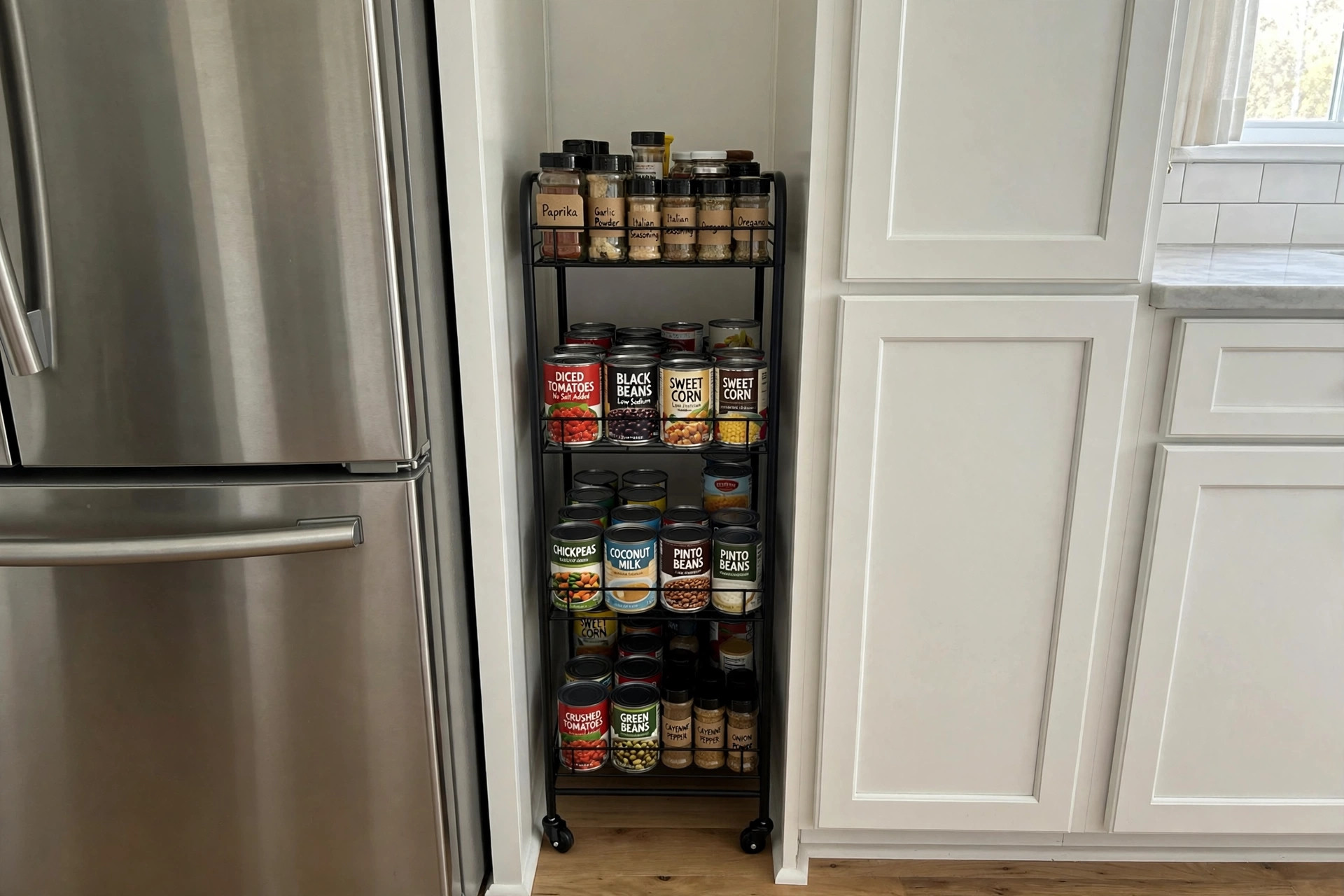
Kitchens in Colorado homes often run short on storage space. Cabinets fill up fast. Counters hold jars, boxes, and small appliances that belong out of sight. If you want to buy slim rolling pantry carts online in Colorado, you are looking at one of the simplest fixes for a tight kitchen. These narrow carts slide into the gap between a refrigerator and a cabinet, or between a stove and a wall, and turn dead space into working storage.
A slim rolling pantry cart is a tall, narrow shelf unit on wheels. Most are five to ten inches wide. Most are three to five feet tall. They hold cans, spice jars, oils, boxed goods, and cleaning supplies. When you need an item, you roll the cart out. When you finish, you roll it back into its narrow slot. The idea is old. The home catalogs of the 1980s carried wooden pantry trolleys. Today’s versions are lighter, cheaper, and easy to order online.
Why It Matters
Space is the first reason. Many Colorado homes have galley kitchens or older layouts with narrow cabinets. Apartment kitchens in Denver and Colorado Springs can be tighter still. A slim cart uses space that now holds nothing at all. The side of a refrigerator, the gap beside a range, the sliver between a washer and a wall: all of these can hold a cart.
Order is the second reason. A pantry cart gives every small item a home. Canned goods sit on one shelf. Spices sit on another. Cleaning bottles sit at the bottom. When each item has a place, you stop buying duplicates. Grocery lists get shorter. The weekly trip costs less.
Speed is the third reason. A rolling cart brings the whole shelf to you. You do not need to reach into a dark cabinet corner. You roll the cart out, take what you need, and roll it back. For older cooks or anyone with a sore back, this small change matters every day.
Online shopping adds one more reason. Stores in Colorado carry these carts, but shelf stock is limited. Online sellers carry far more sizes, colors, and materials. You can compare ten models in an hour from your kitchen table, which is faster than driving to three stores.
How to Choose the Right Cart: Buy Slim Rolling Pantry Carts Online in Colorado
Start with the gap you plan to fill. Measure the width between the two surfaces where the cart will live. Measure in two or three spots, top and bottom, because walls are not always straight. Then subtract half an inch for clearance. If the gap is seven inches wide, buy a cart no wider than six and a half inches. A cart that is too wide will scrape paint or refuse to fit.
Next, check the depth. The cart should sit flush with the cabinet front when it is rolled in. Most kitchen counters are about 25 inches deep. Measure from the wall to the front edge of your counter. A cart deeper than the counter will stick out and catch your hip as you pass.
Height matters less, but it still counts. The cart must clear any shelf or pipe above the gap. It must also clear the handles of nearby doors. A tape measure settles these questions in five minutes.
What to Look For
Wheels that lock. A cart that rolls on its own is a hazard. Good carts have caster wheels, and at least two of the wheels should lock. You lock them when the cart is parked, and you unlock them to pull it out. Before you order, check the product page for the words “locking casters.”
Sturdy shelves. Shelves carry the weight of cans and jars. Thin plastic shelves sag under a full load of soup cans. Look for shelves at least a few millimeters thick, or metal wire racks with a solid frame. Product photos can mislead, so read the reviews for words like “sturdy” and “sag.”
A narrow but stable base. Tall, narrow carts can tip when fully loaded and pulled out fast. The best designs widen slightly at the base or keep the heaviest shelf at the bottom. Keep heavy cans low and light boxes high. That rule keeps any cart stable.
Handles that fit your hand. You will pull this cart out many times a day. A good top handle or side bar makes the job easy. Check reviews for notes about the handle. A cart with no good grip gets left in the corner and gathers dust.
Types and Options
Slim rolling pantry carts come in several styles. Each one suits a different kitchen.
Plastic tier carts are the cheapest and lightest. They come in white, black, and sometimes gray. Three to five tiers are common. They assemble without tools in most cases. They suit renters and light loads: spices, tea, packets, and paper goods. They cost the least, and they ship in flat boxes that fit through any door.
Metal wire carts hold more weight. Chrome or black steel frames with wire shelves carry full cans and bottles without bending. They suit busy family kitchens. They cost more than plastic, but they last longer. Some have hooks on the sides for towels or small pans.
Wood and bamboo carts look warm and suit kitchens with wood cabinets. They cost the most of the three types. They are heavier, so check the caster quality. A heavy wooden cart on weak wheels is hard to roll and wears out the wheels fast.
Carts with lids or covers hide clutter. Some models have a fabric cover or a solid top that doubles as a small counter. These suit kitchens where the cart sits in the open rather than in a hidden gap.
Colorado buyers should also think about humidity and sun. The dry air of the Front Range is kind to wood but can crack cheap plastic over years near a sunny window. If the cart will sit in a sunlit gap, metal or good plastic holds up better than thin wood. Guides at The Spruce and Apartment Therapy often review small-space storage with real photos, which helps you picture a cart in a tight kitchen.
Cost and Price
Prices for slim rolling pantry carts run wide. A simple plastic three-tier cart sells for about twenty to forty dollars. A mid-range metal wire cart sells for about fifty to ninety dollars. A wooden cart or a large multi-tier metal unit can run one hundred to two hundred dollars or more.
Shipping is the hidden cost. These carts ship flat, but large models are bulky. Some online sellers charge ten to twenty dollars for shipping to Colorado addresses. Others ship free on orders above a set amount. Read the shipping line before you compare prices. A cart that costs forty dollars with free shipping beats a cart that costs thirty dollars with a fifteen-dollar shipping fee.
Sales follow the calendar. January and July bring storage and organization sales. Back-to-school season brings dorm-sized carts at low prices. Holiday sales in November and December drop prices across the board. If you are not in a hurry, wait for a sale and save twenty to thirty percent.
Assembly cost is zero in most cases. The carts arrive with simple instructions and need no tools, or one small wrench that comes in the box. Plan thirty minutes for your first build.
Buying Online in Colorado
Online buying is simple, but a few local points help.
First, check delivery times to your zip code. Some sellers ship from warehouses in Texas or California, and delivery to Colorado takes three to seven days. Some items ship faster from closer warehouses. The product page shows the estimated date. Order before a holiday weekend if you need the cart by a certain day.
Second, read the return policy. A cart that looked right online may prove too wide or too short in your kitchen. Sellers with free or cheap returns make the experiment risk-free. Keep the box until the cart is built and tested in the gap.
Third, measure once more before you click buy. The most common reason buyers return these carts is a wrong size. The second most common reason is weak wheels. Read at least ten reviews and search them for the words “wheels” and “fit.” Real buyers will tell you what the product page hides.
Fourth, think about the store behind the sale. Large retailers such as IKEA, Wayfair, The Home Depot, Lowe’s, and Target all carry slim carts and ship to Colorado. Specialty storage shops such as The Container Store carry higher-end models. Family Handyman publishes project guides that show how to use narrow gaps well. Any of these sources is fine as long as the size fits and the return policy is fair.
Fifth, watch for snow-season delays. Colorado winter storms can slow ground shipping for a day or two. In December and January, order a few days early.
Care and Upkeep
A slim rolling pantry cart needs little care, but a little care keeps it rolling for years.
Wipe the shelves every few weeks. Flour dust, oil drips, and crumbs collect on every kitchen shelf. A damp cloth and a drop of dish soap handle most messes. Dry metal shelves after wiping so water does not sit in the joints.
Check the wheels twice a year. Hair and crumbs wrap around caster axles and slow them down. Pull the cart out, turn it on its side, and clear the wheels. A drop of light oil on a squeaky axle helps.
Tighten the bolts once a year. The bolts on a cart loosen with daily rolling. A loose bolt makes the cart wobble. Most carts use the same small wrench that came in the box. Ten minutes of tightening makes the cart feel new again.
Keep the load balanced. Heavy cans go on the bottom shelf. Light boxes go on top. Never stack items above the top rail where they can fall when the cart rolls.
Safety
A pantry cart is safe when it is used with care.
Lock the wheels when the cart is parked. An unlocked cart can roll into a walkway and trip someone. Make the habit automatic: roll it back, lock two wheels.
Do not let children climb on it. A tall narrow cart can tip if a child pulls it toward themselves or climbs the shelves. Teach small children that the cart is not a ladder.
Keep heat in mind. Do not store a cart directly beside a hot oven wall or a heating vent if it is plastic. Heat warps cheap plastic over time and can melt it in rare cases. Wood and metal handle heat better, but a few inches of space is still wise.
Check for recalls. If you buy a cart with electric parts, such as a lighted model, check the CPSC site now and then. Recalls on simple carts are rare, but a quick check takes a minute.
Frequently Asked Questions
What width should I buy for a six-inch gap?
Buy a cart five inches wide or less. You need at least half an inch of clearance for the cart to slide in and out without scraping the walls. Measure the gap at the top and the bottom and use the smaller number.
Can a slim cart hold full cans of food?
A metal wire cart can. A cheap plastic cart can hold some cans, but a full load of large soup cans may bend the shelves. Read the weight limit on the product page. A good metal cart holds fifty to one hundred pounds across all shelves.
How do I keep the cart from rolling away on a tile floor?
Lock the caster wheels. Most carts have two locking wheels. Press the lock tabs with your foot after you roll the cart back into place. On very smooth tile, a thin non-slip mat under the parked cart adds extra grip.
Is it hard to assemble?
No. Most models need no tools. You snap the shelves onto the frame and push the wheels into their sockets. The instructions take about thirty minutes the first time. If a step feels forced, stop and check the diagram before pushing harder.
Can I use it in a bathroom or laundry room?
Yes. Slim carts suit any narrow gap. In a bathroom they hold towels and toiletries. In a laundry room they hold detergent and dryer sheets. If the room is damp, choose metal or plastic over wood, since wood swells with moisture.
What is the difference between a pantry cart and a utility cart?
A pantry cart is narrow and tall, built to slide into a gap between cabinets. A utility cart is wider and shorter, built to stand alone. Pantry carts are usually five to ten inches wide. Utility carts are usually twelve to eighteen inches wide.
A Final Word
A slim rolling pantry cart is a small buy that pays off every day. It turns a wasted gap into real storage. It keeps small items in view and in reach. If you measure your gap, choose sturdy wheels, and buy from a seller with a fair return policy, the cart will serve your kitchen for years. For related reading, see our guides to slim rolling pantry carts reviews and buying guide, slim rolling pantry carts price comparison usa, and pantry shelving units reviews and buying guide.
References
Apartment Therapy. (n.d.). Home design ideas and inspiration. https://www.apartmenttherapy.com Family Handyman. (n.d.). DIY home repair and maintenance. https://www.familyhandyman.com IKEA. (n.d.). Home furnishings. https://www.ikea.com Lowe’s. (n.d.). Home improvement products. https://www.lowes.com Target. (n.d.). Retail store. https://www.target.com The Container Store. (n.d.). Storage and organization products. https://www.containerstore.com The Home Depot. (n.d.). Home improvement products. https://www.homedepot.com The Spruce. (n.d.). Home and garden advice. https://www.thespruce.com U.S. Consumer Product Safety Commission. (n.d.). Product safety information. https://www.cpsc.gov Wayfair. (n.d.). Furniture and home goods. https://www.wayfair.com
Was this guide helpful?

About Michael Thompson
The My Garden US editorial team writes practical, in-depth home and garden guides for American homeowners — tested advice, no fluff.