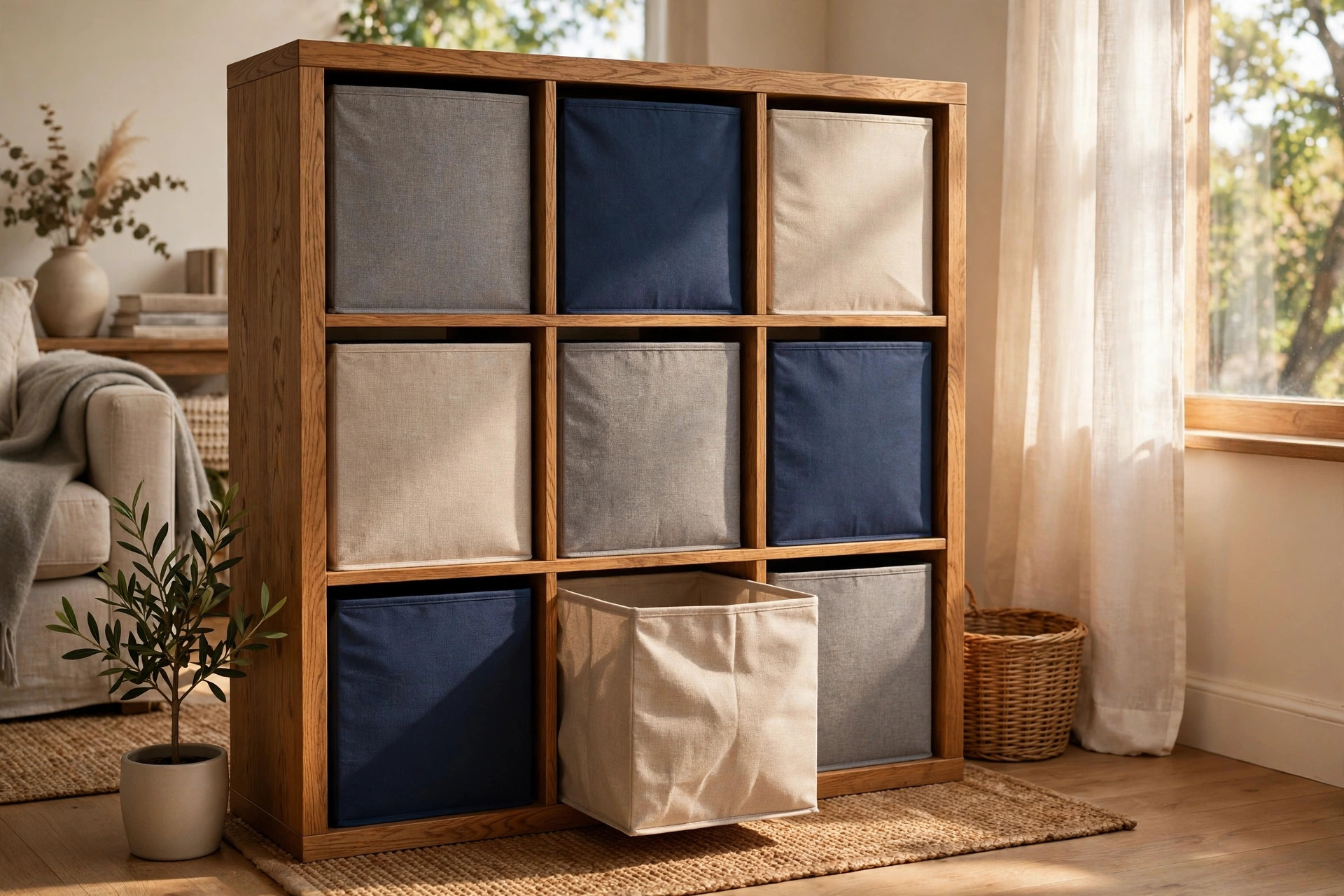

What Are Fabric Storage Cubes?
If you are looking for a simple way to cut clutter, this fabric storage cubes reviews and buying guide will point you in the right direction. Fabric storage cubes are square bins made of cloth. They slide into cube shelves and cubby units. They hide toys, clothes, papers, and all the small things that make a room look messy.
Each cube is light and soft. It has a handle or a pull tab on the front. You grab the handle, pull the cube out, take what you need, and push it back. The whole system takes minutes to set up. There are no tools to find and no screws to tighten.
Americans buy these cubes by the dozen. They fit in closets, nurseries, offices, dorm rooms, and garages. They cost little, and they do a big job. That is why they remain one of the best-selling storage items in the country.
Why They Matter: Fabric Storage Cubes Reviews and Buying Guide
A messy room can make the mind feel messy. Studies from home experts note that clutter raises stress. When every item has a place, the house calms down. Fabric cubes give each item a place.
Hard plastic bins work too, but fabric cubes have clear edges over them. They are soft, so they will not scratch floors or furniture. They fold flat, so you can store extras in a drawer. They come in colors and prints, so they add style instead of taking it away. A shelf of matching cubes looks neat. A pile of loose items does not.
Price is another reason they matter. Most cubes sell for a few dollars each. A full shelf system with twelve cubes often costs less than one wooden dresser. For renters and young families, that is a real benefit. You can read more ideas for low-cost rooms in The Spruce storage guides, which often show cube shelves in real home makeovers.
How to Choose the Right Cube
Not all cubes are the same. Before you buy, think about these points.
Size
The most common size is eleven inches by eleven inches. It fits the standard cube shelf sold by most big stores. There are also ten-inch and thirteen-inch sizes. Measure your shelf first. A cube that is too tall will not slide in. A cube that is too small will leave gaps and look sloppy.
Material
Most cubes use non-woven fabric or canvas. Non-woven fabric is thin and cheap. It works for light items like scarves and paper. Canvas and cotton blends are thicker. They hold books and shoes without bowing. Polyester blends resist stains, which helps in a playroom.
Shape and Support
Some cubes have stiff inserts in the sides. The inserts keep the cube square when it is full. Others have no support and go soft when loaded. For heavy items, pick a cube with side panels or a reinforced bottom. For light linen or toys, a soft cube is fine.
Handles
Cut-out handles sit on the sides of the cube. Strap handles sit on the front. Front handles make the cube easy to pull out of a tall stack. Pick the style that fits how you will use it.
Lids
Some cubes come with lids. Lids keep dust out and let you stack cubes on top of each other. Open cubes are faster to use. For a garage or attic, lids are worth it. For daily items, open tops save time.
If you are comparing larger storage systems too, our guide on garage ceiling storage racks price comparison usa covers overhead options for the garage.
Types and Options
Shoppers will meet several types of fabric cubes. Each type suits a different need.
Standard open cubes. These are the basic square bins. They hold clothes, toys, and craft items. They are the cheapest type.
Cubes with lids. The lid keeps the contents clean. These work well for seasonal clothes and holiday decor.
Divided cubes. An inner divider splits the cube into two parts. These help sort small items like socks, ties, or tools.
Reinforced cubes. Thick walls and a hard base let these hold heavy books and files. They cost more, but they last longer.
Decorative cubes. Prints, colors, and textures turn storage into decor. They cost a bit more than plain ones.
Collapsible sets. These fold flat for moving or storage. College students and movers like them.
Retailers such as IKEA and Wayfair carry wide ranges of these types, so you can compare colors and sizes side by side online.
What the Reviews Say
Reviewers across the country give fabric storage cubes high marks for value. The top-rated cubes earn four to five stars out of five on major retail sites. Here is what buyers praise and what they warn about.
Buyers love the price. A pack of six cubes often costs less than twenty dollars. They also love how the cubes tidy a room in an afternoon. Many reviews mention kids’ rooms and closets as the best use cases.
The most common praise goes to cubes with stiff sides. They stay square. They do not lean. Reviewers say these feel closer to real furniture than to a soft bin.
The most common complaint is about weak handles. Thin fabric handles tear when the cube is heavy. Reviewers advise checking handle stitching before you buy. A second complaint is about size labels. Some cubes listed as eleven inches measure a half inch less. Read the reviews for the exact brand you plan to buy.
Another point from reviews: dark colors hide dust. Light colors look fresh but show stains. Families with small children tend to pick medium tones like gray and navy.
For honest product testing methods, Consumer Reports explains how independent labs rate home goods, though cubes themselves are rarely tested there.
Cost and Price
Fabric storage cubes are one of the cheapest storage products you can buy. Here is what to expect in 2026.
– Basic non-woven cubes: two to four dollars each in multi-packs. – Canvas and reinforced cubes: five to ten dollars each. – Decorative and designer cubes: eight to fifteen dollars each. – Cube shelf units (the frame the cubes slide into): twenty to eighty dollars.
Watch for multi-packs. A pack of twelve often costs the same as eight sold singly. Holiday sales and back-to-school sales cut prices further. The Home Depot runs frequent storage events where cube packs drop by twenty percent or more.
Shipping matters. Cubes are light, so many stores ship them free. If you shop in store, bring a tote. A dozen cubes stack flat and fit in a car with ease.
Where to Buy
You can buy fabric storage cubes almost anywhere home goods are sold. Big box stores, department stores, and online sellers all carry them.
For a hands-on look, visit a local superstore and pull a cube out of its package. Feel the fabric. Test the handle. Online, filter reviews by the words “handle,” “sturdy,” and “size” to find the useful comments fast.
The Container Store is known for its wide cube wall, where you can compare dozens of colors in one aisle. Apartment dwellers often start their search at Apartment Therapy, which features small-space setups built around cube shelves.
Care and Upkeep
Fabric cubes need little care, but a few habits will make them last years instead of months.
Dust the outside with a dry cloth once a month. For spots, wipe with a damp cloth and mild soap. Let the cube dry fully before you push it back into the shelf. Never put a wet cube back. Trapped damp air can cause a musty smell.
Do not overfill. Each cube has a soft weight limit, often around ten to fifteen pounds. Books add up fast. Spread heavy items across several cubes. When the sides bow out, the cube is too full.
Rotate the cubes now and then. The ones on the bottom row take more wear. Swap them with top-row cubes once or twice a year to spread the load.
If a handle tears, you can often sew it back in minutes with a needle and strong thread. Many owners repair a cube instead of replacing it. That keeps waste down and saves money.
Practical home care tips of this kind appear often on Family Handyman, which covers simple fixes for common household goods.
Safety
Fabric cubes are safe for most homes, but a few rules keep them safer.
Keep heavy cubes on low shelves. A cube full of books can hurt a small child if it falls from a high shelf. Anchor tall cube shelves to the wall. Most shelf units include wall straps for this purpose.
Use flame-resistant placement. Keep cubes away from space heaters and radiators. Fabric can catch heat and hold it.
In nurseries, skip cubes with long cords or loose straps. Loose straps can wrap around small hands. Pick cubes with cut-out handles instead. For small items, our notes on waterproof dresser drawer dividers with free shipping may help you organize the inside of each cube too.
Matching Cubes to Each Room
Different rooms ask different things of a cube. A short room-by-room plan helps you buy once and buy right.
Living room. Use medium-tone cubes that match your furniture. Store remotes, blankets, and game controllers. Two rows of cubes under a console table hide clutter in seconds.
Bedroom. Use cubes for folded shirts, scarves, and shoes. A cube shelf at the foot of the bed can replace a bulky chest.
Kids’ room. Use bright colors and label each cube with a picture. Sorting toys becomes a game. Light items only, so little hands can lift the cubes.
Home office. Use cubes for paper, files, and supplies. Dark colors look neat on camera during video calls.
Bathroom. Use cubes for towels and cleaning supplies. Pick polyester blends that resist damp air.
Garage. Use lidded cubes for small tools and parts. Pair them with bigger systems, as discussed in our buy heavy duty wire shelving online in california guide, to build a full garage wall.
Eco Notes
Many fabric cubes now use recycled polyester. The label will say so. Buying recycled cuts new plastic use. When a cube wears out, check local textile recycling before you throw it away. Some cities take old fabric at drop-off points.
To cut waste, buy the right size the first time. Measure twice. A cube that does not fit the shelf often ends up unused. Returning a poor fit wastes shipping and packing.
Frequently Asked Questions
What size fabric storage cube is standard? Eleven inches square is the most common size. It fits the cube shelves sold by most major stores. Always measure your shelf opening before you order.
How much weight can a fabric storage cube hold? Most hold ten to fifteen pounds. Reinforced cubes hold more. Do not load them with dense items like full books across the whole cube.
Can you wash fabric storage cubes? Most are spot-clean only. A damp cloth with mild soap handles most stains. Machine washing can warp the stiff inserts, so check the label first.
Do fabric cubes work without a shelf? Yes, but they look best in a shelf. Without support, soft cubes can lean. Stack no more than three high on their own.
Are fabric cubes good for closets? They are excellent for closets. They turn open closet shelves into drawers. They also fold flat if you move.
How long do fabric storage cubes last? With normal use, three to five years. Reinforced canvas cubes last longer. Sunlight fades colors, so keep them out of direct sun when you can.
Final Word
Fabric storage cubes earn their place in the American home. They are cheap, light, and simple. They hide clutter fast and look neat doing it. Pick the right size, choose sturdy handles, and do not overfill them. Your rooms will thank you.
This fabric storage cubes reviews and buying guide aimed to give you plain facts, real price ranges, and honest review notes. Start with a small pack, test them in one room, and add more once you see how well they work.
References
Apartment Therapy. (n.d.). Home design ideas and inspiration. https://www.apartmenttherapy.com Consumer Reports. (n.d.). Product reviews and ratings. https://www.consumerreports.org Family Handyman. (n.d.). DIY home repair and maintenance. https://www.familyhandyman.com IKEA. (n.d.). Home furnishings. https://www.ikea.com The Container Store. (n.d.). Storage and organization products. https://www.containerstore.com The Home Depot. (n.d.). Home improvement products. https://www.homedepot.com The Spruce. (n.d.). Home and garden advice. https://www.thespruce.com Wayfair. (n.d.). Furniture and home goods. https://www.wayfair.com
Was this guide helpful?

About Jennifer Lee
The My Garden US editorial team writes practical, in-depth home and garden guides for American homeowners — tested advice, no fluff.
You May Also Like

Best Overhead Garage Storage Systems for USA Homes
May 23, 2026 0 views
Luxury Mudroom Storage Benches for Sale: A Buyer’s Guide for the American Home
July 7, 2026 0 views
Stackable Toy Storage Bins for Sale: A Practical Guide for American Homes
May 29, 2026 0 views