
Introduction
Finding affordable basement shelving units for sale can save you time, space, and money. A basement is the largest room in many homes, yet it often becomes a dark heap of boxes. Good shelves change that. They lift goods off the floor. They keep damp air away from your tools, files, and holiday goods. They let you see what you own at one glance. This guide shows you how to pick the right shelves, what they should cost, and how to keep them safe for years. Whether you need one rack for paint cans or a full wall of storage, you will find plain advice here that helps you shop with care.
Why Basement Shelving Matters: Affordable Basement Shelving Units for Sale
A basement is a harsh place for goods. Water can seep in after rain. Damp air can rust tools. A concrete floor can stain boxes. Shelves solve most of these ills. They raise your goods six or more inches above the floor. They let air move around each box. They turn a messy heap into neat rows.
Good shelves also save time. When each bin has a place, you find it fast. You stop buying a second screwdriver because the first one is lost. You stop tripping over old luggage. Families with small homes gain the most. A well shelved basement works like a second garage or a small shop. The cost is low, and the gain is felt each week.
How to Choose the Right Unit
Choice starts with three plain facts: what you will store, how much it weighs, and how much room you have. Heavy goods need steel frames. Light goods do fine on wire or resin. Measure your wall space first. Leave room for the door to swing open. Leave room for the furnace and water heater, since they need clear air space by code in most towns.
Height matters too. A five foot unit fits under most duct work. A six foot unit gives more tiers but needs a flat, level floor. Depth is often missed by buyers. Twelve inch shelves hold bins well. Eighteen inch shelves hold large boxes. Deeper than that, and goods hide behind each other.
Think About Access and Layout
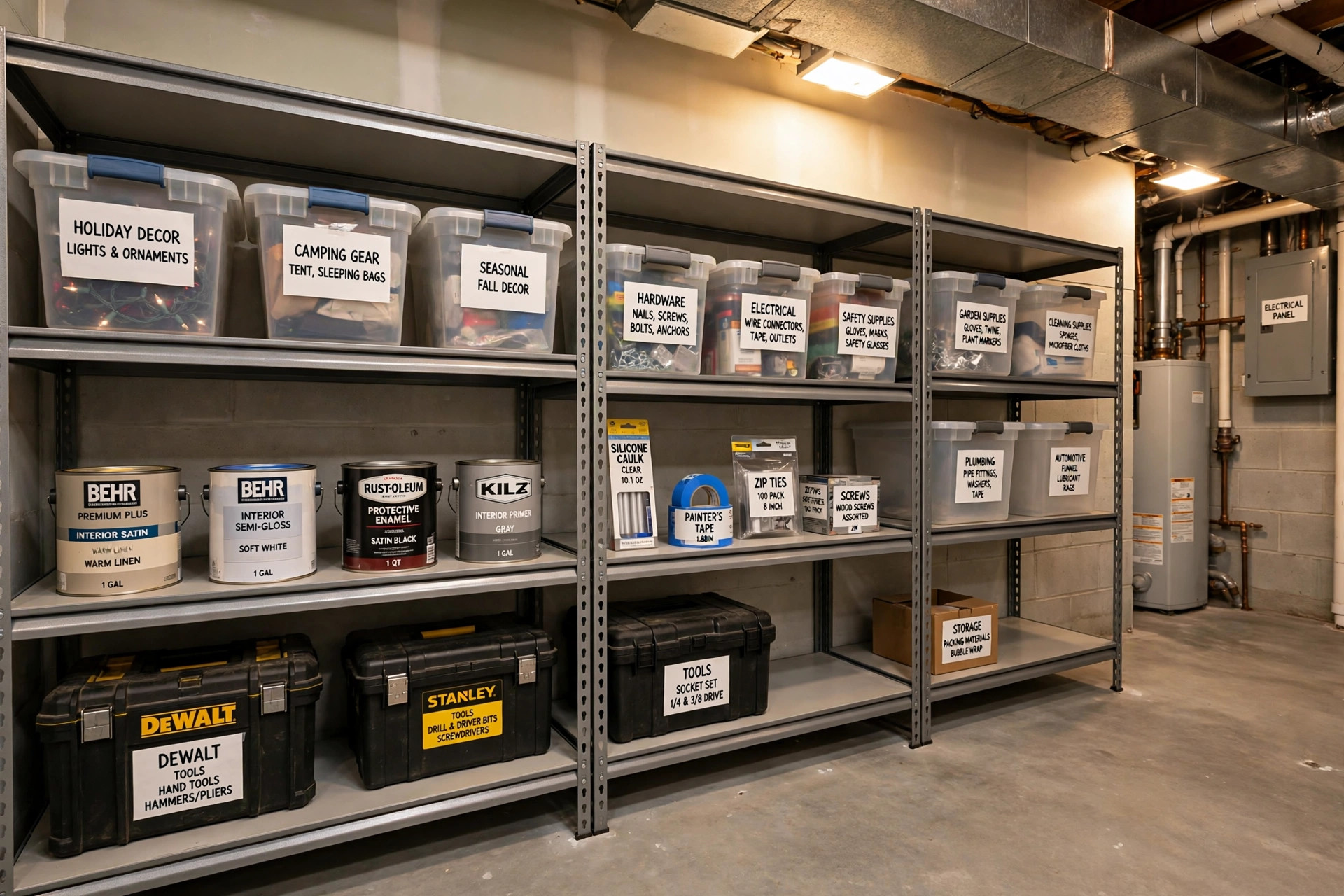
Plan how you will reach each shelf. The most used goods belong at waist height. Rarely used goods, like holiday lights, can sit on the top shelf. Leave a gap of three to four feet in front of each rack so you can pull a bin straight out. A tight room needs narrow racks and a clear aisle. Draw your floor plan on paper before you order. Mark the stairs, the furnace, and the water line. This simple step stops the common fault of a rack that blocks the breaker panel or the shut off valve.
Check the Weight Rating
Each shelf should state a clear weight limit. A good steel unit holds 350 to 800 pounds per shelf when the load is spread even. Add up what one shelf will hold. A case of canned food weighs about 25 pounds. A box of books can weigh 40 pounds. When in doubt, pick the stronger unit. A weak shelf that bows is a danger.
Match the Finish to the Basement
Basements carry damp air. Bare steel can rust in a few years. Pick shelves with a powder coat or chrome finish. These coats fight rust well. Resin and plastic units do not rust at all, but they hold less weight. Galvanized steel is the best pick for wet rooms.
Types of Affordable Basement Shelving Units
Shoppers meet five main types in stores today. Each has its place.
Steel Boltless Shelving
This is the most common pick for basements. The parts slot together with no tools or with a rubber mallet. A five tier unit costs little and holds a great deal. The shelves can be moved up or down to fit tall boxes. The Home Depot stocks many sizes of this type, and you can view them in person before you buy.
Wire Shelving
Wire shelves are light and open. Air moves through them, which keeps damp spots away. They work well for paint cans, cleaning goods, and bins. Chrome wire fights rust. Epoxy coated wire fights rust even better. Units often come on wheels, so you can roll them to the car for loading.
Resin and Plastic Shelving
Plastic units cost the least and never rust. They snap together in minutes. They suit dry basements and light goods like holiday trim or camping gear. Do not load them with car parts or books. Heat can warp cheap plastic, so keep them away from the furnace.
Wall Mounted Shelving
When the floor is wet or uneven, wall shelves help. Heavy duty brackets fix to wall studs or concrete. These shelves hold less than free standing steel racks, but they keep goods high and dry. They are a smart add on for small rooms. Ideas for small room layouts appear often on Apartment Therapy, where readers share real storage plans.
Freestanding Storage Racks
Deep garage racks with thick beams hold the heaviest loads. They fit in large basements and near the workshop zone. Some brands sell add on kits that join two racks into one long run. Lowe’s and Walmart both carry wide ranges of these racks at fair prices.
Cost and Price Guide
Affordable does not mean weak. It means fair value for the load you need. Use these bands when you shop for affordable basement shelving units for sale:
– Light duty resin unit, four to five tiers: 25 to 60 dollars. – Medium duty wire unit, five tiers: 60 to 140 dollars. – Heavy duty steel boltless unit, five tiers: 80 to 200 dollars. – Deep garage beam racks: 120 to 300 dollars per bay.
Prices move with steel costs and sales. Late summer and early fall often bring the best deals, since stores clear space for holiday goods. Buying two of the same unit can cut the per unit cost. Check the shipping fee too. A heavy rack may cost 30 dollars or more to ship to your door, which can erase a small price cut.
Watch the true cost of a deal. A rack that costs 20 dollars less but holds half the weight is no deal at all. Read the weight rating and the gauge of the steel. Thicker posts cost more but last far longer. A five year rack that you replace twice costs more than one strong rack that lasts twenty years. This is the core of smart buying: pay once for strength, not twice for regret.
Online marketplaces help you compare. Wayfair and IKEA list clear weight limits and buyer notes on most shelf pages. The Container Store shows neat systems that fit tight rooms, though their prices run higher than the budget brands. Crate and Barrel leans toward home decor, but its storage pages can give you ideas for finished basement rooms that double as living space.
Care and Upkeep
Good care adds years to any shelf. Wipe steel units once a year with a damp cloth. Dry them well. Look for rust spots at the joints. A small spot can be sanded and touched up with rust proof paint. Do not paint over thick rust, since the coat will peel.
Keep goods off the lowest shelf if your floor floods. Some owners lay rubber mats under the feet. This cuts rust at the base and stops the rack from sliding on smooth concrete. Check the plastic feet each year. Cracked feet let the steel post touch wet concrete, and rust follows.
Wire shelves need less care. Wash them with warm soapy water when dust builds up. Resin shelves can be hosed off in the yard. For all types, recheck the shelf clips twice a year. A clip that slips can drop a loaded shelf. Family Handyman posts step by step repair guides for common shelf faults, and The Spruce keeps clear care sheets for metal, wire, and resin storage goods.
Safety Tips for Basement Storage
Shelves are safe when they are set up right. They turn risky when they are rushed.
– Anchor tall units to the wall with straps or brackets. A six foot rack can tip when a child climbs it. – Put the heaviest goods on the lowest shelves. This keeps the rack stable. – Do not store fuel, paint thinner, or gas cans near the furnace or water heater. – Keep a clear path to the exit. Boxes must never block the stair door. – Use a step stool, not a chair, to reach the top shelf. – Wear gloves when you lift rough steel posts. Edges can be sharp. – Spread the load. One shelf should never carry its full rating in one corner.
Damp air is the silent foe. Use a dehumidifier if the air feels wet. Keep paper goods and photos in sealed bins, not open boxes. A small fan keeps air moving and cuts musty smells. If water pools on the floor, fix the leak first. No shelf can save goods that sit in standing water.
Keep the floor zone clear around each rack. A dry six inch gap between the rack and the wall lets you spot leaks early. Label each bin on the side you face, not on top. A clear label saves you from pulling down five bins to find one cord. Small habits like these keep the whole system working for years.
Frequently Asked Questions
What is the best shelf type for a damp basement?
Steel shelves with a powder coat or galvanized finish work best. They hold heavy loads and fight rust. Add a dehumidifier and keep goods off the floor. Plastic units never rust but hold far less weight, so they suit light goods only.
How much weight can a cheap basement shelf hold?
A fair steel boltless unit holds 350 to 500 pounds per shelf when the load is spread even. Wire units hold 150 to 350 pounds per shelf. Resin units hold 100 to 200 pounds per shelf. Always read the label on the box. Never guess the limit.
Should I buy one big unit or two small ones?
Two small units beat one big unit in most rooms. You can place them on two walls. You can move one without help. If one fails, the other still stands. One long run works well only along a single straight wall.
Can I put shelves on an uneven concrete floor?
Yes, with care. Shim the short legs until the rack stands level. Use hard plastic or metal shims, not wood, since wood rots in damp air. Some racks sell foot levelers as add ons. Check the rack with a level before you load it.
How do I stop shelves from rusting?
Pick coated steel, keep the room dry, and wipe the posts once a year. Rubber mats under the feet help. Fix any leak that wets the floor. Touch up small rust spots fast, before they spread to the joints.
Where can I find deals on basement shelving?
Big stores run sales in late summer and early fall. Watch the shelf pages at major home stores and compare weight ratings, not just price. Floor models can sell at a cut, but check that all clips and posts are in the box before you pay.
A Short Final Word
The right shelf is the one that fits your goods, your room, and your budget. Measure first. Pick a finish that fights rust. Respect the weight limit. Anchor the unit to the wall. With these plain steps, your basement turns from a storage worry into a storage win. For more ideas, see our guides on space saving attic storage solutions for sale, an affordable under bed storage containers buying guide, and the best linen closet organizers for texas homes.
References
Apartment Therapy. (n.d.). Home design ideas and inspiration. https://www.apartmenttherapy.com Crate and Barrel. (n.d.). Furniture and home decor. https://www.crateandbarrel.com Family Handyman. (n.d.). DIY home repair and maintenance. https://www.familyhandyman.com IKEA. (n.d.). Home furnishings. https://www.ikea.com Lowe’s. (n.d.). Home improvement products. https://www.lowes.com The Container Store. (n.d.). Storage and organization products. https://www.containerstore.com The Home Depot. (n.d.). Home improvement products. https://www.homedepot.com The Spruce. (n.d.). Home and garden advice. https://www.thespruce.com Walmart. (n.d.). Everyday low prices. https://www.walmart.com Wayfair. (n.d.). Furniture and home goods. https://www.wayfair.com
Was this guide helpful?

About Michael Thompson
The My Garden US editorial team writes practical, in-depth home and garden guides for American homeowners — tested advice, no fluff.
You May Also Like

How to Buy Rolling Storage Carts Online in Florida
September 21, 2026 0 views
Budget Friendly Vertical File Cabinets: A Practical Buying Guide
January 22, 2026 0 views
How to Buy Heavy Duty Wire Shelving Online in Florida
May 7, 2026 0 views