
Introduction
A workshop tool chests price comparison USA shoppers can trust starts with the basics. Every garage owner who owns more than a hammer and a wrench knows the problem. Tools pile up on benches. Wrenches hide under rags. Sockets roll into corners. A good tool chest ends that mess. It gives every tool a home.
This guide walks you through prices for workshop tool chests across the United States. It explains what drives cost up or down. It shows the main types of chests. It helps you pick the right size and build for your money. No hype. Just plain facts, so you can shop with confidence.
Why a Tool Chest Matters: Workshop Tool Chests Price Comparison Usa
A tool chest is more than a box. It protects your investment. A full set of hand tools can cost hundreds or thousands of dollars. Left loose in a damp garage, wrenches rust. Sockets chip. Ratchets lose their snap. A closed chest keeps dust and moisture away. It slows rust and keeps edges sharp.
Order saves time too. Think of the last repair you did. How many minutes did you spend hunting for the right socket? A labeled drawer layout cuts that search to seconds. Over a year of projects, those saved minutes add up to hours.
Safety is another reason. Loose tools on a bench fall off and hit feet. A chisel left blade-up can cut a hand. A chest with a lock keeps sharp tools away from children and pets. Many garage accidents start with a tool left in the wrong place. A chest puts an end to that.
What to Look For When You Compare
Prices vary a lot. To compare fairly, you must look at the same features each time. Here are the points that matter most.
Size and Drawer Count
Tool chests are sold by width, depth, and number of drawers. Common widths are 26, 41, 46, 52, 56, and 72 inches. A small 26-inch chest may have four or five drawers. A large 56-inch rolling cabinet can hold twelve or more.
Count the drawers you need, not the drawers you want. List your tools first. Long wrenches need wide drawers. Sockets need shallow ones. Power tools need deep bins. If you need guidance on wall storage for overflow tools, a pegboard wall organizer guide can help you pair wall hooks with your chest.
Steel Gauge and Build
Steel gauge tells you how thick the metal is. Lower numbers mean thicker steel. Many budget chests use 20-gauge steel. Better chests use 18 or 16 gauge. Thicker steel resists dents and sags less under load. Check the rated load capacity too. A good chest lists how much weight each drawer can hold, often 50 to 100 pounds.
Look at the corners and welds. Rounded corners look nice but square corners give a bit more drawer space. Drawers should pull out smoothly with weight in them. Cheap drawers tilt and stick when loaded.
Drawer Slides and Weight Rating
Drawer slides are the metal tracks that let drawers glide. Two main kinds exist. Friction slides are simple and cheap. They work fine for light loads. Ball-bearing slides roll smoothly and carry more weight. They cost more but last longer.
Check the weight rating per drawer. A friction slide may hold 25 pounds. A ball-bearing slide may hold 50 to 75 pounds. For heavy mechanic tools, ball bearings are worth the extra cost. Reviews on sites like The Spruce often test how slides feel under load.
Locking System
Almost every tool chest has a lock. Tubular locks are common on rolling cabinets. They are round keys that are hard to pick. Drawer locks on top chests often use flat keys. Check that the lock catches every drawer at once. Some cheap chests leave one drawer free when locked.
If you share a garage or park in an open carport, the lock matters more. A solid lock plus a heavy chest is a real deterrent. Some owners chain a rolling chest to a wall stud for extra security.
Types of Workshop Tool Chests
Four main types cover most needs. Knowing them helps you compare prices fairly, since each type sits in its own price band.
Rolling Cabinets
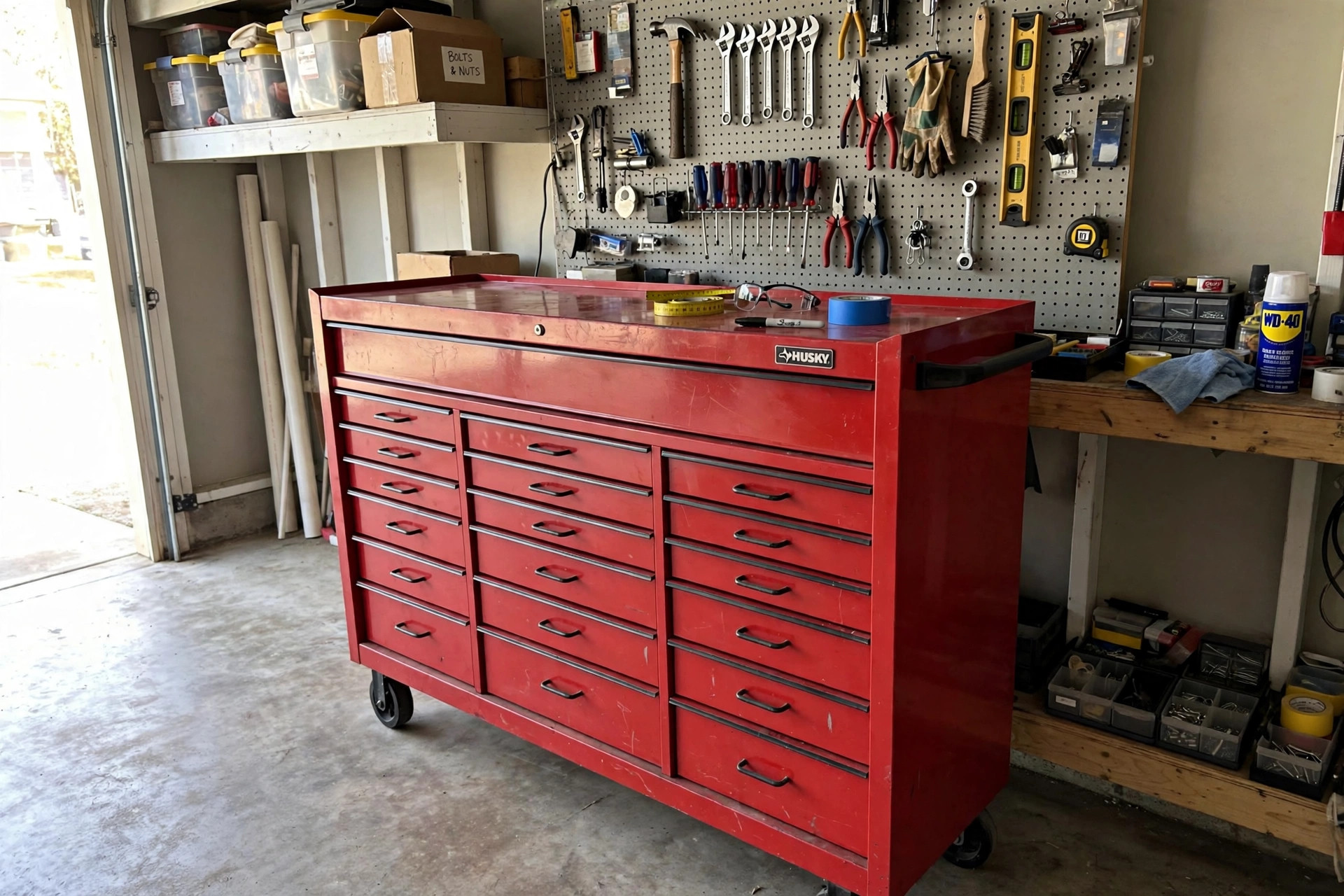
A rolling cabinet is a tall chest on caster wheels. It usually stands 34 to 48 inches high. It has five to twelve drawers plus a top till. You roll it to the car or the bench, do the job, and roll it back. This is the most popular type for home garages. It pairs well with a solid workbench, and buyers who compare full garage setups often read the best workshop tool chests for American homes before they decide on a size.
Top Chests
A top chest sits on top of a rolling cabinet or a bench. It is shorter and holds the tools you reach for daily. Many owners buy a matching top chest later, when the rolling cabinet fills up. The pair together is called a combo set. Top chests cost less than rolling cabinets because they are smaller and have no wheels.
Combo Sets
A combo set is a top chest and rolling cabinet sold as one unit. Buying the set usually costs less than buying both parts apart. Sets also match in color and drawer layout. If you know you need both, the set is the better deal.
Stationary and Side Cabinets
Side cabinets are narrow chests that bolt to the side of a rolling cabinet. They add storage without much floor space. Stationary chests have no wheels. They suit a shop where the chest never moves. They cost less than rolling models of the same size, since wheels and casters are pricey parts.
Cost and Price
Now the numbers. A workshop tool chests price comparison USA style must give real ranges. Prices shift with sales and seasons, but the bands below hold steady year after year.
– Small top chests (26 inch, 4 to 6 drawers): about 60 to 150 dollars. These suit a new homeowner with a basic tool set. – Mid-size rolling cabinets (41 to 46 inch, 8 to 10 drawers): about 200 to 500 dollars. This is the sweet spot for most home garages. – Large rolling cabinets (52 to 56 inch, 10 to 12 drawers): about 450 to 900 dollars. These hold a full mechanic set with room to grow. – Extra-large cabinets and combo sets (72 inch, 16 plus drawers): about 900 to 2,000 dollars or more. These are built for serious hobbyists and pros.
What moves the price inside each band? Five things matter most.
1. Steel thickness. An 18-gauge chest costs more than a 20-gauge chest of the same size. The heavier steel simply uses more metal. 2. Drawer slides. Ball-bearing slides add cost. A cabinet with soft-close ball-bearing slides can cost 100 dollars more than the same size with friction slides. 3. Finish. Gloss black and red are standard. Special colors and textured powder coats cost extra. Powder coat also resists chips better than plain enamel. 4. Brand. Big tool brands charge for their name and their warranty network. Store brands often match the specs for less money. Big retailers like Home Depot and Lowe’s carry both national brands and their own house brands side by side, which makes comparison easy. 5. Sales timing. Tool chests go on sale around major holidays. Father’s Day, Black Friday, and spring garage season bring the deepest cuts. A 600-dollar chest may drop to 450 dollars during a holiday sale.
Shipping is a hidden cost. A 56-inch steel cabinet can weigh 300 pounds. Many online listings charge 50 to 150 dollars for freight delivery. Check the final delivered price, not just the shelf price. Stores like Wayfair and The Container Store list shipping costs before checkout, so compare the totals.
Used chests are worth a look too. A ten-year-old steel chest with smooth drawers can sell for half its new price. Check the slides and the lock before you pay. Rust on the outside is cosmetic. Bent drawers are not.
Care and Upkeep
A tool chest can last twenty years with basic care. Wipe the outside with a damp cloth a few times a year. Wax the paint once a year with car wax. This keeps moisture off the steel and slows rust.
Keep the drawers clean. Metal shavings and sawdust work into the slides and grind them down. Vacuum the drawers when you notice grit. A drop of light oil on friction slides once a year keeps them smooth. Ball-bearing slides need less care, but wipe them clean if they start to drag.
Mind the load. Do not pile all your heavy tools in one drawer. Spread the weight across the cabinet. Check the caster wheels once a year. Tighten any loose bolts. If a wheel wobbles, replace it before the cabinet tips. Storage experts at IKEA and Apartment Therapy stress the same rule for all heavy furniture: keep the load low and even.
Watch for moisture. Garages get damp in spring and fall. A small dehumidifier or a few silica gel packs inside the chest help. If you see rust spots, sand them lightly and touch up with matching paint. Left alone, small spots grow.
Safety
Tool chests are heavy. A loaded 56-inch cabinet can weigh 600 pounds or more. Never stand on a chest to reach a high shelf. The drawers can slide out and tip the whole cabinet. Open only one heavy drawer at a time. If you must open several, lock the casters first.
Anchor tall chests if small children visit your garage. A simple anti-tip strap to a wall stud stops a climb-over accident. Keep the chest locked when children are near. Knives, chisels, and punches belong in locked drawers, not open bins.
Mind your back when you move a chest. Empty the drawers before you roll a heavy cabinet across a rough floor. A full drawer can slide open mid-move and throw the balance off. Two people should lift a top chest onto a cabinet. Lift with your legs, not your back.
Frequently Asked Questions
What size tool chest do I need for a home garage?
For most home garages, a 41 to 46 inch rolling cabinet with eight to ten drawers is plenty. It holds a full hand tool set, a drill, and a box of fasteners. If you work on cars often, step up to 52 or 56 inches. Measure your garage first. Leave room to open the drawers fully and to walk past the chest.
Are cheap tool chests worth buying?
A cheap chest suits light use. If you own a basic set of wrenches and screwdrivers, a 150-dollar cabinet will serve you for years. Heavy users wear cheap chests out faster. The slides fail first. Match the chest to the load. Buy the best slides you can afford.
Should I buy a combo set or buy pieces over time?
If you know you need both parts, buy the combo set. The set price beats the two separate prices, and the parts match. If money is tight, buy the rolling cabinet first. It holds the most tools. Add the top chest later when funds allow. Guides like Family Handyman often suggest building your storage in stages this way.
How much weight can a tool chest drawer hold?
It depends on the slides. Friction slides usually hold 25 pounds per drawer. Ball-bearing slides hold 50 to 75 pounds. The maker lists the rating in the specs. Stay under it. Overloading bends the slides and ruins the smooth glide.
Do tool chests keep tools from rusting?
They help a lot. A closed chest blocks dust and slows moisture from reaching the tools. It does not stop rust on its own in a damp garage. Add a dehumidifier or rust-inhibitor packs for full protection. Long-standing tool brands such as Craftsman recommend storing tools dry and oiled as well as enclosed.
Can I store a tool chest outside?
Not for long. Rain and sun break down the paint and the seals. Moisture creeps into the drawers and rusts the slides. If the chest must sit in a carport, cover it with a waterproof tarp and keep it off wet concrete with wooden blocks. An indoor garage or shed is far better. Entryway and garage storage often overlap, so some owners pair garage chests with indoor pieces like the mudroom storage benches price comparison options for a full home plan.
A Final Word
A workshop tool chests price comparison USA buyers rely on always ends in the same place. Know your tools. Know your space. Set a budget. Then compare like-for-like on gauge, slides, drawer count, and delivered price. The cheapest chest that meets your real needs is the best value. Buy once, keep it dry, and it will serve you for decades.
References
Apartment Therapy. (n.d.). Home design ideas and inspiration. https://www.apartmenttherapy.com Craftsman. (n.d.). Tools and storage. https://www.craftsman.com Family Handyman. (n.d.). DIY home repair and maintenance. https://www.familyhandyman.com IKEA. (n.d.). Home furnishings. https://www.ikea.com Lowe’s. (n.d.). Home improvement products. https://www.lowes.com The Container Store. (n.d.). Storage and organization products. https://www.containerstore.com The Home Depot. (n.d.). Home improvement products. https://www.homedepot.com The Spruce. (n.d.). Home and garden advice. https://www.thespruce.com Wayfair. (n.d.). Furniture and home goods. https://www.wayfair.com
Was this guide helpful?

About Robert Taylor
The My Garden US editorial team writes practical, in-depth home and garden guides for American homeowners — tested advice, no fluff.
You May Also Like

Slim Rolling Pantry Carts Price Comparison USA: A Plain Guide to Slim Kitchen Storage
June 26, 2026 0 views
Space Saving Rolling Storage Carts With Free Shipping: A Buyer’s Guide
August 23, 2026 0 views
Top Rated Rolling Storage Carts for Small Apartments
June 14, 2026 0 views