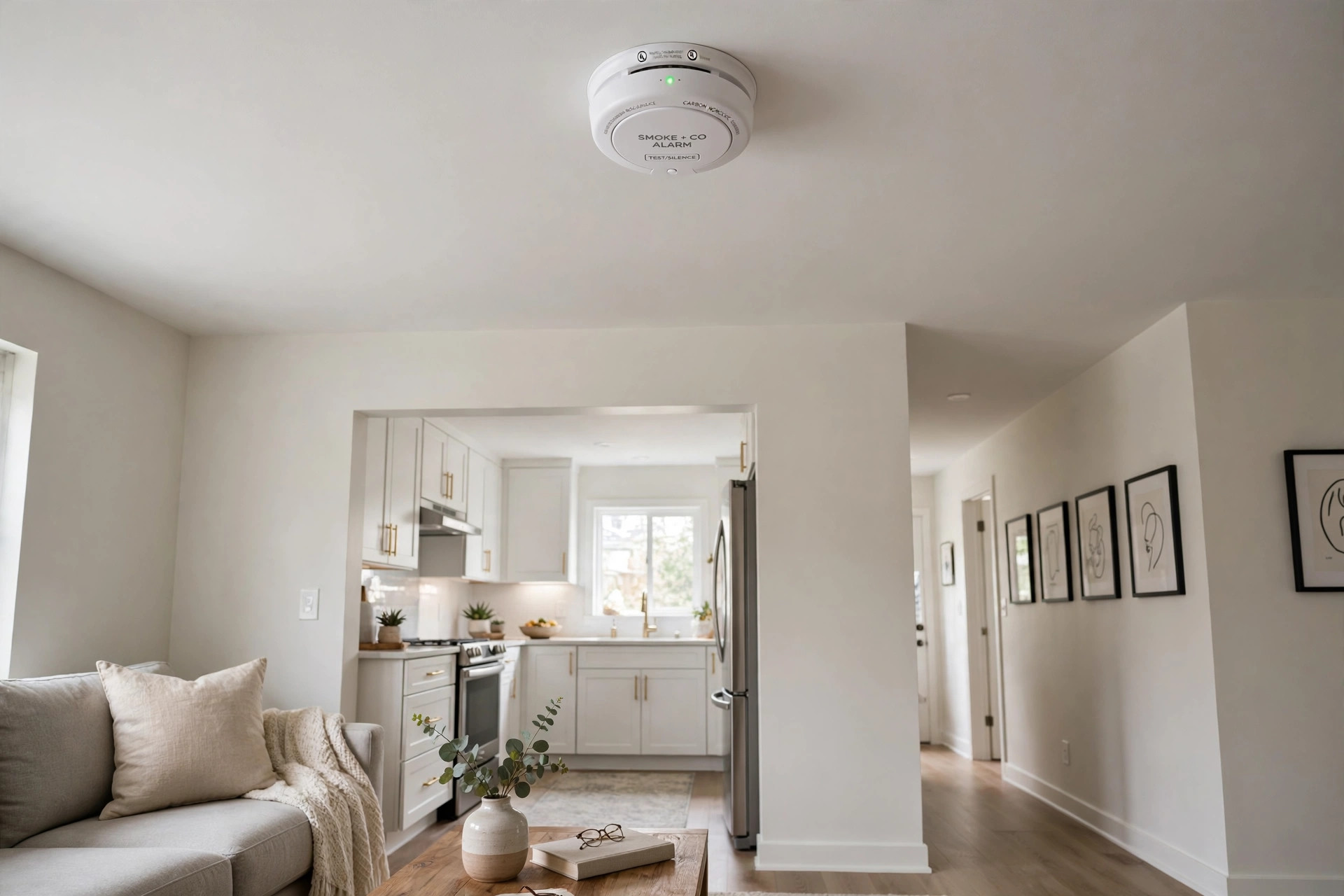

Every year, smoke and carbon monoxide take lives a good alarm could have saved. A standard alarm sounds in the house and stops there. If no one is home, the sound does no good. A smart smoke and CO combo detector does more. It senses smoke and deadly carbon monoxide gas, and it sends an alert straight to your phone. That alert can reach you at work, on a trip, or in the garden. It can also reach a family member. For this reason, the best smart smoke and co combo reviews usa are read with care by homeowners across the country. This guide looks at what these devices do, how to choose one, what they cost, and how to keep them working.
Why a Smart Combo Detector Matters
Smoke kills in a fire, but carbon monoxide kills without any warning at all. The gas has no color, no smell, and no taste. A faulty furnace, a blocked chimney, or a car left running in a garage can fill a home with it in a short time. People fall asleep and never wake up. A combo detector guards against both dangers in one unit.
The smart part changes everything. When a smoke and CO combo device is smart, it connects to your home Wi-Fi and to an app on your phone. If smoke rises at home while you are at the office, your phone buzzes within seconds. You can call the fire department from far away. Some models let you hush a false alarm from the couch instead of climbing a chair and waving a towel. Many also speak the name of the room where the danger is found.
A second reason matters too. Smart detectors test themselves. They run silent checks each month and report battery and sensor health to the app. For older parents or a second home, that peace of mind is worth a great deal.
What to Look for When You Choose: Best Smart Smoke and Co Combo Reviews Usa
The best smart smoke and co combo reviews usa point to the same short list of features again and again. Start with detection. The alarm must sense both smoke and carbon monoxide, and it should use proven sensor types. Photoelectric sensors catch slow, smoky fires well. Ionization sensors react faster to open flame. Many top models use a split-spectrum sensor that handles both. For carbon monoxide, an electrochemical sensor is the standard you want.
Next comes the alert. The alarm must be loud, at least 85 decibels, and it should use voice alerts naming the room and the danger. The app must send push alerts fast and keep working when you are away from home. Check that the app is simple to use. A poor app turns a smart alarm into a dumb one.
Power and life matter. Most combo units run on a sealed ten-year battery. You never change the battery. At the end of ten years, the whole unit gets replaced. A few models need house wiring. Those keep working in a power cut only if they have a battery backup. Pick sealed-battery units if you do not want wiring work.
Connectivity should fit your home. Most smart alarms use Wi-Fi on the 2.4 GHz band. Make sure your router reaches every corner where you will mount a unit. Some alarms form a mesh, so that when one sounds, they all sound. That feature is worth having in a two-story home.
Interconnect and smart-home ties come last. Good units link together so the whole house warns at once. Many work with common voice assistants and with security systems. If you already run a wireless doorbell camera with strong reviews in a smart-home setup, a combo alarm from the same ecosystem keeps the app count low.
Types and Options on the Market
Combo alarms fall into three rough groups. Standalone smart combo units are the most common. They replace the plain alarm on the ceiling and work through their own app. They cost the least and suit most homes. Well-known models in this group appear often in expert roundups from places like CNET and PCMag.
Listening devices form the second group. These do not detect smoke themselves. They listen for the sound of your existing alarms and alert your phone when they hear one. They cost less and suit renters who cannot change hardwired alarms. The catch is plain: if the old alarm fails, the listener cannot help.
The third group ties into full security systems. Brands like SimpliSafe and ADT sell smoke and CO sensors that report to a monitoring center. If the alarm trips, a dispatcher calls you and can send the fire department. The trade is a monthly fee. Homes that already pay for monitoring often take this path.
There are also store-brand and ecosystem models sold through big retailers and device makers. Pages like the Google Store and Ring show how these devices sit inside wider smart-home families. Review sites such as The Verge and Consumer Reports test many of them head to head each year.
How the Top Models Compare
Reviews in the United States keep returning to a small set of names. The Google Nest Protect stands near the top in almost every roundup. It uses a split-spectrum smoke sensor, speaks room names, tests itself, and links to the Google Home app. It costs more than most rivals, and some users dislike its app-only controls.
The First Alert Onelink line is a strong second pick. It adds a built-in speaker to a full smoke and CO combo. Price sits in the middle range.
X-Sense offers the best value for many buyers. Its smart combo units use a sealed ten-year battery, link wirelessly so all units sound together, and cost well under the big names.
In independent tests, Consumer Reports and the U.S. Consumer Product Safety Commission keep reminding buyers of one fact: brand matters less than proper placement and working sensors. A mid-range alarm in the right spot beats a costly alarm in the wrong one.
Cost and Price
A single smart smoke and CO combo unit costs between 60 and 150 dollars in the United States. Basic smart models with a sealed battery sit near the low end. Flagship models with voice alerts, self-testing, and wide smart-home support sit near the high end. A full home needs more than one unit. Plan on one per bedroom, one outside each sleeping area, and one on each level including the basement. A three-bedroom, two-story house often needs six units. That brings a whole-home set to 400 to 900 dollars for the hardware alone.
Wired installation adds cost if you choose hardwired models. An electrician may charge 100 to 200 dollars per unit in many markets. Battery units need no electrician, which is one reason they sell so well.
Monthly fees apply only to monitored systems. The fee runs 15 to 30 dollars a month with major providers. Over ten years, that adds up to more than the hardware. Weigh it against the value of a dispatcher who can call the fire department when you do not hear your phone.
Running costs are near zero for battery models. There are no batteries to buy for ten years. Wired models use a tiny amount of house power. Replacement is the real cost. Every combo alarm expires after about ten years, and smart ones cost more to replace than plain ones. Set a calendar reminder for the replace-by date printed on the unit.
Placement and Setup
Placement decides whether the alarm can save you. Mount a combo unit high on the ceiling or high on the wall, since smoke rises. Keep it at least ten feet from a cooking stove so toast does not set it off. Put one in every bedroom, one in the hallway outside bedrooms, and one on each floor. Do not put alarms in the garage, the bathroom, or right next to a furnace vent. Steam and dust cause false alarms.
For carbon monoxide, the best spots are outside sleeping areas and near attached garages. CO mixes with air, so height matters less than it does for smoke, but ceiling mounting still works fine for combo units. Read the maker booklet for each room before you drill.
Setup takes about fifteen minutes per unit. Download the app, create an account, and follow the steps. Most owners do it themselves, but if you want a pro for a wired setup, check smart doorbell installation cost near me for a rough idea of what electricians charge. Name each unit by room as you add it. That name is what the alarm speaks in an emergency, so use plain names like “upstairs hall” and not “unit three.” Test each unit after setup with the app test button, then hold a real test once a year if the maker allows it.
Pair the alarm with the rest of your security gear where it makes sense. A house that already compares doorbell brands in a Ring vs Nest comparison will find it simple to keep its alarms in the same app family. Fewer apps mean fewer passwords to lose and faster alerts in a crisis.
Care and Upkeep
Smart alarms ask for little care, but they still need some. Dust the unit twice a year with a soft cloth or a vacuum brush. Dust on the sensor is the top cause of false alarms. Do not paint the unit or cover its vents.
Read the app once a month. It shows battery level, sensor health, and the date of the last self-test. If the app shows a fault, act on it the same day. Replace the unit at once if the end-of-life warning sounds. That warning is a hard chirp pattern, often once a minute, that will not stop.
Keep the app updated on your phone. Makers push updates that fix alert bugs and improve detection. An old app can miss a push alert. If you change your Wi-Fi password, rejoin each alarm to the new network at once. An alarm that lost its connection still sounds in the house, but it cannot alert your phone.
Plan the ten-year replacement. Write the expiry date on the inside of a kitchen cabinet door with a marker. When the date comes, replace every unit at the same time. Mismatched old and new units can break the wireless link between them.
Safety Notes You Should Not Skip
A smart alarm is a guard, not a guarantee. It cannot stop a fire or fix a gas leak. Every home still needs an escape plan. Walk the plan twice a year with everyone in the house. Keep bedroom doors closed at night. A closed door slows smoke and heat and buys minutes.
Never ignore an alarm. If the combo unit sounds for carbon monoxide, get out at once and call the fire department from outside. Do not open windows first and do not go back inside for pets or papers. CO can knock you down fast. The U.S. Consumer Product Safety Commission warns each year that many deaths happen when people re-enter a home too soon.
False alarms have their own safety cost. If an alarm screams every time you sear a steak, you will stop trusting it. That is why placement matters more than brand. Keep cooking alarms far from the stove, run the range hood, and use the hush feature in the app rather than pulling the unit off the ceiling.
Check local law. Many states and cities require smoke and CO alarms in rentals and in home sales. Some require specific sensor types or sealed ten-year batteries. Landlords who skip this duty face fines and worse. A quick check of your state fire marshal page takes ten minutes and keeps you on the right side of the rules.
Frequently Asked Questions
How many combo alarms does my home need? Put one in each bedroom, one in the hall outside the bedrooms, and one on each level of the home. Most family homes need five to seven units. Count the basement and the garage level as levels.
Do smart combo alarms work when the power or Wi-Fi goes out? The alarm itself still sounds in the house, since it runs on its own battery. The phone alert will not go out while the Wi-Fi is down. Monitored systems with cellular backup can still report the alarm to the monitoring center.
How long does a smart smoke and CO combo last? About ten years from the date of manufacture. The sensors wear out even if the battery is sealed. Check the replace-by date printed on the unit and replace all units at once.
Can a smart combo alarm call the fire department by itself? Most standalone models cannot. They alert your phone, and you call. Only alarms tied to a paid monitoring plan, such as those from SimpliSafe or ADT, can have a dispatcher send help.
Will steam from the shower set it off? It can if the unit is too close to the bathroom. Keep combo alarms out of bathrooms and at least a few feet from the bathroom door. Good placement ends most false alarms before they start.
A Short Final Word
The best smart smoke and co combo reviews usa all end in the same place. Pick a listed unit from a maker you trust, put one in every right spot, name each room plainly, and keep the app on your phone up to date. The smart features are a fine bonus, but the plain work of the alarm, a loud clear warning in the dark, is what saves lives. Spend the money once, spend ten quiet years, and replace the units when their time is done. Your home, and everyone who sleeps in it, deserves that much.
References
ADT. (n.d.). Home security and automation. https://www.adt.com CNET. (n.d.). Technology news and reviews. https://www.cnet.com Consumer Reports. (n.d.). Product reviews and ratings. https://www.consumerreports.org Google Store. (n.d.). Smart home devices. https://store.google.com PCMag. (n.d.). Technology product reviews. https://www.pcmag.com Ring. (n.d.). Smart home security devices. https://www.ring.com SimpliSafe. (n.d.). Home security systems. https://www.simplisafe.com The Verge. (n.d.). Technology news and reviews. https://www.theverge.com U.S. Consumer Product Safety Commission. (n.d.). Product safety information. https://www.cpsc.gov
Was this guide helpful?

About Jennifer Lee
The My Garden US editorial team writes practical, in-depth home and garden guides for American homeowners — tested advice, no fluff.
You May Also Like

Best Neighborhood Watch Camera Sharing Apps USA
June 22, 2026 0 views
Home Security System Installation Cost USA: A Plain Guide for Homeowners
January 10, 2026 0 views
10 Year Battery Smoke Detector Reviews USA: A Plain Guide to Buying the Right Alarm
January 2, 2026 0 views