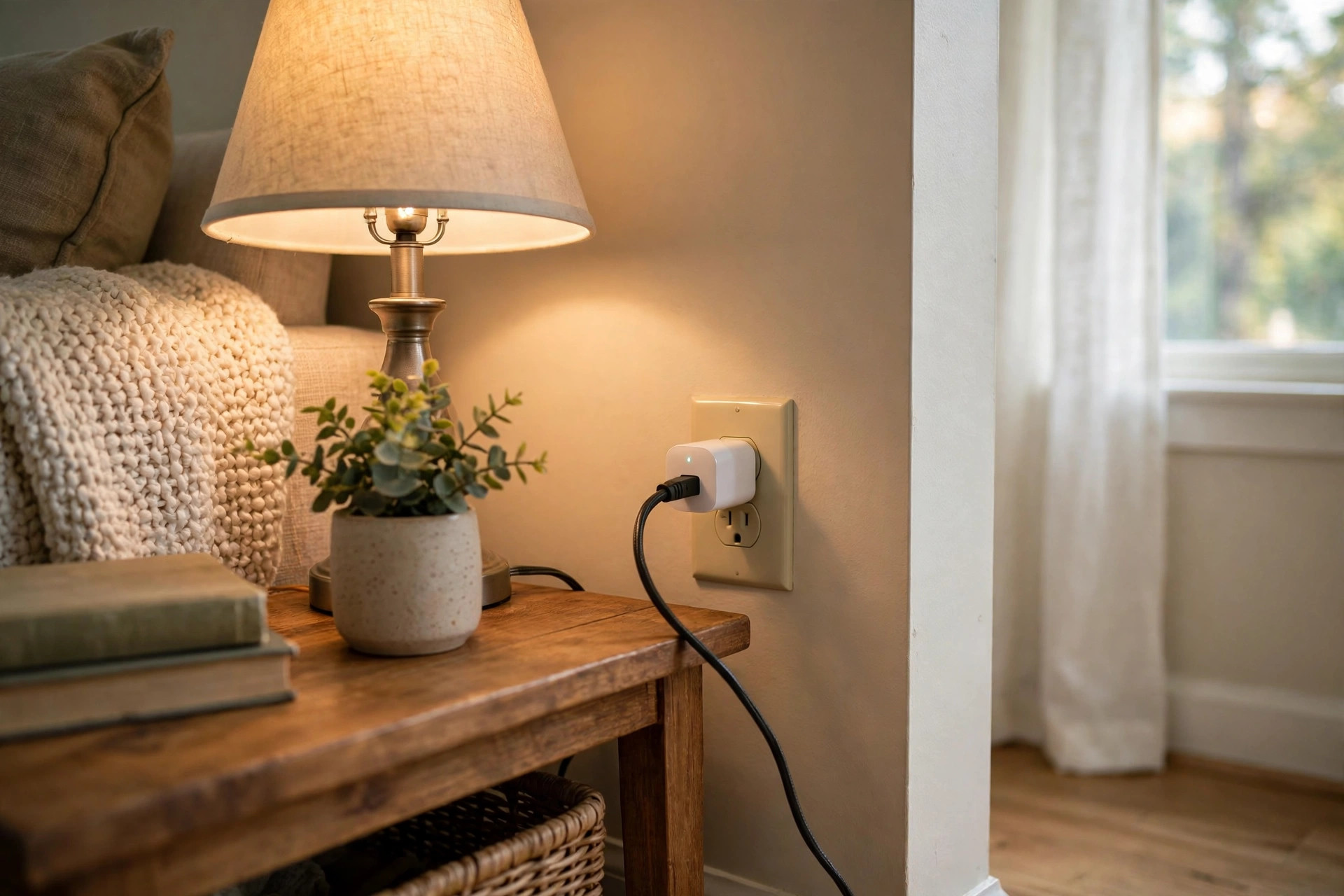

The best matter compatible smart plug reviews usa are easy to find but hard to read. Many reviews use words that sound grand but mean little. Many are written by people who want to sell a plug, not help a buyer. This guide takes a different road. It explains what a Matter plug is, why the standard matters, and how to pick a good one for your home. It uses plain words. It gives real advice. By the end, you will know what to buy and what to skip.
A smart plug is a small box. It fits into a wall outlet. You plug a lamp or a fan into it. Then you can turn that lamp on or off with your phone or your voice. It is one of the cheapest ways to make a home smart. Matter is a new open standard for smart home gear. A Matter plug works with Apple Home, Google Home, Amazon Alexa, and Samsung SmartThings. You do not need a brand app. You set it up once, and it answers to the system you already use.
Why a Matter Smart Plug Matters
The old way of smart homes was a mess. Every brand had its own app. Some plugs needed a hub. Some only worked with one voice helper. When a brand closed its servers, the plug became a brick. Matter changes this. It is a shared language built by many large firms. When a plug speaks Matter, it speaks to them all. Your best PoE security camera system reviews may cover another corner of the smart home, but the plug is the simplest place to start.
A Matter plug also lasts longer. You are not tied to one phone or one brand of speaker. If you move from an iPhone to an Android phone, the plug follows you. If you add a new speaker next year, the plug still answers. This is why reviews of Matter plugs now fill the market. The standard is new, and makers want a share of it.
Money matters too. A plug costs little and saves power. Many models show how much power a lamp or a fan uses. Some can set a schedule. A lamp that turns off at midnight uses no power all night. A fan that runs only when needed wastes less. Over a year, a few well-placed plugs can pay for themselves.
What to Look for When You Choose a Plug: Best Matter Compatible Smart Plug Reviews Usa
Good reviews of Matter plugs all point to the same few traits. Start with the radio. Matter runs over two kinds of link: Thread and Wi-Fi. Thread plugs use very little power and form a mesh. Each Thread plug helps carry signals to the next one. They need a Thread border router in the house. A HomePod, an Apple TV 4K, a newer Google Nest speaker, or an Amazon Echo can fill this role. Wi-Fi plugs need no router of their own. They join your home network like a phone. They are easier to set up but can crowd a busy network.
Next, look at the outlet rating. Most plugs in the United States handle 15 amps at 120 volts. That covers lamps, fans, phone chargers, and most small gear. Do not use a plug for a heater or a big air conditioner unless the plug is made for it. Read the rating on the box. A plug that says 1800 watts is safe for a 1500-watt heater, but a cheap plug with no clear rating is not.
Size is a real issue. Some plugs are wide. They block the second outlet on the wall plate. A slim plug leaves both outlets free. If you plan to use two plugs on one plate, check the width before you buy. Reviews that measure this are worth more than reviews that do not.
The setup method matters too. Every Matter plug uses a QR code or a setup code. You scan the code with your home app. A good plug pairs in under two minutes. A bad one times out or needs you to stand close to the router. Look for reviews that time the setup. They tell you more than star ratings do.
Energy tracking is a fine extra. Some Matter plugs report watts and kilowatt-hours. Some do not. If you want to learn where your power goes, pick a plug that tracks energy. If you only want to turn a lamp on and off, skip the extra and save the money.
Types of Matter Smart Plugs
Mini Plugs
Mini plugs are the most common. They are small and round or square. They sit flat against the wall. Most are rated for 15 amps. They are the best pick for lamps, fans, and chargers. They cost the least. For a first smart plug, a mini plug is the right move.
Plugs With Energy Monitoring
These look like mini plugs but track power use. The home app shows watts in real time and totals for the day, week, or month. They cost a bit more. They suit people who want to cut a power bill. A review site that tests the numbers with a real meter is worth reading. Some plugs guess the numbers. Some measure them. The true meters are the ones you want.
Outdoor Plugs
Outdoor plugs are built for rain and dust. They carry a weather rating on the box. They often have two outlets so one plug can run two string lights. They cost more than indoor plugs. They are the right pick for a porch, a yard, or holiday lights. Check that the rating is real and not just a word. A plug with an IP rating, such as IP44 or higher, is built for weather. A plug that only says “weather resistant” may not be.
Power Strips With Matter
A smart power strip has three or four outlets in one box. Each outlet can switch on its own. This suits a TV stand or a desk. A lamp, a charger, and a fan can each run on their own schedule. Power strips cost more than single plugs but less than three plugs. They need a firm Wi-Fi signal if they run over Wi-Fi.
Cost and Price
Matter plugs are not dear. A basic indoor mini plug sells for about 12 to 20 dollars in the United States. A plug with energy monitoring sells for about 18 to 30 dollars. Outdoor plugs sell for about 20 to 40 dollars. A four-outlet power strip sells for about 35 to 60 dollars. These prices move with sales and with new models, so treat them as a guide, not a rule.
Packs of two or four lower the price per plug. If you know you want three plugs, a four-pack is often the best deal. Watch for the trick of fake savings. Some packs pair a good price with an old model that lacks Matter. Check the box or the listing for the Matter mark before you pay.
What should you avoid? Do not pay for features you will not use. A plug with energy tracking is wasted on a porch light that runs on a timer. A Wi-Fi plug is fine for a house with a strong router; you do not need to pay for Thread unless you plan a large mesh. And do not pay twice. If you already own an old plug that works, keep it. Matter is new and good, but a working plug owes you nothing.
Reviews that name prices without dates are weak. Prices move fast. A review from last spring may quote a price that is long gone. The best reviews say when they checked the price. Keep this in mind when you read any list of the best matter compatible smart plug reviews usa.
Care and Upkeep
A smart plug needs little care. Keep it dry. Do not pull it by the cord of the lamp. Dust the slots once in a while. Check the plug each year for heat. A plug that feels warm is normal. A plug that feels hot is not. Unplug a hot plug and stop using it. Heat is a sign of a loose outlet or a failing plug.
Software needs care too. Open the home app now and then and check for updates. Makers release updates that fix bugs and close safety gaps. A plug that never updates is a plug you should replace. If a plug drops off the network often, move it closer to the router or to a Thread router. A weak signal is the most common cause of a “dead” plug that is not dead at all.
Reset a plug before you sell it or give it away. Every plug has a reset step, often a long press on its button. Reset wipes your network and your account from the plug. The next owner can set it up fresh. This small step guards your home.
Safety
Safety is the most serious part of any smart plug review. A plug sits in your wall for years. It carries real current. Buy plugs with a UL or ETL mark. These marks mean a lab tested the plug to United States safety rules. A plug with no mark is a risk. The Consumer Product Safety Commission tracks recalls of unsafe electrical gear, and its reports are a good place to check before you buy a little-known brand.
Do not use an indoor plug outside. Rain can reach the contacts and cause a fault. Do not plug one power strip into another. This is called daisy chaining. It can overload the first strip. Do not run a heater through a plug made for lamps. The plug can melt. These rules sound plain, but most plug fires come from breaking one of them.
Fire safety reviews also look at how a plug fails. A good plug fails safe. It cuts power when it gets too hot. A cheap plug has no such guard. This is one more reason to buy a named brand with a real safety mark. The few dollars you save on a no-name plug are not worth the risk.
Security is part of safety too. Matter plugs join your home network. Keep your Wi-Fi password strong. Keep the home app updated. Do not share setup codes in photos you post online. A QR code in a photo can let a stranger add your plug to their phone. Peel the code sticker off only when you need it, and store it someplace safe.
If you plan a wider smart home, read up on the rest of the system as well. Good best professionally monitored security systems guides explain how alarms, cameras, and plugs work side by side. And before you wire anything yourself, check what smart doorbell installation costs look like in your area, since some smart jobs are best left to a pro.
FAQ
What does Matter mean on a smart plug? Matter is an open smart home standard. A plug with Matter works with Apple Home, Google Home, Amazon Alexa, and Samsung SmartThings without a brand app. It pairs with a QR code and answers to the voice helper you already use.
Do I need a hub for a Matter smart plug? Wi-Fi Matter plugs need no hub. They join your home network. Thread Matter plugs need a Thread border router, which may already be in your house. A recent HomePod, Apple TV 4K, Google Nest hub, or Amazon Echo can serve as one.
Can a Matter plug work with both iPhone and Android? Yes. That is one of the main gains of Matter. The same plug can sit in an Apple home and a Google home at once. If you change phones, the plug stays with you.
Which is better, Thread or Wi-Fi for a smart plug? Both work well. Thread uses less power and builds a mesh that grows stronger as you add plugs. Wi-Fi is simpler to set up and needs no border router. For one or two plugs, Wi-Fi is fine. For a house full of plugs, Thread is the better base.
Can I use a smart plug with a space heater? Only if the plug is rated for it. Most plugs are made for 15 amps, which covers a 1500-watt heater on paper. But heat is the enemy. Use a plug with a clear high rating, a UL or ETL mark, and a heat cut-off. Many makers warn against heaters. When in doubt, plug the heater straight into the wall.
Do Matter plugs save power? The plug itself uses a small amount of power, often under one watt. It saves power by turning gear off when it is not needed. A lamp on a schedule or a fan that runs only in the evening can cut real waste. Plugs with energy tracking show the savings in numbers.
A Final Word
The best matter compatible smart plug reviews usa agree on one point: the plug itself is simple, and the standard is the star. Buy a plug with a real Matter mark, a real safety mark, and the right rating for the job. Keep it simple. A mini plug for a lamp. A weather-rated plug for the porch. A strip for the desk. Read reviews that measure setup time and test safety, not just ones that count stars.
Start with one plug. Learn how it feels in your daily round. Then add more. A home that grows one plug at a time is a home that stays simple, safe, and under your control. That is what the Matter standard was built for, and it is what a good plug should give you.
For more background, see The Verge, Consumer Reports, and Ring. For more background, see U.S. Consumer Product Safety Commission, SimpliSafe, and ADT. See CNET for more detail.
References
ADT. (n.d.). Home security and automation. https://www.adt.com CNET. (n.d.). Technology news and reviews. https://www.cnet.com Consumer Reports. (n.d.). Product reviews and ratings. https://www.consumerreports.org Google Store. (n.d.). Smart home devices. https://store.google.com Ring. (n.d.). Smart home security devices. https://www.ring.com SimpliSafe. (n.d.). Home security systems. https://www.simplisafe.com The Verge. (n.d.). Technology news and reviews. https://www.theverge.com U.S. Consumer Product Safety Commission. (n.d.). Product safety information. https://www.cpsc.gov
Was this guide helpful?

About David Wilson
The My Garden US editorial team writes practical, in-depth home and garden guides for American homeowners — tested advice, no fluff.
You May Also Like
3 Way Smart Switch Installation Guide USA
February 21, 2026 0 views
Cellular Security Camera No WiFi Reviews USA: A Plain Guide for Homes and Cabins
March 26, 2026 0 views
Solar Lease vs Buy Comparison USA 2026: A Plain Guide for Homeowners
April 10, 2026 0 views