
When the first cold nights of autumn arrive, many homeowners start to ask about the pellet stove installation cost near me. A pellet stove burns small compressed pellets of wood or plant material. It gives steady heat for a room or a whole floor. It often costs less to run than oil or electric heat. But the true price of the job depends on more than the stove itself. Venting, permits, labor, and the layout of your home all play a part. This guide walks through each part of the cost in plain terms, so you can plan with confidence.
Why a Pellet Stove May Be Right for Your Home
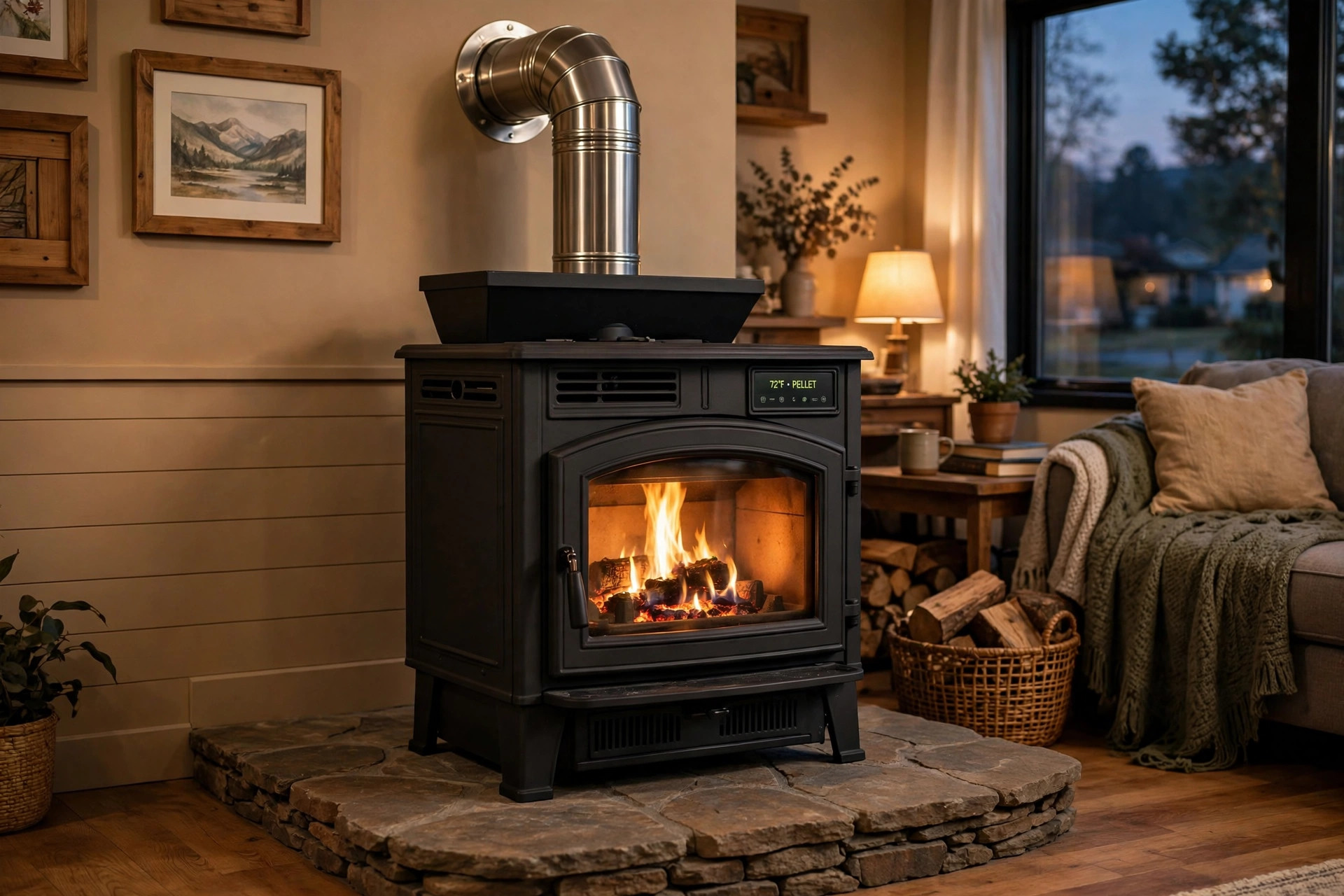
A pellet stove sits between a wood stove and a furnace. Like a wood stove, it gives real flame heat that you can see through a glass door. Like a furnace, it feeds itself. A hopper holds the pellets, and an auger drops them into the burn pot on a steady schedule. A small blower pushes warm air into the room. Many models let you set a room temperature, and the stove adjusts the feed rate on its own.
Fuel cost is one reason people make the switch. Pellets are sold in forty-pound bags at hardware and farm stores across the country. A ton of pellets often costs less than the same amount of heat bought as heating oil or propane. Homeowners in cold regions also like the steady warmth. A pellet stove holds a room within a few degrees for hours, without the surges of some space heaters.
There is also the matter of comfort during power outages, with one limit. Pellet stoves need electricity to run the auger, the fans, and the controls. Most draw about as much power as a few light bulbs. A small battery backup or generator keeps them running when the grid goes down.
What Determines the Price of the Job: Pellet Stove Installation Cost near Me
The full pellet stove cost installed covers five parts: the stove, the vent pipe, labor, permits, and any building changes. Each part can move the total up or down.
The stove itself. Basic models that heat eight hundred to one thousand square feet start at the lower end of the market. Mid-range stoves with larger hoppers, quieter blowers, and thermostat control cost more. Large units meant to heat two thousand square feet sit at the top of the range. A plain black steel box costs less than a unit with porcelain enamel or a bay window.
The vent system. Most use a special double-wall pipe, often three or four inches across. A short, straight run out the nearest wall is the cheapest kind of vent. Long runs, runs that turn corners, or vents that go up through the roof cost more in pipe and labor. If your home already has a safe masonry chimney, a liner can often be run inside it after an inspection and cleaning.
Labor. A simple replacement of an old stove in the same spot may take half a day. A first-time install with new venting, a new hearth pad, and electrical work may take a full day or two. Rates vary by region. Cities and the Northeast tend to run higher than rural areas in the South.
Permits and inspections. Most towns require a permit for a new heating appliance. The fee is usually modest, but the inspection is not a step to skip. The inspector checks clearances, vent joints, and the hearth pad. A permitted job protects your insurance and your resale value.
Building changes. Some homes need a non-combustible hearth pad under and around the stove. Others need a new wall thimble, a roof flashing, or an outside air intake. Each adds material and time.
How to Find a Fair Price in Your Area
Searching for the pellet stove installation cost near me is a good start, but the search alone will not give you a number you can trust. Prices shift from county to county. The best way to learn your local price is to get three written quotes from licensed installers.
Look for dealers and hearth shops rather than general handymen. Shops that sell stoves often have factory-trained installers. They know the clearances for each brand, and they know the local code official by name. Ask each bidder to break the quote into parts: stove, vent kit, labor, permit fees, and extras. A quote that lists one lump sum tells you less than a quote that shows each line.
Ask how long the work will take and what the warranty covers. Many stoves carry a manufacturer warranty on parts, while the installer warranties the vent joints and the labor. A good installer will light the stove with you, show you how to fill the hopper, and walk you through the cleaning routine before leaving.
It also pays to call in the off season. Installers are busiest in September and October, when everyone feels the first chill. Quotes taken in spring or summer are often lower, and the schedule is easier to fit. You can also ask about rebates. The federal energy tax credit has at times covered a share of efficient biomass stoves, and some states add their own programs. A quick check of ENERGY STAR and the U.S. Department of Energy will tell you what is current.
Types of Pellet Stoves and What They Cost to Install
Free-standing stoves. These are the most common. They stand on legs or a pedestal, with the vent running out the back or the top. They suit living rooms, family rooms, and open basements. Install cost is the lowest of the types because the unit is easy to reach and the vent run is often short.
Pellet inserts. An insert slides into an existing fireplace opening and uses the old chimney, lined with new pipe, as its vent path. Inserts look neat and save floor space. The install costs more because the crew must fit the unit into the old firebox, seal the surround, and run the liner up the flue.
Furnace add-ons and boilers. Some pellet units tie into hot-water or forced-air systems and heat the whole house. These are the priciest to install, needing duct or pipe connections, larger venting, and sometimes a bigger electrical circuit. They make sense for large homes or homes already set up for hydronic heat. Carrier and Trane are names many homeowners know from the furnace world, and the same planning care applies when adding a whole-house biomass unit.
A Realistic Cost Breakdown
The stove is usually the largest single line, roughly half to two-thirds of the total, with vent pipe, labor, the permit, and the hearth pad making up the rest.
Ways to hold the total down are simple. Choose a spot on an outside wall so the vent run stays short. Keep the stove model in line with the space you need to heat. An oversized stove costs more to buy and vent, and it will cycle and soot. Buy pellets by the ton before heating season, when prices are usually lowest. And get the chimney inspected before you sign, so a cracked flue does not turn into a surprise change order.
When you compare quotes, make sure each one covers the same scope. One bid may look cheap because it leaves out the hearth pad or the permit fee. The Family Handyman guides and This Old House project write-ups both stress the same point: compare line by line, not total by total.
Venting, Permits, and Building Codes
The pipe must be the type listed for pellet fuel, with sealed joints. Most codes call for the vent to end a set distance from windows, doors, and the ground, so exhaust does not drift back inside. A wall thimble protects the wall where the pipe passes through. An outside air kit, which pulls combustion air from outdoors, is required by many makers and some codes. It also keeps the stove from pulling cold drafts through the house.
Clearances matter as much as the pipe. Every stove ships with a manual that lists how many inches it must sit from walls, furniture, and curtains. Your installer will measure them during the site visit. The hearth pad must extend a set distance in front of the glass door and to the sides, and it must be made of non-combustible material such as tile, stone, or a listed pad.
The permit office will want to see the plan before work starts. After the install, the inspector checks the vent joints, the clearances, and the pad. Keep the manual and the permit card with your house records. If you ever sell the home, the buyer and the home inspector will ask for them. It also helps to read up on related projects like gas boiler installation cost for old houses or the best garage heater for winter reviews, since the permit and venting logic overlaps.
Care and Upkeep
A pellet stove asks for a little care each week and a deeper cleaning each year. The burn pot should be scraped clear of ash every day or two during heavy use. The ash pan needs emptying when it fills, often once a week. The glass door can be wiped with a damp cloth and ash, or a cleaner made for stove glass. Once a month in heating season, vacuum the heat exchanger tubes and check the door gasket for a tight seal.
Once a year, the vent pipe should be brushed and the blower motors checked. Many owners do the weekly work themselves and hire a sweep or dealer tech for the annual service. A yearly visit also catches worn gaskets, tired igniters, and loose vent joints before they become problems. Pellet quality matters here. Certified low-ash pellets clog the burn pot less and cut cleaning time.
Store pellets in a dry place. Bags left in a damp garage or shed will swell and crumble, and damp pellets jam the auger. A dry corner of the basement or a sealed bin in the garage works well.
Safety
Heat and fire demand respect, even from a clean-burning stove. Keep the clearances in the manual at all times. Do not dry clothes on the stove or stack firewood against it. A working smoke alarm and a carbon monoxide alarm belong on every floor, and the one nearest the stove should be tested monthly. Ashes should go into a metal can with a tight lid, set on concrete away from the house, until they are fully cold.
Burn only the fuel the maker allows. Heating pellets are not the same as animal bedding or barbecue pellets, and the wrong fuel can damage the stove and void the warranty. The U.S. Environmental Protection Agency publishes clear guidance on safe home heating, and makers such as Lennox, Rheem, Goodman, and Napoleon all give the same rule: follow the manual, keep the alarms working, and service the unit yearly.
Frequently Asked Questions
How much does it cost to install a pellet stove? The total depends on the stove, the vent run, labor rates, and permits in your town. A simple free-standing install with a short wall vent costs far less than an insert fitted into an old fireplace or a whole-house boiler. Three written quotes from local hearth shops will give you the true range for your zip code.
Can I install a pellet stove myself to save money? A handy homeowner can do some of the prep work, but the venting, the electrical hookup, and the final inspection are best left to a pro. Most makers require professional install to keep the warranty in force, and most towns require a licensed installer for the permit.
Do pellet stoves need a chimney? No. Pellet stoves vent through a small double-wall pipe, not a full masonry chimney. The pipe can go straight out a wall or up through the roof. A pellet insert can use an old fireplace flue with a new liner after an inspection and cleaning.
How much do pellets cost per winter? It depends on your climate, your home size, and how warm you keep the rooms. Many homes burn two to four tons in a season. Buying by the ton in late summer, when dealers run early-bird pricing, usually beats buying bag by bag in January.
Will a pellet stove heat my whole house? A free-standing stove heats the rooms near it best. Open floor plans carry the warmth farther. Homes with closed-off rooms may need small fans or a second heat source for far bedrooms. Whole-house pellet furnaces and boilers exist for larger homes but cost much more to install.
A Final Word
The pellet stove installation cost near me is not one number but a small stack of them: the stove, the vent, the labor, the permit, and the pad. When you understand each part, you can ask sharp questions and spot a thin quote before you sign. Get three bids, check the vent plan, and plan the install for the warm months. If you are weighing other upgrades, related reads like the best insulation for metal building homes or the best garage heater for winter reviews can help, since tight insulation and the right backup heat make any stove work less hard. A well-chosen pellet stove, installed right and cleaned on schedule, will warm your home for many winters to come.
References
Carrier. (n.d.). Heating and cooling systems. https://www.carrier.com ENERGY STAR. (n.d.). Energy efficient products. https://www.energystar.gov Family Handyman. (n.d.). DIY home repair and maintenance. https://www.familyhandyman.com Goodman. (n.d.). Heating and cooling equipment. https://www.goodmanmfg.com Lennox. (n.d.). Heating and cooling systems. https://www.lennox.com Napoleon. (n.d.). Fireplaces, grills, and heating products. https://www.napoleon.com Rheem. (n.d.). Heating, cooling, and water heating. https://www.rheem.com This Old House. (n.d.). Home renovation guidance. https://www.thisoldhouse.com Trane. (n.d.). Heating and air conditioning. https://www.trane.com U.S. Department of Energy. (n.d.). Energy efficiency and renewable energy. https://www.energy.gov U.S. Environmental Protection Agency. (n.d.). Protecting human health and the environment. https://www.epa.gov
Was this guide helpful?

About David Wilson
The My Garden US editorial team writes practical, in-depth home and garden guides for American homeowners — tested advice, no fluff.
You May Also Like
Thermostat for Two Zone System Reviews USA: A Plain Buyer’s Guide
June 19, 2026 0 views
Dual Hose Portable AC Reviews 2026 USA: A Plain Buyer’s Guide
August 22, 2026 0 views
Best Garage Heater for Winter Reviews USA: A Practical Guide to Warmth
September 16, 2026 0 views