
When you search for shower valve replacement cost near me, you are asking a fair and simple question. You want to know what a plumber in your town will charge to swap out the valve behind your shower wall. The answer changes with the type of valve, the work involved, and where you live. This guide lays out the numbers in plain terms so you can plan with confidence.
A shower valve is the part behind the wall that mixes hot and cold water and controls the flow. You see only the handle or trim. The valve itself sits inside the wall. When it wears out, water may drip, the temperature may swing from hot to cold, or the handle may feel stiff. At that point a replacement is the fix.
Why a Shower Valve Matters
The valve does more work than most people guess. It guards you against sudden burns. Modern pressure-balancing and thermostatic valves keep the temperature steady even when a toilet flushes or a washer starts. Older valves lack this guard. Replacing an old valve with a new one can make a shower safer for children and older adults.
A bad valve also wastes water and money. A slow drip may send gallons down the drain each day. A valve that cannot fully shut off may run warm water all night. In hard water areas the valve can crust up inside and fail sooner. Spending money on a replacement now can stop a larger water bill and a damaged wall later.
What to Look For Before You Call: Shower Valve Replacement Cost near Me
Watch for the common signs of a failing valve. Water drips from the showerhead long after you shut the handle. The temperature will not stay where you set it. The handle turns too hard or feels loose. You may hear a grinding or squealing sound when you move the handle.
Note the brand if you can. Many valves carry a name on the trim plate: Moen, Delta, or Kohler are the common ones. Knowing the brand helps the plumber bring the right part. If you still have the papers from a past remodel, they may list the model. A photo of the handle and trim helps too.
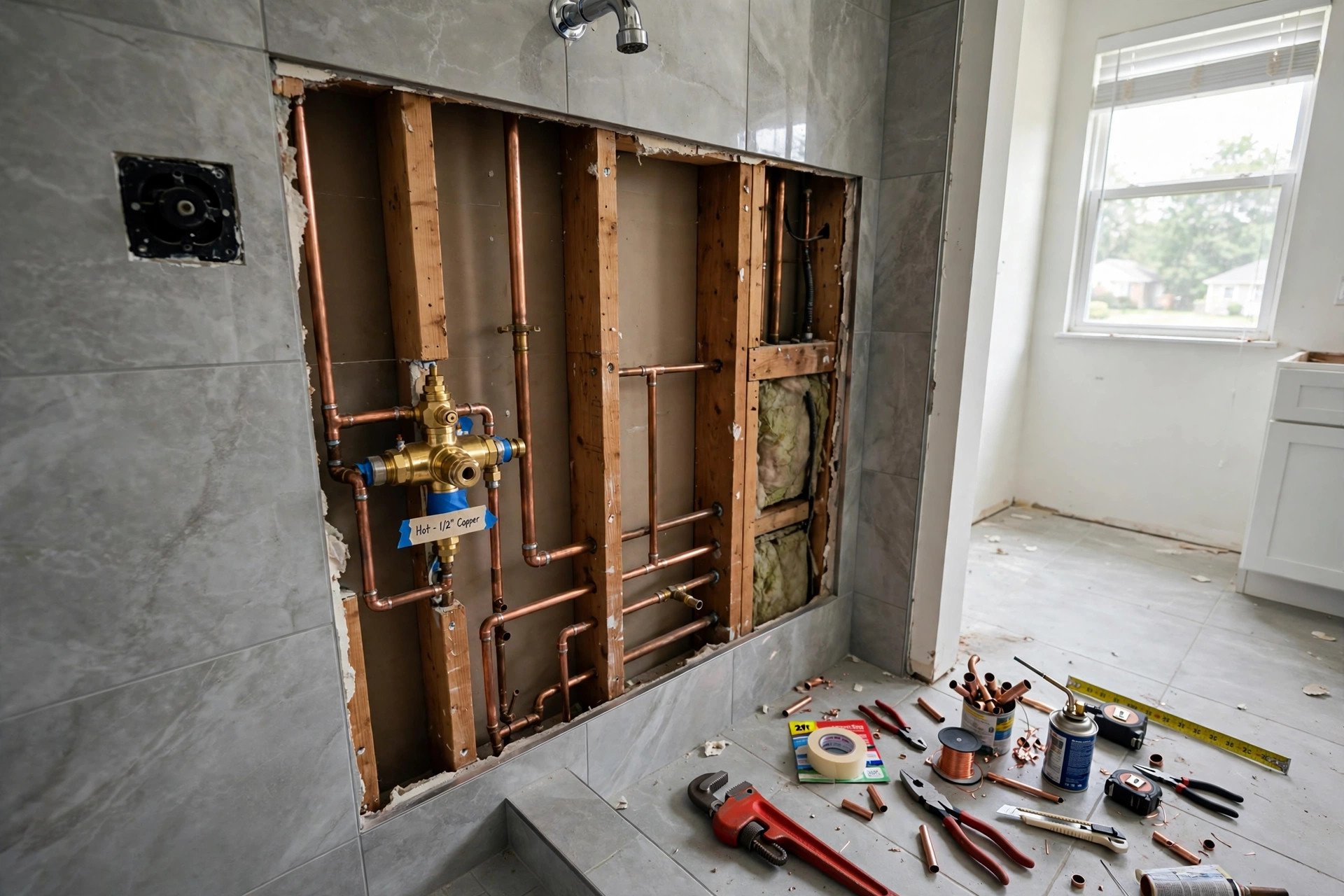
Think about access. In many homes the back of the shower wall is a closet or a hallway. A plumber can open the wall from that side and keep the tile intact. If the only access is through the tile, the job grows larger and the cost rises. Look for an access panel behind the shower before you call. Homeowner repair sites like Family Handyman show how these panels work and why they save money on valve jobs.
Types of Shower Valves and Their Price Ranges
The type of valve sets the base price of the part. Three types cover nearly every home in the United States.
Pressure-balancing valves. These are the most common. They keep the water mix steady when pressure drops on one side. The part alone runs from about 40 to 120 dollars at major retailers. Brands such as Moen and Delta sell these valves in most hardware stores. They suit most homes and meet code in nearly every state.
Thermostatic valves. These sense the actual water temperature and hold it to the degree you set. They cost more, often from 150 to 400 dollars for the valve body. Many people choose them for comfort and for extra burn protection. Kohler and other makers sell thermostatic models with matching trim kits. If someone in the home is very young or very old, this type is worth a look.
Diverter valves. Some showers have a separate diverter that sends water to the showerhead or the tub spout. A diverter replacement is often a smaller job, with parts from about 25 to 80 dollars. If your tub spout and showerhead both leak, the diverter may be the cause.
Trim kits are a separate cost. The trim is the handle and plate you see. A new trim kit runs from about 60 to 250 dollars. Many owners change the trim at the same time as the valve so the finish matches the rest of the bath.
The Cost Breakdown: Parts, Labor, and Extras
Most homeowners pay between 200 and 550 dollars for a full shower valve replacement. The part often makes up the smaller share. Labor makes up the larger share.
A typical bill looks like this. The valve body costs 40 to 250 dollars depending on type. A plumber usually charges 150 to 350 dollars in labor for a standard replacement with good access. A service call fee of 50 to 100 dollars may appear on the invoice if it is not folded into the labor.
Extras can move the total up. If the wall must be opened through tile, patching and retiling can add 100 to 300 dollars. If corroded pipes must be cut back and refit, the plumber may add 50 to 150 dollars. In an older home the plumber may need to bring the work up to current code, which can add parts and time.
Where you live matters. In large cities and coastal states, the hourly rate for a plumber runs higher, and a shower valve replacement follows that rate. In smaller towns the same job may cost a third less. This is why the words “near me” matter in your search. Prices in your zip code are the only prices that count.
Retailers such as Lowe’s and Home Depot list valve prices online so you can check part costs before you call. That knowledge helps you judge whether a quote is fair.
Repair or Replace: How to Decide
Sometimes a repair is enough. A worn cartridge inside the valve is the cause of most drips. A new cartridge may cost 20 to 60 dollars and take a plumber under an hour to fit. If the valve body itself is sound and under twenty years old, ask about a cartridge change first.
Full replacement is the better call in several cases. The valve body is cracked or corroded. The brand is no longer made and parts are hard to find. The valve lacks scald protection and you want a safer modern unit. The wall is already open for a remodel, so the labor cost is low.
A plumber can tell you which path fits. Ask for the price of both options when you call. A good plumber will explain the choice without pressure.
What the Job Looks Like, Step by Step
Knowing the steps helps you judge the work and the time. A standard replacement runs like this.
First the plumber shuts off the water to the bathroom or the whole house. Then the handle and trim come off. An access panel or a small section of wall is opened to reach the valve. The old valve is cut or unsoldered from the pipes. The new valve is fitted, soldered, or joined with modern push-fit connections. The water is turned back on and the plumber checks for leaks and tests the temperature. Finally the wall is closed and the trim is set.
The whole job often takes two to three hours with good access. Tight spaces and tile work can stretch it to half a day. The plumber should leave the area clean and show you that the valve works before leaving.
How to Choose the Right Valve and Plumber
Match the valve to your needs, not to a brand name alone. Check that the valve meets local code for scald protection. The EPA WaterSense pages explain how efficient fixtures save water without hurting performance. Pick a finish that matches your other bath fixtures. Stay with a major brand so parts stay easy to find for years.
Choose the plumber with the same care. Ask friends and neighbors for names. Read reviews and check for a license where your state requires one. Get two or three written quotes for the same scope of work. Ask whether the quote covers the valve, the trim, the wall repair, and any permit. A clear written quote beats a low verbal guess.
A plumbing emergency changes the math. If a burst pipe floods the wall behind the shower, the cost of a burst pipe repair will dwarf the valve cost, and you will pay emergency rates. Fix leaks early to avoid that bill.
Care and Upkeep After Replacement
A new valve needs little care, but a few habits will stretch its life. In hard water areas, wipe the trim and check the screen filter at the showerhead once a year. Mineral buildup is the main enemy of valves. A whole-house softener can slow that buildup, though that is a larger project on its own.
Turn handles gently. Forcing a stiff handle can crack a seal. If the handle grows stiff again, call before it breaks. Teach children not to hang on the handle. Once a year, run the valve through its full hot and cold range to keep the internal parts moving. If you ever plan to add leak protection, an automatic water shut-off valve is a smart companion to new plumbing work.
Keep your receipt and the model number. Most valve bodies carry a warranty of several years. You will need the model number if you ever order a cartridge.
Safety Notes
Water and heat demand respect. Scalding is a real risk with an old valve. Set your water heater to 120 degrees Fahrenheit. That setting still gives a hot shower while cutting burn risk. Test the new valve at full hot before you trust it.
Shut off the water before any DIY work near pipes. If you do not know where the main shutoff is, find it before the plumber arrives. Keep small children and pets out of the work area while the wall is open. Sharp tools and hot solder belong to the tradesperson.
If your home was built before 1978, take care with wall work. Older paint and building materials can hold lead or asbestos. A careful plumber will follow safe work practices for old homes.
Frequently Asked Questions
How long does a shower valve replacement take? Most jobs take two to three hours when the plumber can reach the valve from behind the wall. Tile removal or pipe repair can stretch the work to half a day.
Can I replace a shower valve myself? A skilled homeowner can do it, but the job involves cutting and joining pipes inside a wall. A mistake can flood the wall. Many owners leave this one to a licensed plumber.
Does the whole shower need new tile after a valve replacement? Not usually. If the plumber works through an access panel or the back of the wall, the tile stays untouched. Tile work is only needed when the wall must be opened from the shower side.
How long should a new shower valve last? A quality valve often lasts twenty years or more. Hard water and heavy use shorten that span. A thermostatic valve with regular care can last even longer.
Why does the shower valve replacement cost near me seem higher than the national average? Local labor rates drive the difference. City plumbers charge more per hour than rural ones, and permit rules vary by town. Get local quotes rather than trusting a national figure.
Should I replace the trim at the same time? It is smart if the old trim is worn or the finish no longer matches. The trim is a separate part and adds 60 to 250 dollars, but the plumber is already there and the labor is already paid.
A Short Final Word
The price of a shower valve replacement comes down to three things: the valve you pick, the labor in your area, and the condition of the wall around it. Know your valve type, check your access, and get written quotes. A few hours of work buys you years of safe, steady showers and an end to the drip.
See Aquasana for more detail.
References
Aquasana. (n.d.). Water filtration systems. https://www.aquasana.com Delta Faucet. (n.d.). Kitchen and bathroom faucets. https://www.deltafaucet.com Family Handyman. (n.d.). DIY home repair and maintenance. https://www.familyhandyman.com Kohler. (n.d.). Bathroom and kitchen fixtures. https://www.kohler.com Lowe’s. (n.d.). Home improvement products. https://www.lowes.com Moen. (n.d.). Faucets and plumbing fixtures. https://www.moen.com The Home Depot. (n.d.). Home improvement products. https://www.homedepot.com U.S. Environmental Protection Agency. (n.d.). Protecting human health and the environment. https://www.epa.gov
Was this guide helpful?

About Michael Thompson
The My Garden US editorial team writes practical, in-depth home and garden guides for American homeowners — tested advice, no fluff.
You May Also Like
The Best Soaking Tub for a Small Bathroom: A USA Buyer Guide
October 5, 2026 1 views
Best Workstation Kitchen Sink Reviews 2026: A Plain Guide to Buying Right
January 13, 2026 0 views
Greywater System for Laundry Cost USA: What Homeowners Pay in 2026
January 15, 2026 0 views