A Persian rug is one of the few pieces of furniture that can outlive its owner. A good one will serve a family for forty or fifty years. That is why the search for the best Persian rug for living room usa buyers can find is worth doing with care. A rug of this kind is not bought the way a small throw rug is bought. It anchors the room. It sets the colors for the whole space.
This guide will walk you through the matter in plain order. We will cover why a Persian rug suits the living room, what to look for in the knot and the wool, the main types on the market, what prices look like in the United States, how to keep the rug in good condition, and how to handle it safely in a busy house.
Why a Persian Rug Belongs in the Living Room
The living room is the heart of the home. It is where guests sit and where the family spends its evenings. A Persian rug brings warmth to a cold floor, softens the noise of footsteps, and gives the eye a place to rest. On bare hardwood it adds comfort. On wall-to-wall carpet it adds depth and pattern.
A Persian design also ages well. Styles in sofas and paint come and go every few years. A fine wool rug with a classic pattern stays in fashion for decades. They choose the rug, then match the furniture to it.
Persian rugs also hold their value better than most furnishings. A hand-knotted rug made of good wool does not wear out in ten years the way a machine-made rug does. It can be cleaned, repaired, and passed down. When shoppers look for the best Persian rug for living room usa dealers offer, they are really looking for a piece that will still look fine in twenty years.
What to Look For When You Choose: Best Persian Rug for Living Room Usa
The Knot Count
Hand-knotted Persian rugs are made one knot at a time. The number of knots per square inch tells you how fine the rug is. A coarse tribal rug may have 60 to 100 knots per square inch. A fine city weave may have 300 or more. Higher counts allow sharper curves in the design and smoother drawing of flowers and medallions.
Do not chase the highest number alone. A 250-count rug in soft wool can be better than a 400-count rug in dry, brittle wool. Feel the back of the rug. It should feel dense and firm. The pattern should show nearly as clear on the back as on the front. A muddy or blurred back means loose weaving.
The Material
Wool is the standard. Good wool is lanolin-rich and springs back when pressed. It resists dirt and cleans well. Silk rugs are finer and cost far more, and they suit a room that sees light use. Most living rooms get daily traffic, so wool is the sensible pick. A wool-on-cotton rug, with a cotton foundation and wool pile, is the most common type in the American market and a solid choice.
Avoid blends with acrylic or cheap synthetics passed off as wool. Rub the pile between your fingers. Real wool feels warm and slightly oily. Plastic yarns feel slick and cold. If you want a lighter budget option, a good washable area rug can serve a family room while you save for a fine piece.
Color and Dye
Older rugs were dyed with plants and minerals. Many modern rugs use chrome dyes, which are stable and long-lived. Both are fine. What matters is that the color goes through the yarn, not just sits on top. Fold the pile back and look at the base of the knots. The color should reach down into the knot.
Watch for abrash, which is the gentle shift of color across a rug from one dye batch to another. A little abrash is a mark of hand work and adds charm. A harsh, sudden stripe of different color may be a flaw or a repair. In bright light, walk around the rug and look at it from both ends. Colors change with the direction of the pile, and a fine rug should please the eye from the side where it will be seen most.
Size and Shape
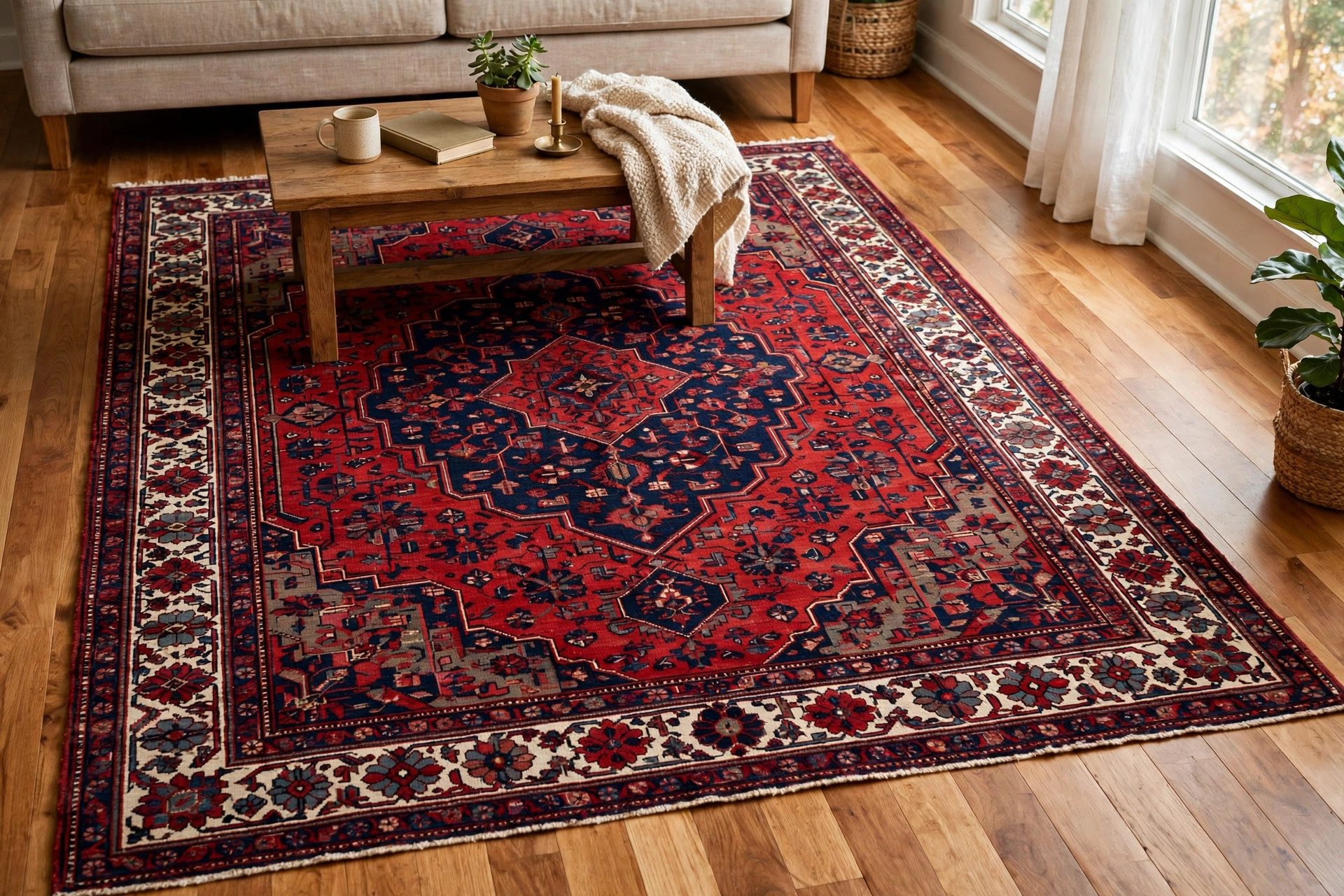
Measure your living room before you shop. The front legs of the sofa and chairs should rest on the rug. A common size for a standard living room is eight by ten feet or nine by twelve. Leave twelve to eighteen inches of bare floor showing between the rug edge and the wall. A rug that is too small floats in the room and makes the furniture look scattered. When in doubt, go one size up.
Condition of the Pile
On a used or antique rug, check for thin spots. Hold the rug up to a strong light. Worn areas let light through. Check the ends where the fringe meets the weave. The fringe is the end of the foundation threads. If the fringe is worn down to the knots, the rug needs repair at its edges. Small repairs are normal and cheap. Large losses of pile are not worth the price.
Main Types of Persian Rugs on the American Market
Tabriz. Rugs from Tabriz are known for fine medallion designs and firm weaving. They suit formal living rooms. They are among the most widely sold Persian styles in the United States.
Kashan. Kashan rugs often show a central medallion on a deep red or navy field with fine floral work. They are a classic pick for a traditional living room and read well under a coffee table.
Heriz. Heriz rugs are bolder and more geometric, woven in mountain villages. They hide wear and soil well, which makes them good for homes with children or pets. Their chunky patterns suit casual and farmhouse rooms.
Kerman. Kerman rugs are known for light grounds and delicate all-over floral patterns. They work in rooms that need brightness. Older Kermans are soft and mellow in color.
Bidjar. Bidjar rugs are among the toughest ever woven. Their weft is packed so tight they are called the iron rugs of Persia. For a living room that takes heavy use, a Bidjar is hard to beat.
Persian-style. Much of what American stores sell as Persian rugs is woven in India, Pakistan, or China in Persian designs. Quality ranges from fine to poor. A well-made Indian Tabriz copy can be a good value. Judge each rug on its own knot work and wool, not on the label.
Cost and Price in the USA
Prices vary more for rugs than for almost any other furnishing. A machine-made Persian-look rug, eight by ten, can cost two hundred to six hundred dollars at a big retailer. A hand-knotted wool rug of the same size from a fair dealer often runs from one thousand to five thousand dollars. Fine antique or high-knot-count pieces can run ten thousand and up.
The honest price of the best Persian rug for living room usa shoppers depends on knot count, wool quality, age, and condition. Shop at dealers who give the knot count and the wool type in writing. Be wary of huge discounts. A rug marked ninety percent off was never worth its list price. Good stores like those listed by Home Depot and Lowe’s carry machine-made options with clear return policies, which is a safe way to try a size and pattern before spending more at a specialty dealer.
Budget for a rug pad as well. A good pad costs fifty to one hundred fifty dollars for an eight-by-ten size. It keeps the rug from slipping, adds cushion, and protects both the rug and the floor beneath. Skip the pad and you will shorten the rug’s life.
Care and Upkeep
A Persian rug asks for simple, steady care. Vacuum it once a week with a suction-only head or with the beater bar turned off. The beater bar pulls at the knots and can chew the fringe. Vacuum the back once a month to lift deep dust. Rotate the rug a quarter turn once or twice a year so that sun and foot traffic do not wear one side faster than the other.
Blot spills at once. Lift, do not rub. Use a clean white cloth and plain water first. For wine or coffee, a mild mix of water and white vinegar works on wool. Test any cleaner on a corner first. Never use bleach or strong detergents on a Persian rug. They strip the dye and dry the wool.
Every three to five years, have the rug washed by a professional rug cleaner, not a wall-to-wall carpet service. A proper wash is done by hand with the right soaps, then dried flat. Guides on The Spruce and This Old House cover the signs that a rug is due for a wash, such as a gray cast to the pile or a sour smell when damp.
Moths are the quiet enemy of wool rugs. They eat the pile in dark, still places, such as under the sofa. Vacuum those hidden areas often. Cedar and moth traps help, but regular movement of the furniture is the best defense. Keep the room aired. Damp air in a closed room invites both moths and mildew.
If the fringe frays or an edge starts to turn, have it fixed early. A small edge repair costs little. Left alone, a loose edge can run across the whole rug. Keep a rug repair shop’s card with your household papers the way you keep a plumber’s number.
Safety in the Home
A rug on a hard floor can slide. That is the main safety risk, and it is easy to fix. A quality non-slip pad sized to the rug holds it in place. The pad should be about one inch short of the rug on all sides so it does not show. Trim it with scissors if needed. This step matters most in homes with older people and small children, where a slip can cause a bad fall.
Keep the rug away from open heat. Do not place it flush against a fireplace or a wood stove. Sparks and radiant heat dry wool and can scorch it. Leave a safe margin, and use a fire screen. Advice from Family Handyman on hearth clearances is worth reading before you lay a fine rug near a fire.
Watch the door swing. If a rug sits under a door, the door can catch and buckle the pile. Cut the rug clear of the swing or trim the door. A buckled rug is both a trip hazard and a wear spot.
If anyone in the home has a dust allergy, a Persian rug can still work. Wool rugs shed less loose fiber than cheap synthetic rugs, and regular vacuuming with a HEPA-filter machine keeps dust down. Shake out small rugs outside twice a year. Large rugs can be rolled, carried out, and beaten gently with a rug beater, the old-fashioned way that still works best.
Frequently Asked Questions
How can I tell a hand-knotted rug from a machine-made one? Look at the back. On a hand-knotted rug the pattern is clear on the back, and you can see the individual knots in rows. On a machine-made rug the back is often covered with a stiff latex backing or shows a uniform grid with no knot detail. Hand-knotted fringes are part of the rug itself. Glued-on fringes are a sign of machine work.
What is the best size Persian rug for a standard living room? Eight by ten feet fits most living rooms with a three-seat sofa. Nine by twelve suits a large room or a sectional. The front legs of all main seating should rest on the rug. Measure twice and mark the outline on the floor with painter’s tape before you buy.
Are Persian rugs good for homes with dogs? Yes, if you choose well. Wool resists stains better than many fibers, and darker, busy patterns hide dirt between cleanings. Heriz and tribal weaves are the most forgiving. Keep nails trimmed and clean up accidents at once. For the dining area, where spills are certain, many families prefer a separate rug for under the dining table that is easier to replace.
How long does a Persian rug last? A hand-knotted wool rug in a living room can last forty to eighty years with normal care. Fine antiques over a century old are still in daily use. Machine-made rugs last five to fifteen years. This long life is what makes the higher price of a hand-knotted rug a fair trade.
Should I buy new or antique? New rugs are clean, bright, and come in standard sizes. Antique rugs have softer colors and proven durability, but they need a careful check for wear, moth damage, and old repairs. Buy antiques only from a dealer who will put the condition in writing and allow returns.
Do Persian rugs fade in sunlight? All dyes fade slowly in strong sun. Rotate the rug yearly and use curtains or UV film on south-facing windows. Fading is gentle and even in a well-made rug, and many collectors prize the mellowed color of a sun-softened antique.
A Final Word
Choosing the best Persian rug for living room usa homes is a slow pleasure, not a race. Visit dealers. Walk on the rugs in the store. Take samples home and live with them for a few days. The right rug will quiet the room, warm the floor, and look better in ten years than it does today. Buy the finest wool and the tightest weaving your budget allows. Retailers such as LL Flooring, Shaw Floors, Mohawk Flooring, and Daltile are useful starting points for comparing what the broader flooring market offers before you commit to a fine hand-knotted piece.
References
Daltile. (n.d.). Ceramic and porcelain tile. https://www.daltile.com Family Handyman. (n.d.). DIY home repair and maintenance. https://www.familyhandyman.com LL Flooring. (n.d.). Hardwood, vinyl, and tile flooring. https://www.llflooring.com Lowe’s. (n.d.). Home improvement products. https://www.lowes.com Mohawk Flooring. (n.d.). Flooring products. https://www.mohawkflooring.com Shaw Floors. (n.d.). Flooring products. https://www.shawfloors.com The Home Depot. (n.d.). Home improvement products. https://www.homedepot.com The Spruce. (n.d.). Home and garden advice. https://www.thespruce.com This Old House. (n.d.). Home renovation guidance. https://www.thisoldhouse.com
Was this guide helpful?

About Emily Rodriguez
The My Garden US editorial team writes practical, in-depth home and garden guides for American homeowners — tested advice, no fluff.