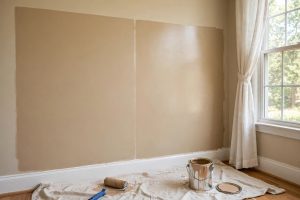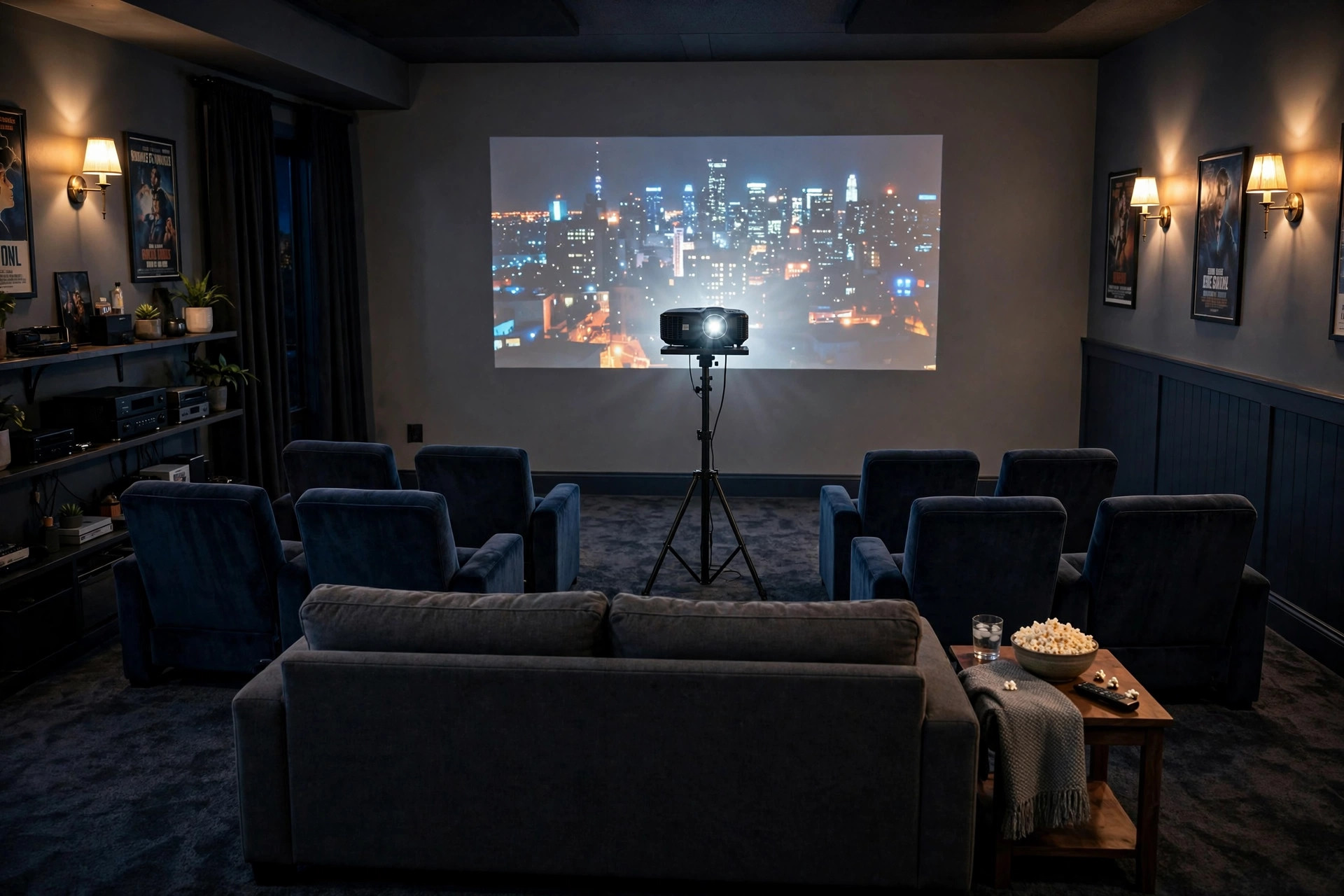

A home projector turns a plain wall into a cinema. But the wall itself matters more than most people think. That is why searches for the best projector screen paint reviews usa keep growing. Buyers want to know which paints give a bright, sharp picture and which ones waste their money. This guide gathers what reviewers and experienced painters agree on. It covers how to read reviews, what features count, the main types of screen paint, costs, care, and safety. By the end, you will know how to pick a paint that fits your room, your projector, and your budget.
Why Projector Screen Paint Matters
A projector throws light at a surface. A plain white wall works in a pinch, but it has flaws. Regular wall paint is too rough, too glossy, or too yellow. It dulls the picture and washes out colors. Screen paint is made to fix that. It gives a smooth, even surface with controlled gain, which is the measure of how much light it reflects back.
Reviewers across the USA agree on one point. The paint often matters more than the price of the projector. A good paint can make a mid-range projector look strong. A bad wall can make a fine projector look weak. The right paint boosts contrast, keeps whites bright, and holds black levels in place. It also hides small wall flaws that a bare wall would show.
Another reason matters. A painted screen costs far less than a fixed-frame screen of the same size. A large manufactured screen can cost many hundreds of dollars, and it still needs a flat wall behind it. A quart or gallon of screen paint costs much less and covers a wall that can be ten feet wide or more. For renters and budget builders, this is a real advantage.
How to Read Reviews the Smart Way: Best Projector Screen Paint Reviews Usa
Online reviews help, but only if you read them with care. Many reviews are written right after the paint dries. The writer is excited and may praise anything. The best reviews come from people who have used the paint for months. Look for comments about how the picture holds up over time.
Watch for details about the room. A paint that shines in a dark basement theater may look dull in a living room with windows. Good reviewers tell you about their room, their projector, and their screen size. Bad reviews often leave those facts out. You cannot judge a paint without knowing the setup.
Also look at the wall prep. Many poor results come from poor prep, not poor paint. A reviewer who skipped sanding or priming may blame the product. Trust reviews that describe the full process. Step-by-step guides from This Old House and Bob Vila show how much prep matters for any paint job. A review that skips prep details is a review you cannot fully trust. The paint may be fine while the wall work was not.
Finally, beware of reviews that read like ads. Honest roundups compare several paints side by side. They name weak points as well as strong ones. The best projector screen paint reviews usa buyers can find are the ones that test under the same light, with the same projector, on the same day.
What to Look For When You Choose
Gain and Brightness
Gain measures how much light the paint sends back to your eyes. A gain of 1.0 reflects light evenly. Higher gain makes the picture brighter but narrows the sweet spot. People sitting off to the side may see a dimmer image. Most home users do best with gain between 1.0 and 1.3. Reviewers praise paints that hold gain steady across the whole wall.
Color of the Paint
White paint gives the brightest picture. It suits dark rooms with a strong projector. Gray paint, often called contrast gray, deepens black levels. It suits rooms with some stray light. Dark gray paints fight washout but need a brighter projector to keep whites alive. Many USA reviewers prefer light gray as a middle ground.
Finish and Hot Spots
A hot spot is a bright patch in the center of the screen. It comes from paint that is too glossy or rolled on too thick. Good screen paint dries to a flat or matte finish. Reviews that mention hot spots are warning you away from a bad formula or a bad rolling job. Apply thin, even coats and you avoid most trouble.
Coverage and Coats
Check how many square feet a quart covers. Most screen paints need two coats over a good primer. Some need three. Reviews that count the coats tell you the true cost. A cheap quart that needs four coats is not cheaper than a dearer one that needs two.
Wall Condition
No paint fixes a damaged wall. Fill holes, sand bumps, and prime with a quality primer first. Big-box paint counters at The Home Depot and Lowe’s stock primers and fillers made for smooth finishes. Many painters start with a base coat from trusted brands like Sherwin-Williams or Behr before the screen coat goes on.
Main Types of Projector Screen Paint
White Screen Paint
White screen paint is the classic choice. It gives the widest viewing angle and the brightest whites. It works best in rooms you can make fully dark. Reviewers like it for movie rooms and basements. Its weak point is black level. In a room with light, blacks turn gray and the picture looks flat.
Gray and Contrast Paints
Gray paints trade some brightness for deeper blacks. Light gray is the most popular pick in USA reviews. It keeps whites decent while making dark scenes richer. Medium and dark gray go further but ask more of the projector. These paints suit living rooms where you cannot block every window.
Ambient Light Rejecting Coats
A newer class of paint claims to reject room light. These formulas use reflective bits to send the projector beam back to viewers while dimming side light. Reviewers are split. Some report a clear gain in bright rooms. Others find the effect mild and the price high. Read long-term reviews before you pay the premium.
DIY Mixed Recipes
Some hobbyists mix their own screen paint from base paint plus additives. Online forums share recipes with names that change over time. Reviewers note that DIY mixes can work well and cost little. But results vary from batch to batch. If you want a sure result, a factory-made screen paint is the safer bet. Home theater planning ideas on HGTV often favor proven products over experiments for first-time builders.
Cost and Price in the USA
Screen paint costs more than regular interior paint. A quart of brand-name screen paint often runs from thirty to eighty dollars. It covers a screen area of about one hundred square feet with two coats. A gallon can cost one hundred to two hundred dollars and covers a very large wall.
Primer, rollers, and tape add to the bill. A high-density foam roller gives the smoothest coat and costs a few dollars. Quality painter’s tape keeps edges crisp. In total, most home projects land between fifty and one hundred fifty dollars. That is still far below the price of a large fixed screen. It is also far below the cost of repainting a room that was done wrong the first time.
Watch for false savings. A plain white interior paint costs less but gives a weaker picture. Many reviewers say they tried cheap paint first and then bought screen paint later. They spent twice. Buying the right paint once is the cheaper path.
Care and Upkeep
A painted screen needs gentle care. Dust it with a dry microfiber cloth. Never scrub hard, because scrubbing can polish the matte finish and cause shiny spots. Keep food and drink away from the wall. Grease marks are hard to remove without repainting.
Touch-ups are easy, which is one more plus over a fabric screen. Keep a small jar of the leftover paint. If a scuff appears, dab it with a small foam roller. Feather the edges so the patch blends in. Most paints touch up well if you saved the same batch.
Humidity matters too. In damp basements, run a dehumidifier so the paint film stays sound. Peeling edges can often be fixed with a light sand and a fresh coat. If your theater is in a basement, advice on painting basement ceiling joists can help you keep the whole room dark and clean.
Safety
Screen paints are low risk when used with care. Work in a ventilated room. Open windows or run a fan while you paint and while the coats dry. Wear a dust mask when you sand the wall. Keep paint away from children and pets until it is fully dry.
Check the label for VOC content. Low-VOC and zero-VOC paints give off fewer fumes. Many modern screen paints meet strict indoor standards. Dispose of leftover paint per your local rules. Do not pour it down drains. For a broader view of paint safety, The Spruce publishes clear guidance on low-VOC products. And if the wall needs patching before you start, a guide to hiring a house painter can save you time when the prep work is more than you want to handle.
FAQ
How big a screen can I paint?
Most projectors fill a wall from eight to twelve feet wide without trouble. A quart of screen paint covers about one hundred square feet, which fits a 120-inch diagonal screen with two coats. Measure your throw distance first, then mark the screen area with tape.
Do I need a special primer?
A smooth white primer helps a lot. It seals the drywall and gives the screen paint a uniform base. Use a high-quality interior primer from a maker like Benjamin Moore. Sand lightly between coats for the smoothest finish.
Can I paint over an old screen wall?
Yes, if the old paint is sound. Clean the wall, scuff it lightly with fine sandpaper, and prime any bare spots. Then roll on fresh screen paint. If the old coat is peeling, strip it back to a firm surface first.
White or gray: which is better for my room?
Pick white for a dark room and gray for a room with some light. Many USA buyers choose light gray as a safe middle path. Also paint the walls around the screen in dark, flat tones. Ideas for dark paint colors for bedrooms and media rooms can help you cut stray reflections.
How long does screen paint last?
A well-applied coat lasts many years indoors. Keep the wall clean and dry, and the picture stays sharp. Fading is rare because the wall gets no direct sun. Touch up scuffs as they appear and you may never need a full repaint.
Is screen paint worth it over a cheap pull-down screen?
For most people, yes. A painted wall gives a bigger image for less money, with no wrinkles or waves. A pull-down screen can ripple over time. Paint stays flat forever. Reviewers who switched from cheap screens to paint rarely go back.
A Final Word
The best projector screen paint reviews usa shoppers can rely on all point the same way. Match the paint to your room, prep the wall well, and roll thin, even coats. White for dark rooms, gray for rooms with light, and honest reviews that describe the full setup. Do that, and a simple wall can rival a costly screen. Your movie nights will thank you for the small extra care.
References
Behr. (n.d.). Paints, primers, and stains. https://www.behr.com Benjamin Moore. (n.d.). Paints and stains. https://www.benjaminmoore.com Bob Vila. (n.d.). Home improvement advice. https://www.bobvila.com HGTV. (n.d.). Home and garden ideas. https://www.hgtv.com Lowe’s. (n.d.). Home improvement products. https://www.lowes.com Sherwin-Williams. (n.d.). Paints and coatings. https://www.sherwin-williams.com The Home Depot. (n.d.). Home improvement products. https://www.homedepot.com The Spruce. (n.d.). Home and garden advice. https://www.thespruce.com This Old House. (n.d.). Home renovation guidance. https://www.thisoldhouse.com
Was this guide helpful?

About Jennifer Lee
The My Garden US editorial team writes practical, in-depth home and garden guides for American homeowners — tested advice, no fluff.
You May Also Like
Painting Contractor License Check Near Me: How to Verify Before You Hire
April 23, 2026 0 views
How the Best Exterior House Painting Cost Estimator in the USA Works
May 28, 2026 0 views
Driveway Sealer Buying Guide for USA Homes
May 18, 2026 0 views