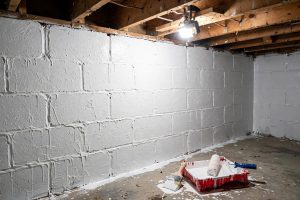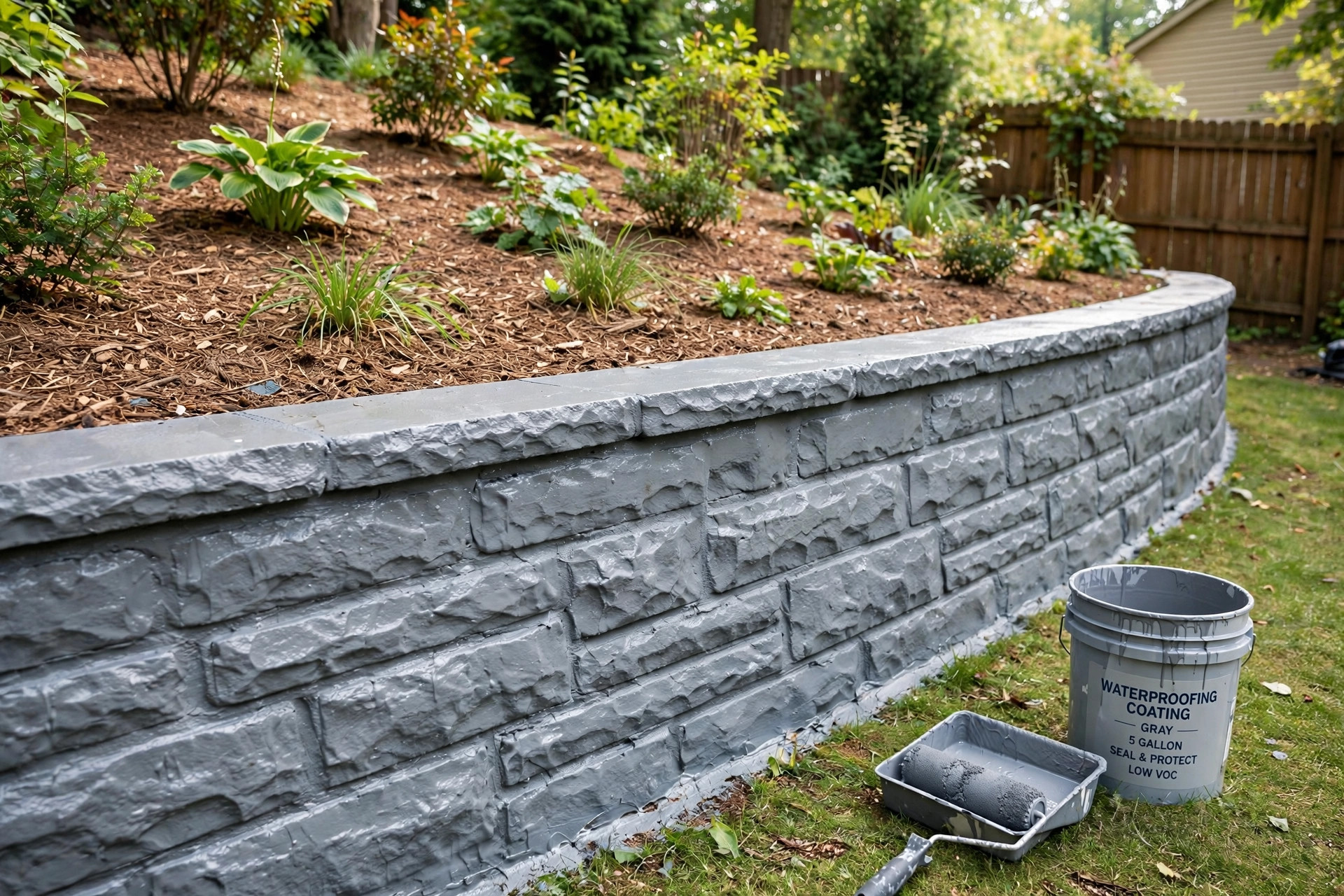

A retaining wall holds back soil and protects your yard from erosion. Water is its worst enemy. Rain soaks into concrete block, poured concrete, and stone. Freeze and thaw cycles then crack the surface. Over the years the wall can lean, stain, or even fail. That is why so many homeowners search for waterproofing paint for retaining walls usa when they plan a repair or a new build. A good waterproofing paint seals the surface against water. It keeps the wall strong and it keeps it looking clean for years.
Why Retaining Walls Need Waterproofing
Water moves through masonry the way ink moves through paper. Concrete and block look solid, but they are full of tiny pores. Groundwater presses against the back of the wall. Rain runs down the face. In winter, the trapped water freezes and grows. The growing ice pushes the masonry apart. You see the result as white crust, dark stains, peeling paint, and cracks.
Waterproofing paint for retaining walls usa products are made for this problem. They form a tough film on the surface. The film lets little or no water pass through. The wall stays drier inside. The soil behind the wall also benefits, because a sealed wall helps manage how water leaves the backfill.
A sealed wall also resists the white crust called efflorescence. That crust is salt carried out of the masonry by water. It looks like chalk dust and it is hard to wash away for good. Paint that blocks water also blocks the salt.
How Waterproofing Paint Works: Waterproofing Paint for Retaining Walls Usa
Standard house paint sits on the surface and adds color. Waterproofing paint does more. It sinks into the pores and bridges small cracks. Many formulas can stretch across cracks up to a sixteenth of an inch wide. That stretching power matters on a wall that moves a little with the seasons.
The paint comes in two main forms. Some are like thick house paint and go on with a roller or brush. Others are cement based and are mixed with water, then applied like a thin plaster coat. Both types need a clean, dry, sound surface to grip.
One coat is rarely enough. Most makers call for two coats. The second coat goes on after the first is dry to the touch. Two coats build a film thick enough to hold back real water pressure.
Types of Waterproofing Paint for Retaining Walls
Acrylic Masonry Coatings
Acrylic coatings are the most common choice at stores like Home Depot. They look and apply much like thick latex paint. They resist ultraviolet light well, which matters for the sunny face of a wall. They come in many colors. They are easy to clean up with soap and water. For most homes in mild climates, an acrylic masonry coating is a safe first pick.
Cement-Based Waterproofing Coatings
These products are sold as dry powder. You mix them with water and brush them onto damp masonry. They harden into a rigid shell that bonds with the wall itself. Pros favor them for basements and for the buried side of retaining walls. They handle heavy water pressure well. They are less flexible than acrylics, so they suit walls that do not move much.
Elastomeric Coatings
Elastomeric paint is thick and rubbery when it dries. It can stretch far more than standard paint. That makes it a good match for walls that already show fine hairline cracks. It costs more than basic acrylic coating, but one job can last ten years or more. It is popular in regions with hot summers and cold winters.
Silane and Siloxane Sealers
These are clear water repellents, not paint. They soak deep into the masonry and turn the pores water resistant while letting vapor escape. They do not change the look of the wall. Many homeowners use them on natural stone where they want the stone face to show. Sites such as The Spruce describe when a clear sealer fits better than a colored coating.
What to Look For When You Choose
Read the label with care. Look for the words “waterproofing” and “masonry.” A product made only for interior walls will not survive on a retaining wall. Check that the label lists concrete block, poured concrete, or stucco as approved surfaces.
Match the product to your climate. In the South and West, ultraviolet resistance matters most. In the North and Midwest, freeze and thaw resistance matters most. In all cases, pick a product with a stated service life of five years or more.
Color choice matters too. Dark colors hide soil stains but absorb heat. Light colors stay cooler but show dirt. A mid tone gray or tan suits most walls. If you plan to paint your house as well, guides about painting brick house pros and cons usa can help you think through color and finish choices across your home.
Check coverage rates. Most coatings cover about 75 to 100 square feet per gallon per coat. Measure your wall. Multiply length by height. Add ten percent for waste. Buy enough for two coats.
Also check the surface condition limits. Some products go on damp walls. Some need the wall fully dry. Some fill small holes. Some need a smooth patching compound first. Makers like Behr and Sherwin-Williams print clear charts for this on their product pages.
Cost and Price
A gallon of good waterproofing paint costs between 30 and 60 dollars. A five gallon pail costs between 130 and 250 dollars. Cement based mixes are cheaper per square foot but need more labor to apply.
For a wall of 200 square feet, plan on four to five gallons for two coats. Paint and supplies will run about 150 to 350 dollars for a do it yourself job. If you hire a painter, labor often doubles or triples the total. Simple walls cost 3 to 6 dollars per square foot installed. Tall walls or walls that need repair first cost more.
Do not buy on price alone. A cheap coating that peels in two years costs more than a good one that lasts ten. Brand guides from Lowe’s and Bob Vila compare product lines by price and life span.
How to Apply It Step by Step
Good preparation decides the result. Paint will not stick to loose, dirty, or wet masonry. Take your time on these steps.
1. Clean the wall. Use a stiff brush and a garden hose. For heavy stains, use a pressure washer at low pressure. Let the wall dry fully unless the product label says damp application is fine. 2. Repair the wall. Fill cracks wider than a sixteenth of an inch with a concrete crack filler. Patch holes and missing mortar. Let all repairs cure per the label. 3. Kill growth. Scrub off moss, mold, and algae with a brush and a mild bleach mix. Rinse well. Let it dry. 4. Strip old paint. If old paint is peeling, scrape it off. Sound, well stuck old paint can stay, but check the new product label for rules about painting over old coatings. 5. Mask and protect. Cover soil beds, walks, and plants with drop cloths. Tape off edges. 6. Apply the first coat. Use a thick nap roller or a stiff brush. Work the paint into the pores. Keep a wet edge and finish one section at a time. 7. Apply the second coat. Wait the time the label states, often four to eight hours. Roll the second coat at right angles to the first. This fills gaps the first coat missed. 8. Let it cure. Keep rain off the wall for at least 24 to 48 hours. Full cure can take a week. Do not backfill soil against a freshly painted buried face until it is cured.
If the wall sits near a garden bed, you may also want fresh color nearby. Ideas in guides like best paint for wooden adirondack chairs usa show how to match outdoor paint colors across a yard.
Care and Upkeep
A painted retaining wall needs little care, but not none. Walk the wall once each spring. Look for peeling, blistering, and new cracks. Small chips can be touched up with a brush and a little of the same paint. Keep extra paint stored in a cool, dry place for touch ups.
Keep water from pooling at the base of the wall. Grade the soil so water runs away. Clean out weep holes so they drain freely. A wall that drains well will outlast one that sits in water, paint or no paint.
Wash the face once a year with a hose and a soft brush. This removes soil splash and slows mildew. Do not use a pressure washer at close range. It can cut into the coating.
Plan on a full recoat every seven to ten years for acrylic and elastomeric coatings. Cement based coatings can last longer. Keep notes on what product you used and when. The next owner will thank you.
Safety
Wear gloves, eye protection, and a dust mask when you clean and paint. Cement based mixes are alkaline and can burn skin. Work in the open air for fresh air flow. Read the full label before you open the can.
Never lean over the top of a tall wall while painting the face. Use a stable ladder or scaffold. Keep children and pets away until the paint is fully dry.
If your wall is over four feet tall or shows signs of leaning, bulging, or deep cracks, call a structural engineer before you paint. Paint seals water out, but it cannot fix a wall that is failing. Cosmetic work on a moving wall wastes money and can hide a danger.
Frequently Asked Questions
Can I use regular exterior house paint on a retaining wall?
Regular exterior paint adds color but lets water pass. On a retaining wall that sees soil moisture, it will blister and peel. Use a product labeled for masonry waterproofing instead.
Should I paint the back side of the wall too?
Yes, if you can reach it before backfilling. The back side faces the soil and the most water pressure. A coat of cement based waterproofing on the buried face is one of the best defenses a wall can get.
How long does waterproofing paint last on a retaining wall?
Most quality products last seven to ten years on the exposed face. The buried face can last much longer because it sees no sun. Harsh freeze and thaw cycles shorten the life. Proper prep adds years.
Can I apply it over old paint?
Sometimes. The old paint must be sound and well stuck. Scrape off all loose paint first. Then check the new product label. Some waterproofing coatings need bare masonry to bond. When in doubt, strip to bare wall.
Does waterproofing paint stop leaks through cracks?
It seals hairline cracks up to about a sixteenth of an inch. Wider cracks need a concrete crack filler first. Moving cracks, ones that grow year to year, need an engineer to find the cause.
What is the best season to paint a retaining wall?
Spring and fall are best in most of the country. Aim for dry days between 50 and 90 degrees Fahrenheit. Avoid painting in direct hot sun, which dries the paint too fast. Avoid painting within 24 hours of rain.
A Final Word
A retaining wall is a quiet worker. It holds your yard in place day after day. A few gallons of good paint and a weekend of care give it the armor it needs. Pick a product made for masonry, prepare the surface well, and put on two full coats. Your wall will stand drier, cleaner, and stronger for years to come.
For other home paint planning, a guide to wallpaper for powder room ideas usa can spark ideas for interior rooms, and paint color research from Benjamin Moore and This Old House helps with both indoor and outdoor projects. Style inspiration for the whole home can be found at HGTV.
References
Behr. (n.d.). Paints, primers, and stains. https://www.behr.com Benjamin Moore. (n.d.). Paints and stains. https://www.benjaminmoore.com Bob Vila. (n.d.). Home improvement advice. https://www.bobvila.com HGTV. (n.d.). Home and garden ideas. https://www.hgtv.com Lowe’s. (n.d.). Home improvement products. https://www.lowes.com Sherwin-Williams. (n.d.). Paints and coatings. https://www.sherwin-williams.com The Home Depot. (n.d.). Home improvement products. https://www.homedepot.com The Spruce. (n.d.). Home and garden advice. https://www.thespruce.com This Old House. (n.d.). Home renovation guidance. https://www.thisoldhouse.com
Was this guide helpful?

About Emily Rodriguez
The My Garden US editorial team writes practical, in-depth home and garden guides for American homeowners — tested advice, no fluff.
You May Also Like
Metal Roof Paint Coating Reviews USA: What Works and What Does Not
March 20, 2026 0 views
Front Door Paint Colors That Sell Homes
April 16, 2026 0 views
Venetian Plaster Wall Finish: Cost, Types, and What to Expect
September 24, 2026 0 views