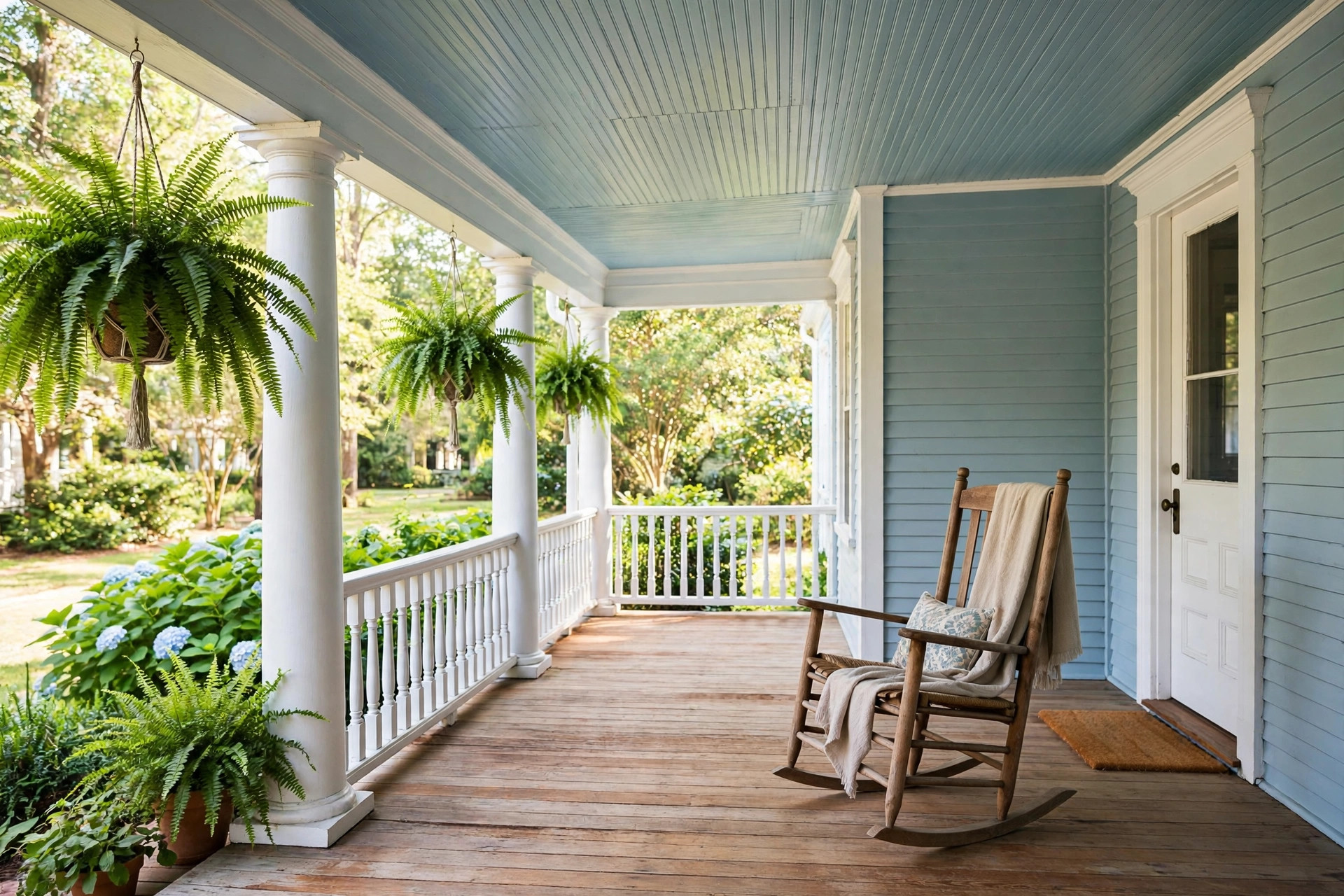

Few small choices shape a home like the color of its porch ceiling. Of all porch ceiling paint colors, haint blue holds a place unlike any other in the United States. It is a pale blue with a touch of green. It appears on farmhouses in Georgia, on cottages in the Carolinas, and on city homes in Louisiana. The tradition is centuries old, and it keeps growing. Homeowners in the North now paint it too. This guide covers the story behind haint blue, the shades worth trying, and how to paint a porch ceiling so the finish lasts.
Why Haint Blue Matters
The custom began in the South with the Gullah Geechee people. They believed that restless spirits, called haints, could not cross water. Blue paint on the porch ceiling would trick the spirits. It would look like the sky or like water, and the haints would pass by the house. Whether or not one believes the tale, the practice took hold. It spread from slave quarters and low-country homes to grand houses across the region.
Today people choose haint blue for many reasons. Some honor the history. Some simply love the look. The color does real work on a porch. It lightens a shaded space. A covered porch can feel dark, even at noon. A pale blue ceiling throws soft light back down. It makes the entry feel open and calm. It pairs well with brick, wood, and white trim. Those are the materials of the classic American porch, a look HGTV features often in its porch design ideas.
There is also a folk claim that haint blue keeps bugs away. Old mixes used lime, which may have discouraged insects. Modern paint does not carry that effect. Still, the belief lingers. Science does not support it, but the story survives. That tells us something. People do not pick this color for science. They pick it for feeling. Of all porch ceiling paint colors in the United States, haint blue is the one with a soul.
Choosing the Right Shade: Porch Ceiling Paint Colors Haint Blue Usa
Haint blue is not one color. It is a family. Some shades lean toward sky blue. Others lean toward aqua or soft teal. The choice depends on the house, the light, and personal taste.
Start with the trim. If the trim is bright white, almost any haint blue will work. White trim gives the eye a clean edge and lets the blue read clearly. If the trim is cream or off white, pick a blue with a warmer touch. A shade that is too icy can clash with warm trim.
Think about the porch light. Porches in shade read colors differently from porches in sun. A porch that faces north gets cool light. On a north porch, a warmer aqua blue feels friendlier. A porch that faces south gets warm sun. There, a cooler sky blue holds its color better. Take sample cards home. Hold them up at different times of day. Paint has a habit of changing its mind in morning light.
Popular shades have names that painters know well. Paint companies offer their own versions of the color. Some are pale and barely there. Some are richer, closer to robins egg. A soft choice suits a small porch, where a strong color could feel heavy. A bolder choice suits a grand wraparound porch with room to breathe.
For help picking among porch ceiling paint colors, haint blue options are worth comparing side by side with white and with other light blues. The difference between two close shades can be hard to see on a small card. Buy small sample pots. Paint large test squares on poster board. Tape the boards to the ceiling and live with them for a few days. This is the step most people skip, and it is the step that matters most. The color tools at Behr can help you compare tones at home.
For those who want a second opinion, a paint color consultation service online usa can narrow the field. A trained eye helps when the shades all look alike in the store.
Types and Options for Porch Ceilings
Porch ceilings come in several materials, and the material shapes the paint choice.
Beadboard is the classic. It is wood, often pine, with narrow grooves. It takes paint beautifully, and guides like those at Benjamin Moore show how color sits in the grooves. It is also the surface most linked to the haint blue tradition. Many old porches have beadboard ceilings. Paint settles into the grooves and gives the surface depth.
Plywood is common on newer homes. It is smooth and flat. It needs a good primer because it can show stains through the topcoat. Painted well, it looks clean and modern.
Stucco or textured ceilings appear in warmer states. They need paint that can be worked into the texture. A thick nap roller helps here.
Vinyl or aluminum soffit is found on many newer porches. These materials need paint made to bond to them. Not every exterior paint sticks to vinyl. Check the label for a bond primer or a paint rated for the surface.
When choosing among porch ceiling paint colors, haint blue works on all of these. The finish matters as much as the color. A flat or matte finish hides flaws. It is the common pick for beadboard. A satin finish is easier to wipe clean. Some homeowners pick satin for porches near the street, where dust settles. Eggshell sits between the two.
Learn more in this porch and patio paint buying guide usa before you shop, so you match the paint type to your ceiling material.
Cost and Price
Painting a porch ceiling is one of the least costly home projects. The paint itself runs modest prices at stores like Home Depot. A gallon of quality exterior paint covers most single porches. Larger porches may need two gallons. Primer adds cost if the surface is raw wood or stained.
The labor question changes the math. A handy homeowner can finish a porch ceiling in a weekend. The work is overhead, so it tires the arms and neck. But the surface area is small compared with a whole house. Many people paint it themselves.
Hiring a painter raises the cost. Painters often charge by the job for small work. A porch ceiling alone may cost a few hundred dollars in labor, depending on the region and the prep needed. Prep work matters. Scraping loose paint and fixing rot takes time. A ceiling that needs repair will cost more than one that needs only a fresh coat.
For a full picture of exterior painting costs, see this best exterior house painting cost estimator usa resource before you plan your budget.
How to Paint a Porch Ceiling
Good results come from good prep. The painting itself is simple. The preparation decides how long the finish lasts.
First, clean the ceiling. Porch ceilings collect dust, cobwebs, and pollen. Wash with a garden hose or a bucket of mild soap and water. Let it dry fully. Paint on a damp surface will fail early.
Second, scrape loose paint. Use a putty knife or a scraper. Any paint that flakes must come off. Sand the edges of bare spots smooth. Fill cracks or holes with exterior wood filler. Let the filler cure, then sand it flush.
Third, prime bare wood and stained spots. Primer seals the surface and gives the topcoat something to hold. It also blocks stains from bleeding through. A stain blocking primer is wise on older ceilings that have dark marks.
Fourth, paint. Use exterior paint rated for the ceiling material, such as the lines sold at Lowe’s. Cut in the edges with a brush. Roll the main surface. Two coats give better cover and longer life than one thick coat. Wait for the first coat to dry before starting the second.
Work on a dry day. Humidity and rain slow drying and weaken adhesion. Morning is often best. It gives the paint hours of daylight to set. Avoid painting in direct hot sun if you can. The surface may be too hot and the paint may dry too fast.
Protect what sits below. Drop cloths guard the porch floor and the steps. Tape covers the trim if you are painting only the ceiling. Remove light fixtures or cover them with plastic.
Care and Upkeep
A painted porch ceiling needs little care. Sweep cobwebs away a few times a year. Wash the surface with mild soap and water when it looks dull. Pollen season leaves a film that a quick rinse removes.
Watch for signs of trouble. Peeling paint points to moisture. Find the source. A leaking roof or a gutter that overflows can soak the ceiling from above. Fix the water problem before repainting. Mildew shows as dark spots. A wash with a mild bleach solution removes it; This Old House offers sound guidance on porch upkeep. Rinse well.
Most porch ceilings need a new coat every five to eight years. Shade protects paint, so porch ceilings often last longer than sun baked siding. When the color fades or chips appear, it is time to repaint. Light sanding and a fresh topcoat restore the look.
Safety
Painting overhead means working with your arms raised for hours. Take breaks. A sore neck is common. A roller with an extension pole lets you stand on the floor for most of the work. Use a stable ladder for the edges. Never stretch beyond the ladder rails.
Ventilation matters less outdoors than inside, but paint fumes still call for care. Avoid breathing the mist from spraying. A simple dust mask helps during sanding and rolling. Wear safety glasses when scraping overhead. Paint chips fall down, and they fall toward your eyes.
Old homes may hold lead paint. Houses built before 1978 often do. If your porch ceiling has old layers, test for lead before scraping. Lead dust is a serious hazard, especially for children and pregnant women. Local health departments can point you to test kits, and resources such as Bob Vila explain safe paint removal rules.
Frequently Asked Questions
What is haint blue?
Haint blue is a family of pale blue-green paint colors used on porch ceilings in the American South. The name comes from the Gullah word haint, meaning a restless spirit. The tradition held that the blue color would ward off evil spirits from the home.
Does haint blue really keep bugs away?
There is no strong proof. Old recipes used lime based paint, which may have bothered insects. Modern exterior paints do not carry that effect. Many homeowners still report fewer wasps and spiders, but this may be habit and observation rather than chemistry.
Which haint blue shade is most popular?
No single shade wins everywhere. Soft sky blues lead in many regions. Aqua leaning shades are popular near the coast. The best choice depends on the trim color, the light on the porch, and the style of the house. Test samples on site before deciding.
Can I use interior paint on a porch ceiling?
It is not advised. Porch ceilings face humidity, temperature swings, and sometimes direct rain. Exterior paint is built for those conditions. Interior paint will fail sooner, even on a covered porch. Always use paint rated for exterior use. See exterior paint basics at The Spruce for more detail.
How many coats does a porch ceiling need?
Two coats are standard. One coat may look fine at first but wears faster. Two coats give fuller color and stronger protection. This holds for all porch ceiling paint colors, including haint blue.
Does haint blue work on modern homes?
Yes. The color suits more than old farmhouses. It appears on new craftsman homes, coastal cottages, and even city townhouses. On a modern porch, a clean pale blue ceiling adds warmth without clashing with simple lines.
A Short Final Word
Porch ceiling paint colors come and go, but haint blue endures. It carries a story that reaches back centuries. It brightens the entry of the house. It welcomes guests with a color that feels like a clear sky. Pick your shade with care. Prep the surface well. Paint two coats. Then sit on the porch and enjoy the result. Some traditions last because they work. This one also lasts because it is beautiful.
References
Behr. (n.d.). Paints, primers, and stains. https://www.behr.com Benjamin Moore. (n.d.). Paints and stains. https://www.benjaminmoore.com Bob Vila. (n.d.). Home improvement advice. https://www.bobvila.com HGTV. (n.d.). Home and garden ideas. https://www.hgtv.com Lowe’s. (n.d.). Home improvement products. https://www.lowes.com Sherwin-Williams. (n.d.). Paints and coatings. https://www.sherwin-williams.com The Home Depot. (n.d.). Home improvement products. https://www.homedepot.com The Spruce. (n.d.). Home and garden advice. https://www.thespruce.com This Old House. (n.d.). Home renovation guidance. https://www.thisoldhouse.com
Was this guide helpful?

About Emily Rodriguez
The My Garden US editorial team writes practical, in-depth home and garden guides for American homeowners — tested advice, no fluff.
You May Also Like

Best Exterior Paint for Stucco Homes USA
May 8, 2026 0 views
Waterproof Paint for Basement Walls Interior: A Complete Homeowner’s Guide
September 14, 2026 0 views
Warm White Paint Colors by Benjamin Moore USA: A Complete Guide
May 8, 2026 0 views