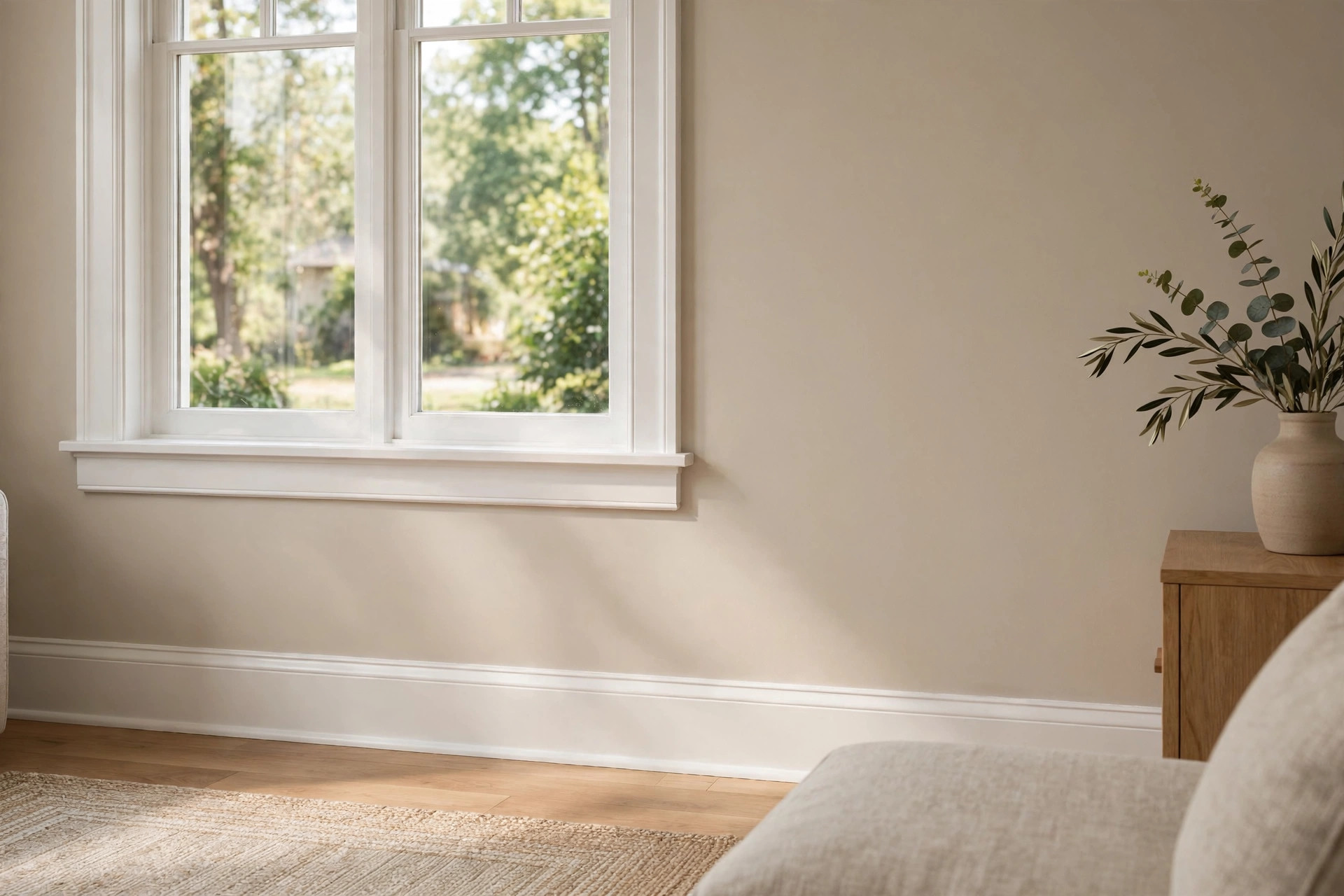

The question of satin vs semi gloss for trim comes up in almost every American home that gets a fresh coat of paint. Baseboards, door frames, window casings, and crown molding all take more wear than walls. They get touched by hands, bumped by furniture, and scuffed by shoes. The sheen a homeowner chooses for these surfaces changes how the paint looks and how long it lasts. This guide walks through the two most common choices for trim, so that the reader can decide with confidence.
Why the Finish on Trim Matters
Trim paint does two jobs at once. It protects the wood or composite material beneath it, and it frames the room. Walls usually wear a flat or eggshell finish that hides small flaws. Trim stands out from the wall, and a brighter finish calls attention to the millwork. For this reason, painters in the United States have long favored higher sheen levels for trim than for walls.
Sheen also shapes how light moves in a room. Glossy trim bounces light back and can glow against a dark wall. Softer trim absorbs light and looks calm. The right pick depends on the style of the home and the wear the trim will see.
Glossier paints also form a harder film that resists fingerprints, grease, and moisture. Kitchens, bathrooms, and hallways benefit most. Choosing the right sheen now saves the cost of repainting later.
What Sheen Levels Mean: Satin vs Semi Gloss for Trim Usa Guide
How Satin Paint Behaves
Satin falls in the middle of the sheen scale. It gives a soft glow without a strong shine. Light paint makers in the United States generally rate satin at 25 to 35 percent gloss when measured at a 60-degree angle. The eye reads it as smooth and rich rather than shiny.
On trim, satin is easy to wipe clean and hides small brush marks and minor flaws better than glossier paints. This forgiving nature suits older trim with layers of old paint.
How Semi-Gloss Paint Behaves
Semi-gloss sits one step higher on the scale. It usually measures 35 to 70 percent gloss at the same 60-degree angle. The surface looks noticeably shiny in bright light. This shine is the reason semi-gloss has been the traditional choice for trim, doors, and cabinets across America for decades.
The harder film of semi-gloss resists stains and moisture very well. It brings out fine millwork details such as dentil molding and carved casings. The trade-off is that bumps, nail holes, and sanding marks show more clearly. Good preparation matters more with semi-gloss.
Where High Gloss and Other Sheens Fit
Above semi-gloss sits full gloss, which is dramatic and tough but shows every flaw. Painters reserve it for front doors or furniture. Below satin sit eggshell, matte, and flat. These are too soft for trim; they mark easily and clean poorly.
Satin vs Semi Gloss: A Side-by-Side Comparison
| Feature | Satin | Semi-Gloss | |—|—|—| | Gloss level | Low to medium glow | Medium to high shine | | Hides flaws | Better | Worse | | Resists stains | Good | Very good | | Moisture resistance | Good | Excellent | | Wipe cleaning | Easy | Very easy | | Traditional look | Modern and soft | Classic and bright | | Repainting over flaws | More forgiving | Needs careful prep |
Homeowners who want a calm, modern interior often choose satin. Those who want the crisp, traditional look of painted millwork often choose semi-gloss. One home can carry both: semi-gloss in kitchens and bathrooms where moisture and grease demand toughness, satin in bedrooms and living rooms where a softer look feels restful.
How to Choose the Right Finish for Your Home
Consider the Room
Kitchens, bathrooms, laundry rooms, and mudrooms see water, steam, and frequent touching, so semi-gloss is the safer pick. Bedrooms and living rooms see less wear, and satin suits them well. Also consider lighting. Strong sun makes semi-gloss shine brightly, which can feel harsh; in bright rooms, satin calms the glare. In dark hallways, semi-gloss bounces the available light.
Consider the Condition of the Trim
New trim with sharp edges and smooth joints can carry semi-gloss well. Old trim with dents, cracks, and layers of old paint will look better under satin. The lower sheen softens the signs of age. If the plan is to sand, fill, and prime the old trim carefully, semi-gloss can still work. The amount of preparation time should match the sheen chosen.
Homeowners who are also weighing the cost of crown molding installation per linear foot often learn that fresh millwork looks best with a finish that shows off its detail. New molding pairs naturally with semi-gloss, while older trim benefits from satin.
Consider the Style of the Home
Colonial, Victorian, and Craftsman homes carry the tradition of glossy painted trim, and semi-gloss fits the historic look. Modern farmhouse and minimalist interiors favor soft surfaces, where satin fits better. Against deep walls, semi-gloss makes the edge between wall and trim sharper. Against white walls, satin blends trim and wall into a quiet whole.
Consider Who Lives in the Home
Homes with children or pets need tough paint. Both sheens clean well, but semi-gloss wipes down a little more easily after sticky hands and muddy paws. Rental properties often use semi-gloss because it stands up to many tenants.
Types and Options of Trim Paint
Most American homeowners today choose water-based acrylic or acrylic-alkyd enamel for trim. True oil-based enamel still exists, but its use has shrunk. Federal and state rules limit the volatile organic compounds, or VOCs, that oil paints release. Many states now restrict oil-based paint sales. Water-based enamels dry fast, clean up with soap and water, and now level almost as smoothly as old oil paints.
American brands offer trim-specific lines. Behr sells enamel lines made for doors and trim in both sheens. Benjamin Moore offers trim enamels that level smoothly and cure to a hard film. Sherwin-Williams sells pro-grade trim paints that resist blocking, the sticking of two painted surfaces such as a door and its frame.
For kitchens, the best paint for kitchen cabinets often overlaps with the best trim paint. Cabinets and trim share the same enemies: grease, moisture, and constant touching. A semi-gloss enamel that suits cabinet doors will usually suit the trim around them.
Paint-and-primer in one works for repainting over a similar color. For bare wood, stained wood, or strong color changes, a separate primer still gives the best result. It seals the surface, helps the finish coat stick, and keeps pine knots from bleeding through white paint.
Cost and Price of Trim Paint in the USA
A gallon of quality trim enamel in the United States generally costs between 35 and 75 dollars as of 2026. Premium lines sit at the top of this range, and store brands at the bottom. A gallon covers about 300 to 400 square feet, and most rooms need only one gallon for all the trim.
Sheen itself adds little to the price. Satin and semi-gloss in the same product line usually cost the same. The real cost difference comes from the product line and the number of coats. Two thin coats always beat one thick coat. Budget for a good primer as well, which runs about 20 to 40 dollars per gallon.
Hiring a professional changes the math. Painters in most American markets charge 2 to 6 dollars per linear foot for trim painting. The labor cost dwarfs the paint cost, which is why many homeowners buy the best paint they can afford and apply it themselves.
Homeowners who want help planning the larger project often look at white paint colors for interior walls at the same time as they choose trim sheen. Walls and trim are painted together in most projects, and choosing both at once keeps the whole room in harmony.
Application Tips for a Smooth Finish
Preparation
Preparation decides the final result more than the paint brand does. Clean the trim with a mild cleaner, sand lightly with 150- to 220-grit sandpaper, and fill nail holes and cracks with wood filler. Sand the filler smooth and wipe away the dust. Tape the wall edges for crisp lines, lay drop cloths, and keep the room ventilated.
Priming
Prime bare wood, repairs, and strong color changes. A stain-blocking primer is wise on knotty pine and on trim that once held dark stain. Let the primer dry fully, then sand it lightly for the smoothest base. Skip the primer only when repainting over a sound coat of the same color and sheen.
Painting
Apply the finish in thin, even coats. A high-quality angled brush, about two inches wide, suits most trim. Work with the grain of the wood on long runs. On doors, paint the panels first, then the rails and stiles. Lay off each section with long, light strokes to level the paint.
Let the first coat dry fully before the second. Rushing causes drag marks. Most water-based enamels need a full day between coats, and full hardness takes up to a month. Treat fresh trim gently in the first weeks.
Step-by-step brushing methods appear at This Old House, beginner tips at Bob Vila, design ideas at HGTV, and current trim enamel lines with prices at The Home Depot and Lowe’s.
Care and Upkeep of Painted Trim
Clean painted trim gently and repair it early. Dust baseboards every few months, wash marks with a soft sponge and mild dish soap, then rinse and dry. Avoid scouring pads, which dull the sheen.
Touch up chips and scratches as soon as they appear. Keep a small jar of the exact paint, labeled with the color name, sheen, and room. Touch-ups blend best in satin. Semi-gloss touch-ups can flash, showing a different shine; in that case, repaint the full board from corner to corner.
Inspect exterior trim every year. American weather punishes painted wood. Sun, rain, snow, and insects all attack the finish. Repaint exterior trim every five to eight years, sooner in harsh climates. Caulk gaps where trim meets siding or windows before painting. Water that gets behind trim rots the wood and ruins the paint from within.
Interior trim usually lasts seven to ten years before a full repaint. When repainting, a light scuff sand and a fresh topcoat are often enough.
Safety When Painting Trim
Painting is safe work when basic care is taken. Keep rooms ventilated while painting and until the paint is fully dry. Open windows and run fans. Low-VOC paints, now widely sold by brands listed on Behr, Benjamin Moore, and Sherwin-Williams, release fewer fumes and are kinder to indoor air.
Homes built before 1978 may hold lead paint under the surface. Sanding or scraping lead paint creates dangerous dust. Federal law requires testing and special work practices in pre-1978 homes. Hire a certified renovator if lead is found. Never dry-sand old paint without knowing what it contains.
Wear a dust mask when sanding and safety glasses when scraping overhead trim. Keep ladders steady. Store leftovers in sealed cans out of reach, and dispose of old paint at a local hazardous waste program.
Home improvement guides at The Spruce offer plain-language safety checklists for painting projects. These checklists cover masks, ventilation, and lead testing in clear terms.
Frequently Asked Questions
Which is better for trim, satin or semi-gloss?
Neither wins in every home. Semi-gloss gives the classic look, resists stains best, and cleans most easily. Satin gives a softer modern look and hides flaws better. For kitchens, bathrooms, and heavy-traffic areas, semi-gloss has the edge. For bedrooms and living rooms, many homeowners now prefer satin.
Can I paint satin over semi-gloss without priming?
It is risky. New paint grips poorly on a slick semi-gloss surface. Clean the trim, sand it lightly to dull the shine, and wipe away the dust. A bonding primer helps the new coat stick. Skipping these steps often leads to peeling within a year.
Should doors and trim be the same sheen?
They often are, and matching them looks clean and planned. Some homeowners use semi-gloss on doors and satin on baseboards for a subtle contrast. Both choices work. What matters most is that the colors agree and the sheens do not clash in the same line of sight.
Does semi-gloss yellow over time?
Old oil-based semi-gloss paints yellowed badly, especially in dark rooms. Modern water-based enamels resist yellowing far better. White water-based trim paint stays white for years. This change is one reason water-based enamel has replaced oil paint for most interior trim.
How many coats of trim paint do I need?
Two coats over primer is the standard. One coat often leaves thin spots and shows the old color through. Two thin coats build a smooth, even film that lasts. Some bright colors over dark trim need a third coat.
Is satin easier to touch up than semi-gloss?
Yes. Satin touch-ups blend into the old paint with little sign. Semi-gloss touch-ups can show a visible edge or a different shine level. For this reason, homeowners who expect frequent small repairs sometimes choose satin for peace of mind.
A Short Final Word
The choice comes down to three questions: how much wear will the trim see, how perfect is the surface, and which look does the homeowner love. Semi-gloss answers with toughness and classic shine. Satin answers with softness and forgiveness. Either one, applied over clean, well-prepared trim with a quality enamel, will serve an American home well for years.
References
Behr. (n.d.). Paints, primers, and stains. https://www.behr.com Benjamin Moore. (n.d.). Paints and stains. https://www.benjaminmoore.com Bob Vila. (n.d.). Home improvement advice. https://www.bobvila.com HGTV. (n.d.). Home and garden ideas. https://www.hgtv.com Lowe’s. (n.d.). Home improvement products. https://www.lowes.com Sherwin-Williams. (n.d.). Paints and coatings. https://www.sherwin-williams.com The Home Depot. (n.d.). Home improvement products. https://www.homedepot.com The Spruce. (n.d.). Home and garden advice. https://www.thespruce.com This Old House. (n.d.). Home renovation guidance. https://www.thisoldhouse.com
Was this guide helpful?

About Emily Rodriguez
The My Garden US editorial team writes practical, in-depth home and garden guides for American homeowners — tested advice, no fluff.
You May Also Like
Stenciled Tile Floor Paint Kit Reviews: What Buyers Need to Know
August 11, 2026 0 views
Mold Resistant Paint for Basement Reviews: A Practical Guide for Damp Walls
March 7, 2026 0 views
Best Caulk for Baseboards Reviews USA: A Plain Guide to Choosing the Right Tube
April 26, 2026 0 views